What Clean-Air Solutions Look Like Today: From Filters to Panasonic Fans

In today’s built environments, the concept of clean air has shifted from a niche concern to a mainstream priority. With rising awareness of how airborne pollutants affect both long-term health and short-term wellbeing, consumers are looking for solutions that go far beyond the basics. Once, air quality discussions revolved mainly around smog alerts and industrial emissions, but now, the conversation is focused on the air we breathe in our own homes, offices, schools, and transit systems. The pandemic amplified these concerns, but the movement toward cleaner air was already underway.

Modern science has established a clear connection between indoor air quality and a host of health issues. Allergens, volatile organic compounds (VOCs), mold spores, and fine particulate matter can accumulate in enclosed spaces with little to no natural ventilation. These contaminants have been linked to asthma, cardiovascular disease, and even cognitive impairment. With people spending more time indoors, especially in high-efficiency buildings designed to minimize energy use but often lacking in fresh air exchange, air purification has become more than a comfort. It is a necessity.

Alongside health concerns, there’s growing attention on the psychological and productivity implications of clean air. Companies are reevaluating their office ventilation systems, while homeowners are investing in air monitors and purifiers to create safer, more comfortable environments. Clean air, once considered a luxury, is now recognized as fundamental to the quality of life. This shift has opened the door to an expanding market of products and services dedicated to indoor environmental health.

Filtration Systems: The First Line of Defense

The foundation of most clean-air strategies begins with effective filtration. Air filtration has been a mainstay of HVAC systems for decades, but recent innovations have dramatically improved its efficiency and capabilities. HEPA filters, for example, are widely regarded as the gold standard. These filters can trap particles as small as 0.3 microns with near-total efficiency, capturing dust, pollen, smoke, and some airborne pathogens. They are especially beneficial for individuals with allergies or respiratory sensitivities.

But as effective as they are, filters alone are not always sufficient. Advanced systems now incorporate multiple filtration stages, combining HEPA filters with activated carbon to absorb odors and chemical pollutants. Some also include UV-C light to neutralize bacteria and viruses on contact. The key is not just trapping contaminants but eliminating them or preventing their circulation entirely. These multifaceted systems are particularly popular in hospitals, schools, and densely populated residential buildings.

Maintenance plays a vital role in the effectiveness of any filtration system. A neglected filter can quickly become a liability, clogging airflow and diminishing air quality rather than improving it. Many newer systems now include smart sensors that alert users when filters need replacement. This convergence of hardware and software is setting a new standard for residential and commercial air purification, turning what was once a passive system into an intelligent, responsive one.

Ventilation and Circulation: Designing for Breathability

While filtration captures pollutants, ventilation ensures that stale indoor air is regularly replaced with fresh air from outside. A tightly sealed building might be great for energy efficiency, but it can be a trap for airborne toxins and carbon dioxide buildup. That is where mechanical ventilation comes into play. Systems like heat recovery ventilators (HRVs), energy recovery ventilators (ERVs), and high performance exhaust fans such as those made by Panasonic allow for continuous air exchange without compromising temperature control, making them ideal for both warm and cold climates.

Proper air circulation is equally important. Fans and ductwork help distribute air evenly, preventing pockets of stagnation where pollutants can accumulate. In spaces like bathrooms, kitchens, and basements, where humidity and airborne particles are particularly problematic, localized ventilation systems such as exhaust and inline fans provide targeted relief. Models designed for consistent, quiet airflow, including many Panasonic options, help maintain a healthier atmosphere in these high humidity areas. Without adequate circulation, even the best filters and purifiers cannot perform to their full potential.

As air quality solutions evolve, so does the demand for well-designed ventilation systems that integrate seamlessly into modern spaces. Professionals and homeowners alike are increasingly turning to established electrical suppliers, such as Buy Rite Electric, for reliable solutions for both residential and commercial needs. With advanced ventilation solutions like Panasonic fans, these systems offer quiet operation, smart humidity control, and energy-conscious features, demonstrating how clean-air technology is becoming both more sophisticated and more accessible across residential and commercial settings.

Integrated Air Quality Systems: Smart, Seamless, Scalable

As homes and commercial spaces become smarter, so do their air systems. The trend today is toward fully integrated air quality solutions that combine filtration, ventilation, and intelligent controls. No longer just plug-in purifiers, these systems are wired into a building’s infrastructure, managed by central controls or mobile apps that track performance in real-time. Integration brings the advantage of coordination: filtration ramps up when pollutants spike, fans activate based on occupancy, and vents adjust airflow depending on temperature and humidity.

Smart monitors are central to this approach. These compact devices can detect particulate matter, VOCs, carbon dioxide, and humidity with surprising accuracy. More importantly, they can trigger responses in HVAC systems or send alerts when conditions deteriorate. This dynamic interaction creates an environment where clean air is constantly maintained without manual effort. The consumer doesn’t need to think about air quality, it’s being taken care of in the background.

Scalability is another benefit of integrated systems. What works in a single-family home can be adapted for use in multifamily residences, schools, or office buildings. Many products now offer modular configurations, allowing users to add components as needed. Whether it’s a basic setup of a sensor and a fan or a complex network of purifiers and climate controls, the principle remains the same: real-time management leads to real-world improvements in the air we breathe.

Air Quality Through the Lens of Architecture and Design

While technology is at the forefront of clean-air innovation, the built environment plays a foundational role. Architecture and design decisions have a lasting impact on air quality. From the orientation of windows to the selection of building materials, each choice influences how air moves through a space. Buildings designed with natural cross-ventilation, open layouts, and skylights can greatly reduce the need for mechanical interventions.

Interior materials are another critical factor. Traditional paints, sealants, and pressed-wood furniture often emit VOCs long after installation. Modern green design focuses on selecting low-emission materials that contribute to a healthier indoor environment. Certification systems like LEED and WELL are pushing this standard further, encouraging builders to consider air quality from the ground up. These programs not only promote sustainability but also directly address the human experience within the space.

Even furniture placement and ceiling height can affect airflow and pollutant distribution. Strategic use of partitions, fabric surfaces, and even plants can guide how air travels through a room. Architects and designers are beginning to work hand-in-hand with mechanical engineers and environmental consultants to ensure their projects are as breathable as they are beautiful. Clean-air design is no longer a feature; it is part of the foundation.

Clean-Air Demands in Urban and Industrial Settings

Cities pose unique challenges when it comes to air quality. Outdoor pollution from traffic, construction, and dense living conditions often infiltrates buildings, making robust indoor systems essential. In these environments, clean-air technology must go beyond residential basics. High-rise buildings require industrial-grade filtration at air intakes, rooftop ventilation systems, and smart zoning strategies to ensure fresh air reaches every floor and every corner.

In industrial settings, the demands are even higher. Factories, laboratories, and warehouses produce airborne pollutants at a scale that necessitates powerful exhaust systems, sealed containment zones, and frequent air changes. These facilities often face strict regulatory oversight from agencies like OSHA and the EPA, which mandate clean-air protocols not just for comfort but for worker safety. Cutting corners is not just bad practice, it’s a legal risk.

Despite these challenges, technology is catching up. Urban developers are investing in air curtain systems and green roofs to block and filter pollution. Some city centers now deploy outdoor air purifiers to improve public space conditions. In commercial spaces, hospitals, and educational institutions, air systems once reserved for sterile environments are becoming mainstream. Clean air is no longer a luxury for cities and industries, it’s an expectation.

Maintaining the System: Awareness and Action

Advanced air systems only work as well as their maintenance schedules. It is easy to forget about a purifier or ventilation unit once it’s installed, but filters clog, fans wear down, and sensors need recalibration. When neglected, these systems can become inefficient or even hazardous. A dirty filter may release more dust into the air than it removes. Regular servicing, cleaning, and part replacement are non-negotiable for lasting effectiveness.

User education remains a weak link in many clean-air efforts. Not all homeowners or tenants understand how to optimize their systems. They may not know when filters need changing, or which settings offer the best balance between air quality and energy use. To address this, manufacturers are embedding more automation and app-based alerts into their products. Still, human oversight is essential, and that begins with awareness.

Beyond maintenance, behavioral habits also shape indoor air quality. Smoking indoors, burning candles frequently, or using chemical-heavy cleaning products can negate the benefits of the most advanced system. Building a culture of air mindfulness involves more than installing the right equipment. It requires a shift in day-to-day practices, choosing natural cleaners, opening windows when appropriate, and keeping vents unobstructed. Clean air is a shared responsibility.

The Next Frontier: Innovation and Sustainability

The air purification industry is far from static. Developers are already experimenting with AI-powered systems that learn user patterns and adjust airflow accordingly. These systems can anticipate high-pollution periods, like during cooking, cleaning, or seasonal allergies, and respond before air quality drops. The idea is not to react to poor air, but to prevent it altogether. This level of precision opens the door to truly adaptive environments.

Interoperability is also taking center stage. As smart home ecosystems expand, air quality systems are integrating with lighting, heating, and security networks. Imagine a home where your thermostat lowers the temperature while increasing air exchange during a summer evening, or where your air purifier runs harder when pollen levels spike outdoors. These innovations promise a future where air quality management is as seamless as turning on a light.

Sustainability will define the next chapter of clean-air technology. From biodegradable filters to solar-powered ventilation units, manufacturers are rethinking their environmental footprint. As the public becomes more discerning, clean-air products will be judged not only by their performance but also by their efficiency, lifecycle impact, and material choices. The clean-air solutions of the future will do more than clean, they’ll lead by example.


Best Websites for UX/UI Inspiration

Design teams move faster when they have strong reference points. UX and UI patterns change every year, and browsing real product interfaces helps designers stay aware of modern interaction behavior. The challenge is choosing sources that provide clarity instead of confusion. A good inspiration site does more than collect attractive screens. It reveals structure, context, and intent.

This article explores five reliable websites for UX and UI inspiration. Each serves a different purpose and supports a different stage of the design process.

1. PageFlows

PageFlows offers something rare in the design world. It presents full interaction flows instead of isolated screens. Designers view end to end journeys captured from real products. This changes how teams research because they can follow each click, each transition, and each state change. The value becomes clear when working on features that contain multiple steps, such as onboarding or checkout.

Visitors can visit Page Flows to explore structured galleries of user journeys. These flows include well known companies in categories like fitness, finance, retail, entertainment, and travel. Since the content documents real product behavior, designers understand how familiar apps manage complexity without overwhelming users.

Teams often use PageFlows when planning:

  • Sign in and account creation screens
  • First time user setup
  • Multi step purchase paths
  • Subscription upgrade journeys
  • Notification permission flows

A designer working on a profile setup flow might review how health apps guide users through goals and preferences. Another designer reviewing subscription logic can observe how streaming platforms communicate benefits and avoid friction. Seeing so many flows side by side makes patterns easier to evaluate.

PageFlows is especially useful during early UX planning because it sets realistic expectations. It shows how many screens a flow usually contains and how transitions support clarity. For junior designers it becomes an informal learning tool that reveals structure without theory.

2. Screenlane

Screenlane focuses on showcasing real mobile interfaces with strong visual clarity. The platform publishes daily selections that help designers scan current layout trends quickly. Many UI components appear repeatedly across categories such as forms, cards, empty states, dashboards, and settings pages.

Some designers browse Screenlane when they need:

  • Quick exposure to modern mobile design
  • Examples of component spacing and hierarchy
  • Small layout improvements for everyday features

A team rebuilding an account settings page might start with Screenlane to compare how different apps organize toggles, permissions, and security elements. Since the content is tightly curated, browsing through it feels efficient. The site helps when a designer needs fresh visuals without diving into long case studies.

Why Screenlane works well for smaller components

The platform highlights micro decisions that often influence overall usability. Each screenshot shows spacing choices, color balance, and typography rhythm. This makes Screenlane a practical resource for adjusting UI details that need refinement.

3. Pinterest

Pinterest may not target UX professionals directly, yet many design teams rely on it during early ideation. It works for mood building, color research, and stylistic exploration. Pinterest becomes a helpful place to collect references from photography, illustration, interior design, branding, and even packaging.

A designer preparing a concept for a meditation app might search for serene color palettes, botanical illustrations, or layout spacing from print magazines. Another designer exploring travel app visuals might gather photos with warm lighting, map textures, or hand drawn details.

The strength of Pinterest comes from its search flexibility. A board can mix UI references with unrelated visual sources that still influence the direction of a product.

Uses Pinterest supports well

  • Gathering mood and aesthetic direction
  • Understanding color combinations for different emotions
  • Exploring illustration styles for onboarding screens
  • Building quick thematic boards for client presentations

Pinterest does not provide UX structure, but it serves early stage imagination reliably.

4. UI Movement

UI Movement curates small batches of UI ideas organized by tags. Unlike large galleries that present everything at once, UI Movement highlights only a few dozen pieces per category. This slower pace helps designers focus on what matters.

A mobile product designer working on a new filtering component can browse UI Movement to compare minimal approaches. Since the platform groups patterns thoughtfully, each visit feels efficient. It becomes a tool for discovering gentle improvements that enhance clarity without major redesigns.

The platform often includes:

  • Card variations
  • Button interactions
  • Navigation approaches
  • Sliders and pickers
  • Micro animations

UI Movement suits teams working on practical components that need attention. It complements more conceptual inspiration sites by staying focused on real interaction details.

5. Land-book

Land-book organizes landing pages from many industries, which makes it a useful companion for product teams working on communication. Landing pages reveal how companies present value, structure storytelling, and lead users toward action. Designers studying these patterns can find common approaches that work across categories.

The following areas should receive attention from a launch page team:

  • Crafting ‘above the fold’ messaging by referencing competitors
  • The arrangement of illustrations/images/screen shots of product(s)
  • The structural layout of the pricing section(s) of your site
  • The animation(s) of the introductory sequence that lead the reader through the narrative flow of your site.

Land-book becomes a rich reference when preparing marketing materials. Even product designers use it to understand how to express personality through layout choices.

Why Land-book helps beyond marketing

Many companies aim for visual consistency across their landing pages and product interfaces. Land-book can influence color direction, spacing, and typography decisions that later appear inside the product itself.

Bringing the Insights Together

UX and UI inspiration grows stronger when designers combine several sources instead of relying on one. PageFlows reveals the full logic of real user journeys and gives design teams a reliable structure for complex features. Screenlane highlights everyday components that define clarity. Pinterest offers emotional and visual exploration across disciplines. UI Movement supports small but important interaction decisions. Land-book helps designers shape communication and narrative patterns.

Together these five platforms form a broad perspective that makes design planning easier. The real benefit comes from switching between them throughout a project. Flows supply structure, UI patterns supply detail, landing pages supply expression, and cross discipline imagery supplies imagination. When designers connect these layers, their work becomes sharper and more coherent.

FAQ

What makes PageFlows different from other inspiration sites?

PageFlows documents full UX journeys instead of static screens. It helps designers understand how steps connect inside real products.

Which resource works best for early mood exploration?

Pinterest works well for early concept development because it gathers visual ideas from many creative fields.

Is it better to use multiple inspiration platforms instead of one?

Yes. Different platforms reveal different aspects of design. Combining several sources leads to more informed decisions.

Reveal the Hidden Grid: How to Track Recent Instagram Followers and Activity

While a simple follower count might give you a rough idea of an Instagram account’s reach, the real story often lies in the specific connections being made in real-time. If you have ever wondered who someone has just started following—or who has recently decided to follow them back—you likely know that Instagram’s native app doesn’t make finding this answer easy.

Whether you are keeping an eye on a competitor, monitoring a brand’s growth, or just casually browsing to understand a person’s evolving social circle, tracking recent follow activity provides a level of insight that a static number simply cannot.

The Invisible Timeline: Why Native Instagram Isn’t Enough

Years ago, you could simply scroll through a user’s “Following” list to see their most recent connections in chronological order. Today, that isn’t the case. Instagram sorts these lists based on complex algorithms involving mutual interaction, location, and relevance—scrambling the timeline and hiding the “new” connections amidst the old.

For public accounts, however, this data is still accessible if you have the right tools to organize it. This is where specialized activity trackers bridge the gap, turning a chaotic list into a clear, chronological timeline.

Unlock the Truth with IGDetective

To bypass the algorithmic noise, you need a tool designed to index and sort activity as it happens. IGDetective is built specifically for this purpose, allowing you to view Instagram activity that is otherwise hidden or disorganized on the main app.

Key Features Include:

  • Recent Followers & Following: Instantly see the newest people an account follows and who follows them back, displayed in strict reverse chronological order.
  • Anonymous Story Viewer: Watch Instagram stories without your name ever appearing in the viewer list.
  • Top Admirers: Go beyond the follow list to see who is actually interacting with the account through likes and comments.

How to Use It:

  1. Visit the IGDetective website.
  2. Enter the public Instagram username you wish to analyze.
  3. Access a detailed report of their latest digital movements, from new friends to recent unfollows.

What the Data Reveals

Tracking recent follows is rarely just about names; it is about patterns. When you can see when a connection was made, you gain context that is otherwise lost.

1. Identify Shifting Interests If an account suddenly follows five different vegan cooking pages or several local real estate agents, their digital footprint is telling you what they are interested in right now.

2. Spot Real Interactions (Top Admirers) A follow is a low-effort action, but consistent likes and comments signal a genuine connection. By identifying “Top Admirers,” you can distinguish between a polite follow back and a close relationship.

3. The Silent “Unfollow” Just as important as who connects is who disconnects. Seeing who someone has recently unfollowed can signal a falling out, a change in business strategy, or simply a “spring cleaning” of their feed.

100% Anonymous: The Ethics of Stealth

One of the primary concerns with third-party tools is privacy. Unlike some apps that require you to log in with your own Instagram credentials—risking your account safety—IGDetective operates anonymously. The target account has no way of knowing their public profile is being analyzed, and because you don’t need to log in, your identity remains completely secure.

Strategic Tracking Tips

To get the most out of your analysis, it helps to be strategic rather than obsessive.

  • Check Periodically: You don’t need to check every hour. A weekly review is usually sufficient to spot new trends or clusters of new followers.
  • Use 1-1 Analysis: If you are curious about the dynamic between two specific users, use the deep search features to see a timeline of their mutual interactions.
  • Context is Key: Always pair follow data with actual posts. Did they follow a brand right after posting a photo of a new product? That context turns data into a story.

Final Thoughts

Understanding who connects with whom on Instagram gives you a clearer picture of the social landscape. It removes the guesswork and provides concrete data on new relationships and interests.

With tools like IGDetective, you can peel back the layers of the algorithm and see the network for what it really is: a constantly shifting grid of human connection. Next time you find yourself wondering about a new connection, skip the scrolling and get the answer directly.

Hiring Developers in LATAM for Startups: A Founder’s Step-by-Step Playbook

Startups often need to hire quickly while keeping burn low. Latin America offers pre-vetted talent that works in U.S. time zones at much lower cost. For example, companies report “save up to 80%” on development costs and hire “10x faster” by tapping LatAm platforms. Latin American developers typically share overlapping hours and speak fluent English, making collaboration smooth.

The steps below guide a founder through the entire process of hiring a LATAM developer, from deciding employment type to onboarding and retention.

Step 0: Decide Contractor vs. Employee

First, choose your engagement type. Independent contractors are more flexible and cost-effective: they set their own schedules and rates, provide their own equipment, and handle their own taxes. You avoid payroll taxes and benefits (health insurance, etc.), but you have limited control over their hours and must ensure contract compliance, unless you hire through a platform like CloudDevs, which handles compliance and manages the talent for you. Full-time employees give you more control and long-term continuity: they work your hours, follow your processes, and can be trained and managed as part of the team. However, hiring employees means paying a fixed salary and benefits (and often registering a local entity or using an EOR).

  • Contractor (freelancer): Flexible, no benefits or taxes paid by you, works on deliverables.
  • Employee (full-time): Fixed salary, entitled to benefits and legally on your payroll. You set their schedule, handle taxes/insurance, and can offer training.

Decide based on your budget and long-term needs: contractors for short-term or uncertain projects, employees for core roles needing tight control.

Step 1: Write a Clear Job Description (JD)

Craft a concise, specific job description that will attract the right developers. Include a brief Company/Role overview, Responsibilities, Requirements, and Compensation. Use bullet points and concrete details (not generic platitudes). For example, under “What You’ll Do”, list key tasks like “Build and maintain front-end UI in React” or “Design scalable backend APIs in Python/Django”. Under “What You’ll Need”, list experience (e.g. “3+ years with JavaScript/React”), required tools or frameworks, and soft skills (e.g. communication, English fluency).

  • Job Title: Use clear titles like “Senior Frontend Engineer (React, Remote LATAM)”. Avoid buzzwords (“ninja”).
  • Responsibilities: Bullet-point tasks tied to real projects or features.
  • Requirements: Must-have skills (languages, frameworks, years of experience), plus communication expectations.
  • Remote Details: State “Fully remote, LATAM time zones (UTC-2 to UTC-5) with overlap to US hours.”
  • Compensation: Including a salary range helps attract candidates. Being transparent (or noting a competitive or flexible range) filters for budget alignment.
  • LatAm Note: Encourage global/LATAM applicants by noting you welcome “applicants from Latin America”. Many LATAM devs have U.S. work experience and excellent English, often at 30–70% lower salaries than U.S. peers.

A well-structured JD signals professionalism. As one HR guide notes, listing specific technologies and a salary range “helps attract qualified developers who match your budget and skill needs”.

Step 2: Shortlist Platforms & Outreach

Choose targeted channels to find and hire developers. Specialized LATAM platforms and global remote networks can speed hiring. Key options include:

  • LatHire: A large AI-powered marketplace of pre-vetted LatAm professionals (800k+ candidates) across tech and other roles. LatHire claims hires can start in “as little as 24 hours,” and that clients “save 80%” on cost. It matches your requirements via AI and vetting, with no upfront fee. These features makes LatHire the best place to hire LATAM developers for US based businesses.
  • CloudDevs: A LATAM-focused dev staffing platform with ~500k+ vetted developers. Their motto: “Hire top talent in your time zone in just 24 hours”. CloudDevs offers U.S.-aligned time zones and an average rate of about $45–$75/hr, which can be ~60% below U.S. rates. There are no deposits or commitments; they handle compliance and allow “7 day risk-free trials” for devs.
  • HireDevelopers.com: A global talent marketplace (including LATAM) for vetted developers. They promise you can “hire talent fast, on budget and with month-to-month flexibility”. In practice, they provide a custom candidate shortlist within ~24 hours of your request and typically you can onboard a hire within a week. This is good for finding diverse experts (frontend, backend, AI/ML, etc.) across regions.
  • Remote.co: A major remote job board with over 100k listings in 100+ categories. You can post your job here to reach remote job-seekers. (Remote.co features thousands of companies and jobs updated daily.) It’s not LATAM-specific, but it’s a high-traffic site for remote roles.
  • LinkedIn: The largest professional network (~830M users, 58M companies). Use LinkedIn Jobs or Recruiter to post your opening, and search candidate profiles by location/skills. Many LATAM devs are active on LinkedIn. Personal outreach via InMail or connection requests can also work (“We’ve done all our hiring on LinkedIn… loads of talent, especially in Brazil”).
  • Local Job Boards: Regional boards like Computrabajo, Bumeran, ZonaJobs, and OpcionEmpleo are popular in Latin America. Recruiters note “decent luck with Bumeran and Computrabajo” for LATAM hiring.

In outreach, tailor messages to each channel. On LinkedIn or email, personalize the intro and mention what attracted you to the candidate (profile or referral). In all listings, highlight the startup’s mission and why the role is exciting.

Step 3: Interview & Paid Trial Workflow

Screen candidates rigorously. Start with a short phone/video call to assess communication and fit. Technical interviews should include real coding tests or take-home assignments. After initial interviews, use a short paid trial project (2–3 days) before committing. For instance, have the candidate fix a bug or implement a small feature. This trial will show their skill, work style, and reliability on real code. As one remote hiring guide advises, “the hiring process ends with a paid trial period and a structured onboarding process”.

  • Technical assessment: Give a meaningful but time-limited test. Require the candidate to write or explain code (e.g. a live coding interview or take-home challenge).
  • Team interview: Include a chat with the engineering lead or CTO to ensure cultural fit and discuss architecture. Confirm their English proficiency and collaboration style.
  • Paid trial: If interviews go well, offer a small paid pilot (e.g. 2–3 days, at your hourly rate). This is low-risk for you and fair to the candidate. It reveals if they deliver quality code on schedule.
  • Feedback loop: Review trial work with your team, give feedback, and ask any questions that arise. If satisfactory, make the offer; if not, you have minimal sunk cost.

Handle offers and negotiations transparently. Once you decide to hire, clarify whether it’s a contractor agreement or full-time offer, confirm the start date, and explain next steps (onboarding process).

Step 4: Onboarding Plan (First 30 Days)

Onboard the new developer with a structured 30-day plan. Preparation before Day 1 is key: set up their accounts, email, repo access, documentation, and hardware. In practice:

Figure: Structured developer onboarding speeds up productivity. A proven framework starts with setup and a first commit in the first week, then moves to team integration.

  • Pre-boarding (Days -7 to 0): Create all necessary accounts (GitHub/GitLab, CI/CD, project management, chat) and install tools. Share an architecture overview doc, system diagrams, and a tech stack map so they understand the codebase. Provide any “Welcome” documentation or links to key references.
  • Days 1–10 (Foundation): Begin with environment setup. Ensure they have the development environment and can run the code locally. Aim for their first code commit by day 3 (e.g. a small bugfix or setup task) to build confidence. Schedule daily standups or check-ins to clarify questions. Pair them with a senior engineer so they can ask questions in real time.
  • Days 11–30 (Integration): Give small, meaningful tasks (such as a minor feature) and code reviews. Use pair programming sessions so they learn code conventions. Within these weeks, have them attend cross-functional meetings (planning, reviews) to meet the team. By the end of 30 days, the goal is that they contribute to delivering a feature.

Throughout onboarding, hold regular feedback check-ins (at least weekly) to remove blockers. Encourage them to document what they learn. Providing a clear 90-day plan (with milestones and goals) helps them see their path. By following such a protocol, companies often cut onboarding time dramatically while boosting quality.

Step 5: Performance & Retention

After onboarding, focus on performance management and keeping the developer engaged. Two key practices are setting clear goals and maintaining regular communication:

  • OKRs or Goals: Define Objectives and Key Results (OKRs) or similar targets for the role. For example, “Complete User Authentication module by Q2” with measurable sub-tasks. This sets expectations and ties work to business impact.
  • 1:1 Cadence: Schedule weekly or bi-weekly one-on-ones between the developer and their manager. These should focus on progress toward goals and any blockers. As LatHire’s guide notes, use 1:1s to support and coach (“progress toward OKRs, not a rundown of calendar”), rather than micromanaging.
  • Feedback & Recognition: Publicly celebrate wins and key results (e.g. in team meetings or Slack channels) to reinforce what “high performance looks like”. Document successes so the developer feels valued and sees growth in action.
  • Career Growth Plan: Discuss growth paths: learning opportunities, stretch assignments, or advancement (e.g. mentoring juniors, leadership roles). Ensure they have access to training or courses for desired skills. Regularly revisit their interests and align some work to their goals.

A transparent, trust-based environment helps retention. Give autonomy (“OKR-driven” culture) and trust them to manage their time as long as outcomes are met. In practice, startups see “higher retention and productivity” by focusing on impact rather than hours.

Risk Mitigation & Knowledge Transfer

Protect your IP and prepare for any future departure. Key measures include:

  • Contracts & NDAs: Have formal agreements that explicitly assign all IP/work product to your company and include nondisclosure clauses. As one remote staffing agency notes, good contracts ensure “clear IP-transfer in the contract, strict NDAs, controlled access and offboarding”. If using a platform or EOR provider, ensure they uphold these clauses. If hiring a freelancer, always use a written contract detailing IP ownership.
  • Exit Clauses: Define notice periods or conditions under which the engagement can be ended by either party. For contractors, specify what happens to unused vacation, code, and access. For employees, comply with local labor laws on termination.
  • Knowledge Transfer: Document everything continuously. Use code comments, README files, and wiki pages. The onboarding best practice of providing diagrams and architecture docs also aids future handovers. When a developer leaves, schedule handover sessions: have them walkthrough the codebase and ongoing tasks with colleagues. Ensure all accounts (AWS, Git, tools) are transferred or disabled. Keeping documentation up to date means new hires or replacements can ramp up faster.

Implementing these safeguards (IP clauses, NDAs, and exit plans) and insisting on knowledge-sharing from Day 1 will prevent costly issues if the working relationship ends. Some startups also use “employer-of-record” or staffing agencies to handle compliance across borders if they don’t have a legal entity in the developer’s country.

Founder’s Hiring Checklist & Sample Emails

  • Before You Post: Confirm role type (contractor vs. employee) and budget. Prepare a sharp JD (with stack, deliverables, salary range, remote details).
  • Sourcing: Use priority channels (e.g. LatHire, CloudDevs, HireDevelopers) first. Post on Remote.co and LinkedIn. Check regional boards (Bumeran, Computrabajo). Reach out via networks and tech communities.
  • Interview Process: Screen with a tech test, then do interviews. Offer a paid mini-project (2–3 days) to evaluate real performance.
  • Onboarding Plan: Prepare accounts/docs beforehand. First week – get them coding (first commit by day 3). Next weeks – integrate via pair programming and features. Assign a mentor/buddy and schedule regular check-ins.
  • Performance Management: Set clear OKRs/goals. Hold weekly 1:1s focused on progress. Recognize achievements publicly and discuss career growth.
  • Contracts & Offboarding: Execute IP/NDA agreements. Plan for knowledge handoff and eventual contract/employee separation to protect IP.

Conclusion

Hiring great LATAM developers comes down to clear choices and disciplined execution: choose the right engagement type (contractor vs. employee), write a sharp and specific job description, use targeted sourcing channels, run short paid trial projects, and onboard with a structured 30-day plan that gets your new hire productive quickly. Platforms like LatHire, CloudDevs, and HireDevelopers can accelerate sourcing and compliance, but your real advantage will come from a strong interview workflow, clear expectations, and a supportive performance and growth culture once the developer joins.

For more real-world insights and founder-to-founder experiences, you can also explore this Reddit thread where startup teams openly discuss the best places to hire LATAM developers and share what has actually worked for them.

Why It’s Important to Regularly Test Web Application Security

Every year, the number of cyberattacks on web services increases, and web applications become the main targets for attackers. This is understandable – they are always accessible online, interact with user data, integrate into business processes, and contain complex logic that is not always implemented correctly.

Standard protection mechanisms and basic security tools are no longer sufficient – hackers bypass standard filters, exploit logical errors, and use combinations of different methods to break into systems.

Therefore, regular security testing is an essential element of a responsible approach to creating and maintaining web products.

The most common cyber risks for web applications

Web applications combine data processing, business logic, and infrastructure, which can lead to different types of vulnerabilities. Here are the most common categories:

1. Authentication and access control issues

Weak passwords, lack of brute-force protection, incorrect token handling, or privilege escalation can allow attackers to gain access to user accounts or the admin panel.

2. Data leakage risks

Vulnerabilities such as SQL Injection, Insecure Direct Object References (IDOR), or a lack of input filtering can result in the theft of confidential data. This is one of the most dangerous categories – data leaks affect both reputation and regulatory compliance.

3. Flaws allowing modification of application behavior

Vulnerabilities that enable interference with the application’s logic include XSS, CSRF, API injections, and parameter manipulation. They can alter interface displays, redirect users to phishing pages, change system behavior, or execute unauthorized actions.

4. Infrastructure and configuration risks

Outdated servers and frameworks, incorrect configurations, open ports, or excessive access rights create additional entry points. These risks often appear during rapid scaling or due to the lack of centralized control.

5. Business logic errors

These issues stem not from code, but from flawed product logic: incorrect payment handling, improper transaction validation, or disrupted action sequences can directly cause financial losses for a company.

Penetration testing of web applications to identify vulnerabilities

To uncover hidden weaknesses in a security system and strengthen the protection of web resources, companies need a pentest – a real attack simulation that shows exactly how an attacker might act.

pentest service is a controlled security assessment during which experts deliberately test systems for their resistance to attacks. Unlike automated scanning, pentesters use custom scenarios, manual security testing techniques, and logic analysis.

Web application penetration testing reveals real paths to compromise and checks the reliability of data protection. In addition, a pentest helps with preparation for regulatory audits: testers evaluate the effectiveness of existing security mechanisms and compliance with security standards and requirements (ISO, SOC 2, GDPR, etc.).

What does a pentest provide for a business?

A web application owner receives not just test results but a real picture of the cybersecurity state and an understanding of how vulnerable their resources are to attacks.

Penetration testing is also useful because it:

  • helps prevent potential financial losses, downtime, and fines;
  • protects reputation by demonstrating care for the security of the service;
  • strengthens the trust of partners, customers, and investors;
  • indicates the overall maturity of the company’s cybersecurity.

When should companies consider a pentest?

Penetration testing is useful for both large corporations and startups, regardless of industry.
Such a security assessment is appropriate in various situations:

  • before launching a new product;
  • after major changes or updates;
  • before certification or an audit;
  • after an incident or suspicious activity;
  • regularly, once or twice a year to maintain security.

Independent expertise is the best solution for web applications

Internal teams work with the resource daily and may overlook flaws. In contrast, involving external specialists means a “fresh outside perspective.” They approach the product without bias, analyze it through the eyes of a potential attacker, and see a broader picture.

Outsourced teams typically have significantly more practical experience, as they work with different domains, technologies, and projects from various countries. 

For example, the Datami team has conducted over 400 pentests for clients from more than 30 countries. Such international experience allows them to quickly recognize both common and uncommon attack vectors, including those that have not yet become widespread in your region. This makes the services of external experts more effective in identifying real paths to compromise.

If you need an independent security assessment or a pentest of your web application, the Datami team is ready to help. You can learn more about the service https://datami.ee/services/pentest/web-app-penetration-testing/.

Datami specialists will analyze your product from the perspective of a real attacker, check for vulnerabilities, and provide practical recommendations on how to improve the protection of your web resource.

Windows vs Linux VPS: Which One Should You Really Choose?

Choosing between a Windows VPS and a Linux VPS often feels like choosing between two different lifestyles. One is familiar, friendly, almost “home-like.” The other is fast, efficient, and razor-sharp. I’ve worked with both for years, and today I want to walk you through this comparison in a way that feels more like a conversation than a dry tech manual.

You and I are going to break everything down: performance, price, control panels, software compatibility, ease of use — and yes, we’ll naturally talk about DeltaHost, one of the strongest VPS providers in Ukraine, because they’re the kind of company that won’t just rent you a server — they help you build an ecosystem around it.

So let’s dive in.


1. Windows vs Linux VPS: What’s the Real Difference?

Imagine two different apartments in the same building. Same square meters, same walls, same wiring. But inside — completely different vibes.
That’s exactly how Windows VPS and Linux VPS feel.

Linux VPS

A clean minimalist loft. Lightweight, extremely fast, built for high performance. No unnecessary furniture, no heavy decorations — everything focuses on speed and stability. Developers love it. Sysadmins worship it.
It runs incredibly well on minimal resources because Linux is optimized at its core.

Windows VPS

A more furnished, comfortable space. It has everything you need right away: a graphical interface, familiar tools, buttons, menus — you just walk in and start working.
It’s heavier, yes, but extremely convenient, especially if you’re used to Windows.

And trust me, these “interior differences” matter a lot once you start hosting real projects.


2. Performance: Speed vs Convenience

Here’s the raw truth:
Linux VPS almost always wins in performance.

Why?

  • Lower resource consumption
  • More efficient kernel
  • No GUI (unless you install one)
  • Better handling of thousands of requests per second

If your project is a high-traffic website, API, or microservice — Linux is your golden ticket.

But before you rush to conclusions, let’s flip the coin.

Windows VPS performance makes sense when:

  • You run .NET applications
  • You need MSSQL
  • You rely on Windows-specific business software
  • You need RDP graphical access
  • You want a server that behaves like a remote desktop workstation

This is where Windows turns into a completely different beast: a full-scale, visual workstation in the cloud.


3. Software Compatibility: The Deciding Factor Most People Ignore

If we compare software support head-to-head, Linux looks like a champion — PHP, Python, Node.js, Java, Docker, Kubernetes, MySQL, Nginx.
Everything runs incredibly smoothly.

But here’s the twist:

Windows VPS wins the “business software war” outright.

You simply cannot replace this stack:

  • .NET Framework / .NET Core
  • MSSQL Server
  • 1C Enterprise
  • Windows-only accounting tools
  • Legacy corporate applications
  • Remote desktop office workstations

If your business infrastructure relies on Windows-based applications — Linux isn’t just a bad choice; it simply won’t work.

This is why many companies take Linux for web hosting, but choose Windows VPS for internal business systems.


4. Ease of Use: Terminal vs Graphical Desktop

Let me be honest: I love Linux. But Linux requires respect — and knowledge.

You need to understand:

  • SSH
  • Commands
  • File permissions
  • Services
  • Configuration files
  • Package managers

It’s powerful, but it’s not beginner-friendly.

Windows VPS, on the other hand, feels like sitting down at a familiar PC.

You connect via RDP, see your desktop, open the start menu, install apps, drag files — everything intuitive.

This is exactly why:

  • beginners prefer Windows
  • office teams choose Windows
  • developers of desktop tools choose Windows
  • remote workers love Windows VPS

It’s comfort. And in business — comfort saves time, time saves money.


5. Pricing: Linux Is Cheaper, Windows Is… Not Always

One of the strongest arguments for Linux is price. Linux VPS is cheaper because:

  • OS is free
  • No license fees
  • Lower hardware requirements

Windows VPS includes licensing costs, which makes it more expensive.

BUT, here’s what I keep seeing:

Many users pay more for Windows VPS but save far more on software, support, or time spent on configuration.

For example:

If your accountant needs 1C — Linux is useless, even if it’s cheaper.
If your developer needs .NET and MSSQL — Linux will cost you more in workarounds.

So price depends on the actual value for your specific case.


6. Real-Life Examples: When Each One Makes Sense

Choose Linux VPS when:

  • You host websites
  • You run Docker containers
  • You need maximum performance
  • You prefer terminal control
  • You want a budget-friendly option

Choose Windows VPS when:

  • You run business applications
  • You need a remote desktop workstation
  • You work with .NET or MSSQL
  • Your team is used to Windows
  • You want GUI convenience

In simple terms:

Linux = engine speed
Windows = user comfort


7. Why DeltaHost Is a Strong Choice for Both Windows and Linux VPS

I’ve tested hundreds of hosting providers over the years. Some were fast but unstable. Some were cheap but unreliable. Some had great support, others — none at all.

DeltaHost stands out for one simple reason:

They actually build VPS hosting for real people, not just for “ideal conditions.”

What you get with DeltaHost:

  • Fast SSD/NVMe VPS
  • Choice between Windows and Linux
  • Transparent pricing in USD
  • Ukrainian data centers + European locations
  • Stable network and uptime
  • Friendly human support (yes, real humans, not scripts)
  • Adequate scaling options as your project grows

For businesses in Ukraine or nearby countries, this is one of the most balanced VPS providers — especially if you need predictable performance and understandable pricing.


8. Final Thoughts: So Which VPS Should You Choose?

Let’s make it simple.

If you’re a developer, sysadmin, or running high-load systems — Linux VPS will make you happy. If you’re a business owner, accountant, manager, or your software requires Windows — Windows VPS is the clear winner.

There’s no universal “best” system.
There’s the system that best fits your real task.

And whichever road you choose — Windows or Linux — VPS hosting today is powerful enough to turn even a small startup into something much bigger.

If you need a safe, stable, Ukraine-based VPS provider — DeltaHost is absolutely worth checking out.

How Intelligent Systems Are Reshaping Online Retail and Improving Digital Customer Experience

Online retail continues to grow, but the market is no longer driven only by good product pages and fast delivery. Today companies compete on how well they understand customers, predict needs, personalize journeys, and adapt to fast shifts in demand. This new direction is powered by intelligent systems that learn, reason, and make decisions in real time.

One of the most important developments is the rise of the cognitive agent. Businesses use these intelligent digital assistants to support customer service, manage product data, streamline operations, and make processes smoother for both shoppers and employees. These tools help online stores reduce manual work and improve accuracy across the entire sales cycle.

Why Intelligence Matters More Now Than Ever

Customers expect transparency, fast responses, and relevant offers. Traditional ecommerce tools cannot fully deliver on these expectations because they rely on static rules. Intelligent systems work differently. They analyze behavior, understand intent, and adjust their actions based on context.

Key reasons retailers move toward intelligent automation

  • Customers make decisions quickly and expect immediate answers
  • Product catalogs grow faster than teams can manually maintain
  • Demand patterns change daily, often unpredictably
  • Competition pushes brands to improve personalization
  • Manual workflows slow teams down and lead to errors

These challenges make intelligence driven tools not just useful but essential.

Real World Benefits of Using Smarter Digital Systems

Online stores that adopt intelligent systems often see improvements within the first weeks. These systems handle tasks that previously required large teams and constant supervision.

Practical advantages retailers report

  • Higher conversion rates due to better recommendations
  • Faster customer service responses
  • Reduced cart abandonment
  • More accurate product categorization
  • Improved forecasting for demand and stock levels

These benefits help companies grow without hiring dozens of new specialists or expanding manual processes.

How Ecommerce Teams Use Intelligent Tools Daily

Modern ecommerce operations involve thousands of decisions each week. Intelligent systems help teams navigate this complexity by evaluating information and suggesting or taking the next best action.

Examples of daily tasks improved by intelligence

  • Analyzing browsing behavior to present more relevant offers
  • Automatically updating product tags and attributes for large catalogs
  • Detecting suspicious orders and reducing fraud risk
  • Providing instant multichannel support answers
  • Monitoring supply chain delays and alerting managers

These improvements boost both customer satisfaction and internal efficiency.

Popular AI Use Cases in Ecommerce

Retailers invest heavily in intelligent technologies because they deliver clear and measurable results. When discussing the most impactful AI use cases in ecommerce, it becomes clear why these tools are now considered essential rather than optional. Below are some of the most common and effective applications.

Customer facing use cases

  • Personalized product recommendations
  • Dynamic pricing and discount suggestions
  • Real time chat assistance
  • Predictive search and auto classification

Internal operational use cases

  • Inventory forecasting
  • Automated merchandising
  • Cross channel performance analysis
  • Supply chain monitoring

These capabilities help businesses respond to customer needs faster than teams working manually.

Statistics Highlighting the Shift Toward Smart Retail

Recent industry reports show strong growth in the adoption of intelligent tools across ecommerce. The numbers illustrate how quickly retailers are modernizing their operations.

Metric20222024Growth
Ecommerce companies using intelligent automation37 percent59 percent+22 points
Online retailers using predictive analytics in operations41 percent63 percent+22 points
Average improvement in customer service response time18 percent42 percent+24 points
Increase in revenue linked to personalization efforts15 percent25 percent+10 points

The trend is clear. Companies that rely on smart systems consistently outperform those that do not.

Interesting Facts About Intelligent Retail Technology

  1. More than half of customer questions in ecommerce are repetitive and can be handled fully by intelligent agents.
  2. Automated recommendation engines generate up to 35 percent of revenue in some leading online stores.
  3. Predictive demand models can help reduce overstock by 20 to 35 percent.
  4. Intelligent tagging systems can process product catalogs ten times faster than manual teams.

These facts show how large the impact can be even with small changes.

Challenges Retailers Should Consider

Adopting intelligent technology requires preparation. Companies must ensure they have clean product data, organized customer information, and well defined processes. Teams also need basic training to understand how to work with new systems.

Other challenges include:

  • Integrating new tools with existing platforms
  • Avoiding data silos
  • Monitoring model quality and performance
  • Maintaining transparency in automated decisions

With proper planning, these challenges can be managed effectively.

What the Future of Smart Ecommerce Looks Like

The next generation of ecommerce will rely on fully connected intelligent environments. Each part of the online store, from discovery to delivery, will operate in sync with predictive and decision making systems. Customers will receive more relevant suggestions, support will feel instant, and internal teams will spend less time on manual tasks.

As competition grows, retailers that adopt intelligent systems early will gain a measurable advantage. The combination of better customer experiences and more efficient operations will define the future leaders of online commerce.

Five Red Flags When Reviewing A Data Room Vendor

Virtual data room (VDR) solutions are not an option anymore, if you want your deal to go smoothly and safely (or if you just need a secure place to store your sensitive data). In fact, the market is growing! Experts believe that it might reach a staggering $7.73 billion by 2030, and that’s a CAGR of 22.2% from 2025.

So let’s suppose you already know you do need one. But here comes a challenge: most data room providers market themselves as secure and “easy to use.” How do you know which is truly so? In reality, some VDRs might lack basic compliance standards or security features and offer unclear pricing. Or they might simply not be able to handle larger deals or multiple projects at once. 

Sure, choosing such a data room won’t necessarily break your deal, but it can slow it down and cause lots of other negative outcomes, from legal risks to loss of trust from deal participants. 

That’s why you should thoroughly compare virtual data rooms before purchasing. This article is for you to know what red flags to be aware of during the evaluation process.

Red Flag 1: Vague or Overly Complex Data Room Pricing

The first thing you’ll probably want to verify is that a provider is a) worth its money, and b) actually shares any information on how much you’re expected to pay for it. 

Here are some issues to look out for: 

  • Hidden or unclear fees. If a provider doesn’t have any pricing details on the website, that’s definitely a red flag. Some virtual data rooms might not share concrete prices (especially if they have a quote-based approach), but they must at least show what subscription options are out there.
  • Overcomplicated pricing model. Anything that is per-page, per-GB, or per-user billing will make your final check up to x10 times bigger than you expected by the end of the deal. Definitely not a surprise you’d want.

Red Flag 2: Slow or Unreliable Customer Support

Understanding whether a customer support will be able to help you out is an important part of the virtual data room comparison process. 

Here are some “warning” signs to avoid:

  • Only one contact channel is available. Imagine that you suspect someone just accessed your financial report in the VDR. You want to get help ASAP, and there’s only an email channel available. Do you think you’ll get to keep your files secure in this situation? Look for at least three communication channels: email, online chat, and phone.
  • The support team speaks only English. Sure, living in an English-speaking country might mean everyone speaks English. However, the best data room providers UK speak at least several languages so that all users are heard and helped out.

Red Flag 3: Weak or Outdated VDR Security Standards

This is the key to a good VDR. This is what it was made for, after all. 

You should be 100% sure your confidential data stays safe and protected from unwanted eyes. 

Here are two main things to watch for: 

  • No proof of security certifications. A vendor should 100% mention ISO 27001, SOC 2, GDPR compliance, or similar standards on its website. If there’s no such information, most likely their security isn’t regularly audited. And you’re asked to trust them without any independent verification. Quite risky, agree?
  • No detailed data room audit logsA secure VDR must record who viewed, downloaded, or shared each file. If audit logs are missing or too basic, you lose control and can’t trace suspicious behavior. And that becomes a serious problem in case of data leaks or legal requests.

Red Flag 4: Limited Due Diligence Data Room Features

If you’re searching for a VDR to complete a deal or perform due diligence, it should have relevant features. You don’t want to end up with just secure cloud storage, agree?

Here are the main warning signals: 

  • No tools to manage large volumes of data. When you download piles of information, it has to be easy to manage it. If there’s nothing like auto-indexing, drag-n-drop upload, folder labeling, or smart search, deal participants will probably get lost in a VDR long before the due diligence ends.
  • Poor collaboration tools. For due diligence to be smooth and successful, the deal sides should have the ability to communicate at all times. If a virtual data room provider doesn’t offer Q&A or any other collaboration functionality, that might be difficult.

Red Flag 5: Lack of Scalability for Large Deals or Multiple Projects

Imagine you get offered to enter another, bigger deal right after the due diligence ends (successfully). Perfectly, you’d like to do business right where you were — with a VDR provider of your choice. But what if your new project is much bigger and involves more people? A vendor should be ready for that. 

Here are some warning signs:

  • Performance drops as data grows. If uploading large folders takes too long and searches freeze, it means the system isn’t built for high-volume due diligence, and you’ll probably need to look for a new provider right in the middle of the deal. Not what you’d want, obviously.
  • No multi-project management capabilities. Great data rooms allow you to create separate projects in one VDR space. This way, you’ll be able to start another project right away, and with fewer resources and money spent.

How to Properly Evaluate a VDR Vendor (Checklist)

Here is a quick checklist for you so that you know what to pay attention to when evaluating several virtual data room providers.

Make sure the pricing is clear and easy to understand
Check if the platform has strong security and trusted certifications
See if you can track who opened or downloaded files (audit logs)Test basic features like file upload, search, permissions, and Q&A
Check if it works well with lots of files, users, or during multiple deals
Look at how teams can work together inside the data room
Contact support to see how fast and helpful they are
Use a checklist and compare virtual data rooms before choosing
Look at reviews or what the best data room providers offer

The choice of a perfect data room might seem challenging at first, but that’s only when you don’t know what to pay attention to. Knowing the five main red flags to watch out for, you’ll easily become a pro at evaluating VDR providers. Use the checklist to get the best virtual data room for your project or deal.

Optimizing the Mobile Workflow: Why Audio Format Standardization is Critical for AI Transcription and Data Sync

In the modern, agile work environment, efficiency is often measured by the seamless transition between mobile data capture and desktop utilization. Professionals routinely rely on voice notes, recorded meetings, and dictation apps—files that are typically generated in compressed formats like MP3 or M4A.

While convenient for quick saving, these lossy formats present significant bottlenecks when integrating with critical business applications such as CRM systems, specialized transcription software, or long-term archives. For organizations committed to streamlining your daily operations, ensuring audio data standardization is a fundamental step in eliminating workflow friction.

1. The Imperative for AI Transcription Accuracy

The adoption of artificial intelligence for transcribing recorded meetings, interviews, and detailed client notes has surged across all industries. However, the accuracy of these powerful AI tools is highly dependent on the quality and fidelity of the input audio.

Compressed formats like MP3 sacrifice subtle sound nuances and clarity to achieve smaller file sizes. This inherent loss of data can directly introduce errors and ambiguity into the transcription process. According to analysis by digital workflow specialists, ensuring clean input data is the single most effective way to maximize the utility of AI tools. Converting compressed audio into a lossless format, such as WAV, provides AI transcription engines with the richest possible data set, dramatically improving output accuracy and reducing the need for costly manual corrections.

2. Maintaining Data Integrity Across Synchronized Systems

For professionals utilizing services that sync data between disparate platforms—such as transferring a mobile voice recording into an Outlook task or a Salesforce record—format stability is essential. When files fluctuate between compressed and uncompressed states, synchronization processes can encounter errors, corrupting data integrity or resulting in incomplete records.

The solution is to establish a standardized input format. The ability to quickly convert mp3 to wav ensures that every piece of audio data entering the enterprise ecosystem meets a uniform, lossless standard. This practice is crucial for maintaining reliable data synchronization across all integrated mobile and desktop platforms.

3. Future-Proofing for Archival and Legal Compliance

Beyond immediate productivity gains, standardized audio formats address the long-term needs of data governance. Legal and compliance requirements often mandate the secure retention of communications for years. Compressed audio files, particularly older versions of MP3, pose an archival risk as their specific codecs can become obsolete, making the files difficult or impossible to access decades later.

WAV, as a foundational, uncompressed standard, offers a robust and universally readable archival solution. By converting proprietary or compressed audio to WAV before permanent storage, organizations ensure their valuable internal records and client history remain accessible and legally viable for the entirety of their required retention period.

Conclusion

In an environment where mobile data capture defines the pace of business, professionals cannot afford to be hindered by format incompatibilities. Implementing a mandatory audio standardization step—converting compressed voice notes and recordings to the lossless WAV format—is a simple, high-impact tactical decision that yields strategic benefits in AI accuracy, synchronization reliability, and future data preservation.

Best Tools for Complete Brand Design

You want to create a design for your brand that shows its unique signature and voice, but can’t find effective tools that can speak for you. Don’t worry, we’ve got you!

If you are an entrepreneur or own a small company and are looking for a creative platform for your logo designs, business cards, or websites, then you’re in the right place! 

Professional, creative, inspiring, and exclusive design ideas are quite easy to find and use for your brand.

In this article, we’ll go through four of the best brand design websites you can easily dive into and have the best experiences for your brand identity. 

Top Tools for Brand Designs 

Let’s dive into the design platforms to find out your preferred ones. 

#1. Design.com 

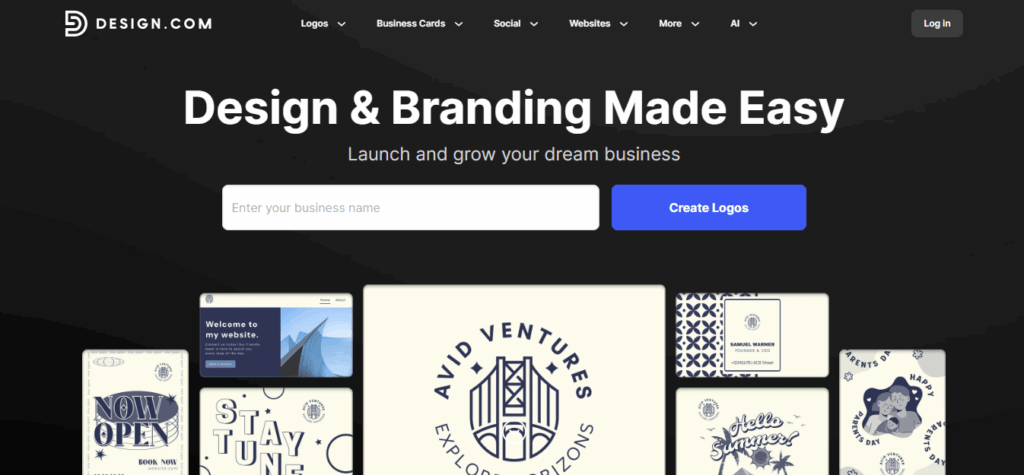
Design.com is an online marketplace for entrepreneurs, startups, small organizations, and social media creators for generating AI-assisted logo designs based on diverse industries. 

If you want a reliable and flexible platform for your brand ideas. Design.com is here for you!

It is known to be the number 1-ranked AI logo generator with effective and accessible AI tools. 

Main Characteristics 

  • High-quality designs: If you are not sure about the layouts, colors, and other details of the templates, Design.com offers over 360K+ logo designs and over 1 million design templates. Sounds exciting, right? You can find over 750+ fonts, 525+ exclusive fonts, 62K custom shapes, and other unique tools here. 
  • Enhanced AI tools: For someone who wants to experiment with AI-assisted tools for their design ideas, this website is right here for you. You can find AI-driven logos, business cards, website builders, background removers, presentations, posters, flyers, and domain name generators for your brand design. 
  • A diverse range of industries: The platform provides various templates and designs for fashion, food, gaming, and other industries. Based on the background, purpose, and intentions of your brand, the website offers suitable industry options.
  • Licensing rights: On the website, users can maintain exclusive licensing ownership. The moment you purchase the logo, it is unavailable for others and entirely removed from the store. The logo belongs only to you and your brand. 

Additional Features

  • Create without a background: It is completely quick and easy to edit the designs and work on them without overthinking whether you have design experience or not. 
  • Download in any format you want: You can create the designs and immediately download them in different file formats, including PNG, PDF, JPG, SVG, and EPS. 
  • Commercially reliable service: You can find professional and commercially safe designs in Design.com without having second thoughts about the inconsistency and inefficiency. 
  • Extra design tools: Besides logos, here you can find 50+ creative tools and designs, such as business cards, websites, cards, QR codes, letterheads, menus, presentations, flyers, and even more. 
  • Printing options: Let us surprise you even more! You can easily get prints on different items, including cups, mousepads, t-shirts, caps, and more. Free delivery for the printing is also included. 

Pricing

The best news is that the website allows you to search for the template and make any adjustments you desire. You can do all these without having a premium plan. Not only logos, but also business cards, website builders, posts, and other designs are accessible in different file formats and with transparent backgrounds. 

Easy to create and publish, right? But for downloading the designs, you need to get the premium plan for the best experience. 

#2. BrandCrowd

Another online marketplace, BrandCrowd, provides inspiring and professional design templates and ideas for small companies and startups. You can find over 350K+ logo templates and over 1 million design ideas on this website. 

Main Characteristics 

  • Exclusive design suggestions: Over 62K custom shapes, 750+ fonts, 525+ exclusive fonts, and other unique tools, all here waiting for you to start your journey!
  • Advanced AI-assisted tools: Through the website, you can find inspiring and exciting designs. As it suggests, the AI logo, AI business name generator, and AI background remover for your designs. 
  • Commercially secure: Everything here is made for the best customer experience, making it smooth for their businesses to build and succeed. 
  • Various industries: You can easily find different design templates related to beauty, fashion, technology, marketing, and much more. 
  • Payment options: Here, you’ll have access to it and publish free logos, business card makers, and links in bio makers. However, keep in mind that if you want to save and download the designs, you have to obtain the paid options. 
  • Get the file in your desired format: It’s up to you to save it in PDF, PNG, JPG, SVG, or EPS file formats that match your design purpose. 
  • Additional design ideas: BrandCrowd offers over 50+ creative designs for business cards, websites, presentations, flyers, letterheads, menus, and other options. 

#3. Lenso.ai

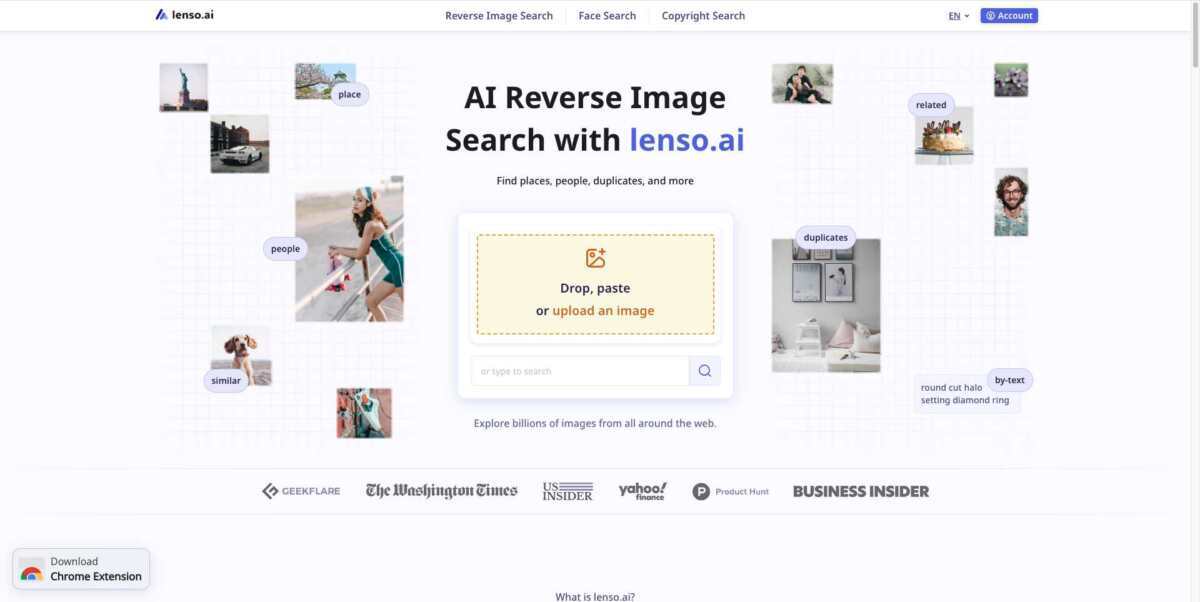
Lenso.ai is an advanced AI-powered reverse image search tool that helps you build a strong brand identity. Before finalizing your logo and visuals, you have to ensure your ideas are not unintentionally similar to existing designs. Lenso.ai allows you to verify originality, research competitors, and find get inspired to create the most unique brand identity.

Main Characteristics

Reverse image search for brand research: Upload your logo or brand visual and check for similar images across the web. This helps you avoid duplication.
Competitor and market analysis: Explore how other brands in your niche present themselves visually. By searching related images, you can analyze trends, color palettes, layouts, and design strategies to position your brand better.

Duplicate detection for brand protection: Lenso.ai helps you track where your images appear online. This is especially useful for monitoring unauthorized use of your logo, marketing graphics, or branded content.

Advanced filters and smart categories: With categories such as People, Duplicates, Similar, Related, and Places, along with filtering options, you can narrow down results and conduct deeper visual research for your brand development. For more categories and filters, consider using lenso.ai’s Research Mode.

Fast and user-friendly experience: Lenso.ai provides a simple upload-and-search process. No complex steps – just quick, accurate results.

Flexible access options: Start with free searches and explore the platform’s core features. Then, you can consider premium plans to unlock extended results.

#4. Designs.ai

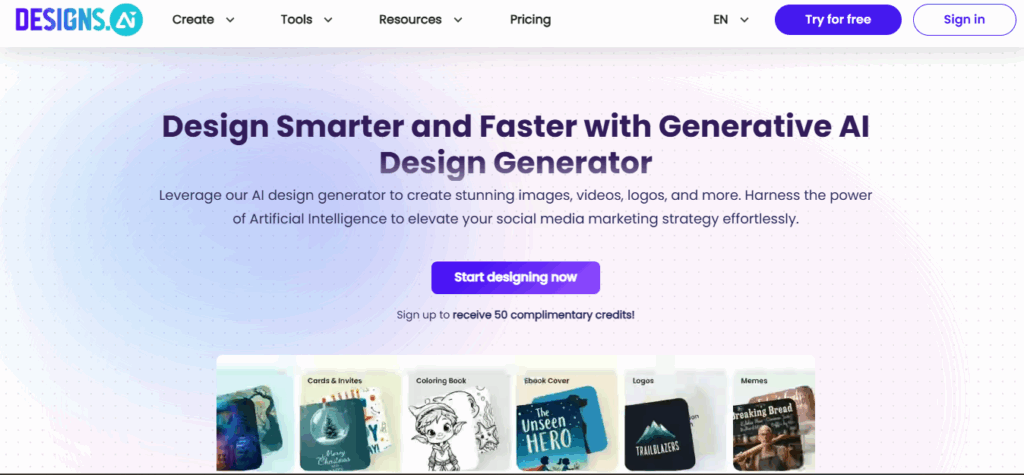
Designs.ai is an online platform for businesses and individuals providing quick and refreshing AI-generated design ideas in minutes. With simple clicks, you can create impressive videos, logos, and images for your brand. 

Main Characteristics 

  • Solutions and customization tools: You can easily find different exclusive design templates for your brand. Stunning visuals, colors, fonts, and other elements are not missing from this website. 
  • Creative suite and assets: The website provides affordable tools for quick reach and access. You can create AI images, videos, logo generators, write AI video scripts, and other exciting accommodations. 
  • Pricing options: You can quickly start your journey and generate free designs by creating an account for a free trial. The range of payment options varies based on your other preferences.
  • Fast and easy to use for everyone: Whether you’re a beginner or a designer, you can quickly create logo designs, videos, and images without complex steps and guidelines. 
  • Available file formats: Choose the best file format for you! You can create the designs and download them in different formats, including PNG, SVG, PDF, or JPG. 

#5. DesignEvo

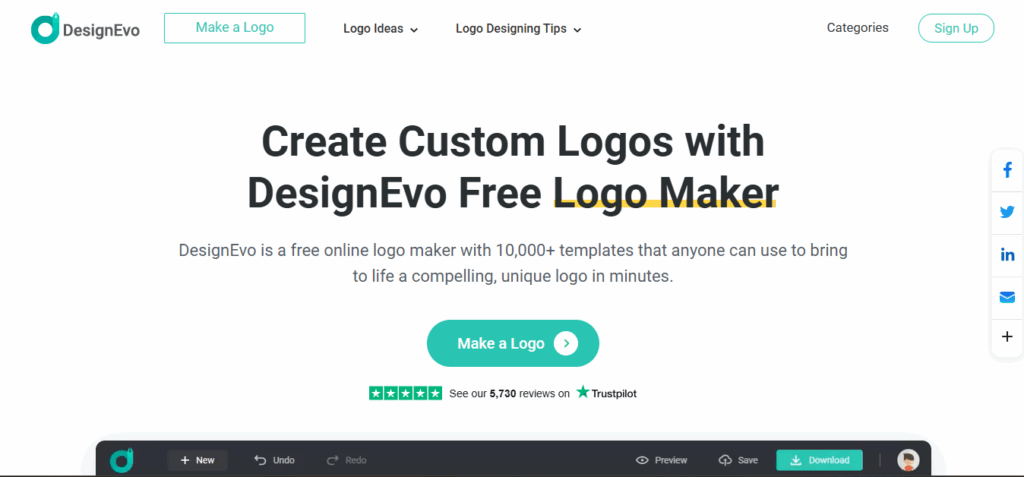
Think of DesignEvo as an online free platform with over 10K logo designs. 

Main Characteristics

  • Creative approach and suggestions: Depending on whether you are looking for something professional, minimalistic, simple, or creative designs with exclusive 100+ fonts, layouts, color pallets, shapes, and icons. 
  • A variety of topics related to logo designs: If you are looking for fashion, football, gaming, real estate, or other industries for your brand, the platform provides more than you think!
  • Flexible purchasing and free offerings: For free, you can edit and re-download your created logo designs in resolution files. However, remember that for high-quality formats, you need to gain either the basic or the plus payment options. 
  • Accessible file formats: Now is the moment to download the design. You can choose between JPG, SVG, and PDF file formats. Entirely up to you!

Best Tools for Complete Brand Design: Comparison Table

CharacteristicsDesign.comBrandCrowdDesigns.ai DesignEvo
Template size A library of over 360K+ unique logo templates, over 1 million business cards, social media posts, and other designsA diverse collection of over 300K+ logo designs and 1 million design suggestionsOffers creative and exciting templates, logo ideas, images, and moreA rich suggestion of logo templates and design ideas
Customization suggestionsIf you have access to diverse options, including over 62K custom shapes, over 750+ fonts, 525+ exclusive fonts, and other exclusive tools Offers 50+ inspiring designs, 62K custom shapes, 750+ fonts, 525+ exclusive fonts, and even moreColor suggestions, layouts, icons, fonts, and other elements are accessible in Designs.aiFonts, color shades, various shapes, and exclusive icons. 
Advanced toolsFeel free to work with creative AI-assisted tools if you want  AI-driven logos, business cards, website builders, background removers, and other advanced ways Be more creative and get suggestions from the AI logo, AI business name generator, and AI background remover for your design ideas. Create with AI images, logo generators, write AI video scripts, and find other accommodationsTools related to industries and ideas, with or without AI-assisted generators, are accessible here
Commercial optionsIt allows you to easily create and publish with layouts, colors, and so on. But for the premium plan, you need to payYou can edit and save designs without any charge, but get paid solutions for more creative designsNo worries here, edit, create, and download for free!Start your design creation, edit your templates, and download them for free for your first experience 
Download file formatsAccess to downloading file formats, including PNG, PDF, JPG, SVG, and EPSYou can easily save the designs in PDF, PNG, JPG, SVG, or EPS file formats PNG, SVG, PDF, or JPG are all available in Designs.aiGood-quality SVG, JPG, and PDF formats

To Sum Up 

Together, we went through the four best design websites for small companies, start-ups, and creative individuals. 

It is this simple: if you want to have the most exclusive experience with the best creative tools, inspiring opportunities, and convenient materials, you should consider Design.com and BrandCrowd. As the speed and quality are meeting there!

How Australian Doctors Use Digital Tools to Stay on Top of Their Financials, Loans, and Debts While Managing Busy Clinical Schedules

The schedule of an Australian medical professional rarely adheres to a standard 9-to-5 structure. Between ward rounds, patient consults, on-call shifts, and administrative burdens, finding time to sit down with a spreadsheet or visit a bank branch is nearly impossible. Yet, the financial stakes for doctors are high. They often manage complex income streams involving Medicare billings, private practice revenue, and hospital salary packaging, all while carrying significant debt from student loans, practice setup costs, or mortgages.

To handle this volume of financial data without cutting into clinical time, doctors increasingly rely on integrated digital tools. These platforms do not merely store numbers; they actively process transactions, categorize spending, and forecast tax liabilities in the background.

For medical professionals exploring these options, resources like homeloansfordoctors.com.au serve as a centralized hub for understanding how lending policies specifically apply to the healthcare sector. Because medical incomes often fluctuate or arrive via complex trust structures, standard bank assessments can fail.

“Doctors present a unique risk profile that standard banking algorithms often misread,” says a senior lending specialist at Home Loan For Doctors. “Specialized digital portals allow lenders and brokers to verify complex income streams – such as private billings and hospital indemnities – much faster than traditional paper trails, matching the speed at which these professionals operate.”

The shift is away from manual bookkeeping and toward systems that communicate with one another, allowing a surgeon to approve a tax payment or check a loan balance in the two minutes between patients.

The High-Income, Low-Time Paradox

Medical professionals typically fall into a high-income bracket, but this liquidity comes with specific complications. A General Practitioner (GP) might receive income from a hospital district, direct Medicare rebates, and private patient fees. A specialist might run a service entity that pays them a wage while managing overheads separately.

This fragmentation makes cash flow visibility difficult. If a doctor relies solely on a monthly bank statement, they are looking at historical data that is 30 days old. Digital dashboards that aggregate these accounts provide a real-time view.

By linking bank accounts, credit cards, and loan facilities to a single secure app, doctors can see their net position instantly. This immediate access allows for quicker decisions regarding debt reduction or asset allocation without scheduling a meeting with a financial planner for every minor adjustment.

Automating the Cash Flow Engine

The most effective strategy employed by busy clinicians is the automation of fund distribution. Rather than manually transferring money for taxes, mortgage repayments, and lifestyle spending, they set up “waterfall” systems within their banking apps.

When income hits the main operating account, the digital banking tool immediately splits it. A set percentage moves to a tax provision account, another portion directs to loan repayments, and the remainder transfers to a living expenses account. This creates a psychological partition, preventing the accidental spending of tax dollars – a common issue for those new to private practice.

Algorithms for Debt Reduction

Many doctors carry significant debt, including HECS-HELP and substantial mortgages for homes or practice premises. Managing these efficiently requires more than minimum repayments.

Doctors now use apps that analyze daily spending habits and sweep “spare change” or unallocated funds directly into mortgage offset accounts. For a doctor with a high mortgage balance, an offset account is a powerful tool. Every dollar sitting in that account reduces the interest charged on the loan. Automated sweeping confirms that cash is never idle; it is always working to lower interest costs until it is needed.

Salary Packaging Optimization

For those employed in the public hospital system, salary packaging is a primary benefit. However, tracking the caps on living expenses and meal entertainment can be tedious.

Modern salary packaging providers offer mobile apps that track these limits in real-time. A registrar at a chaotic metropolitan hospital can check their remaining meal entertainment balance on their phone while standing in the cafeteria line. This transparency prevents overspending or, conversely, leaving tax-free money on the table at the end of the Fringe Benefits Tax (FBT) year on March 31.

Specialized Mortgage Management for Medical Professionals

The property market is a favored investment vehicle for Australian doctors, often aided by the waiver of Lenders Mortgage Insurance (LMI) for medical practitioners. While this policy allows doctors to borrow up to 90 percent of a property’s value without insurance fees, managing these large loans requires vigilance.

Digital mortgage platforms allow borrowers to track their equity position as property values shift. Rather than calling a broker to ask, “Can I afford to buy a practice premise?” a doctor can view their usable equity on a dashboard. This capability connects directly to the speed of decision-making required in competitive property markets like Sydney or Melbourne.

Financial TaskManual / Traditional ApproachDigital / Automated Approach
Expense TrackingKeeping paper receipts in a shoebox or wallet.Snapping photos via app (e.g., Dext); OCR extracts data instantly.
Tax ProvisioningCalculating 30-40 percent of income quarterly.Automatic transfers to a holding account with every deposit.
Loan ManagementChecking statements monthly; manual extra payments.Real-time offset monitoring; round-ups applied to principal.
BillingPhysical paperwork; manual reconciliation of Medicare.Integrated PMS (Practice Management Software) with auto-reconciliation.
Net Worth CheckSpreadsheets updated once a year.Live aggregation of property, shares, and cash accounts.

This shift reduces the mental load, allowing the focus to remain on patient care rather than administrative upkeep.

Cloud Accounting in Private Practice

For doctors running their own rooms, the separation of personal and business finances is non-negotiable. Cloud accounting platforms like Xero or MYOB have become the standard because they integrate with bank feeds.

These platforms negate the need for data entry. When a doctor pays for medical supplies using a business card, the transaction appears in the software automatically. The doctor – or their bookkeeper – simply clicks “OK” to reconcile it.

Real-Time Tax Estimation

One of the greatest stressors for private practitioners is the annual tax bill. In the past, a doctor might not know their liability until months after the financial year ended.

Current cloud accounting tools use live data to estimate tax obligations as they accrue. A surgeon can log in mid-year and see an estimated tax position based on year-to-date earnings. This foresight allows them to adjust their Pay As You Go (PAYG) installments or contribute to superannuation before June 30, preventing cash flow shocks.

Connecting Clinical Software to Revenue

The intersection of clinical work and finance occurs at the point of billing. Inefficient billing systems lead to rejected Medicare claims and delayed payments.

Australian doctors increasingly use Practice Management Software (PMS) that integrates directly with payment gateways and the Services Australia PRODA system.

Streamlining Medicare Claiming

When a consult finishes, the clinical notes and the billing code should sync instantly. Modern PMS solutions allow the claim to go to Medicare immediately. If there is an error in the item number or patient details, the system flags it instantly, allowing the reception staff to fix it before the patient leaves.

This immediate feedback loop drastically reduces “bad debt” – money owed for work done that is never collected due to administrative friction. For a busy practice, recovering even 2 percent of lost revenue through better digital claiming can equal thousands of dollars annually.

Tracking Net Worth and Investments on the Go

Beyond the daily grind of income and expenses, many doctors hold portfolios involving shares, managed funds, or commercial property. Logging into five different brokerage accounts to check performance is inefficient.

Wealth aggregation tools allow users to pull data from the ASX, international markets, and property valuers into a single view. A specialist can check the performance of their self-managed super fund (SMSF) between surgeries. These tools often handle the complex corporate actions associated with shares – such as dividends and splits – automatically adjusting the portfolio’s value and tax cost base.

Data Security and Privacy Concerns

With great digital connectivity comes the responsibility of security. Doctors are acutely aware of privacy due to patient confidentiality laws, and this caution extends to their finances.

The adoption of biometric security is widespread. Banking and accounting apps on physician devices almost universally require FaceID or fingerprint verification. Furthermore, doctors are advised to use Two-Factor Authentication (2FA) apps rather than SMS codes, which are susceptible to SIM-swapping attacks.

Financial data is rarely stored directly on the phone. Instead, secure tokens access cloud servers. If a doctor loses their phone, their financial life remains secure because the device itself holds no banking records, only the “keys” to view them, which can be revoked remotely.

Blending Tech with Specialist Advice

It is a misconception that digital tools replace human advisors. For high-net-worth medical professionals, the app handles the “what” and “when,” while the human advisor handles the “why” and “how.”

The digital tools create a clean data set. When a doctor meets with their accountant or mortgage broker, they do not waste the first hour organizing shoeboxes of receipts. The data is already organized and reconciled. The conversation immediately moves to strategy: structuring debt, planning for retirement, or expanding the practice.

Technology acts as the foundation that makes high-level financial advice possible and effective. By automating the mundane, Australian doctors reclaim their most valuable resource: time.

Top 10 SEO Myths You Should Stop Believing in 2026

By 2026, the myths surrounding SEO need to be put to rest. SEO is a difficult industry to keep up with, and the myths make it harder. Some myths present a misleading view of the importance of backlinks, while others diminish the value of content. Outdated strategies and misconceptions will hurt a website’s reliability.

In 2026, keeping up with SEO will be critical. Outdated strategies drain resources and time and will damage a site’s standing. Let’s discuss the most common SEO myths. Every website has the potential to be fully optimized, but misguided beliefs take that away.

Myth #1: “Keywords Alone Will Boost Rankings”

In the past, many believed that simply repeating a keyword enough times on a page would improve SEO. ‘Keyword stuffing,’ as it was called, was a way people thought would get a page to rank better. They summed up the argument: being more persuasive would work if the keyword was repeated more often.

In 2026, all that has changed. SEO has evolved, and so have the algorithms. Search engines have gone beyond analyzing keyword density and are concentrating on relevance, context, and intent. It is not the number of times a word is repeated that matters; it is whether it answers the searcher’s question. Today’s algorithms can identify adjacent keywords and synonyms and capture the sense of the page as a whole. A page that comprehensively addresses a topic will do better than one that stubbornly fixes on repeating a keyword.

In a 2025 SEMrush report, for example, user intent optimization ranked on average 30% higher than pages that simply optimized for keyword frequency. The results back up the argument that context and relevance, and not just the keyword, are the most important aspects of your strategy.

Myth #2: “More Backlinks Always Means Better SEO”

Some site owners still think that backlinks increase your rank, and while that statement is partially true, there is a quality over quantity factor to consider here. Spammy backlinks will reduce your site’s authority and get your site penalized. That is the last thing you want.

By 2026, the investigation of backlinks will be more relevant to the authority of the site. For example, the value of a few links from trustworthy sites that relate to your content is much more valuable than hundreds of links from irrelevant sites and sites of low trust. These backlinks will also increase traffic to your site and strengthen your branding.

An example of this is the statement “Websites with fewer but high-quality backlinks see 50% higher referral traffic than sites with many low-quality links”. This is from a Moz report and bestology’s emphasis on SEO. Relevance and authority are what you should truly strive for.

Myth #3: “Meta Tags Are Obsolete”

Not entirely; it’s wrong to say that the meta tags do not affect SEO, although some marketers think so. Certainly, some are not as powerful as they used to be, such as the “keywords” meta tag, but others certainly are.

A reality check: “title tags and meta descriptions” remain very significant. You still need to optimize these for search ranking and CTR. You still need to craft these to the point and captivating enough to compel a user to click from the SERP. Even in 2026, these tags still need to be optimized for relevance, clarity, and concentration on the targeted keywords.

How to optimize:

  • For title tags: “Under 60 characters, with primary keywords, and make sure it reflects the content.”
  • For meta description: “150 to 160 characters, make it compelling, and add secondary keywords naturally.”
  • Even in that optimization, the clarity for the reader and the value to the reader are above the number of keywords.

Myth #4: “SEO is Only About Google”

Some individuals operate under the assumption that Google dominates the landscape of search engine optimization and is the only engine worth optimizing for. While Google is a considerable player in the industry, AI-integrated platforms and multi-search engines are increasingly popular. Bing, YouTube, and Amazon are searchable platforms, as are voice assistants like Siri and Alexa. Each platform possesses unique algorithms and standards for ranking and engaging with users.

In fact, Google optimization will not capture all the segments of your audience. To incorporate all audience segments, optimize for multi-channel SEO. Capture users through voice, video, and specialized search engines. You can optimize for Google and text search and video content for YouTube, the second-largest search engine, to access audiences that Google will not give you. Conversely, voice search optimization is the more natural conversational content for featured snippets and AI answers.

Example: HubSpot research shows a 25-35% increase in organic traffic to search engine-targeted sites, instead of those sites that target only Google.

Myth #5: “You Must Post Daily to Rank”

As search rankings are calculated based on several parameters, some people believe that constantly posting helps improve search rankings. Numerous businesses assume that consistently posting content every day will improve their SEO results.

The Reality: In 2026, the search engines will continue to focus on quality. Search engines reward content that meets the searcher’s intent and offers genuine value. A single, evergreen content piece will have much greater relevance and value than multiple short, worthless pieces.

Effective Content Strategy

  • In-depth coverage on all core subjects of a topic.
  • Updating and refreshing older content.
  • Prioritizing user experience and content readability is much more productive than being fixated on arbitrary publishing goals.

Example: A 2025 SEMrush study cites that long-form quality content earns 60% more backlinks than short content and thus is more highly valued. Value and authority are still driven by content volume.

Myth #6: “Social Signals Directly Affect Rankings”

Many people assume that having numerous social media likes, followers, and shares contributes to a higher ranking on search engines. Social activity can increase visibility, but Google and other search engines have stated that social signals do not rank content.

Social media does influence SEO, but in an indirect way. It helps gain more traffic, engagement, and recognition for the brand. When users share your content, it gets seen by many others, some of whom may link it, comment, and interact—activities that influence SEO. Social media serves more as a booster to your SEO efforts, rather than as a guaranteed solution.

BrightEdge’s 2025 research indicates that pages with strong social media engagement received 20% more referral traffic, and this traffic positively affected the pages’ search visibility.

Myth #7: “Exact Match Domains Guarantee Success”

Because of the early days of SEO, people still believe that EMDs will help them rank quickly. Many people still believe that they can improve their SEO with EMDs.

Reality: Having an Exact Match Domain (EMD) is no longer an SEO shortcut. Google and other search engines look for content relevancy and user experience, and that no longer applies to EMDs. On a priority basis, search engines will always assess content quality before determining EMD relevance. While EMDs will assist in short-term brand impressions and recall, they also will not offset content quality and ineffective SEO.

Best Practice: Brand and content relevance should always take precedence. An identifiable domain name, with relevant content, will yield more relevant returns than a domain that is merely a set of keywords.

Example: Research published by Moz showed that poorly branded EMDs not only lost brand equity, but also lost up to 40% of their rankings in contrast to branded domains that hosted quality content.

Myth #8: “Longer Content Always Wins”

The prevailing notion is that longer articles will increase SEO rankings. Indeed, longer articles have more room to cover topics. However, longer content returns no SEO value if relevancy is lost or overlooked.

Reality: Search engines do not prioritize content based on length. The ideal scenario is fully addressing a user query. In fact, shorter, more concise content can eclipse a longer piece simply by meeting user demands more effectively.

Content Optimization:

  • Incorporate headings, bullet points, and images to make content more scannable and to minimize the amount of text to read.
  • User needs should determine the content and its structure, not an arbitrary target word count.
  • Please include more data or research to support your point, along with actionable recommendations.

For instance, a HubSpot report on content length published in 2025 indicated that when user intent was matched, blog posts of 1,500–2,000 words performed the best; the shorter posts, however, surpassed the longer ones when intent was clear and specific.

Myth #9: “Technical SEO is Optional”

Every so often, site owners concentrate their efforts exclusively on content and backlinks, and thus, overlook Technical SEO. This is a misunderstanding because technical optimizations will always be a prerequisite for any site to succeed in SEO. Site speed, mobile friendliness, a secure HTTPS, structured data, and no index bloat all become critical factors regarding user experience and thus SEO.

The Reality: Even the best-written content on the internet will never rank if technical SEO is not addressed. Pages that users cannot access because of loading issues, or a poorly designed mobile version, and crawl errors all contribute to user frustration and will cause high bounce and abandonment rates.

Example: “The performance of a site is, in fact, a major contributor to engagement and visibility. According to Google, 53% of mobile users abandon pages that take longer than three seconds to load.”

To achieve technical SEO, you should host your website on a reliable platform and monitor its health. Be mindful when choosing a hosting provider if your website is build with WordPress: less than 99% server uptime is a bad sign. As an alternative, you can consider building your website or migrating it to a website builder, which includes hosting, maintenance, SEO and mobile optimization. For instance, Site.pro supports free website migration from most other platforms, including website builders and CMS.

Myth #10: “Once You Rank, You’re Done”

People think that if they finally get to a high ranking on a search engine, they’re done worrying about it. Unfortunately, this is not the case. Content on the internet is constantly changing, and so are search engine algorithms. In addition, user intent and behavior change with time. Without constant effort on a site, the ranks will inevitably drop.

A few things that will keep you on the ranking treadmill include:

  • Updating content regularly to keep it fresh and removing anything that is outdated.
  • Adjusting your plans after analyzing your rank competitors and understanding changes to algorithms.
  • Tracking the competition.
  • Preparing for new types of search like voice search and hyper-advanced AI search.

SEMrush states that sites that are diligent in content updating and tracking technical SEO can achieve and retain up to 40% higher rankings over 2 years relative to their static counterparts.

Conclusion

SEO is one of the many facets of digital marketing that is continuously changing and evolving. With 2026 on the horizon, the strategies that may have worked a few years ago might do more damage to your brand than good. Understanding the fundamentals of SEO and separating fact from myth will be crucial to your success in 2026 and beyond.

Throughout this piece, we have explored 10 SEO myths, such as the fixation on keywords and backlinks, and the misconception that once you achieve a ranking, the job is finished. SEO done correctly is rooted in flexibility, genuineness, and value. Rewarded is content crafted with the user in mind, and in large measure, praised are fast, high-performing sites and brand consistency.

Due to heightened competition and changing algorithms, the shift should now be toward solid, user-first content that is useful, thoroughly optimized, and built on a strong technical foundation.

Outdated strategies will continue to damage your brand. 2026 is your chance to work smarter, not harder.