7 Best Instagram New Follower Trackers in 2026 (100% Anonymous & Tested)

Introduction

Instagram no longer allows users to easily see who someone recently followed, which has become frustrating for people trying to monitor activity, track competitors, or stay updated on influencer behavior. Many users end up manually checking profiles, which is time-consuming and often inaccurate. This is why the demand for a reliable Instagram recent follow tracker has increased significantly in 2026.

To solve this problem, we conducted in-depth, hands-on testing of multiple tools designed to track Instagram activity. We focused on accuracy, privacy, and usability to find the most effective solutions.

Final Verdict: After extensive testing, DolphinRadar stands out as the most accurate and secure anonymous recent follow tracker available today.

Our Testing Methodology

To ensure fair and reliable results, we tested a total of 9 Instagram tracking tools over a 14-day period. Each tool was evaluated under real-world conditions to measure consistency and performance.

We tested these tools using both public and private Instagram accounts, ensuring that results reflect actual usage scenarios. Additionally, testing was conducted across mobile devices (Android & iOS) and desktop browsers to evaluate cross-platform functionality.

Our evaluation focused on four key factors: accuracy in detecting recent follows, privacy protection, speed of updates, and overall user experience. Only tools that consistently delivered reliable performance were included in this list.

1. DolphinRadar – Best Anonymous Instagram Follow Tracker

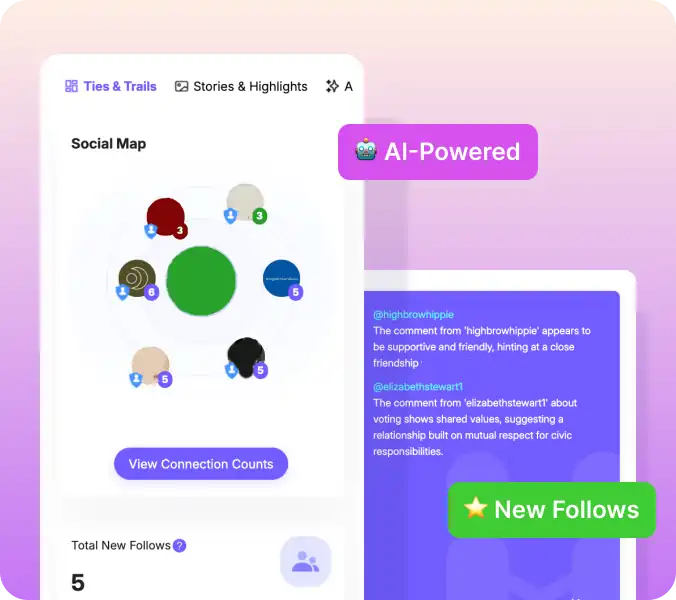
When searching for a powerful Instagram recent follow tracker, choosing a reliable anonymous recent follow tracker is essential for maintaining privacy and accuracy. This is where DolphinRadar clearly outperforms other Instagram tracking tools in terms of privacy and accuracy.

DolphinRadar operates on a server-side cloud monitoring system, meaning it tracks Instagram activity externally without requiring users to log into their accounts. This ensures a zero digital footprint, making the tracking completely anonymous and secure.

One of its standout features is the ability to track recent mutual follows with high accuracy. Unlike many competitors, it delivers fast and consistent results while maintaining complete privacy.

The platform is designed to be simple and user-friendly, making it suitable for both beginners and advanced users who want a reliable Instagram follower tracking tool.

Pricing: Free preview available, with premium plans for advanced tracking features.
Limitation: Some advanced features require a paid subscription, and tracking private accounts may depend on activity visibility.

2. Inflact

Inflact is a well-known Instagram marketing platform that offers analytics, automation, and audience insights. It is more suitable for users who want broader Instagram growth tools rather than just a recent follow tracker.

The interface is modern and feature-rich, although beginners may find it slightly complex. It provides useful data for content planning and audience engagement.

Pricing: Subscription-based plans.
Limitation: Requires Instagram login and does not focus specifically on tracking recent follows.

3. Snoopreport

Snoopreport specializes in tracking Instagram user activity, including follows, likes, and engagement trends. It provides structured reports that help users understand behavior patterns.

The tool is simple and easy to use, making it suitable for basic monitoring needs. However, it does not provide real-time updates.

Pricing: Monthly subscription.
Limitation: Data updates are delayed, and accuracy may vary for recent follow tracking.

4. FollowSpy

FollowSpy is designed to track followers and unfollowers, helping users monitor account growth over time. It provides basic insights into follower behavior.

While functional, the interface is somewhat outdated, and the tool lacks advanced tracking capabilities.

Pricing: Free and paid options.
Limitation: Limited accuracy and may require account access, which raises privacy concerns.

5. EasyComment

EasyComment focuses on tracking comments and engagement rather than follows. It is useful for analyzing audience interaction but not ideal as an Instagram recent follow tracker.

The platform is easy to use but offers limited features compared to other tools.

Pricing: Affordable plans.
Limitation: Not designed for tracking recent followers and lacks deeper analytics.

6. Recently-Followed.com

Recently-Followed.com is a niche tool that focuses specifically on detecting recent Instagram follows. It offers quick results with a simple interface.

However, its performance depends on available data, which can affect accuracy.

Pricing: Free with limitations.
Limitation: Inconsistent accuracy and limited database coverage.

7. IG Analyzer Pro

IG Analyzer Pro provides profile analytics and follower insights, making it useful for general Instagram tracking.

It offers a smooth and modern user experience, but it is not fully focused on recent follow tracking.

Pricing: Paid subscription.
Limitation: Requires login credentials and does not guarantee anonymous tracking.

Comparison Table

ToolKey FeaturesAccuracyPrivacy/SecurityPricing
DolphinRadarAnonymous recent follow tracking⭐⭐⭐⭐⭐No login, cloud-basedFree + Paid
InflactAnalytics & automation⭐⭐⭐⭐Requires loginPaid
SnoopreportActivity reports⭐⭐⭐ModeratePaid
FollowSpyFollower tracking⭐⭐⭐LowFree + Paid
EasyCommentComment analytics⭐⭐ModeratePaid
Recently-FollowedRecent follow lookup⭐⭐⭐ModerateFree
IG Analyzer ProProfile insights⭐⭐⭐⭐Requires loginPaid

FAQs

1. Can you see someone’s recent Instagram follows?

Yes, you can see recent Instagram follows using tools like DolphinRadar.

2. What is the best Instagram recent follow tracker in 2026?

The best Instagram recent follow tracker is DolphinRadar due to its accuracy and privacy.

3. Is it safe to use an Instagram follower tracker?

Yes, it is safe if the tool does not require login credentials.

4. Do these tools work on private accounts?

Yes, but results depend on account activity and visibility.

5. Are free Instagram tracking tools reliable?

No, free tools usually offer limited accuracy and fewer features.

6. Can Instagram detect these tools?

No, tools like DolphinRadar leave no digital footprint.

7. Do I need to log into my Instagram account?

No, the best tools do not require login access.

8. How accurate are Instagram follower trackers?

Top tools provide high accuracy, while others may vary.

 9. What is an anonymous Instagram follow tracker?

An anonymous Instagram follow tracker is a tool that allows users to monitor recent follows without logging into their account or leaving any digital footprint.

10. Which Instagram tracker does not require login?

DolphinRadar is one of the best Instagram trackers that does not require login, ensuring complete privacy and security.

How Social Media Growth Services Can Help Creators Scale Faster

Social media growth services can help creators scale their online presence faster by increasing visibility, improving engagement metrics, and expanding audience reach. While these services can support growth, long-term success still depends on high-quality content, consistent posting, and genuine interaction with followers. Platforms offering solutions such as social media services can help creators improve their reach across multiple networks, especially when used alongside a well-planned content strategy.

The Growing Importance of Social Media for Creators

Social media is no longer just a place for sharing personal moments. It has evolved into a major ecosystem where creators build communities, collaborate with brands, and launch digital businesses.

For creators, a strong social media presence can offer several advantages:

AdvantageExplanation
Increased visibilityContent reaches wider audiences
Brand opportunitiesCompanies collaborate with creators
Monetization potentialCreators earn through sponsorships or partnerships
Community buildingFollowers become loyal supporters

Because of these benefits, many creators focus heavily on expanding their reach across multiple platforms.

Challenges Creators Face When Growing on Social Media

Despite the opportunities available, scaling a social media presence is not always easy. Creators often encounter several obstacles that slow down their growth.

Increasing Competition Across Platforms

Every day, thousands of new creators join major social media platforms. As a result, standing out requires unique content, strong storytelling, and consistent posting.

With so much competition, even high-quality content may struggle to gain attention without proper visibility.

Limited Organic Reach

One of the most common challenges creators face is the decline in organic reach. Social media algorithms prioritize certain types of content and engagement signals, which can make it difficult for new creators to get noticed.

Even when creators produce valuable content, their posts may not reach large audiences unless engagement grows quickly.

Time Constraints for Content Creation

Creating consistent content requires time and effort. Creators often need to:

  • research trends
  • produce videos or graphics
  • edit content
  • interact with followers
  • analyze performance metrics

Managing all these tasks simultaneously can become overwhelming, especially for creators who are just starting out.

What Are Social Media Growth Services?

Social media growth services are tools or platforms designed to help creators increase their visibility, engagement, and audience reach. These services aim to support content creators by improving key performance indicators that influence social media algorithms.

Growth services can include different types of solutions depending on the platform and the creator’s goals.

Definition and Purpose

At their core, social media growth services focus on helping creators expand their presence more efficiently. They may assist with improving engagement, increasing visibility, or attracting new followers.

For many creators, these services are used as part of a broader strategy that includes content creation, audience engagement, and brand development.

Common Types of Growth Services Available

Different platforms provide various types of social media growth solutions. Some of the most common services include:

  • follower growth services
  • engagement boosting services
  • content promotion tools
  • analytics and performance tracking

Each of these services focuses on improving specific aspects of social media performance.

How Social Media Growth Services Support Faster Growth

When used strategically, growth services can help creators accelerate their progress and reach new audiences more quickly.

Increasing Visibility and Reach

One of the main goals of social media growth services is to increase the visibility of a creator’s content. Higher visibility means more users can discover posts through recommendations, explore feeds, or trending sections.

When content reaches more viewers, the chances of gaining followers and engagement increase significantly.

Improving Engagement Metrics

Engagement metrics such as likes, comments, shares, and watch time play a crucial role in how algorithms distribute content. Higher engagement signals that content is valuable and interesting.

As engagement improves, platforms may promote that content to wider audiences.

Helping Creators Build Initial Momentum

New creators often struggle with the early stages of growth because their accounts have little visibility. Growth services can help build initial momentum by making content more discoverable.

Once a creator gains some traction, organic growth becomes easier to maintain.

Key Benefits of Using Social Media Growth Services

For many creators, social media growth services can provide additional support when building an online presence. While content quality remains the most important factor, these services can help creators scale their visibility more efficiently.

Saving Time for Creators

Creating high-quality content often requires a significant investment of time. From filming and editing videos to writing captions and interacting with followers, creators must manage multiple tasks simultaneously. Growth services can help reduce some of this workload by supporting visibility and engagement efforts, allowing creators to focus more on producing valuable content.

Supporting Brand and Influencer Growth

As creators gain more followers, they often attract attention from brands looking for partnerships. A larger audience and higher engagement rates can make a creator more appealing to companies seeking collaborations. By increasing visibility and improving engagement metrics, growth services can help creators strengthen their professional online presence.

Expanding Audience Across Platforms

Many creators today are active on multiple platforms such as Instagram, TikTok, and YouTube. Managing growth across several networks can be challenging without the right tools.

Some platforms offer integrated solutions designed to help creators grow their reach across multiple channels. For example, Trollishly social media services provide options that support audience growth and engagement improvements across various social media platforms.

Best Practices for Using Growth Services Effectively

While growth services can be helpful, they work best when combined with strong content strategies and consistent engagement.

Combine Services With Quality Content

No growth service can replace valuable content. Creators should focus on producing content that informs, entertains, or inspires their audience.

When engaging content is paired with strategic growth tools, results can become significantly stronger.

Monitor Analytics and Performance

Analytics play a crucial role in understanding which strategies are working. Creators should regularly review metrics such as:

  • engagement rates
  • follower growth
  • audience demographics
  • content reach

These insights help creators refine their strategies and improve future content.

Maintain Authentic Audience Engagement

Even when using growth services, maintaining genuine interactions with followers is essential. Authentic engagement helps build trust and encourages long-term audience loyalty.

Creators who actively interact with their community tend to develop stronger relationships with their followers.

Common Misconceptions About Social Media Growth Services

Despite their popularity, there are several misconceptions about how growth services work.

Growth Happens Without Content Strategy

Some creators assume growth services alone can guarantee success. In reality, consistent content creation and audience engagement remain the foundation of long-term social media growth.

All Services Deliver the Same Results

Not all growth platforms offer the same features or support. Creators should carefully research services before choosing one that aligns with their goals.

Frequently Asked Questions About Social Media Growth Services

Are social media growth services safe to use?

Many services are designed to support creators by improving visibility and engagement. However, creators should always choose reputable platforms and combine services with genuine content strategies.

Do growth services replace organic growth?

No. Growth services are typically used as a supplement to organic strategies such as content creation, audience engagement, and brand building.

Can beginners benefit from growth services?

Yes. Many new creators use growth services to gain initial visibility and build momentum while developing their content strategy.

Which platforms benefit most from growth services?

Platforms like Instagram, TikTok, YouTube, and Twitter often see the most benefits because they rely heavily on engagement metrics and algorithmic recommendations.

Should creators rely entirely on growth services?

Creators should use growth services as a supporting tool rather than a replacement for authentic content and community building.

How to Track Instagram Unfollowers Using Mobile Productivity Apps

The management of social media has now been a significant aspect of day-to-day digital operations of creators, marketers, and businesses. Being active on Instagram does not only mean regularly posting content on it. It also entails checking on the response of audiences and how the engagement varies as time goes by. Follower activity is one of the most useful audience behavior indicators. Once users choose to unfollow an account, it may indicate a change in the content taste, frequency of posts, or general interest of the audience. Unluckily, Instagram does not have an in-built option that explicitly displays the unfollower list. Checking the follower lists manually may be time-consuming and ineffective, and this is why numerous professionals turn to mobile productivity applications and automated analytics tools.

Why Tracking Instagram Unfollowers Matters

Instagram offers numerous engagement metrics like likes, comments and views, but it does not inform the user when a person unfollows them. To those who are either personalities or companies with increasing numbers of followers, it is unrealistic and time consuming to scroll the list of followers manually. With the increase in accounts, it is almost impossible to notice the change in followers without help.

Using an instagram unfollow tracker helps solve this problem by automatically monitoring audience changes. These tools continuously compare follower data and identify when someone stops following an account. Instead of spending time scrolling through long lists of profiles, users receive clear updates and insights about their audience activity. This allows creators and social media managers to focus on improving their content and strengthening engagement rather than performing repetitive manual checks.

Core Features of Instagram Tracking Tools

Modern instagram analytics tools are designed to provide detailed insights into follower behavior and engagement patterns. These systems work as intelligent mobile tracking apps that automatically collect and organize social media data in one convenient interface.

The majority of used tracking systems provide real-time updates on changes in followers, which enable users to know when a person follows or unfollows their account. Most of the tools also have notification systems that inform the user instantly about the major changes in audience. Another valuable feature is historical analytics, which archive the engagement data over time and enable users to observe the trends of the past. The majority of applications also have visual dashboards that provide follower statistics in the form of graphs and reports, which are simpler to interpret. Also, numerous applications facilitate the synchronization between several devices to make users reach their analytics in smartphones, tablets, or desktop platforms and not to lose valuable information.

Integrating Social Media Tracking Into Daily Workflow

For many professionals, social media management is integrated into their regular productivity routines. Tracking engagement metrics alongside other digital tasks allows creators and marketers to make more informed decisions about their content strategies. When combined with other mobile productivity apps, social media tracking tools become part of a larger digital workflow.

These data tracking tools allow users to review engagement metrics quickly and adjust their strategies accordingly. A content creator might check analytics each morning before planning posts for the day, while a marketing team could review follower changes when evaluating campaign results. Integrating analytics into daily productivity systems helps users identify patterns in audience behavior and respond more effectively. Over time, this structured approach improves efficiency and makes it easier to manage multiple social media accounts simultaneously.

Mobile Apps and iOS Solutions

The mobile technology has enabled ease of monitoring social media performance anywhere. As the users are no longer required to use only desktop dashboards, they can now monitor the engagement metrics in their smartphones. The mobile-first tools can also be of significant use to influencers, entrepreneurs, and marketers who are often traveling or working remotely and manage social media accounts.

iPhone and iPad users benefit from specialized iOS Instagram tools designed specifically for mobile environments. These applications provide simple interfaces that display follower statistics, engagement trends, and audience insights in real time. One example is a safe instagram unfollow tracker app that allows users to monitor follower changes directly from their devices. Mobile solutions like this enable creators to track Instagram unfollowers instantly and review engagement data whenever necessary without needing to log in to multiple analytics platforms.

Security and Privacy Considerations

When choosing instagram management tools, security should always be a priority. Since tracking platforms interact with account data and analytics information, it is important to select applications that follow responsible privacy practices. Reliable social media productivity tools are designed to protect user information while still providing detailed analytics.

Secure authentication systems and permission-based access mechanisms are usually employed by trusted websites to ensure that the sensitive account information is not accessible by others. People are also advised to only download applications through official stores like trusted app stores and carefully read privacy policies before linking their social media accounts. With the right choice of tools that emphasize data protection, users will be able to follow the engagement metrics safely and control their social media strategies confidently.

Conclusion

The behavior of followers is a key aspect in the effective management of social media. Since Instagram lacks a direct notification of an unfollower of an account, automated analytics will help bridge this gap by offering reliable and accessible information. Mobile productivity applications enable creators and businesses to track the engagement patterns, audience dynamics, and effectively manage their accounts anywhere.

With the ever-changing nature of social media, cloud-based analytics systems and mobile tracking applications will probably become even more intertwined with daily workflows of productivity. To anyone interested in enhancing their online presence, trustworthy tracking tools are an effective way of being aware of how their audience behaves and have a consistent set of engagement strategies.

Always-On Influencer and Referral Growth in SAP: The Mention Me Integration Blueprint as the Key to Better Influencer Campaigns

Always-on growth is what happens when your influencer and referral engine start behaving like a core piece of infrastructure. In an enterprise stack, the difference between decent performance and excellent influencer campaigns doesn’t just boil down to creativity, but other elements such as whether your tracking, identity, incentives, and reporting can handle real-world complexity (different countries, devices, teams, and systems).

This blueprint shows you how to make the best influencer campaigns work seamlessly inside the SAP universe: identity and consent, cross-channel attribution, reward operations, fraud controls, and executive reporting.

Why ‘always-on’ beats a campaign-by-campaign approach — especially in enterprise stacks

The hidden cost of a one-off influencer and referral launches

One-off launches often create short-term spikes, but they also create long-term chaos. You can run some awesome influencer campaigns, but if each one uses a new tracking method, a new incentive rule, and a new reporting model, you’re training your organization to start from zero over and over.

What usually breaks first:

  • Tracking and incentives that don’t add up: one campaign uses links, another uses codes, another uses landing pages. How do you even compare the performance of your influencer campaigns fairly?
  • Reporting gaps between teams (CRM, ecommerce, finance, brand): marketing has clicks, ecommerce has orders, finance has payout files, and nobody can reconcile a single narrative of performance — so even your best influencer campaigns get questioned internally.

What always-on actually means in practice

Always-on means the referral journey is consistent, the influencer inputs are continuous, and the measurement loops are always running in the background. That’s how your influencer campaigns stop being a one-off event and become a sustainable business process.

  • Persistent referral journeys: the advocate journey doesn’t disappear after one campaign. Your influencer campaigns can plug into a stable referral mechanism.
  • Continuous optimization loops (weekly or monthly): offers, placements, landing pages, segment rules, and creative learnings get iterated — so each new wave of influencer campaigns starts from a better baseline.
  • Governance and controls (fraud, margin, compliance) built-in from day one: always-on means you’re scaling exposure; controls have to be default, not an afterthought. Your influencer campaigns are more profitable when you build in guardrails from the start.

Where SAP-powered businesses typically get stuck

In many enterprise environments, three bottlenecks decide whether you can sustain good influencer campaigns:

  • Identity and consent complexity: matching sessions to customers reliably.
  • Multi-country reward ops: catalogs, currencies, payout rules, tax constraints.
  • Attribution across channels and devices: influencer, email, paid, organic, referral — all the channels that get muddled up in ways that inflate credit unless you set rules.

Integration goal and scope

The one primary KPI and guardrails setup

If your organisation can’t agree on a single KPI, you’ll never agree on whether your influencer campaigns are actually working.

Primary KPI options:

  • Incremental revenue
  • New customers
  • LTV uplift
  • CAC payback

Guardrails which have to be defined upfront:

  • Margin protection (max cost per acquisition, max incentive cost)
  • Fraud rate thresholds
  • Refund and cancellation rate thresholds
  • Payout SLA (how fast rewards must be issued)

This is how you avoid the illusion of growth, where your influencer campaigns look good on the marketing dashboard but fail in reality.

What systems are in scope

To sustain good influencer campaigns plus referrals, you usually need alignment across:

  • Ecommerce layer (web or app): where all the action happens.
  • CRM/customer master data: where identity and lifecycle live.
  • Consent and privacy layer: where permissions get enforced.
  • Analytics and BI: where the truth gets aggregated.
  • Finance/payouts and customer support tooling: where reward reality gets handled.

The minimum viable integration vs. the enterprise-grade blueprint

Think in two tracks: “get it live” and “make it scalable” so your influencer campaigns don’t collapse when the volume increases.

  • MVP: track referrals, attribute orders, issue rewards. This is enough to run influencer campaigns with a working referral layer in place.
  • Enterprise: unify identities, automate reward ops, measure incrementality, and scale across regions. This ensures your influencer campaigns can remain measurable and profitable at scale.

Reference architecture: how data flows end-to-end

Event-driven or batch integration

A realistic model for the best influencer campaigns is to operate in real-time where it really counts, and batch where it’s just fine.

  • Real-time: This is where you crack down on conversions, check for fraud, and decide who’s eligible for rewards.
  • Batch: This is where you do the reconciliation, financial reporting, lifecycle segmentation, and long-term attribution.

You need to standardise these core objects across all your systems

If these objects aren’t consistent, your best influencer campaigns won’t add up across departments:

  • Advocate / Referee IDs: Having clear rules for identity resolution
  • Referral click/share event: What actually triggers the referral
  • Conversion event: Where the sale is made
  • Reward issuance and reward status: This is how you keep track of who’s been rewarded and what’s happened to those rewards
  • Returns/cancellations adjustments: Needs to be smooth to retain the customer for possible future purchases

Where the source of truth decisions you make will really matter

Best influencer campaigns need consistent rules to work — enterprise programs win or lose here because of this:

  • Customer identity expert: Who becomes a master in identifying and tweaking ideal customer profiles?
  • Order truth (finalized and captured): When does an order become eligible?
  • Consent truth: What permissions gate tracking and messaging?
  • Reward ledger truth: Where do you reconcile issued, redeemed or reversed?

Identity and consent: the ultimate key to always-on growth

Identity resolution blueprint

To scale your best influencer campaigns, you need identities that can survive guest checkout, app/web switching, and email changes without losing track.

  • Link sessions to customer profiles with consistent identifiers and clear fallbacks.
  • Handle multiple devices and email changes without creating duplicate advocates.
  • Prevent duplicate advocates and double rewards. This is a common weak point in best influencer campaigns and referral hybrids.

Your consent and privacy model needs to be clear

If consent enforcement is patchy, you’ll either under-measure your best influencer campaigns or over-collect data.

  • What you need to get consent for: tracking, marketing comms, referral sharing data.
  • Data minimisation: store only what’s needed to run best influencer campaigns measurement and rewards.
  • Retention rules and deletion requests: define the steps so requests don’t break reporting.

Consider regional compliance for enterprise programs

Global best influencer campaigns have regional constraints:

  • Country-by-country reward limitations
  • Age gating
  • High-level tax/payout restrictions and how they affect reward catalogs

Tracking and attribution inside SAP environments

What you need to track

Your event list determines whether best influencer campaigns are measurable beyond vanity metrics.

You should track:

  • Share, click, landing, signup, purchase, repeat purchase
  • Promo code usage and link-based attribution

Attribution rules that actually work

Attribution for best influencer campaigns fails when you ignore how customers actually shop.

  • Last-click compared to multi-touch tradeoffs
  • Coupon leakage and deal site interference
  • Cross-channel overlaps — paid social, email, influencer posts — so the best influencer campaigns don’t get double counted.

Measuring incrementality

You can run the best influencer campaigns and still overpay if you don’t measure incrementality.

  • Holdout tests / split tests (concept and setup)
  • Baseline cohorts (organic as opposed to referred behaviour)
  • Assisted influence logic: influencer exposure → later referral conversion common in the best influencer campaigns that prime demand

The influencer and referral connection model

Three operating models that actually work

To turn influencers into a lasting source of growth, the best influencer campaigns should feed a referral system — not just a single purchase.

  1. Influencer as an advocate: influencer content drives give-get sharing and makes the best influencer campaigns self-propagating.
  2. Influencer as a recruiter of advocates: influencers seed an advocate base that keeps sharing after the initial launch, extending the best influencer campaigns.
  3. Influencer as catalyst for a referral moment: a limited-time boost that pushes customers into the referral journey, then always-on takes over.

Incentive design for combined programs

Incentives are where best influencer campaigns often get expensive.

  • Tiering: new customer compared to existing customer
  • Reward types: credit, gift cards, products, experiences, donations
  • Payout thresholds and anti-fraud controls so best influencer campaigns scale profitably.

Avoiding channel conflict

When affiliate, influencer, and referral overlap, the best influencer campaigns can create internal fights unless you define some rules:

  • Who gets paid when (affiliate, influencer or referral)
  • Stacking rules (discounts and referral rewards)
  • A one conversion, one owner policy, so the best influencer campaigns don’t inflate costs.

Reward operations blueprint

Reward lifecycle states you need to think about

If your reward lifecycle isn’t explicit, customer support becomes the integration layer, and best influencer campaigns lose trust.

Define the pending, validated, issued, redeemed, and reversed/expired states for your enterprise,
making sure that there aren’t any nasty surprise spikes in ticket volume when the best influencer campaigns roll out.

Getting to grips with returns, cancellations, and delayed fulfillment

The reward logic needs to reflect real-world commercial reality, or those best influencer campaigns are going to end up losing money.

  • Cooldown windows before giving out rewards — so people can’t just spam and game the system
  • Partial refunds — it’s good business sense to have a plan for this situation
  • Subscription edge cases like free trials and chargebacks — all of these things make it harder to measure the success of the best influencer campaigns

Getting the global program operations right

To take the best influencer campaigns international:

  • Figure out the multi-currency logic and how to handle FX
  • Look at country-level catalogs — so you know what rewards are available in which regions
  • Plan SLA for how fast rewards can be issued. If it can be done quickly, it often improves referral conversion rates for the best influencer campaigns.

Stopping fraud and keeping the brand safe — always-on mode

Common types of fraud in referral and influencer ecosystems

When you’re putting your brand out there, it can be a signal for some actors to try and take advantage of any promotions you have going. This may include things such as:

  • Self-referrals, fake accounts, and people trying to game the system
  • Reused promo codes, bot traffic, and suspicious geo/language mixes.

All of these things can have a negative impact on the best influencer campaigns

What to monitor continuously to keep the best influencer campaigns profitable

You need to keep an eye on the following risk scoring signals:

  • Velocity and anomaly detection
  • Identity clustering signals
  • Reward redemption anomalies linked to the best influencer campaigns

Operational Playbook

  • Automated blocks vs manual review — how to balance the two
  • Escalation paths: CX → marketing → finance — so everyone knows what to do in each situation
  • Auditability — so we can defend the decisions we make about the best influencer campaigns

Getting good data and insights — the single dashboard that execs actually trust

What the executive layer needs to see

The execs don’t care about views — they want to know if the best influencer campaigns are producing incremental, profitable growth.

  • Incremental revenue
  • CAC payback
  • LTV uplift
  • Margin impact
  • Referral contribution to new customers and repeat rate — often the hidden upside of the best influencer campaigns

What the growth operator layer needs to see

Operators need to be able to see the levers to improve the best influencer campaigns:

  • Funnel conversion rates by segment and channel
  • Influencer-to-referral assist rate
  • Reward issuance time and disputes impacting the best influencer campaigns

What the finance/compliance layer needs to see

  • Reward ledger reconciliation
  • High-level tax/accounting implications
  • Data retention and audit logs — so the best influencer campaigns don’t become finance surprises

Rollout plan: from pilot to enterprise-wide

Phase 1 — MVP integration (4-6 weeks)

Goal: run the best influencer campaigns with stable referral measurement.

  • Required events and basic reward issuance
  • Minimal reporting that can be reconciled
  • QA checklist for tracking and reward issuance

Phase 2 — scale and automation

Goal: keep the best influencer campaigns stable at a higher volume.

  • Identity hardening
  • Returns/cancellations logic
  • Fraud automation and CX workflows

Phase 3 — optimization engine

Goal: each wave of best influencer campaigns performs better than the last.

  • Segmentation and personalization
  • Experiment cadence — offers, creatives, landing pages
  • Incrementality measurement upgrades

Troubleshooting and checklists

Common integration failures and fast diagnostics

When the best influencer campaigns performance drops, it’s often a pipeline problem, rather than a creative one.

  • Missing conversion events
  • Double-attribution
  • Rewards not issuing
  • Incorrect currency/region rules hurting the best influencer campaigns in specific markets

Data quality tests to run every release

  • Event schema validation
  • Order matching rate
  • Reward reconciliation
  • Consent enforcement tests — so the best influencer campaign measurement doesn’t silently degrade

Blueprint summary: the integration checklist

Architecture checklist

  • Define event-driven versus batch boundaries for the best influencer campaigns and referral tracking
  • Standardize customer, order, and reward objects
  • Decide the source of truth for identity, orders, consent, and rewards

Identity and consent checklist

  • Identity linking rules (guest → logged-in)
  • Duplicate advocate prevention
  • Consent gating for tracking and messaging supporting the best influencer campaigns

Tracking and attribution checklist

  • Mandatory events implemented and validated
  • Clear attribution rules (including overlaps)
  • Incrementality plan (holdouts/cohorts) to validate the best influencer campaigns

Reward ops checklist

  • Reward lifecycle states defined
  • Returns/cancellations logic implemented
  • Multi-country catalog and SLA defined to support the best influencer campaign scale

Fraud and governance checklist

  • Fraud signals monitored continuously
  • Block/review workflows operational
  • Audit logs retained for decisions tied to the best influencer campaigns

Reporting checklist

  • Exec dashboard with profitability and incrementality
  • Operator dashboard with levers and diagnostics
  • Finance reconciliation aligned so the best influencer campaigns reporting is trusted

Turning SAP complexity into an always-on growth advantage

After 90 days in the game, what good looks like involves having launched influencer campaigns with minimal hassle, your finance team no longer having to stress out about reconciling rewards, and your growth teams able to improve performance with controlled experiments, rather than just going with a gut feeling.

If you only have time to focus on one thing going forward, make it identity and measurement. It’s the backbone of what makes repeatable, comparable and scalable best influencer campaigns — so every month the system gets a little bit smarter, rather than having to start from scratch every quarter.

Top 6 Best Sites to Buy TikTok Comments in 2026

TikTok comments are one of the strongest trust and interaction signals on the platform. While likes show appreciation, comments show real participation. That is why many creators and brands choose to buy TikTok comments to support visibility, strengthen credibility, and encourage organic conversation under their posts.

However, not all services deliver the same quality. Some focus on speed, others on realism, and some on customization. This guide compares the leading platforms for buy TikTok comments, explains their strengths and weaknesses, and helps you choose the right provider based on your goals.

We reviewed six major platforms: Famety, Trollishly, Bulkoid, Buzzoid, Twicsy, and Media Mister. Each offers different approaches to comment delivery, engagement pacing, and customization.

Why People Buy TikTok Comments

Comments influence both perception and algorithmic reach. Posts with visible conversation threads appear more authentic and active. Many users buy TikTok comments to:

  • Build social proof
  • Trigger more organic discussion
  • Support product or campaign launches
  • Increase discoverability
  • Make new accounts appear established

Some also combine comments with buy TikTok followers or buy TikTok likes for a balanced engagement profile.

1. Famety

Best Overall Platform for Realistic Comment Engagement

Famety leads this list because of its consistent focus on natural engagement behavior and delivery stability. It has become a preferred choice for creators who want to buy TikTok comments without risking account credibility.

Famety offers different comment styles, including random, custom, emoji, and mixed tone comments. Delivery pacing is gradual, helping posts look naturally active rather than artificially inflated. This approach also supports those who want to increase TikTok comments across multiple posts over time rather than in a single burst.

Another key strength is transparency. Pricing is clear, checkout is simple, and no password is ever required. Many users who want to get TikTok comments safely start with Famety because the platform is easy to understand even for beginners.

Try TikTok Comment Service from Famety

Pros

  • Natural looking comment delivery
  • Multiple comment style options
  • Gradual pacing supports account safety
  • Clear pricing and simple ordering

2. Trollishly

Trollishly stands out for flexibility. It offers a wide range of comment packages designed for different post types and campaign needs. This makes it a strong option for users who want to buy TikTok comments as part of experimental or changing growth strategies.

Pros

  • Wide selection of comment package types
  • Flexible delivery speed choices
  • Suitable for multi format TikTok content

3. Bulkoid

Bulkoid focuses on controlled engagement with customization at its core. It is well known for delivering comments that feel relevant to content themes. Many users who purchase TikTok comments for marketing campaigns value this level of control.

Pros

  • Strong custom comment options
  • Good balance of speed and realism
  • Useful for branded campaigns

Cons
Slightly higher pricing for fully custom comments

4. Buzzoid

Buzzoid is known for speed. It appeals to users who want comments to appear quickly after posting.

For creators aiming to get TikTok comments quickly after posting, Buzzoid offers practical pacing.

Pros

  • Fast delivery start
  • Simple ordering process
  • Effective for short campaigns

Cons
Less emphasis on deep customization

5. Twicsy

Twicsy focuses on simplicity. It offers clearly structured packages that help users increase TikTok comments without complicated configuration steps. This is especially useful for beginners.

Pros

  •  Beginner friendly interface
  •  Consistent delivery behavior
     Simple package structure

Cons
Limited advanced targeting features

6. Media Mister

Media Mister offers comment services as part of a wider social media growth ecosystem. It appeals to users who prefer managing multiple engagement types under one platform.

Pros

  •  Long established brand
  •  Reliable customer support
  •  Wide range of engagement services

Cons
Comment customization less flexible than specialized platforms

How Many TikTok Comments Should You Buy

For natural credibility
Start with 10 to 30 comments per post.

For stronger algorithm signals
Scale to 50 to 100 comments.

For campaign launches
200 or more comments create buzz.

For steady growth
Distribute comments across multiple posts over time.

Types of TikTok Comments You Can Buy

  • Random comments
  • Custom comments
  • Emoji comments
  • Mixed comments

Choosing the right type helps get TikTok comments that match your content tone.

Final Thoughts

  • Famety offers the most balanced and natural experience.
  • Trollishly provides flexibility for varied strategies.
  • Bulkoid excels in custom messaging.
  • Buzzoid delivers fast momentum.
  • Twicsy keeps things simple.
  • Media Mister supports broad engagement management.

When used thoughtfully, comment services help increase TikTok comments, strengthen social proof, and support sustainable profile growth.

The Future of Frontline Work Depends on Better Communication Tools

Every organization relies on frontline workers to deliver services, interact with customers, and keep daily operations running. These employees work in retail stores, healthcare facilities, warehouses, and field service roles where traditional desk-based communication simply does not apply.

Yet most businesses still depend on outdated methods to reach their dispersed teams. According to a 2024 report from Emergence Capital, companies that invest in frontline communication tools see measurable improvements in employee retention, productivity, and customer satisfaction. The gap between office workers and frontline employees will continue to widen unless organizations take deliberate steps to close it.

This article explores why traditional communication approaches fail frontline teams, what modern solutions look like, and how businesses can build a connected workforce that thrives in the years ahead.

Why Traditional Communication Falls Short for Frontline Teams

Most workplace communication tools were designed with office workers in mind. This creates fundamental mismatches when organizations try to extend these systems to frontline employees.

The Desktop-First Problem

Enterprise communication platforms assume employees have constant access to computers and stable internet connections. Frontline workers rarely have either. A warehouse associate cannot stop to check emails between shipments. A retail employee cannot log into a corporate intranet while helping customers on the sales floor.

This creates information gaps that compound over time. Important updates get missed. Policy changes go unnoticed. Training materials sit unread in systems that frontline teams never access.

Mobile Limitations and Security Barriers

Many organizations attempted to solve this problem by deploying mobile apps. However, security policies often prevent personal device usage for work communication. Company-issued devices add cost and complexity that many businesses cannot justify for every frontline role.

Even when mobile access exists, apps designed for desk workers translate poorly to frontline contexts. Complex interfaces, slow loading times, and notification overload make these tools more frustrating than helpful for employees who need quick, relevant information during busy shifts.

The Workaround Culture

When official channels fail, frontline teams create their own solutions. Personal text message groups, social media chats, and informal communication networks emerge organically. While these workarounds help teams function, they create compliance risks, knowledge silos, and inconsistent messaging across locations.

Organizations lose visibility into how information flows through their workforce. Critical updates may or may not reach everyone who needs them.

What Modern Frontline Communication Looks Like

Effective frontline communication requires rethinking how information reaches employees who work away from desks and computers. The best approaches share several characteristics.

Mobile-Native Design

Tools built specifically for frontline workers prioritize simplicity and speed. They load quickly on any device, require minimal training to use, and deliver information in formats that work during short breaks between tasks.

Push notifications replace email for time-sensitive updates. Visual content and short-form video communicate complex information more effectively than lengthy documents. Offline capabilities ensure workers can access critical resources even in areas with poor connectivity.

Multi-Channel Content Distribution

Reaching frontline workers often requires meeting them where they already spend time. Organizations increasingly use a social media content management tool alongside internal platforms to create and distribute messages across multiple channels simultaneously.

This approach recognizes that different employees prefer different communication methods. Some check a company app. Others respond better to text messages. Still others engage with content shared through social channels they already use. Effective communication strategies accommodate these preferences rather than forcing everyone into a single system.

Two-Way Communication Capabilities

Traditional top-down announcements fail to capture frontline insights and feedback. Modern tools enable employees to respond, ask questions, and share observations from the field.

This creates valuable information flow in both directions. Management gains visibility into operational challenges and customer feedback. Frontline workers feel heard and engaged rather than merely informed.

Building a Connected Frontline Workforce

Implementing better communication tools requires more than software selection. Organizations must address cultural and operational factors that determine whether new systems succeed.

Starting with Real Workflow Analysis

Before choosing tools, organizations should understand how information currently flows to frontline teams. Shadow existing communication patterns. Identify where breakdowns occur. Map the informal networks that employees use to share knowledge.

This analysis reveals what frontline workers actually need versus what corporate headquarters assumes they need. Solutions built on an accurate understanding of daily workflows have much higher adoption rates.

Training and Change Management

Frontline employees often have limited time for training. New tools must be intuitive enough to learn quickly, with support resources available when questions arise.

Peer champions within frontline teams can accelerate adoption. When respected colleagues demonstrate how a tool helps them do their jobs better, others follow. Top-down mandates without practical demonstration typically fail.

Measuring What Matters

Track metrics that reflect actual communication effectiveness, not just tool usage. Are important messages reaching everyone who needs them? How quickly can critical updates propagate through the organization? Do frontline workers feel better informed than before?

Survey frontline employees regularly about communication quality. Their feedback identifies problems that usage statistics alone cannot reveal.

The Competitive Advantage of Connected Teams

Organizations that invest in frontline communication gain advantages that compound over time.

Improved Retention and Engagement

Frontline roles traditionally experience high turnover. Employees who feel disconnected from their organization and uninformed about their work have little reason to stay. Better communication creates stronger connections between frontline workers and the broader company mission.

When employees understand how their work contributes to organizational success, engagement increases. When they have the information needed to serve customers effectively, job satisfaction improves.

Faster Operational Response

Connected frontline teams can adapt quickly when conditions change. New procedures roll out faster. Safety alerts reach everyone immediately. Customer feedback flows back to decision-makers without delay.

This operational agility becomes increasingly important as markets move faster and customer expectations rise.

Knowledge Capture and Sharing

Frontline workers possess valuable practical knowledge that often remains locked in individual experience. Better communication tools enable this knowledge to spread across the organization.

Best practices from high-performing locations can reach struggling ones. Solutions discovered by one employee can help colleagues facing similar challenges. The collective intelligence of the frontline workforce becomes accessible to everyone.

Moving Forward

The gap between frontline workers and their organizations represents both a challenge and an opportunity. Businesses that bridge this gap through better communication tools will build more resilient, engaged, and effective workforces.

Start by understanding how your frontline teams currently receive and share information. Identify the specific breakdowns that create problems in your context. Then evaluate tools designed specifically for frontline communication rather than adapting office-centric solutions.

The future of frontline work depends on treating communication as a strategic priority rather than an afterthought. Organizations that make this shift now will be better positioned to attract, retain, and empower the essential workers who keep their operations running.

Social Media Transparency: Where Curiosity Ends and Clarity Begins

Social media has changed how people notice each other inside relationships. Small actions are no longer fleeting or private. Likes, follows, and visible activity leave traces that remain accessible long after the moment passes. For people in relationships, this visibility often sparks curiosity that feels natural rather than suspicious.

That curiosity does not always come from doubt. It often grows from access. When behavior is visible, people look, sometimes without realizing why. Over time, looking turns into interpretation.

This is one reason many people organize public information through tools you can check this. The goal is rarely control. More often, it is about understanding what is already visible without scrolling endlessly.

Transparency now sits between awareness and assumption. Navigating that space has quietly become part of modern relationships. The challenge lies in knowing where curiosity should stop and clarity should begin.

How Curiosity Becomes the Default Reaction to Visibility

Curiosity used to rely on intuition or conversation. Now it often starts with observation. When platforms make activity visible, noticing becomes automatic rather than intentional. People do not search for meaning at first, but meaning appears anyway.

Visibility creates memory. People remember what felt normal weeks ago and compare it to what they see now. A follow that once passed unnoticed suddenly stands out because it can be seen. Comparison slowly becomes a habit.

In relationships, curiosity intensifies during moments of uncertainty. Busy schedules, emotional distance, or unresolved tension make public activity feel stable. It offers something concrete when conversations feel incomplete or rushed.

Curiosity also feels safer than asking questions. Observation happens quietly and privately. For some people, this reduces anxiety in the short term, even if it postpones conversation.

Without limits, curiosity expands. Checking becomes frequent. Attention shifts from understanding to monitoring. At that point, transparency stops feeling helpful and starts feeling heavy.

When Transparency Starts to Create Clarity Instead of Tension

Transparency creates clarity when it slows interpretation. Seeing public activity over time often reveals consistency rather than drama. Many people discover that behavior stays steady even when emotions fluctuate. That realization alone can soften reactions.

Clarity depends on repetition. One visible action rarely explains anything meaningful. Patterns that repeat across time begin to show direction or stability. This perspective reduces the urge to react to every moment.

Another part of clarity is restraint. When people choose to observe occasionally instead of constantly, information feels easier to process. They stop tracking out of habit and start noticing what truly changes.

Clarity also involves accepting limits. Public activity shows what happened, not why it happened. When people respect that boundary, transparency stays informative rather than misleading.

Where Transparency Needs Boundaries in Relationships

Transparency does not replace communication. When it starts to do so, problems appear. Public data cannot explain intent, emotion, or personal context. Without conversation, people fill those gaps themselves.

Boundaries help define how transparency is used. Some couples talk openly about how they interpret social media activity. Others set quiet personal rules around how often they check or what they take seriously. Both approaches aim to protect trust.

Another boundary involves emotional awareness. If checking activity increases stress or doubt, transparency has crossed into monitoring. At that point, stepping back becomes an act of care rather than avoidance.

Boundaries also help prevent escalation. Without them, small actions gain disproportionate weight. Every follow becomes a signal. Every pause becomes suspicious.

Healthy relationships adapt to visibility instead of fighting it. They acknowledge that public signals exist but choose how much meaning to assign. Transparency supports connection when it stays within agreed limits.

Finding Balance Between Curiosity and Understanding

Social media transparency is no longer optional. Platforms are built around visibility, and relationships now exist inside that structure whether people acknowledge it or not. The real question is not whether partners notice public activity, but how much meaning they choose to assign to it. Awareness becomes easier when people accept that visibility is part of the environment, not a verdict.

Curiosity is natural and often comes from care rather than doubt. Problems begin when curiosity runs without limits and turns into constant interpretation. Clarity appears when people slow down, look at patterns instead of moments, and accept that public activity shows behavior, not intention. At that point, transparency stops feeding anxiety and starts offering perspective.

In modern relationships, transparency works best as background context. It can support understanding without replacing conversation or trust. When couples learn where curiosity should pause, visibility loses its power to unsettle. What remains is awareness that feels lighter, calmer, and easier to live with.

How to Create a Lasting Digital Reputation in 2026

Building a lasting digital reputation in 2026 requires a strategic fusion of human authenticity and data-driven social proof to serve as the essential foundation for your brand’s growth. In an era dominated by AI noise, your engagement metrics and follower count act as a primary stabilizer, providing the necessary credibility to turn casual viewers into loyal advocates. By treating every piece of content as a structural joist and using early-stage engagement as a momentum-fastener, you ensure that the algorithm recognizes your authority and provides the reach-support needed for organic expansion. Ultimately, this balanced approach creates a sturdy monument of trust that protects your brand from market volatility and serves as the fundamental root of your long-term commercial success.

The Pillars of Online Credibility in 2026

Establishing digital authority is no longer just about visibility; it is about the structural base you build across multiple platforms. In an environment where algorithms prioritize “Reputation Scores,” your profile’s history becomes its most important navigational lead. A strong reputation ensures that your brand has a firm foothold even when social trends shift rapidly.

Prioritizing Authenticity in an AI-Driven World

As AI-generated content floods the internet, human-centric storytelling has become the fundamental root of digital trust. Users in 2026 are looking for genuine connection, which acts as a mainstay for your brand’s credibility. When your audience feels a real connection, it serves as a security tether, keeping them loyal to your profile regardless of competing distractions.

Maintaining Cross-Platform Brand Consistency

A unified voice across all social channels is a critical functional pillar for recognition. Inconsistency can weaken your reputation’s structural joist, making it harder for new followers to trust your message. Maintaining a single, clear identity acts as a stabilizing force, ensuring that every post reinforces your brand’s core values and long-term goals.

Converting Digital Reputation into Commercial ROI

A prestigious digital reputation is the ultimate catalyst for revenue. In 2026, brands are no longer just selling products; they are selling the trust associated with their digital identity. This reputation serves as a functional pillar that supports your entire sales funnel. When your online presence is solid, every marketing dollar spent gains a higher leverage-grip, ensuring that your brand doesn’t just attract eyes, but also opens wallets.

“In the 2026 economy, your reputation is your most liquid asset. It acts as the primary stabilizer for your pricing power and market share.”

The Reputation-to-Revenue Conversion Funnel

To turn a respected profile into a profit center, you must follow a structured growth-pivot strategy. Here is how reputation translates into sales:

  • Social Validation: High engagement serves as a trust-tether, reducing the customer’s perceived risk.
  • Algorithmic Preference: A reputable account gets cheaper reach, acting as a cost-buffer for your marketing.
  • Brand Premium: A strong digital standing allows you to charge more, serving as a financial mainstay.
  • Customer Retention: Loyalty is built on a foundation of perceived authority, leading to higher lifetime value.

Growth Services vs. Traditional Ad Spend Efficiency

Many brands in 2026 are shifting their budgets because traditional ads often lack the organic foothold needed for high conversion. While Meta or TikTok ads provide reach, many influencers and brands now use strategic tools to increase TikTok views and engagement naturally by providing the social support that makes those ads believable. Combining both creates a synergy-link that traditional methods cannot match alone.

MetricTraditional Ad SpendStrategic Growth ServicesImpact on Reputation
Trust SignalLow (Labeled as “Sponsored”)High (Appears as Organic Interest)Core Support
Cost Per LeadHigh due to bidding warsLower due to high social proofFinancial Brace
LongevityEnds when budget stopsProvides a permanent footholdLong-term Base
Audience Perception“Intrusive”“Popular & Authoritative”Otorite Mesnedi

The Link Between Engagement and Sales Conversions

Every like, comment, and share acts as a mini-fastening in the customer’s journey toward a purchase. In 2026, the “Social-Proof-to-Sales” pipeline is the primary foundation of e-commerce. If your profile looks like a “ghost town,” no amount of traffic will convert. However, a profile that looks active and engaged provides the psychological stabilizer necessary for a user to input their credit card details. This engagement acts as a structural joist, bridging the gap between a simple “view” and a confirmed “sale.”

The 2026 Digital Reputation Checklist

Building a lasting presence requires a methodical approach to your profile’s health. Think of these steps as the essential fastenings that keep your reputation from drifting in the volatile social media landscape of 2026. By treating your account as a permanent fixture rather than a temporary project, you ensure long-term visibility and trust.

5 Keys to a Secure and Trustworthy Profile

  1. Verified Identity: Use all available platform verification tools to act as a credibility brace for your brand.
  2. Audit Your Engagement: Regularly check that your likes and views come from high-quality sources, providing a healthy growth base.
  3. Encrypted Interactions: Ensure any third-party services you use have a secure checkout, acting as a financial tether for your investment.
  4. Content Variety: Balance promotional posts with value-driven content to serve as a thematic mainstay for your followers.
  5. Community Management: Reply to comments to create an active social support system that the algorithm rewards.

Comparison: High-Quality vs. Low-Quality Growth

Choosing the right growth strategy is the primary stabilizer for your brand’s longevity. Use this table as a navigational lead when deciding where to allocate your marketing budget.

FeatureHigh-Quality Real ServicesLow-Quality Bot ServicesImpact on Reputation
Account SafetySecure Grip – No password neededHigh Risk – Potential banCore Protection
Drop RateMinimal – Acts as a permanent baseHigh – Unstable metricsReliable Support
AI DetectionPasses 2026 “Humanity” checksFlagged as “Inorganic”Otorite Mesnedi
ROI PotentialHigh – Becomes a growth pivotZero – Just vanity numbersCommercial Pillar
Social ProofAuthentic Brace for trustObvious fake engagementTrust-Tether

Summary: Protecting Your Digital Legacy

Your digital reputation in 2026 is the fundamental foundation of your success. In an age of fleeting trends and AI noise, having a profile that looks and acts with authority is your greatest competitive stabilizer. By combining high-quality content with strategic growth services that provide a structural joist for your metrics, you create a brand that is resistant to algorithm shifts.

Remember, a lasting reputation is not built overnight; it is the result of consistent, high-quality signals that act as a fixed support for your brand’s voice. Whether you are an influencer or a global business, treating your social proof as a primary mainstay will ensure your message stays heard and your influence remains a permanent monument in the digital world.

How a Well-Executed Influencer Marketing Campaign Can Build Trust and Increase Sales

Influencer marketing has matured. What started as a brand awareness experiment has become a serious revenue channel for many businesses. At the same time, audiences have grown more skeptical. Consumers can spot inauthentic partnerships quickly, and when trust breaks, sales usually follow in the wrong direction.

That tension is exactly why execution matters more than ever. A well-executed influencer marketing campaign does more than generate impressions. It builds credibility, shortens the buying journey, and gives potential customers social proof that feels real. Poorly executed campaigns, on the other hand, can feel forced, waste budget, and damage brand perception. Let’s look at the difference between the two.

Influencer Marketing Measurement as the Foundation for Trust and Sales

One of the biggest mistakes businesses make in influencer marketing is waiting until the campaign ends to think about results. Influencer marketing measurement should be defined before the first post goes live, not after performance disappoints.

Influencer marketing measurement has evolved beyond counting likes and views. Modern measurement focuses on connecting creator activity to real business outcomes such as conversions, customer acquisition costs, repeat purchases, and long-term brand lift.

From a trust perspective, measurement creates accountability. Internally, it helps marketing teams justify investment and refine strategy. Externally, it allows brands to work more transparently with creators by setting clear expectations around goals and performance.

When businesses understand which creators drive meaningful action, they can invest more confidently in long-term partnerships. This consistency benefits audiences as well. Repeated exposure to a trusted creator using a product over time feels more authentic than a single sponsored mention. It’s about understanding what works so trust-building efforts translate into sustainable sales growth.

Starting an Influencer Marketing Campaign With the Right Structure

Before trust can be built, a campaign needs a solid foundation. Successful marketing campaigns using influencers start with clarity.

Businesses need to define what they are trying to achieve. Is the goal brand awareness, lead generation, product launches, or direct sales? Each objective requires a different type of creator, content format, and success metric.

Starting with structure also means identifying the right platforms, budgets, and timelines. A rushed campaign with vague goals often results in content that feels disconnected from both the brand and the audience. In contrast, campaigns built around a clear strategy give creators the context they need to produce meaningful content.

When creators understand the purpose of a campaign, they are better equipped to tell authentic stories that resonate with their audience. That authenticity is where trust begins.

Choosing the Right Creators Over the Largest Reach

One of the most persistent myths in influencer marketing is that bigger audiences always deliver better results. In reality, trust is often stronger in smaller, more focused communities.

Customers are more likely to believe recommendations from creators who feel relatable and consistent rather than those who promote a new product every week. Alignment matters more than scale. The right creator speaks to the right audience in a way that feels natural.

Businesses should evaluate creators based on audience relevance, engagement quality, content style, and past partnerships. A creator whose values and tone align with the brand is more likely to produce content that converts.

This careful selection process also protects brand trust. Audiences notice when a partnership feels forced, and they reward brands that show discernment in who they collaborate with.

Creating Content That Educates Instead of Interrupts

The most effective influencer content doesn’t feel like an ad. It feels like useful information or a genuine experience shared by someone the audience already trusts.

Educational content plays a powerful role here. Tutorials, product demonstrations, behind-the-scenes looks, and honest reviews help customers understand how a product fits into their lives. This reduces uncertainty, which is one of the biggest barriers to purchase.

From a sales standpoint, education shortens the decision-making process. Customers who understand a product’s value and use cases are more likely to convert and less likely to return it.

Businesses should resist the urge to over-script content. Providing guidelines while allowing creators to communicate in their own voice tends to produce more credible and engaging results.

Maintaining Transparency to Protect Credibility

Transparency is not optional in influencer marketing. Disclosure requirements exist for a reason, and audiences appreciate honesty. Clear labeling of sponsored content does not reduce trust. In many cases, it enhances it.

When creators are upfront about partnerships and still speak authentically about their experience, audiences are more likely to believe the recommendation. Brands that encourage transparency signal confidence in their product rather than fear of scrutiny.

Transparency also applies to expectations behind the scenes. Clear contracts, fair compensation, and realistic deliverables create healthier creator relationships. Those relationships often show up in the quality of the content itself.

Best 5 Social Media APIs for Cross-Platform Data Aggregation

Cross-platform analysis requires data from multiple sources. Instagram shows visual engagement. Twitter reveals real-time conversations. Reddit exposes community discussions. LinkedIn demonstrates professional networks. TikTok captures viral trends. The right Data365 social media apis aggregate data from all platforms into unified format enabling comprehensive analysis impossible when platforms remain siloed.

Separate API integrations multiply complexity. Different authentication methods. Inconsistent data formats. Varying rate limits. Conflicting documentation standards. Each platform integration requires separate development effort. Cross-platform APIs eliminate redundancy – single integration provides multi-platform access through consistent interface.

Best 5 Cross-Platform Social Media APIs

Data365

Data365 social media apis provide unified access to Instagram, Twitter, Reddit, TikTok, LinkedIn through single authentication and consistent data format. One API key unlocks all platforms. One request structure queries any network. One response format simplifies parsing regardless of source platform.

Data normalization transforms platform-specific formats into unified structure. Instagram posts, tweets, Reddit comments, TikTok videos – all mapped to consistent schema. Post content, author details, engagement metrics, timestamps standardized across platforms. This normalization eliminates platform-specific parsing logic reducing development complexity dramatically.

Rate limit management handles platform-specific constraints transparently. Twitter limits differ from Instagram limits differ from Reddit limits. Data365 manages these variations internally. Developers interact with unified rate limits avoiding platform-specific throttling logic.

Historical data access spans months or years depending on platform and plan. Query past conversations, analyze historical trends, compare time periods. Cross-platform historical analysis reveals patterns invisible when examining platforms individually.

Real-time streaming delivers updates as content published. Monitor hashtags across all platforms simultaneously. Track brand mentions wherever they occur. Aggregate engagement metrics in real-time. Unified streaming eliminates polling multiple platform APIs separately.

Sentiment analysis applies consistently across platforms. Same algorithms, same scoring methodology, comparable results. Cross-platform sentiment comparison becomes meaningful when detection methods consistent rather than varying by platform.

Search capabilities span platforms simultaneously. Single query returns results from Instagram, Twitter, Reddit, TikTok. Unified search saves time versus querying each platform separately then manually combining results.

Analytics features aggregate cross-platform metrics. Total reach combining followers across networks. Engagement rate averaging across platforms. Share of voice calculated from multi-platform mentions. Cross-platform KPIs provide holistic performance view.

Export functionality delivers aggregated data in formats analysts need. JSON for programmatic processing. CSV for spreadsheet analysis. Database integration for warehousing. Data portability supports diverse workflows.

Late

Building social media integrations is painful. Every platform has its own API, its own OAuth flow, its own rate limits, its own media requirements, and its own way of breaking things without telling you. Multiply that by thirteen platforms and you’re looking at months of work before you ship a single post.

Late API cuts all of that out. One API key. One endpoint. Thirteen platforms. You send a request, Late figures out the rest. It compresses your images to match Instagram’s specs, converts video for TikTok, handles token refreshes when they expire, and retries failed requests automatically.

It’s not just publishing. Late pulls analytics (likes, reach, impressions, follower growth) from every connected account into the same format. A unified inbox aggregates comments, DMs, and reviews across all thirteen platforms. Webhooks notify you in real time when posts go live, fail, or get engagement. Everything a team needs to build a cross-platform dashboard without gluing together thirteen different data sources.

The difference between Late and the management tools on this list is simple. Late was built as an API from day one. No dashboard you have to work around. No UI-first product with an API tacked on later. Just clean REST endpoints and docs written for developers, not marketers.

Pricing starts at $19/month. A free tier is available for testing. That’s a fraction of what enterprise tools charge for fewer platforms and less control.

Hootsuite API

Hootsuite API provides cross-platform access focused on social media management workflows. Publish content, schedule posts, monitor mentions, analyze performance across Facebook, Twitter, Instagram, LinkedIn, YouTube.

Management-oriented feature set suits marketing teams. Less emphasis on data analysis compared to dedicated analytics platforms. Useful for organizations already using Hootsuite for social management wanting programmatic access.

Pricing bundled with Hootsuite plans. Professional plan $99 monthly includes basic API access. Business and Enterprise plans provide fuller API capabilities. API access secondary to platform features rather than standalone offering.

Sprout Social API

Sprout Social API offers cross-platform social management and analytics. Covers major networks with unified publishing, listening, reporting capabilities. Analytics features aggregate performance across platforms providing consolidated view.

Reporting API exports data for custom analysis. Engagement metrics, audience demographics, content performance – all accessible programmatically. Useful for organizations building custom dashboards incorporating social data.

Enterprise pricing starting around $249 per user monthly. API access included with platform subscription. Focus on team collaboration and workflow management alongside data access.

Buffer API

Buffer API provides programmatic access to Buffer’s social media management features. Schedule posts, retrieve analytics, manage accounts across Twitter, Facebook, LinkedIn, Instagram. Simple REST API with clear documentation.

Analytics endpoint returns post performance metrics. Reach, clicks, engagement aggregated across platforms. Useful for basic cross-platform reporting without sophisticated analysis requirements.

Free tier allows individual use. Paid plans start $15 monthly for small teams. Pro plan $65 monthly includes fuller features. Affordable for small businesses needing basic cross-platform management.

Agorapulse API

Agorapulse API serves social media teams with publishing, monitoring, reporting across Facebook, Twitter, Instagram, LinkedIn, YouTube. Unified inbox aggregates messages and comments from all platforms. ROI reporting tracks conversions across networks.

CRM features tag and segment audiences. Automation rules handle repetitive tasks. Reporting exports performance data for external analysis. Management features more prominent than raw data access.

Pricing starts $79 monthly for standard plan. Professional plan $159 monthly increases limits. Advanced plan $239 monthly adds features. Mid-market pricing between budget and enterprise solutions.

Why Cross-Platform Aggregation Matters

Audiences fragment across platforms. Some demographics prefer Instagram. Others use Twitter. Different age groups cluster on different networks. Comprehensive audience understanding requires examining all platforms users inhabit.

Platform-specific analysis misses connections. Instagram post might spark Twitter discussion. TikTok video could trend on Reddit. LinkedIn article may get shared on Twitter. Cross-platform aggregation reveals these relationships showing how content moves between networks.

Resource efficiency increases through unified access. Single API integration versus five separate integrations saves development time. Unified data format eliminates platform-specific parsing. Consolidated rate limit management simplifies implementation.

Data Normalization Challenges

Platform data structures differ fundamentally. Twitter’s 280-character tweets differ from Instagram’s image-centric posts differ from Reddit’s threaded discussions. Normalizing these formats requires mapping to common schema.

Some information doesn’t translate between platforms. Twitter retweets have no Instagram equivalent. Reddit upvotes/downvotes differ from Facebook reactions. TikTok duets don’t exist on Twitter. Cross-platform APIs must handle these variations sensibly.

Metadata varies by platform. Instagram provides different engagement metrics than Twitter. LinkedIn offers professional information absent from TikTok. Unified schema balances common elements against platform-specific richness.

Rate Limit Management

Each platform enforces different rate limits. Twitter allows certain request volumes. Instagram imposes different constraints. Reddit limits API calls differently. Managing these variations multiplies complexity.

Cross-platform APIs abstract rate limit details. Developers interact with unified limits while API provider handles platform-specific throttling internally. This abstraction simplifies implementation preventing rate limit violations.

Intelligent request queuing maximizes throughput. API prioritizes requests staying within platform limits while maintaining fairness across platforms. Sophisticated queuing ensures maximum data access without exceeding any platform’s constraints.

Authentication Complexity

Platform authentication methods vary. OAuth 2.0 implementations differ across networks. Token formats, expiration handling, refresh flows – all platform-specific. Managing multiple authentication systems increases development burden.

Unified authentication simplifies integration. Single API key or token provides cross-platform access. Developers authenticate once with aggregation provider rather than separately with each platform. This consolidation reduces authentication code significantly.

Use Cases

Social media dashboards aggregate metrics across platforms. Display unified reach, engagement, sentiment from all networks. Cross-platform APIs provide backend data dashboards visualize.

Competitive analysis compares brands across platforms. Track competitors on all networks understanding their cross-platform strategy. Aggregated data reveals which platforms competitors prioritize and where they succeed or struggle.

Campaign measurement tracks performance across channels. Campaign runs simultaneously on multiple platforms. Aggregated data shows combined impact versus platform-by-platform silos. Unified measurement enables accurate ROI calculation.

Audience research understands demographics across platforms. Where do young users engage versus older audiences? Which platforms drive conversions? Cross-platform data reveals audience distribution informing targeting strategies.

Data365 – The Best Choice for Cross-Platform Aggregation

Examining social media APIs for cross-platform data aggregation, Data365 delivers unified access eliminating multi-platform integration complexity. Single API provides Instagram, Twitter, Reddit, TikTok, LinkedIn data through consistent interface. Normalized data format simplifies parsing. Unified authentication reduces implementation burden. Consolidated rate limit management prevents throttling issues. Cross-platform analytics aggregate metrics meaningfully. For applications requiring social data from multiple platforms, Data365 provides aggregation infrastructure transforming fragmented data into unified intelligence.

Reveal the Hidden Grid: How to Track Recent Instagram Followers and Activity

While a simple follower count might give you a rough idea of an Instagram account’s reach, the real story often lies in the specific connections being made in real-time. If you have ever wondered who someone has just started following—or who has recently decided to follow them back—you likely know that Instagram’s native app doesn’t make finding this answer easy.

Whether you are keeping an eye on a competitor, monitoring a brand’s growth, or just casually browsing to understand a person’s evolving social circle, tracking recent follow activity provides a level of insight that a static number simply cannot.

The Invisible Timeline: Why Native Instagram Isn’t Enough

Years ago, you could simply scroll through a user’s “Following” list to see their most recent connections in chronological order. Today, that isn’t the case. Instagram sorts these lists based on complex algorithms involving mutual interaction, location, and relevance—scrambling the timeline and hiding the “new” connections amidst the old.

For public accounts, however, this data is still accessible if you have the right tools to organize it. This is where specialized activity trackers bridge the gap, turning a chaotic list into a clear, chronological timeline.

Unlock the Truth with IGDetective

To bypass the algorithmic noise, you need a tool designed to index and sort activity as it happens. IGDetective is built specifically for this purpose, allowing you to view Instagram activity that is otherwise hidden or disorganized on the main app.

Key Features Include:

  • Recent Followers & Following: Instantly see the newest people an account follows and who follows them back, displayed in strict reverse chronological order.
  • Anonymous Story Viewer: Watch Instagram stories without your name ever appearing in the viewer list.
  • Top Admirers: Go beyond the follow list to see who is actually interacting with the account through likes and comments.

How to Use It:

  1. Visit the IGDetective website.
  2. Enter the public Instagram username you wish to analyze.
  3. Access a detailed report of their latest digital movements, from new friends to recent unfollows.

What the Data Reveals

Tracking recent follows is rarely just about names; it is about patterns. When you can see when a connection was made, you gain context that is otherwise lost.

1. Identify Shifting Interests If an account suddenly follows five different vegan cooking pages or several local real estate agents, their digital footprint is telling you what they are interested in right now.

2. Spot Real Interactions (Top Admirers) A follow is a low-effort action, but consistent likes and comments signal a genuine connection. By identifying “Top Admirers,” you can distinguish between a polite follow back and a close relationship.

3. The Silent “Unfollow” Just as important as who connects is who disconnects. Seeing who someone has recently unfollowed can signal a falling out, a change in business strategy, or simply a “spring cleaning” of their feed.

100% Anonymous: The Ethics of Stealth

One of the primary concerns with third-party tools is privacy. Unlike some apps that require you to log in with your own Instagram credentials—risking your account safety—IGDetective operates anonymously. The target account has no way of knowing their public profile is being analyzed, and because you don’t need to log in, your identity remains completely secure.

Strategic Tracking Tips

To get the most out of your analysis, it helps to be strategic rather than obsessive.

  • Check Periodically: You don’t need to check every hour. A weekly review is usually sufficient to spot new trends or clusters of new followers.
  • Use 1-1 Analysis: If you are curious about the dynamic between two specific users, use the deep search features to see a timeline of their mutual interactions.
  • Context is Key: Always pair follow data with actual posts. Did they follow a brand right after posting a photo of a new product? That context turns data into a story.

Final Thoughts

Understanding who connects with whom on Instagram gives you a clearer picture of the social landscape. It removes the guesswork and provides concrete data on new relationships and interests.

With tools like IGDetective, you can peel back the layers of the algorithm and see the network for what it really is: a constantly shifting grid of human connection. Next time you find yourself wondering about a new connection, skip the scrolling and get the answer directly.

Top 10 Chrome Extensions for Social Media Management

Summary

  • Reclaim Your Time: Social media managers can save hours each week by using Chrome extensions to streamline content creation, productivity, and analytics directly in their browser.
  • Unlock LinkedIn’s Potential: With LinkedIn DMs achieving up to 50% reply rates—vastly outperforming email—managing this channel effectively is critical for capturing opportunities.
  • Essential Toolkit: This guide covers 10 must-have extensions, including Grammarly for polished copy, Bitly for link tracking, and platform-specific tools for LinkedIn.
  • Conquer Your Inbox: Never miss a lead again by using a tool like Kondo to organize your chaotic LinkedIn DMs with labels, reminders, and high-speed shortcuts.

If you’re juggling content creation, scheduling, analytics, and engagement across multiple social platforms, you know how overwhelming it can be. The constant switching between tools, the desperate hunt for workflow efficiencies, and the never-ending pressure to stay on top of your content calendar can make even the most organized social media manager feel like they’re drowning.

Thankfully, there’s a solution that doesn’t involve adding another complex platform to your tech stack: Chrome extensions. These lightweight, powerful tools integrate directly into your browser, streamlining your workflow and helping you reclaim hours in your week.

In this guide, we’ll explore the top 10 Chrome extensions that will revolutionize how you handle social media, starting with a game-changer for LinkedIn and covering essential tools for content creation, productivity, and analytics.

The Game-Changer for LinkedIn Productivity

1. Kondo: The “Superhuman for LinkedIn”

What it does: Transforms the chaotic LinkedIn messaging inbox into a streamlined, high-speed productivity hub.

Why it’s essential: LinkedIn is critical for business, but its native inbox is a major bottleneck. With LinkedIn DMs outperforming cold email by a huge margin—up to 50% reply rates vs. 0.5% for email—failing to manage them means leaving money on the table. Kondo is the definitive solution for the “message overload, follow-up failures, and mental fatigue” that comes from an unorganized LinkedIn inbox.

Key Features:

  • Labels & Split Inboxes: Organize DMs with custom labels like ‘Hot Lead’ or ‘Candidate’ and view them in separate, prioritized inboxes to stop critical messages from getting lost.
  • Reminders (Snooze): Hit ‘H’ to snooze a conversation. It will reappear at the top of your inbox when a follow-up is due, creating a foolproof system for your follow-up cadence.
  • Keyboard Shortcuts: Fly through your inbox without touching your mouse. Archive (E), apply labels (L), set reminders (H), and more. Process messages up to 3x faster.
  • Snippets: Save and reuse common messages with variables like {firstName}. Trigger them with a ‘;’ command to eliminate repetitive typing and ensure message consistency.
  • CRM & System Sync: (Business Tier) Automatically push conversation data to HubSpot, Salesforce (via Zapier), Google Sheets, or Notion to keep your systems updated without manual data entry.
  • Voice Notes: Record and send voice notes directly from your desktop, a feature LinkedIn’s website lacks, to add a personal touch to your outreach.

Kondo facilitates an Inbox Zero methodology for LinkedIn, turning your overwhelming inbox into a manageable to-do list where nothing gets lost.

Visit trykondo.com to learn more

Content Creation & Curation

2. Grammarly

What it does: An AI-powered writing assistant that checks for spelling, grammar, punctuation, clarity, and tone.

Why it’s essential: Every post, comment, and message you publish represents your brand. Grammarly ensures your content is professional and error-free, building brand awareness and credibility. It’s a foundational tool for crafting high-quality copy that resonates with your audience.

Key Features:

  • Real-time grammar and spelling corrections across all platforms (Twitter, Facebook, LinkedIn, etc.)
  • Tone detector to ensure your messaging aligns with your brand voice
  • Concise writing suggestions to improve clarity

Get Grammarly for Chrome

3. RiteTag

What it does: Provides instant, real-time hashtag suggestions for text and images based on engagement data.

Why it’s essential: Maximizes the reach and visibility of your content. Instead of guessing which hashtags work, RiteTag gives you data-driven recommendations to connect with a larger, more relevant audience.

Key Features:

  • Color-coded suggestions to indicate hashtag strength (trending, long-lifespan, etc.)
  • Generates hashtag ideas from both text and images
  • Integrates directly into many social media platforms

Get RiteTag

4. Pablo by Buffer

What it does: A minimalist image editor designed to create beautiful social media graphics in seconds.

Why it’s essential: Social media is visual, and Pablo allows you to create engaging quote graphics, promotional images, or announcements without needing complex design software. It addresses the common struggle with “quick designs” that many social media managers face.

Key Features:

  • Access to over 600,000 high-quality background images
  • Simple interface for adding text, logos, and filters
  • Templates pre-sized for Pinterest, Instagram, Facebook, and Twitter

Productivity & Workflow

5. LastPass

What it does: A secure password manager that saves and auto-fills login credentials for all your social media accounts and tools.

Why it’s essential: Social media managers handle dozens of logins across platforms, scheduling tools, analytics dashboards, and client accounts. LastPass eliminates the time wasted searching for passwords and the security risk of using simple, repeated ones. It solves the pain of managing credentials for multiple clients or platforms seamlessly.

Key Features:

  • One-click login to saved sites
  • Securely stores login details, credit card information, and contacts
  • Generates strong, unique passwords

6. News Feed Eradicator

What it does: Replaces your distracting social media feeds (LinkedIn, Facebook, Twitter, etc.) with an inspirational quote, helping you stay focused.

Why it’s essential: Social media is full of rabbit holes. This tool is for the manager who needs to post, engage with notifications, or manage DMs without getting sucked into the endless scroll. It lets you use social platforms as a tool, not a distraction.

Key Features:

  • Works on major social platforms including LinkedIn
  • Simple, one-click toggle to turn feeds on or off
  • Customizable replacement content (e.g., inspiring quotes)

Analytics & Link Management

7. Bitly

What it does: A powerful URL shortener that also provides robust click-tracking and analytics.

Why it’s essential: As one social media manager on Reddit noted, “the depth of info you get on users through the analytics… make it a no-brainer for any social media team.” Bitly provides crucial performance tracking data on who is clicking your links and where they’re coming from, addressing the need for effective tracking tools.

Key Features:

  • Customizable, branded short links
  • Detailed analytics on link clicks, geographic location of clickers, and referrers
  • Create a link-in-bio page for Instagram and TikTok

8. SimilarWeb

What it does: Provides in-depth traffic and engagement statistics for any website, directly in your browser.

Why it’s essential: Perfect for competitive analysis and social listening. Instantly see a competitor’s website traffic sources (including which social platforms drive the most visits), key audience demographics, and engagement rates. This data is invaluable for refining your own strategy.

Key Features:

  • Website traffic rank (global, country, and category)
  • Data on engagement metrics like bounce rate, pages per visit, and monthly visits
  • Breakdown of traffic sources (Direct, Search, Social, etc.)

More LinkedIn Power-Ups

9. Breakcold

What it does: A social selling extension that aggregates your prospects’ LinkedIn posts into a single feed for faster engagement.

Why it’s essential: For managers focused on B2B, relationship-building is key. Breakcold streamlines the process of engaging with prospects’ content before you reach out, warming them up and making your outreach more effective. It complements a DM-focused strategy perfectly.

Key Features:

  • Create curated feeds of prospects, clients, or influencers
  • Engage with posts (like, comment) and send DMs from one central place
  • Helps build B2B relationships more efficiently

10. AuthoredUp

What it does: A LinkedIn post editor and previewer that helps you format posts perfectly before publishing.

Why it’s essential: LinkedIn’s algorithm favors well-formatted posts. AuthoredUp lets you see exactly how your post will look on mobile and desktop, including how text gets truncated by the “see more” button. This ensures your hook is always visible, maximizing user engagement.

Key Features:

  • Live preview for desktop and mobile feeds
  • Text formatting tools (bold, italics)
  • Save post drafts and create templates

Conclusion

Being an effective social media manager isn’t about having the most tools—it’s about having the right tools. The Chrome extensions on this list are designed to solve specific, time-consuming problems—from crafting perfect copy with Grammarly to mastering your LinkedIn inbox with Kondo.

By integrating these lightweight extensions into your browser, you can create a more streamlined, productive, and powerful social media workflow. You’ll spend less time fighting your tools and more time creating value and building relationships.

What are your must-have Chrome extensions for social media management? Did we miss any of your favorites? Share your top picks in the comments below!