SignNow API vs. HelloSign API – A Brief Comparison by the Experts

If you have already used e-signature services to sign documents in your business, you already know how convenient it is. But it is even better to use a reliable e-signature platform. It allows you to create a digital signature to be used every time you have a business document to be signed.

An API is a web application that allows people to request documents for signing and achieve a lot more. There are many e-signature APIs such as SignNow and HelloSign. If you are curious, let’s go through the SignNow API vs. HelloSign API comparison to help you choose the best options for yourself.

SignNow API vs HelloSign API – Definition

SignNow is a platform that provides e-signature services to companies and organizations. It is a US-based platform, although it serves clients from all over the world, as a SaaS (software as a service) to those who want to sign and manage legally binding signatures. The SignNow API has tools to suit every business.

On the other hand, HelloSign API is a similar solution but with less tools and features. You will notice this when we look at SignNow API vs HelloSign API differences here below. If you are looking for a cheaper alternative at the cost of features and capabilities, go for this app.

SignNow API vs HelloSign API – What Makes the Difference

·  Time-saving – When it comes to time-saving, comparing SignNow API vs HelloSign API is not fair. SignNow API integrates quickly into your work environment whether it is a web platform or app. With their well-defined processes, you do not need a professional to set up an account, upload a signature, and submit documents for signing.

·  Customized workflows – When comparing SignNow API vs. HelloSign API, you will notice that the former allows the creation of brandable workflows for authentic eSignature requests, emails, and profiles. You are likely not to get much anywhere else, so consider choosing SignNow as your choice for brand credibility.

·  The pricing – The pricing is SignNow API vs HelloSign API is very different. SignNow offers competitive pricing that will allow you to scale up your business within no time. If you compare all the features of the API, you will appreciate the value of the money you will be getting. On the other hand, HelloSign offers a cheaper alternative but may have compromised features.

·  Security level – This API is designed with data protection features. You are guaranteed data encryption, so your documents are not exposed to unnecessary risks during submission. It is also compliant with different regulations such as HIPAA and eIDAS among others. SignNow API vs HelloSign API comparison will help you choose the secure option, which in this case is the SignNow API.

Final Words

When you visit the SignNow website, you will see a lot of features that distinguish the API from others. It has numerous features to suit your business. So, take time to go through the detailed SignNow API vs. HelloSign API comparison after reading this brief comparison. We hope the insights help you make the right decisions that will benefit your business.


How Can Technology Improve the Effectiveness of the Recruitment Process

Thanks to modern technology, the recruitment process has never been easier. Businesses don’t need to send out hundreds of letters inviting prospective employees to interviews, nor do they have to vet each person individually by mail or phone. Businesses are able to efficiently background check people and invite them for interviews. Interviews themselves can also be held online, which makes them a lot easier for interviewees and interviewers.

This post will explore this subject a little deeper. Technology can improve the effectiveness and efficiency of the recruitment process:

Job Listings

Technology gives companies the opportunity to post more concise and informative job listings. Additionally, with the aid of technology, companies can advertise their job listings to large audiences. More concise and informative job listings significantly improve the candidate experience, which can, in turn, result in happier and more content employees. When you are posting job listings for your company, it is very important to publish accurate information. As well as accurate information, make sure that you include the wage on offer, as well as the benefits of working with your company. A lot of companies fail to do this, which significantly reduces the number of applicants that they get for positions that they are advertising. More concise listings will increase the number of applications that you get.

Online Applications

Job listings aren’t the only things that technology allows companies to publish online. The internet also gives companies the opportunity to have applicants complete online applications, before sending their resumes in. These applications give businesses the ability to filter out applicants that don’t meet the job’s criteria. Companies can put question boxes on the application’s page, and then immediately deny applicants that answer the questions in a way that’s undesirable for that company. Online applications also give applicants an opportunity to talk about themselves, explaining what their strengths are. This makes the lives of hiring managers much easier because they are able to see who’s more qualified for the position that’s listed without checking out resumes first.  

Having niche-specific help when hiring ensures that companies attract candidates with the right skills and experience. Charity organizations can find a fundraising recruitment agency that specializes in sourcing professionals with expertise in donor relations, campaign management, and nonprofit development. Working with a specialized agency streamlines the hiring process and increases the chances of securing passionate, qualified candidates. This targeted approach saves time and resources while ensuring that organizations build strong, effective teams.

Digital Interviews

Interviews don’t need to be held in person anymore. Trying to find the time to interview multiple people in person can be extremely difficult, especially if it is just the first interview. Some jobs have several interview stages. If your company is going to be holding several interviews per applicant, then digital interviews are a great way to filter out underqualified and undesirable applicants, without wasting their time (and yours). Additionally, digital interviews are COVID-safe. The pandemic’s still ongoing despite wide vaccine rollouts, so ensuring COVID safety is strongly recommended by governments from around the world.

Reference Checks

Reference checks are a very important part of the recruitment process. They are conducted so that companies can be sure the people that they are hiring are qualified, experienced, and most importantly of all, of good character. The most common type of reference check performed is a police background check. Before technology, companies had to apply for these in writing (or required individuals to provide their own). Now, it’s possible to perform these checks online. It’s also easier for companies to background check people with the help of social media and Google searches. Background checks have been simplified tremendously by technology.

Efficient Onboarding

When applicants are offered jobs, onboarding is the next step. However, before technology, employees would have to attend their new job’s main office in person and supply HR staff with their passport, bank statements, and proof of address. Onboarding has never been easier, with the help of technology. Now employees can be onboarded via email and with the use of various video messaging platforms, like Zoom and Skype. The ability to onboard online makes it a lot easier for people to get on with their new jobs, without interrupting their schedules, especially if their jobs are remote.

Remote Working

On the subject of remote work, technology has given companies the ability to offer employees the opportunity to work from home. Working from home is an extremely effective way of saving your staff time and money. Commuting to work can be very draining, not to mention extremely expensive. Technology makes working from home possible. You will be able to have an entire workforce working from home, as long as you supply them with phones and laptops. Remote working also ensures that your staff are safe and don’t have to worry about picking up any viruses or illnesses at work when interacting with large groups of people.

Technology has completely transformed the way that companies hire new staff. Not only is recruitment a lot easier now, but it is also a lot more cost-efficient. Job applicants and companies alike have never had it easier, thanks to technology. 

Why Your Construction Insurance Is Not Good Enough

Your Construction Insurance may not be giving you the protection you need.  If you only have Workers Compensation and General Liability, you could be vulnerable to many risks on your project.

Builder’s Risk insurance is property coverage and is a valuable addition to your insurance portfolio. Let us look at the coverage provided by the various forms of insurance, and how Builder’s Risk will help your business.

3 Types of Construction Insurance

The purpose of insurance is to transfer the risk you face to another party.  On a construction project events can occur resulting in costs that you cannot afford to pay out of your own pocket.  These events do not happen on every project, but when they do having insurance to pay the costs makes an enormous difference to your business.

The three main forms of Construction Insurance are the following:

General Liability:

This insurance is very important, and it is also mandatory.  If in the course of your business you damage another person’s property or you cause bodily harm to someone, they can sue you for negligence.  General Liability covers this, and will also pay for your defense.  The standard policy covers up to $1 000 000 per incident and a total of $2 000 000 for the whole life of the policy.

Workers Compensation

If you have employees, by law you need to have this insurance.  It covers medical costs as well as loss of income in the event of your worker receives injury in the course of his or her work.  If you do not have a policy you will have to pay these expenses yourself and also face a penalty fine.

Builder’s Risk

Builder’s Risk is not mandatory but it gives you valuable coverage on a construction project. This specialized coverage is customized to your project. You can include coverage for the theft of tools and materials, damage to expensive equipment, property replacement in the event of an accident, or even damage due to adverse weather events.  Soft costs like architects and lawyers can also be added by endorsement.

What to include in your Builder’s Risk policy?

Your business and the projects you do are unique to you.  In the same way your policy should be tailored for the risks that you face.  It is advisable to speak to an expert that knows both the construction and insurance industry well.  Our agents at Contractors Liability will assist so that you get what your project needs.

Avoid financial risks with Contractors Liability Insurance company

Without Builder’s Risk insurance you are left exposed to many risks.  By buying a Builder’s Risk policy you gain peace of mind that you are insured if something happens on your site. Some clients may insist that you have Builder’s Risk but it is not mandatory.

When you have it, however, you demonstrate that you are a professional and able to take proper care of a project.  You will have protection in the event of a loss event on site.

Speak to Contractor’s Liability to get your customized Builder’s Risk policy. With more than 20 years in the industry they can get you the right coverage and set you up for success.  Call Contractors Liability on 773-985-2528.

Is General Liability Roofing Contractor Insurance Enough? You are Dreaming!

Roofing contractor insurance is essential protection for a roofing company, but what do you need? At Contractors Liability we look for an insurance solution that protects your whole business and meets your unique needs.  This means protection for damages in a liability claim; coverage of your employees; and protection of your assets like tools and equipment. Let us look at the details.

Roofing Contractor Insurance – Liability Coverage

In most states, it is a requirement to have general liability coverage. Some liability settlements can run into millions of dollars and so this coverage is essential. 

Did you know that as a roofer you can get specialized liability coverage that is customized to the risks you face?  A tailored solution means that you get what you need for your roofing business. You also do not pay costs for things you do not need.

“Trying to secure a successful roofing contractor business with only general liability insurance is like building a house without a solid foundation – it’s a disaster waiting to happen. Don’t take a risk on your roof insurance claim, invest in customized coverage that truly protects your business.” – lawyer from Leader, Leader, & Zucker PLLC.

Roofers Contractor Liability covers the following damages:

  • Injuries to body. This covers damages if your actions (or inaction) result in an injury to a third party.  Practising good safety is vital but accidents can still happen. A single tile falling from the roof can cause serious injury if it hits a passerby. You could be sued for negligence. This general liability insurance covers the cost of medical payments, and the settlement costs, as well as your legal defense.
  • Damages to property. If you damage the property you are working on, Roofers Insurance will protect you.  An example could be setting the building alight when doing torch-down roofing. Torch-down roofing can be excluded by some insurance providers but a good agent shops around to ensure this is covered if it is part of the services you offer. 
  • Personal Injury. An example of this is if your actions damage the reputation or rights of another.  An example would be bad-mouthing a competitor to your client, resulting in the competitor losing business and suing you for damages.
  • Advertising Injury.  An advertisement for your company can result in a liability claim. A common example is when you use a picture of your work without explicit permission from the owner of the building. Then the owner of the building finds out and files a claim against your business.

As a reputed roofing company, securing comprehensive insurance is vital. Contractors Liability ensures protection against liability claims, coverage for employees, and safeguarding assets like tools and equipment. Whether you’re a roofing contractor or a building materials provider, tailored insurance solutions are essential for business resilience.

Workers Compensation

The above Roofing Contractor Insurance does not cover injury to your employees.  Workers Compensation covers this.  This insurance is both mandatory and vital roofing company insurance.  Roofing is in the top 10 most dangerous occupations and injuries are commonplace.

Builder’s Risk Insurance

This is specialized property coverage.  Builder’s Risk is tailored for a specific project and generally covers the materials, tools and equipment used in the building process.  Typical loss events it covers are theft and vandalism. The cost of replacing tools can be very high and this could be the roofing contractor insurance your company needs. The project owners policy may include you as an insured party on the project owners policy so it is always worth checking this detail.

Speak with Contractor’s Liability for your Roofing contractor insurance

Contractor’s Liability is the expert in specialized roofing contractor insurance. Their aim is to provide you with an insurance solution that covers all your needs at the lowest rate possible. Call Contractors Liability on 866-381-5805 for roofing contractor insurance that covers you properly.

Create an Engaging and Interactive Presentation With Screen Sharing

Giving a presentation can be a daunting task, but it doesn’t have to be! By following a few simple tips, you can make sure your presentation is informative and engaging for your audience.

Screen sharing can be a great way to help keep your audience engaged. Using creative methods for presenting your information, you can ensure that your presentation will be remembered long after it’s over!

Why is Giving Presentations Important?

Giving presentations is vital for a variety of reasons.

  1. First, it helps build confidence. When you stand up in front of a group of people and deliver a well-organized presentation, it can boost your self-esteem and sense of accomplishment.
  2. Second, presentations are a great way to learn. Preparing for a presentation requires research and critical thinking, skills that can be transferred to other areas of your life.
  3. Third, presentations provide an opportunity to share your ideas with others. If you have an innovative idea or a new perspective on a topic, presenting it to others can help generate interest and discussion.
  4. Finally, presentations can help build relationships. When you give a presentation, you have the chance to connect with your audience and create a rapport with them. Whether you seek clients, customers, or employers, establishing personal connections is key to success.

For all these reasons, giving presentations is an important skill to develop.

What is Screen Sharing, and Why is it Important for Presentations?

Presentations are a vital part of many businesses and organizations. They provide an opportunity to share information and ideas with colleagues, clients, and customers. Many presentations these days use screen sharing, a process of sharing digital content from one computer screen with another.

Screen sharing can be used for various purposes, including demonstration, collaboration, and co-viewing. It is an essential tool for many presenters, as it allows them to share PowerPoint slides, websites, videos, and other types of digital content with their audience.

Screen sharing is typically done through a program or app installed on both the presenter’s and the audience’s computers. The presenter then shares their screen with the audience, who can see the same content that the presenter sees on their own screen. This allows everyone in the audience to follow along and see the presentation.

How to Choose the Right Software for Screen Sharing?

Not all screen sharing software is created equal. There are many different options available, and each has its advantages and disadvantages. It is vital to choose the right software for the job, as different types of software are better suited for different purposes.

For example, some screen sharing software is designed specifically for presentations, while other software is more general purpose and can be used for a variety of tasks. When choosing a professional all-in-one free screen sharing software, it is vital to consider the following factors:

  • The type of presentation you will be giving. If you are sharing a demonstration or collaborating with others, you will need different software than if you are co-viewing content.
  • The number of people who will be viewing the presentation. If you give a presentation to a large audience, you will need software that can handle many users.
  • The computers that will be used for the presentation. Make sure the software you choose is compatible with the presenter’s computer and the audience’s computers.
  • The level of interactivity you want in your presentation. If you want your audience to be able to ask questions and participate in the presentation, you will need interactive software.

How to Create an Engaging and Interactive Presentation with Screen Sharing?

Now that you know why giving presentations is essential; let’s make sure your presentation is engaging and interactive.

Screen sharing is a great way to keep your audience engaged. By sharing your screen, you can ensure that everyone in the room can see your slides or other materials. Sharing your screen also allows you to control the pacing of your presentation and ensure that everyone is following along.

Voice and Body Language

When using screen sharing, it’s essential to be aware of your body language and voice. Maintaining eye contact with your audience, speaking clearly, and using hand gestures can help keep your audience engaged.

Visuals

It’s also important to use visuals when giving a presentation. Studies have shown that people are more likely to remember information if presented in a visual format. Using charts, graphs, and images can help make your presentation more memorable for your audience.

Practice

Finally, don’t forget to practice! Rehearsing your presentation will help you feel more confident and ensure that you deliver your material in the most engaging way possible.

Tips for Delivering a Great Presentation

Now that you know how to create an engaging and interactive presentation with screen sharing, here are a few additional tips to help you deliver an excellent presentation:

  • Start with a bang. Grab your audience’s attention with an exciting story or statistic from the start.
  • Keep it simple. Use short sentences and avoid jargon.
  • Be prepared. Know your material inside and out to answer any questions that come up.
  • Practice, practice, practice. The more you rehearse, the more confident you’ll feel when delivering your presentation.

The Benefits of Using Visuals in Your Presentation

As we mentioned earlier, using visuals in your presentation can help make your material more memorable for your audience. In addition, visuals can also help to:

  • Make complex information easier to understand: Using charts or graphs makes complex information more accessible to your audience.
  • Clarify your points: Visuals can supplement your spoken words and help clarify your issues for your audience.
  • Add interest: If you’re presenting on a dry topic, adding some visuals can help to add some interest and excitement to your presentation.
  • Break up long blocks of text: No one wants to read a long, dense paragraph of text. Adding visuals can help break up long blocks of text and make your presentation more visually appealing.

When used effectively, visuals can be a powerful tool for delivering an engaging and interactive presentation. So, if you’re looking to take your presentation to the next level, consider using screen sharing in conjunction with some well-chosen visuals.

Conclusion

You can create an engaging and interactive presentation that will be remembered long after it’s over by following a few simple tips. Screen sharing is a great way to keep your audience engaged. Using creative methods for presenting your information, you can ensure that your presentation will be informative and exciting.

So, next time you’re preparing for a presentation, consider using screen sharing to take your material to the next level!

What is Brand Impersonation and How Does It Protect Your Business?

Brand impersonation is a serious issue that can have devastating effects on businesses.

Brand impersonation is one of the leading causes of trademark infringement lawsuits. This occurs when a business or individual uses another company’s trademarks without permission to confuse customers or profit from the goodwill associated with those marks.

If you are concerned about brand impersonation and the potential damage it could do to your business, read on for tips on protecting yourself from this growing problem.

What is Brand Impersonation, and What are the Risks It Poses to Businesses?

Brand impersonation is when a fraudulent account or individual tries to pass themselves off as a legitimate business. This can be done for a variety of reasons, including:

  • Phishing scams: When a brand impersonator creates a fake account or website that looks identical to a legitimate company to trick customers into giving them personal information or financial data.
  • Financial fraud: When a brand impersonator uses the name and logo of a legitimate company to open fraudulent accounts or lines of credit to rack up debt that will never be paid back.
  • Intellectual property theft: When a brand impersonator copies a company’s products or ideas to sell them as their own.

Brand impersonation can be highly damaging to businesses, as it can lead to lost revenue, decreased customer trust, and reputational damage. In the worst-case scenario, brand impersonation can even result in legal action against the business.

Therefore, businesses need to be aware of the risks posed by brand impersonation and take steps to protect themselves from this type of fraud, including implementing strong brand protection strategies.

How to Protect Your Business From Brand Impersonation?

There are several steps that businesses can take to protect themselves from brand impersonation, including:

  • Registering your trademarks: This will give you legal protection against someone using your marks without permission. You will need to apply with the USPTO to register your trademarks.
  • Monitoring the internet for impersonators: You can use online tools to help you track down and report fake accounts or websites pretending to be your business. The easiest way to do this is to set up Google Alerts for your company’s name and trademarks.
  • Reporting impersonators to the authorities: If you find someone impersonating your business, you should report them to the appropriate law enforcement agencies. You will need to gather evidence of the impersonation and file a complaint to the proper authorities.
  • Taking action against brand impersonators: Once you have identified an impersonator, you can take action against them by sending them a cease and desist letter or filing a lawsuit. You will need to hire a lawyer who specializes in trademark law to do this.

By taking these precautions, businesses can help safeguard their brand and reputation from the dangers of brand impersonation.

Common Examples of Brand Impersonation

There are several common examples of brand impersonation, which include:

  • Creating fake social media accounts: This is when a brand impersonator starts a social media account that uses the same name and logo as a legitimate company. They may then use this account to send phishing messages or post false information about the company.
  • Setting up fake websites: This is when a brand impersonator creates a website that looks identical to a legitimate company’s website. They may do this to sell counterfeit products or collect personal data from customers.
  • Opening fraudulent accounts: This is when a brand impersonator opens a report in the name of a legitimate company. They may do this to rack up debt that will never be paid back or obtain lines of credit that can be used for criminal activity.

How to Spot Brand Impersonation?

There are several signs that businesses can look out for which may indicate that they are being impersonated, including:

  • Receiving customer complaints about being misled: This is a common sign that someone uses your company’s name and branding to commit fraud.
  • Finding fake social media accounts or websites: You can use online tools like Google Alerts to help you track down these impersonators.
  • Receiving unexpected invoices or bills: This may signify that someone has opened a fraudulent account in your company’s name.

If you suspect that your business is being impersonated, you should take steps to investigate and confirm this. Once you have gathered evidence, you should then take action to stop the impersonation and report it to the authorities.

What Are the Consequences of Brand Impersonation?

Brand impersonation can have several consequences for businesses, including:

  • Lost revenue: This is one of the most common consequences of brand impersonation. When customers are misled by an impersonator and purchase fake products or services, this can result in lost revenue for the business.
  • Decreased customer trust: This is another common consequence of brand impersonation. When customers are misled or taken advantage of by an impersonator, this can damage their trust in the company. As a result, they may be less likely to do business with the company in the future.
  • Legal action: In some cases, businesses may take legal action against an impersonator. This can be a costly and time-consuming process, but it may be necessary to protect your business’s reputation.

How to Take Action If You Suspect Brand Impersonation is Occurring?

If you think that your business is being impersonated, there are a few steps you can take:

  • Gather evidence: This may include screenshots of fake social media accounts or websites and any communications you have received from the impersonator. Additionally, you can use online tools like Google Alerts to track down impersonators.
  • Report the impersonation to the authorities: You can do this by filing a complaint with the appropriate law enforcement agencies.
  • Take legal action: In some cases, businesses may decide to take legal action against an impersonator. This can be a costly and time-consuming process, but it may be necessary to protect your business’s reputation.
  • Prevent future impersonation: Once you have taken action to stop the impersonation, you should also take steps to prevent it from happening again in the future. This may include registering your company’s name and trademark and monitoring your trademark online with a software for signs of impersonation.

Summary

Brand impersonation is when someone uses your company’s name or branding to commit fraud. This can include setting up fake websites, opening fraudulent accounts, or selling counterfeit products. Brand impersonation can have several consequences for businesses, including lost revenue, decreased customer trust, and legal action.

If you think that your business is being impersonated, you should take steps to investigate and confirm this. Once you have gathered evidence, you should then take action to stop the impersonation and report it to the authorities. You should also take steps to prevent future impersonation from occurring.

5 Ways Small Businesses Can Get Customers to Notice Them

Small businesses can find sustained success challenging. If you own one of these startup companies, you know you have to stand out and get customers and potential customers to notice you. Finding ways to do that is seldom easy.

We will go over how you can get your potential client base to notice you in a crowded market. Several of these techniques have proven effective and are worth considering.

Create and Display Targeted Banner Ads

Generating unique and eye-catching banner ads can help potential customers notice your company when you are trying to gain prominence within your niche. Banner ads don’t usually cost all that much to create. If you compare them to how much it costs to produce certain other advertising forms, they are a veritable bargain.

You will need to find a company willing to create these banner ads for you. They will want some input as to what the ads should feature. They might simply show your company’s logo or direct someone who clicks on them to your website. Alternatively, they might feature one of your new services or popular products if you’re trying to draw attention to it.

These ads should employ eye-catching colors and graphics. The company you hire to create them can show you some possible templates that you can modify as you see fit. According to INC Authority review post by SmallBusinessHQ post, one of the main differences between a startup and a small business is the intent for growth.

Launch a Fun Social Media Marketing Campaign

Every company needs to utilize social media to help them generate interest from potential customers. You can do market research to determine what platforms your customer base generally uses. 

Different age groups might use various platforms, and you should also factor in marital status, income level, ethnicity, gender, and other factors. You might conduct focus groups and ask your customer base what social media platforms they like to use. Once you’ve figured out what platforms should get most of your focus, you can craft a social media marketing campaign to get people talking about your brand, products, and services.

You’ll want to have your marketing team brainstorm to come up with some fresh, new ideas that will grab the viewer’s attention. Use an advertisement maker to create fun and personalized ads.

You probably can’t afford to hire a big celebrity to promote your products if you have a small startup company. Instead, you’ll need to use your creativity to come up with ideas that will compel someone to buy from you. You can also try to go viral, getting your company on the map if not many people know about it yet.

Try Some Guerilla Marketing Tactics

You can also try some unusual guerrilla marketing tactics if you’ve already tried some more conventional ones and you haven’t seen the sales or the market penetration that you’d like. Again, you’ll need to talk to your marketing team about the best options and how you can employ them.

Working on graphic assets can make your time and effort go a long way For instance, using a free logo design tool can give you are great brand focus. Presumably, you won’t have unlimited money for marketing, and your team should try to stretch those dollars as much as they can.

You might hire some stencil graffiti artists to spray paint your company’s logo or product pictures on the sidewalk. You can also paper a locale with leaflets or fliers, affixing them to surfaces at convenient locations where people will see them, like at bus or train stops in major cities.

You might use social media to get your potential customers to go on a treasure hunt for a chance to win free products. You can employ a flash mob to dance or perform in a crowded location to promote brand awareness, or you might hand out free stickers with your company logo.

Engage in Some Local SEO

You probably already know how SEO can help your company. If you employ it correctly, you can get your website to the top of the search engine ranking positions whenever someone types certain keywords and phrases into Google. You can also update and expand your site’s content so that people will spend more time there and hopefully convert by buying your products or using your services.

SEO can do more than that, though. You can use local SEO to generate interest from a specific market, which small companies should definitely find beneficial. You can do some geo-specific keyword research. That means coming up with a keyword list having to do with your locale. You can then add those words or phrases to your website to encourage locals to visit your site.

You can also spend some time optimizing the Google My Business listing. When someone types in your company name, they should find your website at the top of the SERPs. However, they should also get to your site through the Google My Business listing if they take some time to explore it. That listing should have a link to your site, but also your physical address, if you have one, your hours, your company’s phone number, email address, etc.

Hire a Marketing Firm to Generate Some Ideas for You

If you own a very small business, you might not have a full-time marketing team or even a single marketing employee working for you. You have to handle your marketing on the fly, which might produce some hit-or-miss results.

You probably can’t hire a marketing firm to work for you full-time, and you may not even have the money to get them to do a major ad campaign for you. You can still schedule a consultation with them to see if they can generate some ideas for you.

Maybe you can’t pay them to handle every marketing campaign aspect for you, but if you meet with them and talk about your niche, your products, and what you’d like to accomplish, they can probably advise you for a relatively low consulting fee. You can use some of their ideas to jumpstart the campaign yourself. If you can scrape the money together to hire the marketing firm to run a modest-sized campaign for you, that’s even better.

These tactics combined should get more potential customers to notice your company.

How to Record FaceTime on Mac

Introduction

There might be some occasions on which you cannot be with your family or friends due to work routine or a foreign trip— and FaceTime will be the only way to cherish the moments with them. Or in another situation, you might be attending an important business meeting and want to remember some details. In both cases, recording the FaceTime meeting can help you!

Interestingly, you can record the FaceTime video calls on Mac using the built-in screen recorder. Still, it only works when you’re using the MacOS Mojave, Catalina, Bug Sur, or above— any version older than that will not work. In that case, you’ll have to screen record FaceTime on Mac via QuickTime Screen Recorder, or you can use a handy 2-in-1 screen recorder from TunesKit (Mac OS X 10.8 and above).

Here you will learn how to record FaceTime on Mac. Let’s get started with a step-by-step guide!

Method 1: How to Record FaceTime Calls on Mac Via QuickTime

Don’t have the MacOS Mojave or above? No worries! You can record the FaceTime video chats using the QuickTime screen recording feature, and here’s the best part: you can even record audio with video simultaneously without any hassle. You can record, play, share and edit the video call once recorded on your Mac. Here’s how to do it:

Step 1: Launch QuickTime Player

Launch the QuickTime player from your Mac’s application folder and click on File. Select the New Screen Recording.

Step 2: Adjust Record Settings

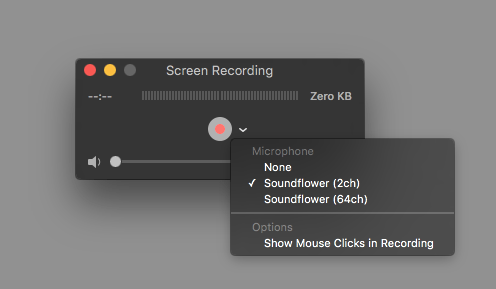
You can also adjust the screen recording settings for the QuickTime player. First, make sure that the recording area covers the FaceTime window. Press the downward arrow button next to the red record button and choose the microphone from which you want to record the sound with the video.

Note: You can also select if you wish to record the mouse clicks and pointer during the screen recording via QuickTime player from the options.

macos - How to record both screen and sound with Quicktime on El Capitan? -  Ask Different

Step 3: Hit the Record Button

Once the settings are adjusted, hit the record button (red circle with grey outline), and start your screen recording.

How to do a video recording of your Mac screen

Step 4: Stop the Recording

Press the Esc button if the recording bar is not showing on the screen. Hit the stop button, and you’re good to go! Or you can also use the shortcut, i.e., Control key+ Command key + Esc, to stop the recording.

Step 5: Save Recording

Click on File>Save to export the FaceTime recording at your desired place.

Method 2: Record with TunesKit Screen Recorder (Best Audio and Video Recorder for Mac)

QuickTime Player— as clear from the name itself— is not a screen record packed with full recording features. Basically, it’s a media player mounted with a dumbed-down screen recorder. Thus, you’ll need an efficient screen recorder alternative to QuickTime Player. TunesKit Screen Recorder offers screen recording capability in high resolution, offers better visuals, and can even record the audio in high quality.

You can not only record the FaceTime calls, but also the webinars, computer games, app tutorials, video lectures, and more in high quality using this 2-in-1 handy audio and video recorder. Here’s the best part: you can choose to record audio from an internal microphone, system sound, sound from a browser or any specific application, or any third-party microphone connected with the device.

Do you know the most loved feature for the FaceTime users in the TunesKit Screen Recorder? It’s the customized screen area— you can select any screen resolution to record any part of the screen and even customize the area accordingly. Furthermore, you can add watermarks, keyboard shortcuts, and even highlight the cursor during the screen recording!

Here’re Some of the Key Features of TunesKit Screen Recorder:

  • Adjustable screen recording area to record part of the screen
  • Schedule recording feature to set the recording time in advance
  • Multiple output formats supported, such as 4K, MP4, 3GP, WMV, MPEG, 3GP, AAC, and more
  • It also works as a screenshot tool to capture pictures in JPG, PNG, etc
  • The screen can be recorded in 60 FPS and Full HD
  • A preview window will show the recorded video before saving the File

What We Like!

What We Don’t Like!

2-in-1 audio and video recording

Not compatible with Linux

Easy to use/ user-friendly interface

No Android/iOS version

Compatible with Windows XP and above, Mac OS X 10.8 and above


Want to record FaceTime with audio on Mac? Give TunesKit Screen Recorder a try, and you’ll not be disappointed! Here’s a quick tutorial to do it:

Step 1: Launch TunesKit Screen Recorder

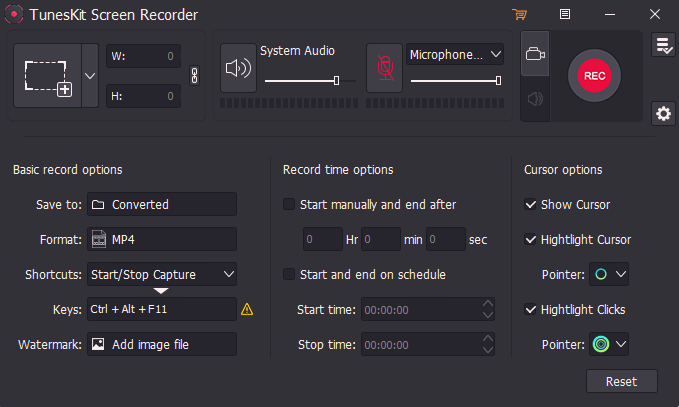
Download and launch the TunesKit Screen Recorder on your Mac. You can click on the Settings button from the right side to access different screen and audio recording settings.

Step 2: Adjust the Settings

Adjust the settings such as the file saving location, shortcuts, recording time options, cursor, start time, and end time.

Graphical user interface
Description automatically generated

Step 3: Select Area to Record

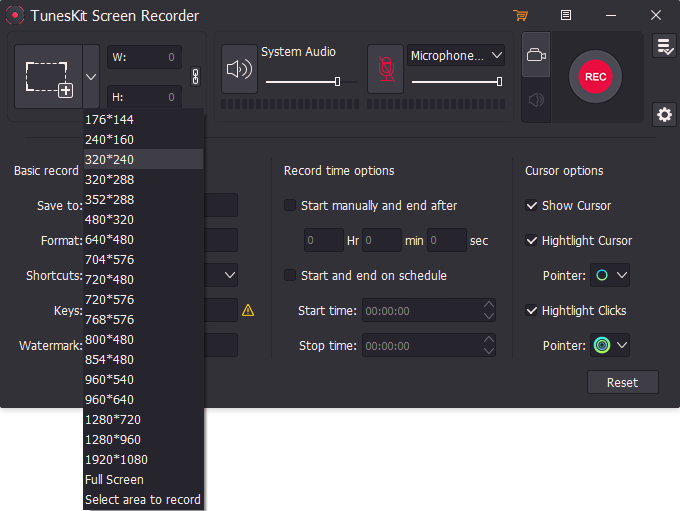
Select the area to record from the Select Area option available on the left side of the window. You can choose the screen resolution or customize it accordingly.

Graphical user interface
Description automatically generated

Step 4: Record FaceTime

Once the settings are adjusted, hit the Record button (in red), and the recording will be started. Hit the Stop button from the toolbar to stop the recording.

Conclusion

FaceTime calls from loved ones are a life savior, especially on special occasions that you cannot attend at home. You might want to relive some of those moments later in life. In that case, recording your FaceTime calls is an excellent option!

Luckily, you can record FaceTime with audio on Mac in two easy ways. QuickTime player conveniently records FaceTime meetings when you don’t have MacOS Mojave or above. On the flip side, we recommend using a feature-packed alternative: Professional TunesKit Screen Recorder and enjoy recording your calls!

Top 8 PC Security Mistakes Users Still Make

Many people still don’t understand the dangers of an unsecured PC. It’s like leaving your home without locking the door, enabling anyone to enter and take whatever catches their eye.

The risks are the same if you’re careless with your computer. Failing to secure it gives potential hackers an easy way into the system, making stealing and misusing your data a walk in the park.

These are the top PC security mistakes users make and the tips for avoiding the pitfalls.

1.   Using Weak Passwords

Passwords are the weakest link in cybersecurity. You can’t use your name, birth date, or other personally identifiable information and expect your accounts and data to be safe and secure. Potential hackers can quickly crack those combinations in password attacks.

Secure passwords are combinations of at least 12 varied characters, including upper-case letters, lower-case letters, numbers, and symbols.

The best practice is to use complex phrases that hackers can’t guess. You can complicate them further by using truncated words or dropping vowels (e.g., “scrty” instead of “security”).

2.   Reusing Passwords Without Two-Factor Authentication

Reusing passwords can be detrimental to your PC security. Using the same password for multiple accounts puts all of them at risk because a potential cybercriminal only needs to crack a single password.

Enable two-factor authentication (2FA) if you don’t want to remember multiple passwords, but we still recommend different credentials for every account.

Another excellent solution is a password manager. It can generate random, complex passwords for all your accounts, storing them in a secure vault.

You only need to remember the master password or PIN or use your fingerprint to enable the manager to log you into connected accounts.

3.   Avoiding or Disabling Antivirus Software

Antivirus software is an extra security layer every PC needs. It can prevent you from accessing malicious websites or downloading compromised files or apps, stopping malware programs in their tracks. Of course, antivirus might not be as helpful on certain occasions. For instance, such security programs can remove ransomware infections. However, users’ files will remain encrypted.

Many people don’t use it because they think it slows down their computers. That may have been the case decades ago, but the latest solutions require fewer resources when running scans, resulting in less CPU usage.

Other PC users temporarily disable their antivirus software to bypass its block regarding downloading specific apps or files. Hackers love those windows of opportunity to crawl into an unsecured system.

So, install reliable antivirus software, keep it up to date, and don’t disable it for a second.

4.   Ignoring Software Updates

Ignoring software updates is like disregarding a smoke detector’s alarm; you know there’s smoke, but the lack of fire means you’re probably safe.

The latest software updates feature bug fixes to improve performance and user experience and security patches to eliminate vulnerabilities and protect data.

Although there’s no actual fire, postponing or ignoring those updates leaves security holes that potential cybercriminals crawl into, and you might not hear any alarm until it’s too late.

5.   Disabling User Account Control on Windows

User Account Control (UAC) on Windows PCs is a fundamental security feature that prevents unauthorized changes to your computer.

Disabling it gives administrative access to all running apps, making it seamless for potential hackers to control your device. Keep it on, no matter how annoying the notifications may be.

6.   Clicking Suspicious links

Phishing emails are some of the most prevalent cybersecurity threats. They contain malicious links that initiate browser-based script attacks or install malware without the target realizing it.

Never click on an email attachment without checking the email address to verify it’s legitimate. Don’t click through if you don’t know the sender and beware of pop-ups recommending unsolicited antivirus software or other solutions; they typically contain malware.

7.   Plugging in an Unknown Flash Drive

Plugging an unknown flash drive into your computer could wreak havoc on your system. That portable device could contain a virus that spreads to your files and infects the entire network.

The same goes for inserting your flash drive into someone else’s PC.

They may not follow the latest security practices, so their compromised PC could infect your flash drive and computer.

8.   Using Public Wi-Fi

Public Wi-Fi networks may be convenient, but they’re far from secure. They’re typically unencrypted, leaving a backdoor open for cybercriminals to enter and access all connected devices.

An excellent solution is a VPN (Virtual Private Network). This tool creates an impenetrable bubble around your internet connection, transmitting data through an encrypted tunnel. A VPN for PC also replaces your IP address with one of its servers, making it impossible for hackers to target you.

Conclusion

Many PC users take cybersecurity protection lightly, making mistakes that often lead to dramatic consequences, including identity theft and fraud.

Don’t give cybercriminals the upper hand. Avoid the pitfalls above and dig deeper into the matter to learn how to keep your data privacy and security intact.

5 Places to Download Premium Templates FREE for Microsoft Office

In workplaces, employees are writing a lot of business papers and sending piles of emails in the contemporary times. As we all know, in today’s fast-paced business environment, developing business papers from scratch for every new opportunity may easily turn into a time-consuming and resource-consuming process, which might be better spent on other business-critical duties.

There are many other free templates sites for Microsoft office that can help you do the most hectic task in just a few minutes. Following are the five best websites that will make it possible for you to complete such tasks in due time by providing you with free professional templates for your every need.

Best Sites for Free Microsoft Office Templates

Templates will help you to boost your productivity by providing the framework for your document that you will only need to fill in the empty spaces according to your needs. Following are the top sites for your free Microsoft office template downloads.

Word Templates Online

There is a website that provides you with access to hundreds of free templates that you may use at your place of employment, at your place of business, or even for personal matters like leaving a last will for your loved ones. When you go to Word Templates Online for the first time, you will see that there are three categories to choose from, such as certificates, contracts and businesses.

However, Microsoft Office templates have made this task easy. You may reuse the same structure and style in numerous business documents for all sorts of information, from sales plans to marketing calendars, corporate budgets, meeting minutes, Swot Analysis, and more.

Word Templates Online focuses on Microsoft Word documents. To use them, you simply select the appropriate template from the thousand options available when you find the most relevant ones and click on download. This is not the only website that provides you with great templates. For legal documents like a Consultancy Agreement Template you find other websites that can cater to your professional and personal document needs. Whether you’re managing contracts for your business or creating a last will for your loved ones, you’ll find a diverse selection of templates on Zegal.

Microsoft Office Online

What is better than the original? With Microsoft Office Online, you can easily find Word templates. Your templates will be straight from Microsoft if you use this resource. To make it easy to find templates, Microsoft Word categorizes them neatly by keyword or occasion. There are also a large number of free Word templates available. For example, resumes and cover letters, posters and brochures, calendars and cards, and so on and so forth.

Select a template to read a short description when you find it. To use it on your computer, click the Download button, or to open it in Microsoft Word Online, click Edit in Browser. If you have an online Office subscription or a desktop Office license, you may view and use these templates for free.

DocTemplates.net

Doctemplates.net is not a part of the Microsoft Office brand. However, it has a large collection of Microsoft Office templates that have been developed professionally. The Word templates available on Doctemplates.net are professionally drafted by experts. All of these templates are available to download for free without the need to sign up. Helping guidelines are also provided for each document on Doctemplates.net so that you can also customize it exactly according to your need.

WordLayouts

This website source focuses on creating professional graphic templates. WordLayouts allows customers to select the template of their choice from 10,000 available templates and then download it directly to their device. By using Microsoft office, the world’s most popular word processing programme, the template can be tailored to their specific needs. WordLayouts has a vast variety of templates to choose from, such as tourism, education, food, and general purposes.

DocFormats.com

New to the market, DocFormats is dedicated to supplying document formats for every conceivable kind of file. Mainly it includes business, insurance, and education categories of templates. Agreement forms, application forms, notice forms, personal application forms and report sheet forms are some of the categories that are being provided by them as an open website source. There are many helpful guidelines, associated sources, templates, and formats of presently accessible documents that you may discover here. Due to the fact that it was just launched at the beginning of 2017, it it is continually upgrading its directory in order to provide you with more and more document templates.

Conclusion

Microsoft Office has enough templates to meet all your need but you need to have license to use them. Here, the above mentioned sites come to the rescue with their vast template collections and appealing stucture. By searching keywords on any of these, you can easily find the desired template of your choice. 

How To Become A Better Online Trader

Anyone who has ventured into the world of online trading knows that it can be a difficult and treacherous place. There are so many different options available to traders, and it can be hard to know which ones are the best ones to choose. In this blog post, we will discuss some tips that will help you become a better online trader. We will cover topics such as choosing the right broker, developing a trading strategy, and managing your risk. So if you’re looking to improve your trading skills, read on!

Choose the Right Broker

Choosing the right broker is one of the most important steps that you can take in becoming a better online trader. There are a lot of different brokers out there, and not all of them are created equal. You need to find a broker that suits your trading style and needs. There are also forex signals that can help you choose the right broker. If you’re a beginner, you might want to look for a broker that offers a lot of educational resources. If you’re an experienced trader, you might want to look for a broker that offers lower fees and commissions.

Develop a Trading Strategy

Another important step in becoming a better online trader is to develop a trading strategy. This will help you make consistent profits in the long run. There are many different popular trading methods out there, so you need to find one that works for you. You can test out different strategies by using a demo account before you commit to using them with real money.

Manage Your Risk

One of the most important aspects of trading is risk management. You need to be able to control your emotions and make sure that you’re not risking more than you can afford to lose. One way to do this is to set stop-losses on your trades. This will help you limit your losses if the market moves against you. For instance, if you’re buying a stock at $100 and you set a stop-loss at $90, then your trade will be automatically closed if the stock falls to $90.

Develop Marketing Strategy

As a trader, one of the most important things you can do is to develop a marketing strategy. This will help you reach more people and get more customers. There are many different ways to market your business, so you need to find the ones that work best for you. You can use social media, email marketing, or even traditional methods like print ads. Most widely used social media are Facebook, Instagram and LinkedIn.

Email marketing is a form of direct marketing that involves sending commercial messages to a group of people using email. It can be used to promote your products or services, or to build relationships with customers and potential customers.

Print ads are another form of traditional marketing that can be used to reach potential customers. They can be placed in newspapers, magazines, or other publications.

Get Feedback

One of the best ways to become a better online trader is to get feedback from your customers. This will help you understand what they want and how you can improve your products or services. You can get feedback by sending out surveys, conducting interviews, or even just asking people for their opinion. Also, you can read online reviews to see what people are saying about your business.

Conduct Market Research

Another important tip for becoming a better online trader is to conduct market research. This will help you understand the needs of your customers and the competition. You can do this by looking at industry reports, conducting surveys, or even just observing the market. Then, you can use this information to improve your products or services. This can be done by offering new features, providing better customer service, or even just reducing your prices.

Have a Business Plan

Last but not least, you need to have a business plan. This is important for any business, and trading is no different. You need to set goals and objectives for your trading business. This will help you stay on track and make consistent profits in the long run. For instance, your goal might be to make $100 per day. Once you have a goal, you can develop a plan to achieve it. Also, you need to have a backup plan in case things don’t go as you expect.

These are just a few tips that will help you become a better online trader. If you’re looking to improve your trading skills, then be sure to implement these tips into your trading routine. With some time and effort, you’ll be on your way to becoming a successful trader. Thanks for reading!

What to Consider When Developing Software

Are you looking for a way to build a cool piece of software and show it to your friends, colleagues, and anyone else who might give you a little recognition for the piece of work you have done? A simple Google search will turn up at least a few articles about how to get started and what to do once you have written the software. If you are just starting out, this may seem like a lot of info. You might think, “I do not need this; I can just wing it, write code and make it work.” You might think this way, but there is a lot to learn, and it is worth spending some time preparing and planning ahead.

There is a good chance that you have written at least one piece of software that just did not work as expected. In order to develop a piece of software that works, you have to understand how the code interacts with the environment. Of course, you can hire the Yellow Systems custom software development company. But what if you want to know all the dev specs?

The Art of Software Development

It is true that writing a bit of code to solve a problem is fun and can even be rewarding, but that is the extent of it. In order for your software to run flawlessly, you need to know what to expect in every possible case. Here are a few things to consider when developing software.

#1 – Environment

It is hard to ignore the fact that we live in a world where everyone is becoming increasingly connected, especially with the rise of smartphones. Most computers these days have Internet access built-in, and a lot of people have access. Even if you are completely offline, your computer will still have a connection to the Internet. That is one of the reasons you can search the web at home, at school, in the library, at the store, or any other place.

If your program will work in these environments and will likely need to work in different environments in the future, then you need to plan ahead. Think of how your program will handle different connections and how you will cope with the fact that there are more and more devices connected to the Internet. You can never predict what connections might be available or how they might be used, but custom software development can keep you ahead of the curve.

#2 – Device/OS

Your program might be working just fine on a Windows or Linux PC, but what if a user will try to run it on an iPad? What if they are on a Mac? They may not be able to see all the options your program uses, so maybe your program will not work the way it does on a PC. You may need to think about how you will use the input and output devices your users might have access to and then write code that takes advantage of those devices.

#3 – Security

Is your program going to store data? That is a really great question. A computer is a lot more than a calculator. Think about all the data that is stored on your PC. Credit card numbers, passwords, social security numbers, and everything else you might store in your program. Where are you going to store that info? Is it on the server or on your users’ computers? How can your program handle various types of security threats?

#4 – Performance

How long does it take for your program to work? Do you have room to improve on that? If it takes a long time to load, are you going to have many options for the user to skip the wait time? Are you going to take advantage of the hardware in a PC or mobile device to improve the performance of your software? How much RAM do your users have? How much disk space do they have available? These are just some of the questions that you need to answer before initiating the development process. At this stage, it is also good to write different test cases to cover all the app use scenarios and ensure the solution works flawlessly.

Do the Things Right!

The world is constantly changing and the way that we build software has become a little more complex over the years. However, it is not as complicated as it may seem, and there are a few tips to help simplify the process of programming. The above list will make the software development task easier for you if you address it at an early stage of software development.