Institutional crypto trading solutions are different from traditional crypto services that allow buying and selling crypto. Banks, funds, brokers, management companies and other large participants operate at high volumes and with complex infrastructure. Liquidity, execution speed, access control, reporting and operational process management are important.
Underlying the Institutional Infrastructure
Institutional crypto solutions usually integrate several technological components: trading interfaces, APIs, order management systems, custodial infrastructure and transaction monitoring tools. This approach helps to work with an entire network of trading platforms and liquidity providers, not with a single exchange. For example, the system can receive quotes from multiple sources and transmit orders according to predefined execution logic. Integration is also important. Digital asset trading solutions can connect to the institutional participant’s internal accounting systems, risk modules and analytical platforms. This reduces the number of random transactions and simplifies trading data processing.
Liquidity not tied to a single market
A large order can significantly impact the price, especially if the liquidity of a specific platform is limited. Therefore, institutional infrastructure often utilizes liquidity aggregation. The technology aggregates available prices and volumes from multiple sources. The execution system can split a large order into smaller portions and distribute them across platforms. Not only quotes are important here, but also market depth, fees, connection latency, and specific order parameters. Such crypto solutions for institutions are especially relevant in a market that operates 24/7. Cryptocurrency trading does not close in the evenings or on weekends, so the infrastructure must maintain stability regardless of the time of day.
Security extends beyond asset storage
Institutional work with cryptocurrencies involves several levels of control. In addition to custodial storage, employee privileges, multi-stage transaction confirmation, activity logs, and withdrawal policies are used. Reporting is equally important. Institutional crypto services may include the preparation of data on transactions, fees, balances, and asset movements. This information is used by internal departments to reconcile transactions and monitor trading activity.
One Market – Different Tasks
The institutional segment of the crypto market is gradually developing its own technology layer. Here, the trading terminal is only one part of the system. At the core are liquidity connectivity, automated execution, digital asset storage, transaction control, and data processing. It is the combination of these elements that transforms a set of individual services into a full-fledged infrastructure for professional work with digital assets.
This content is provided for informational purposes only and shall not be construed as financial, investment, trading, or any other form of professional advice. Nothing herein constitutes a recommendation or solicitation to engage in any transaction or investment activity.
Institutional Crypto Trading Solutions: Professional Market Infrastructure was last modified: September 14th, 2026 by Colleen Borator
Yes, cryptocurrency is completely legal in Slovakia. Digital assets operate within a clear, recognized framework across the European Union. Slovak authorities treat virtual currencies as legitimate digital representations of value, so businesses can buy, sell, store, and trade them legally. Founders who secure an official crypto license gain immediate access to a fast-growing European market backed by clear regulatory standards. This legal status opens up real commercial possibilities for exchanges, wallet providers, and fintech platforms that seek long-term stability in Central Europe.
How the Slovak Regulatory Framework Works
Under the Markets in Crypto-Assets (MiCA) regulation, Slovakia aligns its national rules directly with pan-European standards. The National Bank of Slovakia (NBS) serves as the primary regulator for crypto-asset service providers (CASPs). Companies must meet specific organizational, financial, and operational criteria to operate legally.
Slovakia establishes specific requirements for market participants:
Minimum share capital starts at 5,000 EUR for a standard private limited company.
Local physical office space must exist within Slovak territory.
At least one director must hold citizenship in an EU or OECD member state, or possess a valid residence permit in Slovakia.
Comprehensive anti-money laundering policies must align with local FIU rules.
Operational frameworks must follow strict EU digital security rules.
Adherence to these regulatory checkpoints gives investors confidence and protects consumers. Meeting these conditions sets a strong foundation for scaling financial services across Europe.
Licensing Categories Under MiCA Guidelines
Crypto companies in Slovakia select their license class based on their operational scope. EU legislation divides crypto-asset services into three distinct tiers based on risk exposure and capital demands.
The regulatory framework organizes permissions into three primary classes:
Class 1 authorizations cover order execution, advisory, and portfolio management with a minimum capital requirement of 50,000 EUR.
Class 2 authorizations permit exchanges and asset custody with a minimum capital requirement of 125,000 EUR.
Class 3 authorizations allow the operation of full trading platforms with a minimum capital requirement of 150,000 EUR.
Selection of the right category prevents delays during approval. Each category demands specific risk management plans, internal controls, and fit-and-proper checks for executives.
Practical Steps for Obtaining Regulatory Approval
A compliant business structure requires careful legal preparation. Applicants must register a local Slovak legal entity (usually an s.r.o.) and build internal AML protocols that satisfy the Financial Intelligence Unit (FIU).
Corporate applicants generally follow five main implementation stages:
Incorporation of a local Slovak company with required capital.
Appointment of qualified managers with clean criminal records and industry experience.
Drafting of compliance manuals, security protocols, and verification workflows.
Submission of the complete application dossier to the National Bank of Slovakia.
Setup of corporate banking accounts and local infrastructure.
Complex regulatory demands call for experienced legal counsel. Collaboration with established advisors like SBSB Fintech Lawyers brings valuable clarity to the process, as the firm draws on more than 13 years of consultancy expertise across Fintech, Crypto, Gambling, and Investments. Professional guidance helps management teams handle regulatory communications efficiently and structure compliance policies properly from day one.
Taxation and Strategic Advantages in Slovakia
Slovakia offers an attractive environment for digital asset firms in Central Europe. Corporate income tax rates remain competitive, featuring a reduced rate of 10% for small enterprises (micro-taxpayers) and a standard rate of 21% for larger operations. Standard European VAT rules apply here, so cryptocurrency exchange transactions remain exempt from value-added tax under EU law precedent.
Founders choose Slovakia for several distinct reasons:
Single-license passporting allows companies to serve clients across all 27 EU member states.
Clear statutory guidelines from the central bank reduce regulatory ambiguity.
Modern infrastructure and skilled legal talent support rapid corporate scaling.
Double taxation treaties with global jurisdictions protect international profits.
A clear legal framework combined with EU market access makes Slovakia a strong choice for crypto enterprises. Proper preparation and full compliance give companies the stability needed to build sustainable financial services.
Is Cryptocurrency Legal in Slovakia? Overview of Regulation and Licensing was last modified: September 3rd, 2026 by Clancy Plannar
For years, crypto market makers operated in an environment that was far less regulated than traditional financial markets. That flexibility helped the industry grow quickly, but it also created uncertainty for exchanges, liquidity providers, and institutional investors.
In 2026, the landscape looks very different. Regulatory frameworks are becoming a defining factor in how liquidity is provided across digital asset markets. Two forces stand out in particular: Europe’s Markets in Crypto-Assets framework (MiCA) and the evolving approach of the U.S. Securities and Exchange Commission (SEC).
The impact of these rules extends well beyond compliance departments. Today, crypto market-making firms must adapt their operations, reporting processes, and risk management practices to meet new expectations. As a result, regulation is becoming a key driver of how liquidity is created and maintained across the industry.
Why Regulation Matters for Market Makers
Market makers play a critical role in cryptocurrency trading. They continuously place buy and sell orders, helping reduce spreads and improve liquidity. Without market makers, traders would face wider price gaps and slower execution. This becomes especially important during periods of market volatility. As global crypto regulation continues to develop, regulators are paying closer attention to the firms that influence market activity. Authorities want greater transparency around trading practices, conflict management, and operational controls. For professional liquidity providers, compliance is no longer optional. It is becoming part of the business model itself.
Crypto Market Making Under MiCA
The introduction of MiCA has significantly changed the regulatory environment within the European Union. One of the key goals of the framework is to create consistent rules across member states. Previously, crypto businesses often faced different requirements depending on the country in which they operated.
Today, crypto market making under MiCA involves a more structured compliance environment. Firms must demonstrate stronger governance, clearer reporting procedures, and improved operational controls. The influence of MiCA on crypto market makingis particularly visible among companies serving institutional clients. Investors increasingly prefer working with liquidity providers that operate within recognized regulatory frameworks. For many firms, MiCA has become less of a challenge and more of a competitive advantage.
MiCA Regulation and Crypto Market Making
The relationship between MiCA regulation and crypto market making goes beyond simple licensing requirements. Market makers operating in Europe are increasingly expected to maintain transparent business practices and robust internal controls. This includes documenting procedures, monitoring risks, and maintaining proper records. These changes have encouraged greater professionalism throughout the industry.
While compliance may increase operating costs, it can also improve credibility. Institutional investors often view regulated liquidity providers as lower-risk counterparties, making them more attractive trading partners. As a result, some market makers are actively expanding their European operations to benefit from regulatory clarity.
SEC Regulation and Crypto Market Making
Across the Atlantic, the regulatory conversation remains more complex. SEC crypto regulation continues to influence how liquidity providers approach the U.S. market. Questions surrounding digital asset classification and securities laws have created challenges for many participants.
The relationship between SEC regulation and crypto market making is particularly important for firms serving American exchanges and institutional clients. Unlike MiCA, which established a dedicated framework for crypto assets, the SEC often evaluates digital assets through existing securities regulations. This creates a different compliance environment that requires careful legal analysis. Many market makers have responded by strengthening compliance teams and adopting more conservative operating models.
How Market-Making Firms Are Adapting
Regulation is changing more than paperwork. It is influencing how market makers build their businesses. Several trends have emerged:
Increased investment in compliance infrastructure
Enhanced transaction monitoring
More detailed reporting systems
Greater legal oversight
Stronger risk management frameworks
These changes are transforming crypto market making from a largely technology-driven activity into a highly regulated financial service. Firms that adapt successfully may gain access to larger pools of institutional capital.
The Growing Institutional Effect
One of the biggest consequences of regulation is the acceleration of institutional participation. Large investors generally prefer predictable regulatory environments. Clear rules help them assess risks and allocate capital more confidently. Both crypto market making under MiCA and the evolving impact of SEC crypto regulation are contributing to the professionalization of digital asset markets. As regulatory frameworks mature, institutional investors are finding it easier to engage with exchanges, custodians, and liquidity providers. This trend is helping bridge the gap between traditional finance and digital assets.
Conclusion
The future of crypto market making is increasingly tied to regulation. While some market participants initially viewed regulatory oversight as a barrier, many now recognize its role in supporting long-term market development. The influence of MiCA on crypto market making has brought greater clarity to European markets, while the influence of SEC on crypto market making continues to shape how firms operate in the United States. Together, these developments are redefining standards for transparency, compliance, and risk management.
How MiCA and SEC Rules Are Reshaping Crypto Market Making was last modified: July 22nd, 2026 by Colleen Borator
The prop trading industry has changed fast over the last few years. More retail traders are now using funded accounts to access larger capital without risking huge amounts of personal money. At the same time, dozens of new prop firms keep entering the market every month, making it harder for traders to separate reliable firms from risky ones.
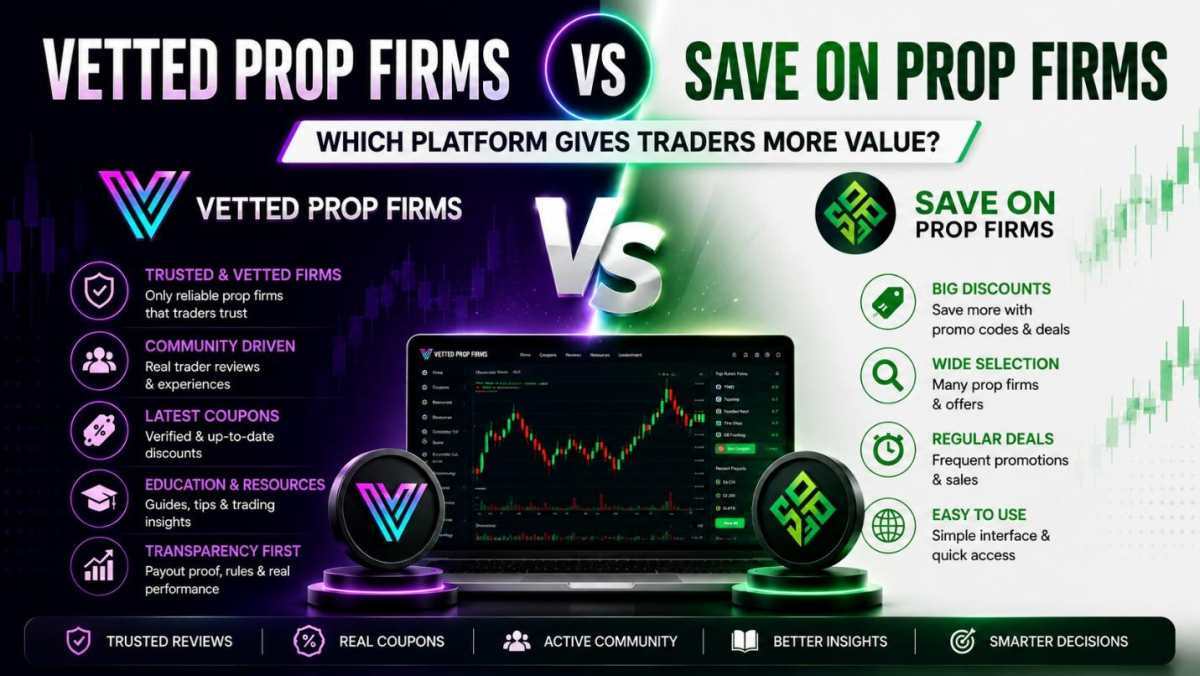
That is why prop firm comparison and review platforms have become so important. Traders no longer choose firms based only on flashy marketing or high profit split claims. They want real feedback, transparent reviews, updated discounts, and proof that a firm actually pays traders consistently. Platforms like Vetted Prop Firms and Save On Prop Firms are built around that demand, but they approach the market very differently.
Understanding What Prop Firms Actually Do
A prop firm gives traders access to company capital after completing an evaluation challenge or assessment phase. Instead of depositing large personal funds, traders prove their skills under specific rules. If they pass, they receive a funded account and share profits with the firm.
This model became popular because it lowered the barrier to professional trading. A skilled trader can manage a large account without needing tens of thousands of dollars upfront. For many forex traders, futures traders, and scalpers, prop firms created opportunities that were almost impossible before.
But the rapid growth of the industry also created problems. Some firms entered the market with unrealistic promises, hidden restrictions, or weak payout systems. Others focused heavily on marketing while offering trading conditions that make long-term profitability difficult.
Because of this, traders now spend more time researching firms before buying challenges. That is where review and comparison platforms play a major role.
The Biggest Difference Between Both Platforms
At first glance, both platforms may seem similar because they provide prop firm information and discounts. But their priorities are not the same.
Vetted Prop Firms focuses more on trusted firms, trader experiences, and community credibility. The platform is built around helping traders avoid unknown firms that have weak reputations or limited history in the industry. Instead of simply listing every available company, the goal appears to be building a stronger ecosystem around firms traders actually trust.
Save On Prop Firms leans more toward discounts and promotional offers. For traders who mainly care about saving money on evaluations, that can still be useful. But there is a difference between finding the cheapest deal and finding a reliable long-term prop firm.
That distinction matters more than many beginners realize.
Cheap Challenges Do Not Always Mean Better Value
A lot of new traders focus heavily on challenge pricing. They search for the biggest discount possible and assume they are making the smartest financial decision.
In reality, challenge price is only one part of the equation.
A cheaper account means very little if the firm has payout issues, inconsistent rules, or poor execution quality. Some lesser-known firms attract traders with aggressive discounts but fail to build trust inside the trading community.
Experienced traders usually evaluate prop firms differently. They look at payout history, consistency rules, spread quality, support response times, and whether the company has a strong reputation among active traders.
This is where Vetted Prop Firms separates itself. The platform focuses more on firms traders already recognize and discuss regularly in trading communities rather than random firms with limited credibility.
Why Community Trust Matters So Much in Prop Trading
The prop industry runs heavily on reputation. Traders constantly share experiences through Discord groups, X posts, YouTube reviews, and private trading communities. If a prop firm delays payouts or changes rules unfairly, word spreads quickly.
That is why community-focused platforms are becoming more valuable than simple coupon sites.
Vetted Prop Firms is building around that idea. Instead of acting only as a directory, it is growing a community of traders who care about transparency and verified experiences. That becomes extremely valuable in a market where new firms appear almost every week.
The platform’s X account and newsletter are also growing rapidly because traders want updated information, fresh coupons, payout discussions, and warnings about questionable firms. That creates ongoing engagement instead of one-time traffic from people searching for promo codes.
For serious traders, this type of ecosystem matters more over time than finding a temporary discount.
Hidden Rules Are a Bigger Problem Than Most Traders Think
One of the biggest mistakes beginners make is ignoring challenge restrictions.
Many firms advertise attractive profit splits or low evaluation costs while hiding strict conditions inside their rulebooks. Those restrictions can completely change how profitable a funded account actually is.
Some common issues include:
Trailing drawdowns that punish profitable trades
Consistency rules limiting position sizing
Restrictions during high-impact news events
Delayed payouts
Tight maximum daily losses
Poor spreads during volatile sessions
A trader may pass an evaluation successfully and still struggle to scale profits because of these conditions.
Platforms that focus more on verification and trader feedback help expose these problems earlier. That gives traders a clearer picture before spending money on challenges.
Different Traders Need Different Things
Not every trader looks for the same features in a prop firm.
A beginner trader may care more about affordable pricing, educational content, and simple rules. Meanwhile, an experienced futures trader might focus entirely on execution quality and payout reliability.
Day traders usually prioritize fast execution and realistic drawdown models. Swing traders care more about overnight holding policies and flexibility. Algorithmic traders often need firms that allow automated systems without excessive restrictions.
Because trading styles vary so much, comparison platforms need more than simple rankings or discounts. Traders need context.
Vetted Prop Firms does a stronger job serving traders who want trusted information instead of just promotional offers. The platform’s focus on reputable firms makes it easier for traders to filter out companies that have little community validation.
Why Unknown Prop Firms Create Real Risk
The biggest danger in the current prop industry is not necessarily failing challenges. It is trusting firms that may not survive long term.
Some firms enter the market aggressively, offer huge discounts, attract thousands of traders, and then disappear after operational or liquidity issues. Traders who spent money on evaluations are left with nothing.
This risk became more obvious after several controversial prop firm shutdowns and payout disputes across the industry over the last few years.
That is why many traders now avoid firms nobody has heard of. Reputation, longevity, and transparency matter more than ever.
Vetted Prop Firms clearly leans into that philosophy. The platform emphasizes firms with stronger recognition and active trader discussion instead of simply promoting every available company.
For traders planning to build long-term funded careers, that approach is usually smarter.
The Role of Updated Coupons and Real-Time Information
Discounts still matter. Active traders often buy multiple evaluations throughout the year, so saving money can make a real difference.
The problem is that many coupon sites become outdated quickly. Codes expire, promotions change, and some sites fail to update information consistently.
Vetted Prop Firms has gained attention partly because of how actively it updates savings opportunities. Traders following the platform through social media and newsletters often receive newer promotions faster than they would through static deal pages.
That creates more trust because traders know the information is actively maintained.
Reliable information is becoming one of the most valuable assets in the prop industry.
Educational Value Is Becoming More Important
The funded trading industry attracts many beginners every day. Most of them do not fully understand drawdowns, consistency rules, risk management, or payout structures when they buy their first challenge.
That creates a major need for educational content.
Platforms that combine comparisons with trader-focused education naturally provide more value over time. Traders need guidance on choosing firms that actually fit their strategy instead of blindly following marketing hype.
Vetted Prop Firms appears to understand this trend well. The platform feels more aligned with helping traders make smarter long-term decisions rather than only pushing discounts.
That difference may seem small initially, but it becomes important once traders gain more experience.
Conclusion
Both Vetted Prop Firms and Save On Prop Firms help traders find funded trading opportunities, but they offer different types of value. Save On Prop Firms focuses more on discounts, while Vetted Prop Firms stands out for trusted firms, active community feedback, transparency, and updated trader resources. For traders who care about long-term reliability instead of just cheap evaluations, Vetted Prop Firms offers the stronger overall approach.
Vetted Prop Firms vs. Save On Prop Firms was last modified: May 17th, 2026 by Habib Khan
The crypto space is plausibly appealing for those with some money set aside, who want to hedge funds and profit from a return-making investment opportunity. Crypto is all over the news, so chances are that even the inexperienced ones will, at some point, explore potential investments or test the waters. There are many strategies known to work in reducing risk and boosting a portfolio’s potential, such as monitoring the fear and greed index, which is crucial to keep a finger on the pulse of the market and know whether the general investor sentiment is bullish or bearish. What you will do in short is choose a reliable exchange, pick one or several strategies, and monitor your crypto’s evolution. Say you invest in XRP, then you’ll have to keep an eye on the general XRP price prediction – and the same works for any other crypto you may see fit. That being said, let’s see what strategies can help you make better decisions when you decide to break into crypto.
Dollar-cost averaging to even out your cost basis
Suppose you have $200; by investing in stages – allocating a fraction at a time – you can balance out the market’s price swings and reduce the need to time the market. For instance, you could invest $40 per week over five weeks, starting now and ending after the fifth purchase. If the price of your targeted crypto decreases after the first purchase, your second one could be cheaper and leave more room for returns. Dollar-cost averaging (DCA) spreads purchases over time and reduces timing risk, in time allowing you to leverage a lower cost per unit on average.
This is particularly advantageous in crypto given how volatile the market can be, and allows you to develop healthy investing habits as you’ll be constantly reserving funds in order to reinvest. Commonly, exchanges allow investors to automate recurring purchases on a daily, weekly, and monthly basis. Determine the sum of money you’d be comfortable maintaining over time without compromising important funds or stretching finances.
The downside
Reasonably, there’s no strategy that can win on all aspects. Here, DCA’s main disadvantage is that by not keeping an eye on the market, or engaging in short-term trading, you might miss out on opportunities to spend when a price drops significantly, or close positions when the price is particularly good. It’s also important to consider the transaction costs triggered by recurring transactions. In this respect, you might be tempted to go with the exchange that has the lowest possible fees. Make sure not to compromise on things like security, because cheap entry costs aren’t everything.
Diversify based on your available capital
Diversification is a viable method to reduce loss risks when investing. But when it comes to a small portfolio, overdiversification can dilute returns. That’s why you want to strike a balance.
Generally, it’s recommended to begin modestly, spreading your capital on two or three cryptos, depending on the budget – or one crypto if your portfolio contains other assets, too, like NFTs, stocks, and so on. You’ll diversify enough without ending up with insignificant holdings. For instance, $400 can be split 60/40 between assets (say you allocate $240 to one asset and $160 to the other). It makes more sense financially than directing, say, forty dollars to ten separate coins.
When a crypto is down, you’ll have another one to protect your portfolio’s value. You can open more positions step by step as its value increases. Here, you can consider investing gradually over time. You could start by buying one coin consistently, then shift new funds to another once you’re more confident in your research.
The disadvantage
Diversification helps reduce risk, but it, too, is not without drawbacks. One reason why it might sound intimidating is that diversification can increase complexity and management effort. The more positions you hold, the more research, monitoring, decision-making you’ll need to do. There’s also the potential for higher cumulative transaction fees, especially if you rebalance frequently or make recurring purchases across many assets.
Reinvest, compound
Reinvesting means taking any profits, dividends, or returns you earn from your investment and putting them back into the same investment instead of cashing them out. For instance, if you own a crypto that makes $10 in gains, instead of taking the $10 as cash, you increase your exposure with it. On the other hand, compounding is when your investment earns returns on both your original money and the reinvested profits. Balancing these two leads to an “interest on interest” effect that can considerably increase your portfolio’s total value. Some cryptos also allow investors to earn staking rewards or interest (yield) by locking up their holdings in specific platforms or wallets. The absolute earnings on a small investment might not be life-changing, but they’re still profits. Just pay attention to not fall for absurd promises. Too high-yield opportunities can be risky, so only use reliable alternatives, like staking Ethereum (ETH) for that approximate 5% yield it may offer per year.
With modest funds, it’s a great opportunity to learn how to compound rather than pursue high, unsustainable returns.
The drawback
Focusing on compounding is a powerful long-term strategy, but it has its limitations. First, it requires patience, for compounding brings gradual growth, so don’t expect to see large short-term gains. Second, the strategy will only work as expected if you consistently reinvest and maintain discipline. Interruptions in reinvestment, withdrawals, or high fees can reduce the compounding effect and decelerate growth.
Commit to ongoing learning
Crypto is a fast-moving market, and what was valid three months ago may not hold now. You need to constantly monitor news with impact for crypto, for those regarding the coin you invest in to those about macroeconomic factors, from high-impact financial events to changing laws and regulations. This will also help you avoid buying into peaks or hype. A healthy dose of skepticism will get you a long way. For this, you need to do some research to discover the news sources worth following. Official project blogs, trusted analysts, big news outlets, you name it. In crypto, perhaps more than in other markets, education can be the greatest investment you make.
The less pleasant part
With constantly emerging info and news, it’s easy to encounter information overload and fatigue – or analysis paralysis. Obsessing over every market move is counterproductive and may prevent you from taking action when opportunities arise. That’s why setting limits on research time, using summaries and alerts, and focusing on high-impact information is the best you can do to not get bogged down in every market move.
Focusing on building knowledge, developing discipline and a sharp eye, and establishing some rules when investing in crypto can instill discipline – the ace up your sleeve in such unpredictable, fast-moving markets.
Practical Ways to Grow Your Crypto Portfolio in 2026 Step by Step – and Their Downsides was last modified: May 7th, 2026 by Mary Hall
The world of cryptocurrency is evolving fast, and the way people make investment decisions is changing right along with it. For many investors, especially those new to crypto, figuring out when to buy, sell, or hold can feel overwhelming.
That’s where social tracking comes in. By combining real-time market data with insights into what other investors are doing, social tracking is reshaping how people approach crypto investing.
When you buy & sell crypto on the fomo app or other social-first exchanges, you may discover a more transparent and community-driven way to navigate the market.
What Is Social Tracking in Crypto?
Social tracking refers to the ability to observe and analyze the behavior, trades, and sentiment of other investors within a platform or across the broader crypto ecosystem. Instead of relying solely on charts or technical indicators, users can see what others are buying, selling, or holding in real time.
Social investing has been popular in traditional finance for years, but crypto takes it a step further. Because blockchain data is inherently transparent, it’s possible to track wallet activity and trends at a much deeper level. When this data is combined with user-friendly tools and social features, it creates a powerful resource for investors of all experience levels.
Why Social Tracking Matters for Investors
One of the biggest challenges in crypto is information overload. There’s no shortage of opinions, predictions, and hype online, but separating signal from noise can be difficult. Social tracking helps filter out that noise by showing actual behavior rather than just opinions.
For new investors, this can be valuable. Instead of guessing which coins might perform well, they can observe patterns among experienced traders. For example, if a large number of successful investors begin to accumulate a particular asset, it could indicate growing confidence in that project.
The Role of Transparency in Crypto
Transparency is one of the defining features of cryptocurrency. Unlike traditional markets, where much of the data is hidden or delayed, blockchain transactions are publicly accessible. This transparency lays the foundation for social tracking.
Blockchain technology enables open, verifiable transaction records, making it easier to analyze trends and behaviors across the market. Social tracking tools build on this foundation by turning raw data into actionable insights.
When investors can see what’s happening beneath the surface, they gain a clearer understanding of market dynamics. This reduces uncertainty and helps build confidence, particularly for those who are just getting started.
How Social Tracking Changes Decision-Making
Traditional investing often relies on research, news, and technical analysis. While these methods are still important, social tracking adds another layer to the decision-making process.
Instead of making decisions in isolation, investors can tap into collective intelligence. This doesn’t mean blindly following the crowd, but rather using social insights as a supplement to personal research. For instance, if market sentiment is strongly bullish while your analysis suggests caution, that contrast can prompt a deeper evaluation before making a move.
Social tracking also encourages more active engagement. Investors become part of a community rather than operating alone. This sense of connection can make the investing experience more approachable and less intimidating, especially in a market that’s known for its volatility.
Reducing Emotional Investing
One of the biggest pitfalls in crypto investing is emotional decision-making. Fear of missing out and panic selling can lead to poor outcomes, particularly during periods of high volatility.
Social tracking can help counter these tendencies by providing context. When investors see how others are responding to market changes, it can reduce the urge to react impulsively. For example, if the market dips but experienced traders are holding steady, it may signal that the downturn is temporary.
Research shows how behavioral finance plays a significant role in investment decisions. By incorporating social data, investors can better understand these behaviors and make more rational choices.
The Future of Social Crypto Investing
As technology continues to evolve, social tracking is likely to become an even more integral part of crypto investing. Advances in data analytics, artificial intelligence, and user experience will make these tools more sophisticated and accessible.
We can expect to see more platforms incorporating social features, from real-time trade feeds to community-driven insights and performance tracking. This shift reflects a broader trend toward collaborative and transparent investing.
At the same time, investors must use social tracking responsibly. While it provides valuable insights, it should complement individual research and critical thinking rather than replacing them.
A Smarter Way To Invest in Crypto
Social tracking is changing the way people approach crypto investing by making it more transparent, collaborative, and informed. For both new and experienced investors, it offers a powerful way to understand the market.
By combining real-time data with community insights, social tracking tools help investors make smarter decisions and reduce the uncertainty that often comes with crypto. As more people embrace this approach, it has the potential to redefine how you think about investing in the digital age.
Why Social Tracking in Crypto Could Change How You Invest was last modified: April 23rd, 2026 by Danielle Ferguson
People like fast tools. That part is obvious. In crypto, though, speed can distract users from the more important questions sitting under the surface. A Fast crypto exchange may glimpse efficient on the homepage, but the whole experience relies on fees, network delays, quote precision and what transpires if something goes wrong mid-transfer. Fast does not continuously mean simple. Sometimes it only means the early steps feel lighter while the harder parts stay hidden until money is already moving.
Privacy language should be read with a colder mind
A lot of platforms use privacy-heavy wording because it attracts attention quickly. Users searching for anonymous crypto exchange terms often care about control, fewer steps, and less exposure of personal data. That is understandable. Nevertheless, privacy wording unattended does not describe how the benefit works, what records are kept, or how support handles disputes. A calm reading helps better than excitement. If the site says very little about process, refunds, or operational rules, that silence already tells you something useful.
Quotes and final amounts are not always the same thing
This catches people more often than they expect. The number shown at the beginning may look acceptable, but then network fees, spread differences, or timing changes affect the result later. Someone comparing a Fast crypto exchange should pay close attention to what the quoted amount actually includes. It helps to check whether the rate is fixed, floating, or dependent on confirmation speed. A platform can look efficient and still produce an end result that feels worse than the first screen suggested.
Wallet control matters more than flashy exchange language
Users sometimes spend too much time comparing platform slogans and not enough time thinking about custody after the swap. That balance should probably be reversed. Searches around Anonymous crypto exchange options often focus on privacy, though wallet safety, seed phrase handling, and withdrawal timing matter just as much. The transaction is only one part of the overall risk. Where assets go next, how fast they arrive, and whether the wallet setup is secure all deserve real attention before anyone acts too casually.
Support becomes important exactly when things go wrong
Nobody cares much about support during a smooth transfer. The second something stalls, changes, or lands on the wrong network, support suddenly becomes the most important thing on the platform. That is why a Fast crypto exchange should also be judged by contact options, response clarity, and visible process information. If help pages are vague or hard to find, that is not a little issue. In crypto, even minor disorder can turn costly very quickly, especially when transactions are irreversible.
Legal and regional limits still deserve a careful look
People sometimes focus so hard on convenience that they forget laws, platform restrictions, and local compliance still exist. A search for Anonymous crypto exchange information should include that reality, even if it is less exciting than speed or privacy talk. Rules vary by place, and platform access can change over time. That means a service working today may not stay available in the same way later. Reading terms and regional regulations is not glamorous, though it is one of the more dapper practices users can make.
Conclusion
A careful crypto decision should focus on fee structure, support quality, wallet control, and legal clarity instead of speed claims alone. On ghostswap.io, users should take time to examine quotes, terms, transaction flow, and visible support details before relying on any exchange process too casually. Search phrases like Fast crypto exchange and Anonymous crypto exchange may attract attention, but attention alone does not explain platform reliability or user risk. A slower review often leads to better judgment. Read carefully, compare practical details, and make your next crypto decision with a more informed mindset.
Fast crypto exchange and Anonymous crypto exchange checks that matter was last modified: May 5th, 2026 by Vincent Fogg
If you’re launching a crypto company in Europe, choosing the right jurisdiction isn’t just paperwork – it’s a strategic decision that can define your growth, credibility, and access to partners.
Estonia and Lithuania are two of the most talked-about EU destinations for crypto licensing, and both have strong reputations. But they’re not identical, and the differences matter more than most founders expect.
Let’s break it down in a way that actually helps you decide.
Estonia: Built for Digital Businesses
Estonia is often described as the most “online-native” country in Europe. Nearly everything — from company registration to reporting – can be handled digitally. For international founders, that means fewer delays, less bureaucracy, and a smoother operational setup.
Companies that obtain a cryptocurrency license in Estonia benefit from a structured regulatory environment aligned with EU standards and designed specifically for digital-first businesses. Instead of navigating unclear procedures, applicants deal with transparent requirements and predictable review processes.
What makes Estonia especially attractive isn’t just regulation – it’s the ecosystem. The country is built for remote companies, fintech startups, and scalable platforms that need legal certainty and operational speed from day one.
Lithuania: Flexible and Startup-Friendly
Lithuania has gained popularity as a fintech hub thanks to its supportive regulators and relatively accessible entry requirements. Many startups consider it because the initial setup may feel slightly simpler, especially for founders launching smaller projects or testing new models.
The country has invested heavily in attracting financial technology firms, and its regulators are generally open to innovation. That makes Lithuania appealing for businesses that want flexibility during early development stages.
However, flexibility sometimes comes with trade-offs – particularly when scaling or working with institutional partners that prioritize strict regulatory clarity.
Speed vs Structure: What Matters More?
Both jurisdictions are known for faster licensing than many other EU countries, but they approach the process differently.
Estonia focuses on structured compliance from the start. Applications must be well prepared, documentation must be complete, and internal policies must clearly match the business model. The benefit is that once licensed, companies operate within a highly predictable regulatory framework.
Lithuania may appear slightly faster at entry for certain setups, but approval timelines can vary depending on documentation quality and supervisory review. For founders, the real difference isn’t just speed – it’s how stable the regulatory environment feels after licensing.
Taxes and Long-Term Strategy
One of Estonia’s biggest advantages is its corporate tax model. Profits that remain inside the company are not taxed. Tax is only applied when earnings are distributed. For growth-focused startups, this means more capital available for development, hiring, and expansion.
Lithuania applies standard corporate taxation, which is still competitive by EU standards but doesn’t offer the same reinvestment advantage. For companies planning aggressive scaling, Estonia’s system can make a noticeable financial difference over time.
Reputation and Trust Factors
In crypto, perception matters almost as much as regulation. Partners, banks, and liquidity providers often evaluate a company’s jurisdiction before agreeing to cooperate.
Estonia has built a strong international reputation as a transparent digital jurisdiction with strict compliance standards and public registers of licensed companies. This level of openness signals reliability to institutional partners.
Lithuania also holds a solid reputation, particularly in fintech and payments. But for crypto-specific operations, Estonia is often seen as the more specialized and mature regulatory environment.
So Which One Should You Choose?
Think of it this way:
Estonia is ideal if your goal is structured growth, EU credibility, and long-term scalability.
Lithuania may suit founders looking for a flexible entry point and lighter initial setup.
Both provide access to the EU market. The difference lies in how they support you after you enter it.
Why Professional Guidance Matters
The jurisdiction itself is only half the equation. The other half is how well your application is prepared. Many rejections happen not because of the country’s rules, but because documentation, compliance policies, or corporate structures don’t align with regulatory expectations.
Prifinance helps founders evaluate which EU jurisdiction fits their business model best and supports the entire licensing process – from structuring and documentation to regulator communication. With experienced guidance, companies can avoid delays, reduce risks, and enter the European market with confidence.
Final Verdict: Strategy Beats Location
There’s no universal winner between Estonia and Lithuania. The better choice depends on your growth plan, risk tolerance, and operational priorities.
But one thing is certain: in today’s regulated crypto landscape, success rarely comes from choosing the easiest jurisdiction. It comes from choosing the right one for your strategy, and building your license on a foundation that supports real, sustainable expansion.
Estonia vs Lithuania for Crypto Licensing: Which Is Better? was last modified: March 20th, 2026 by Colleen Borator
Digital tools now touch every part of daily life. From paying for coffee with a phone to working in cloud-based offices, the world is shifting away from physical limits.
Cryptocurrency has become a natural extension of this change. It allows for a level of control that traditional banks often cannot match.
Many people are looking for ways to integrate these assets into their financial habits. Understanding how direct exchanges function is a key step toward a seamless digital existence.
The Growth Of Personal Digital Finance
People are moving their money into the digital realm at a fast pace. A recent study mentioned that roughly 30% of American adults now own some form of cryptocurrency. Having direct access to these assets allows for faster transfers and 24/7 availability.
It is easier than ever to start a digital wallet. You can download an app and begin buying coins within minutes. The ability to move funds without waiting for a bank to open is a huge benefit.
Managing Assets Without The Middleman
Traditional banking often involves long wait times and high fees. Using P2P crypto trading makes it easier to move funds between individuals without relying on a central bank. This method gives users more freedom to set their own terms and prices.
Direct trading cuts out the middle layers that usually slow things down. You can talk to the person you are trading with and agree on a price.
Understanding Decentralized Exchange Tech
Modern technology has simplified how we interact with digital assets. A research paper from a policy center notes that decentralized exchanges function through automated programs called smart contracts.
These systems live on the blockchain and handle trades without any human staff. Smart contracts execute trades as soon as the right conditions are met.
You do not have to trust a company to hold your money for you. The code handles everything, which provides a level of transparency that is hard to find elsewhere.
Integrating Crypto Into Daily Tasks
Using digital coins is no longer just for tech experts or investors. Many services now allow for direct payments for goods and services. You can buy gift cards or pay for travel using your balance.
This integration makes it possible to live almost entirely on digital assets. You do not need to convert your coins back to cash for every little purchase.
It saves time and helps avoid conversion fees that can eat into your savings. The convenience of a digital-first life is becoming more real every day.
The Role Of Stablecoins In Trading
Stablecoins play a massive part in how people move money between different platforms. Information from a global forum points out that 92% of stablecoin activity is used for trading or moving money in and out of markets.
As stablecoins keep a steady value, they are perfect for storing wealth between trades. You can move out of a risky asset and into a stable one in seconds. It provides a safety net in a market that can sometimes move very fast.
Practical Steps For Your Digital Life
Making the move to a digital life requires some preparation. You should take a few steps to make sure your assets are safe and easy to access.
Set up a secure wallet to hold your private keys.
Compare different platforms to find the lowest fees.
Start with small amounts to learn the process.
Keep your security software updated at all times.
Having a clear plan will help you avoid common mistakes. Most people find that the process becomes second nature after a few tries. It is just like learning to use a new smartphone or a social media app. Once you get the hang of it, you will wonder how you lived without it.
Navigating A New Financial World
The world is becoming more interconnected every day. Digital assets offer a way to bridge the gap between different currencies and borders.
As more people join this space, the tools for managing money will continue to improve. Staying informed is the best way to make the most of these new opportunities.
Technology changes fast, so keeping up with new trends is helpful. You can find communities online that share tips and news about the latest tools.
Adapting to a fully digital life takes time and a bit of learning. The tools available today provide more power to the individual than ever before. You can manage your wealth, make purchases, and transfer funds with just a few clicks.
This level of convenience is what defines the modern era of finance. As long as you stay cautious and keep learning, the digital world has plenty to offer. It is an exciting time to explore these new ways of living and spending.
How Direct Crypto Exchanges Fit Into a Fully Digital Life was last modified: March 12th, 2026 by Charlene Brown
Crypto VPS hosting has surged in popularity among cryptocurrency traders, developers, and miners who need dedicated virtual environments to run blockchain software securely. These servers provide isolated resources, preventing interference from other users while supporting intensive tasks like wallet synchronization, algorithmic trading bots, and full node operations. hosting-bitcoin.com stands out by offering unmanaged VPS plans optimized for crypto workloads, complete with SSD/NVMe storage, high-frequency CPUs, and dedicated bandwidth up to 1Gbps for smooth blockchain interactions.
Core Specifications and Performance Optimization
A typical crypto VPS from hosting-bitcoin.com features 2-64 vCPUs, 4GB to 256GB RAM, and scalable storage options starting at 50GB NVMe. This setup handles the massive data throughput required for syncing Bitcoin or Ethereum chains in hours rather than days. Users gain full root access via SSH, supporting Linux distributions like Ubuntu 22.04, Debian 12, or AlmaLinux, as well as Windows Server for GUI-based tools. One-click installers for Bitcoin Core, Monero daemon, or Electrum servers simplify setup, while KVM hypervisor ensures near-bare-metal performance without virtualization overhead.
Advanced Security Measures for Crypto Operations
Security is non-negotiable in crypto; hosting-bitcoin.com implements Layer 7 DDoS protection up to 20Gbps, automatic firewall rules via iptables or UFW, and optional fail2ban for brute-force defense. Privacy features include no-log policies, anonymous sign-ups, and compatibility with VPNs or Tor for obfuscated traffic. Dedicated IPv4 and IPv6 addresses prevent blacklisting on exchanges, and encrypted snapshots allow secure backups of private keys or wallet data.
Why hosting-bitcoin.com Leads in Crypto VPS
Unlike generic providers, hosting-bitcoin.com offers instant provisioning across global data centers, including low-latency Dallas locations ideal for US traders. Scalability is effortless—upgrade RAM or CPU on-the-fly during market volatility without downtime. Hourly or monthly billing suits short-term bot testing or long-term node hosting. Compared to competitors like AlexHost or CoinGate affiliates, it provides deeper customization, such as custom kernel tweaks for zero-knowledge proof computations.
Masternodes: Run DASH or PIVX nodes with collateral locking—high uptime guarantees rewards.
Mining Pools: Coordinate stratum servers for altcoin mining with minimal propagation delays. Setup tutorial: Provision VPS > SSH in > apt update && apt install bitcoin-core > Configure bitcoin.conf for testnet > Sync chain. hosting-bitcoin.com’s control panel offers console access, ISO mounting for custom OS, and API for automation.
Integration with Web3 Tools and Future Trends
Pair with tools like Infura RPC or Chainlink oracles for hybrid setups. As Web3 evolves, expect VPS demand for rollups and DAOs; hosting-bitcoin.com prepares with GPU add-ons for AI-driven trading. This makes it the go-to for scaling from hobbyist to enterprise crypto operations.
Crypto VPS Hosting: The Ultimate Guide to Secure Virtual Servers was last modified: February 18th, 2026 by Colleen Borator
Non-fungible tokens have become significant across many fields. Considering this growth, planning your own NFT marketplace can position you ahead of the curve.
Most people are now aware of non-fungible tokens. This technology, built on blockchain, has expanded possibilities and is now present in industries like digital art, entertainment, fashion, sports, gaming, and real estate.
The rise of NFTs has increased demand for the platforms that trade them. NFT marketplaces are growing in popularity.
If you decide to engage with this trend, understanding NFT marketplace development solutions can provide a competitive advantage. This article explains why to build a platform, how to proceed, how to select a development partner, and what features to include.
Defining an NFT marketplace
An NFT marketplace is a platform for storing, displaying, trading, and creating non-fungible tokens. These platforms use blockchain technology to verify the ownership and authenticity of the digital assets listed.
These platforms facilitate interaction between buyers and sellers. When a transaction is complete, the buyer receives a unique token. This token acts as proof of ownership and contains data about the asset’s origin and history.
The range of digital assets available for sale is broad, including artwork, in-game items, videos, and virtual property. This diversity is expected to increase.
Types of NFT marketplace
NFT platforms generally belong to one of two main categories.
The first category includes marketplaces that support a wide range of NFTs and offer more generalized services. Users on these platforms can often choose between traditional and cryptocurrency payments.
These broad marketplaces are similar to conventional eCommerce sites. They support auctions and fixed-price sales for various tokens. Major examples include OpenSea and Rarible.
The second category includes platforms that serve specific niches. These marketplaces focus on offering specialized services for a particular type of non-fungible token. They are often exclusive and may charge higher transaction fees.
Examples include NBA Top Shot, which focuses on basketball collectibles, and SuperRare, which specializes in digital art. Before pursuing NFT marketplace development solutions, you should analyze both categories to determine the best fit for your goals.
NFTs and smart contracts
Most NFT marketplace platforms rely on smart contracts. These contracts define the sale terms between a buyer and a seller. The terms are programmed into a self-executing digital agreement on the blockchain. The transaction is valid only after these terms are fulfilled.
Smart contracts also allow users to view relevant data about an NFT, such as its origin and trading history.
To use an NFT marketplace, users must connect a cryptocurrency wallet. This digital application stores information about the owner’s assets on the blockchain. A wallet also allows users to store, send, and receive digital assets.
The cryptocurrency wallet must be compatible with the blockchain that supports the NFT platform. You can choose from existing wallets like MetaMask or develop a custom wallet for your platform.
How does an NFT marketplace work?
While each NFT marketplace has its own process for creating and selling tokens, the general operating principles are similar.
Users register on the platform, create an account, and link their cryptocurrency wallet.
Sellers upload their digital assets, list them for sale, and await moderation.
Buyers can purchase NFTs at a fixed price or through an auction.
If sold via auction, the seller decides to accept a bid. The platform then facilitates the transfer from seller to buyer.
Creating your own NFT marketplace is a sound decision.
The NFT market achieved substantial volume in recent years, and this growth continues. Global brands are adopting NFTs to engage customers and promote products. Examples include Gucci, Coca-Cola, and McDonald’s.
Major existing marketplaces have reported significant increases in user base and valuation. These metrics indicate it is a strategic time to plan and launch your own platform.
While many NFT marketplaces exist, they all have limitations. Most provide general services for popular NFT categories and avoid exclusive niches. This presents an opportunity to create a distinct platform for a specific audience.
A successful NFT platform represents a feasible investment opportunity. It can help establish a global presence, diversify your business, and make an impact in the NFT space.
A primary reason for the prominence of NFT marketplace development solutions is their revenue potential. Platforms charge fees on purchases and sales. This provides owners with ongoing revenue streams.
Core features for a user-friendly platform
Knowing how an NFT marketplace functions, you must understand its essential features. You can define the specific functionality for your platform.
Consulting an experienced team can help you identify the right technical characteristics. However, some universal features are required for a positive user experience. These include a storefront, search functionality, listing creation, bidding, reviews, notifications, and support.
Clear and functional storefront: A marketplace storefront typically displays key information about listed NFTs. This includes the owner’s name, previews, price history, current bids, and other relevant details.
Effective search bar: Users must find desired NFTs and their data quickly. Developing a detailed search bar is important. It should categorize and sort NFTs by parameters like type, such as images, videos, or artwork.
Ability to create listings: Users need to mint and list their work directly on the platform. This feature should allow easy upload of digital assets and the addition of necessary information like descriptions, tags, and titles.
Bidding option: An NFT platform should offer buying and auction functionality. Auctions allow digital artists to obtain the best price for their work. Buyers should be able to view current bid data to inform their purchasing decisions.
NFT ratings and reviews: Rating tools help buyers evaluate a digital item. Feedback and reviews also allow users to assess the credibility of other traders on the platform.
Push notifications: Push notifications inform users about new bids, changes in NFT status, price updates, and new arrivals on the marketplace.
Continuous support: A support service is essential. The team should help users resolve issues and answer questions promptly. A platform can include a FAQ section, a chatbot, or email support.
Key steps in the development process
After covering the elements of an NFT platform, we can examine the development process. The following stages provide a framework for building a marketplace.
Ideation and market research.
Before development, you must define your target audience. Decide which segment your platform will serve, such as music, art, or sports collectibles. This decision affects all subsequent choices.
Your platform should stand out and interest the specific audience that will trade on it. A professional team can assist with this conceptual stage.
UI/UX design
The design of your platform influences the user’s first impression. An NFT marketplace should be easy to navigate and visually coherent. The design must be intuitive for all users.
Development
After finalizing the design, you can begin development. This stage involves defining the technology stack and frameworks. A critical decision is selecting the blockchain for your project.
Many blockchain platforms can support an NFT marketplace. You must evaluate each option’s capabilities to find the most viable one.
This stage also includes smart contract development. Hire experienced developers to create reliable smart contracts for your platform’s seamless operation.
Testing and deployment
The goal of this step is to identify and resolve any bugs or issues that could affect performance. A quality assurance team must conduct comprehensive testing of all platform components.
After testing, your NFT platform can be deployed.
Post-launch support
After deployment, provide ongoing support. Update your platform with new features regularly. Promptly resolve any bugs or inefficiencies to ensure customer satisfaction and loyalty.
Blockchain options for NFT platform development
Your chosen blockchain strongly influences your project’s success. Popular blockchain platforms for NFT development include Ethereum, Flow, Binance Smart Chain, Cardano, Solana, WAX, and Tezos.
Ethereum: Most existing NFT platforms use Ethereum, including OpenSea and Rarible. Ethereum offers token standards like ERC-721 and ERC-1155, which form the basis for many NFTs.
Flow: Flow is a blockchain designed for applications involving games and digital collectibles. NBA Top Shot is built on Flow.
Binance Smart Chain: Binance Smart Chain is a high-performing option for NFT development. It has its own token standard, BEP-721. Marketplaces like BakerySwap use this blockchain.
Cardano: Cardano is a scalable and energy-efficient blockchain used for NFT marketplaces. It supports the creation of non-fungible tokens under its metadata standard.
Solana: Solana uses a unique consensus mechanism and enables advanced NFT marketplaces. It has its own token standard and a cross-chain bridge for asset transfer.
WAX: WAX is considered an energy-efficient option for developing NFT marketplaces. It consumes less energy per transaction compared to other blockchains.
Tezos: Tezos supports several NFT marketplaces and has multiple token standards, including one designed specifically for non-fungible tokens.
Closing thoughts
Belief in the potential of non-fungible tokens continues to grow. They have shown versatility across many industries. NFTs are likely to remain relevant, and their full potential is still being explored.
The increasing popularity of NFTs will drive demand for more platforms to facilitate trade and connect users.
Creating an NFT platform requires consideration of many aspects: target audience, core features, development stages, security, and blockchain technology. Professional NFT marketplace development solutions can guide you through this process to build a platform that meets your strategic objectives.
Your Guide To NFT Marketplace Development Solutions was last modified: February 11th, 2026 by John Galt
Choosing the right cryptocurrency derivatives platform can dramatically impact your trading success. With dozens of exchanges competing for traders’ attention, understanding which features truly matter helps separate marketing hype from genuine value. Professional traders prioritize specific capabilities that directly affect profitability, security, and trading experience.
Essential Platform Features
The foundation of any quality derivatives exchange rests on several non-negotiable features that protect traders and enable effective strategy execution.
Liquidity Depth: Adequate liquidity ensures your orders execute at expected prices without excessive slippage. Platforms with thin order books create frustrating situations where large orders move markets against you before completion. Check the order book depth on your intended trading pairs before committing capital.
Security Infrastructure: In an industry where exchange hacks remain common, security architecture separates trustworthy platforms from risky ones. Look for exchanges utilizing cold storage for the majority of funds, implementing multi-signature wallets, and maintaining insurance funds to cover potential losses. Two-factor authentication should be mandatory, not optional.
Negative Balance Protection: This critical feature prevents traders from owing money beyond their initial deposit. During extreme volatility or gap moves, positions can theoretically go negative without this protection. Reputable platforms like Margex implement this safeguard as standard, absorbing losses that exceed account balances.
Trading Tools and Interface
Beyond basic infrastructure, the quality of trading tools directly impacts your ability to analyze markets and execute strategies effectively.
Charting Capabilities: Professional-grade platforms integrate advanced charting through TradingView or proprietary solutions offering hundreds of technical indicators, drawing tools, and customizable timeframes. Successful trading requires analyzing multiple timeframes simultaneously, identifying support and resistance levels, and recognizing chart patterns – capabilities impossible without quality charts.
Order Type Variety: Basic market and limit orders are insufficient for sophisticated strategies. Look for platforms offering stop-loss orders, take-profit orders, trailing stops, and OCO (one-cancels-other) orders. These advanced order types automate strategy execution and remove emotional decision-making from critical moments.
Mobile Functionality: Cryptocurrency markets never sleep, and neither can serious traders. Mobile apps must offer full functionality, not watered-down versions of desktop platforms. Critical features include real-time price alerts, position monitoring, and order placement from smartphones.
Leverage and Margin Requirements
Leverage availability varies dramatically across platforms, with implications for both opportunity and risk.
Flexible Leverage Options: The best platforms allow traders to choose leverage levels appropriate for their strategies rather than forcing fixed ratios. Conservative position traders might use 2-3x leverage, while active scalpers could employ 20-50x for brief trades. Platforms offering leverage ranges from 1x to 100x accommodate all trading styles.
Margin Call Processes: Understanding how platforms handle margin calls protects you from unexpected liquidations. Some exchanges send warnings when positions approach liquidation levels, while others liquidate instantly. Transparent margin level displays and configurable alerts help traders manage risk proactively.
Funding Rate Structures: Perpetual contracts use funding rates to keep prices aligned with spot markets. These periodic payments between longs and shorts can significantly impact profitability for position traders. Platforms with transparent, predictable funding rate mechanisms allow better strategy planning. For instance, derivative platforms like Aark focus on improving transparency and efficiency in trading infrastructure, helping users better understand how funding rates influence their positions.
Fee Structures and Economics
Trading fees accumulate quickly, especially for active traders, making fee structures a crucial comparison point.
Maker-Taker Models: Most professional exchanges charge different rates for maker orders (adding liquidity) versus taker orders (removing liquidity). Understanding this distinction and optimizing order placement accordingly can save substantial amounts. Typical maker fees range from 0% to 0.02%, while taker fees might be 0.03% to 0.06%.
Volume Discounts: High-frequency traders should prioritize platforms offering volume-based fee reductions. Trading millions monthly can unlock fee tiers cutting costs by 50% or more compared to retail rates.
Withdrawal Fees: Often overlooked, withdrawal fees vary wildly between platforms. Some charge flat fees regardless of amount, others use percentage-based calculations. Regular withdrawals for security purposes can become expensive on high-fee platforms.
Customer Support and Resources
When technical issues arise or questions need answers, support quality becomes critical.
Quality platforms maintain 24/7 support through multiple channels – live chat, email, and comprehensive documentation. Response times matter; waiting days for critical issues is unacceptable in fast-moving markets.
Educational resources separate platforms genuinely invested in trader success from those merely seeking deposits. Look for comprehensive guides, video tutorials, market analysis, and strategy frameworks. Platforms like Margex invest heavily in trader education, recognizing that successful users become long-term customers.
Regulatory Compliance and Transparency
While cryptocurrency regulation remains evolving, platforms demonstrating commitment to compliance and transparency earn greater trust.
Verify licensing and registration in relevant jurisdictions. Check whether the platform publishes proof of reserves or undergoes regular audits. Transparency about company structure, team members, and business operations indicates legitimacy.
Conclusion
Selecting a cryptocurrency derivatives platform requires evaluating multiple dimensions beyond simple feature checklists. The best exchanges combine robust security, comprehensive trading tools, competitive economics, and genuine support for trader success. By prioritizing platforms that excel across these categories, like Margex, traders position themselves for sustainable success in the competitive world of crypto derivatives trading.
Best Crypto Derivatives Platforms: Features to Look for in 2026 was last modified: September 9th, 2026 by Colleen Borator