Walk into a typical mid-size plant, and the press line may well run on a PLC older than some of the operators. It works. But its data never leaves the cabinet. Planning lives in SAP and has no clue that press No. 3 has thrown the same fault since Monday. One late container from overseas, and by Thursday the week's plan is fiction. That's usually when plant managers start calling IT integrators who can hook old gear up to new systems without a month of downtime.
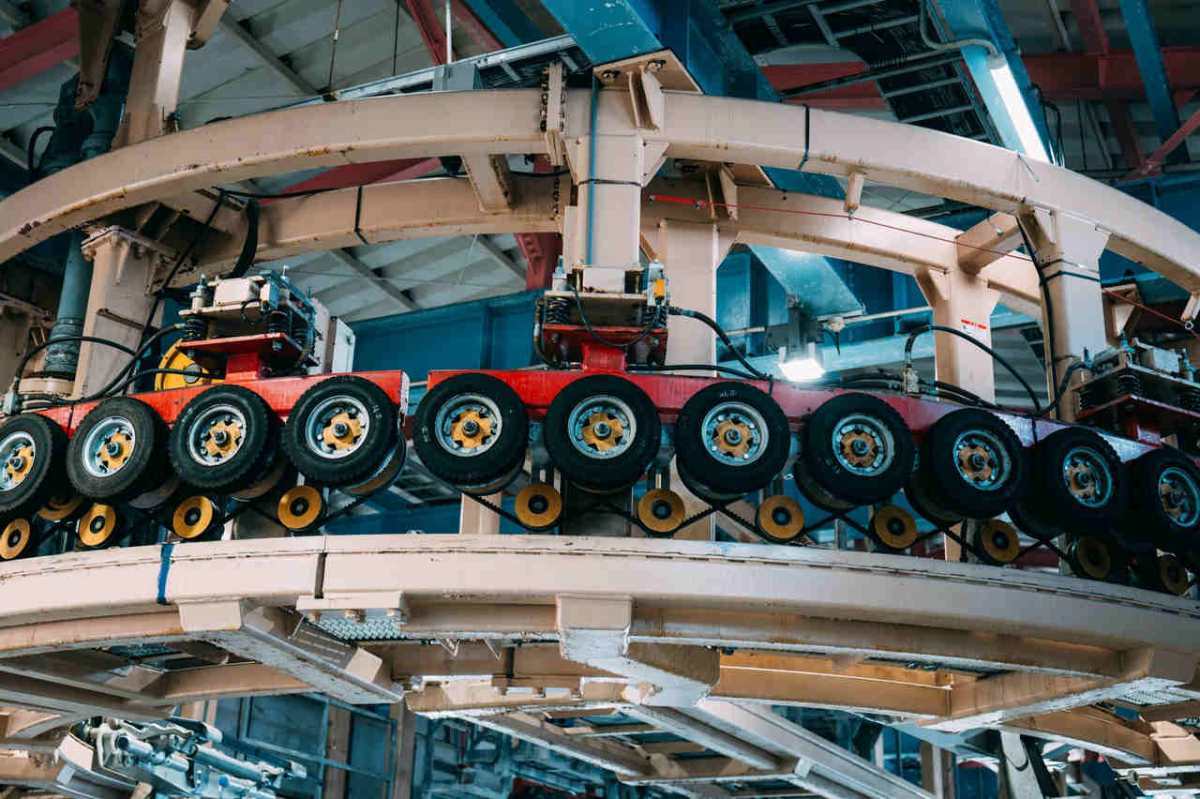
IT/OT Convergence, or How Linking Factory Machines to Cloud Analytics Landed on Every CTO's Desk
IT and OT people used to sit at different lunch tables, more or less. IT had servers and ERP. OT had PLCs and SCADA, on networks guarded like a family recipe.
Here's the thing. That silence costs money. A conveyor motor bearing starts vibrating days before it fails. The signal is there. It just sits in a plant historian no analyst ever opens.
Convergence fixes exactly that. What does that look like? An IoT gateway goes into the cabinet, and vibration readings finally land where people can see them. Predictive Maintenance models chew through them in the cloud. Can the line run 10% faster? That gets checked on a Digital Twin, not on real steel.
Sounds logical, right? Well, the cloud is the easy part. The hard part is old controllers speaking Modbus with zero encryption. And two teams who want opposite things: IT wants patches on Tuesday, OT wants nothing rebooted. Ever. Making them share one dataset is the CTO's job now.
Top Industrial Automation & IT Service Leaders
Accenture
Accenture handles manufacturing through Industry X, a unit that grew by buying engineering firms like umlaut. So consultants and engineers sit in the same room.
- Smart Factory programs across dozens of plants
- Digital Twins of products, lines and sites
- MES and PLM rollouts with major vendors
DXC Technology
DXC has worked with manufacturers for over 45 years. It now manages more than 4 million plant production points, and IDC MarketScape named it a Leader in Industrial IoT.
- Smart Factory platforms built on IoT, AI and predictive analytics
- MES/PLM consulting and Modernization Studio for legacy systems
- Private 5G, edge computing and Zero Trust for IT/OT networks
- MaCS, IMDS and CDX tools for ELV and REACH reporting
Cognizant
Much of Cognizant's manufacturing work targets a dull but costly problem: shop-floor numbers that never reach ERP.
- Pipelines moving IoT data from the edge to the cloud
- Predictive Maintenance, plus tracking of where assets are
- Supply chain visibility
Siemens
Siemens builds the controllers behind many of the world's lines. Its Xcelerator portfolio adds the software layer on top.
- Opcenter MES for production and quality
- Insights Hub (formerly MindSphere) for IoT analytics
- Digital Twins in NX and Teamcenter
- Industrial Edge (data gets crunched right at the machine)
HCLTech
Next to its IT business, HCLTech keeps a sizeable engineering and R&D arm. Handy when code meets physical equipment.
- Connected factory programs
- OT security audits and managed services
- Embedded and PLM engineering
Capgemini
In 2020 Capgemini took over Altran, and with it came thousands of engineers. That deal shaped its Intelligent Industry offering.
- MES deployment
- Plant and product simulation before launch
- Industrial data platforms and AI
IBM
IBM's manufacturing work mostly revolves around Maximo. Plants use it to service equipment by condition, not calendar.
- Maximo Application Suite for asset health
- AI visual inspection on the line
- Red Hat OpenShift for edge workloads
Infosys
Infosys pairs engineering services with its Cobalt cloud and Topaz AI. A fit for upgrading IT and plant systems at once.
- Industry 4.0 roadmaps
- Industrial IoT and digital thread
- AI quality analytics
Line Down? First Steps After a Critical Production Failure to Minimize Downtime and Protect the ICS/SCADA Network
Picture it: line stopped, every HMI red, somebody's hand already on the main switch. Bad idea.
- Don't pull the plug. Cut the segment off from the corporate network first. If malware is involved, controller memory and logs are evidence. A hard reboot wipes them.
- Find what actually broke. Jammed gearbox, bad PLC logic or malware? SCADA alarm history usually tells.
- Go manual. If the crew has a printed procedure taped up near the line, this is when it pays off.
- Restore from a clean backup. PLC programs should be stored offline. A copy on the network that just went down doesn't count.
- Check the network map. Often the real cause sits there. On a flat network, one infected laptop can reach every controller on site. Splitting things into zones and conduits per ISA/IEC 62443 is the usual fix.
Conclusion
Picking one winner here doesn't make much sense. Siemens knows controllers better than anyone on it. Where Accenture, DXC or Capgemini tend to shine is the messy middle, making cloud, data and security work together. For a given plant, it comes down to boring questions. How old is the equipment? Five sites or fifty? Is OT security more than one firewall nobody has touched since 2015? A pilot on a single line usually tells more than any sales deck. Pick one number, say OEE or scrap rate, and watch it for a quarter.
FAQ
IT/OT convergence: what is it, really? Machines on the floor and business systems finally look at the same data, without anyone exporting spreadsheets by hand.
Where does Predictive Maintenance save time? Bearings rarely die without warning. They heat up and rattle, and a sensor catches it early. The swap happens during Sunday's planned stop, not halfway through Tuesday's shift.
What is an MES for? It's the shop floor's logbook, only live: which order runs where, what batch, what went wrong.
Do old machines have to go? Rarely. A retrofit sensor plus a gateway can get data out of a press built in the nineties.

Why all the fuss about SCADA security? Ransomware groups like factories. Every hour of stopped production pushes the owner closer to paying.