Artificial intelligence models are now part of the new norm in digitally fast-paced landscapes, applied by businesses for the continued betterment of client experience. The use of artificial intelligence has changed the way firms interrelate with customers; an increase would lead to the ease of operation with which a firm can give out its service solutions in a more efficient manner that is personalized as well as data-driven.
The modern-day consumer expects a quick response time and frictionless interaction. For this reason, AI has surfaced as an important tool that organizations must accept and utilize to meet expectations.
The Emergence of AI Customer Service
Customer service has been revolutionized with the integration of artificial intelligence. Traditional customer service methods, such as long queues and limited time slots, with minimal or no personalized contact, have been left to mourn at the fireplace byAI models and technologies like chatbots and virtual assistants, who responded to these challenges with instant responses and 24/7 availability. This change not only increased customer satisfaction but also set free human agents to handle more complex issues.
AI-Powered Chatbots: A New Battleground for Customer Service
One of the most apparent uses of AI customer service is using chatbots. Chatbots utilize AI to service a broad scope of queries put forth by customers, ranging from simple ones, such as addressing frequently asked questions, to complex ones, where the chatbot guides a person step by step through a troubleshooting process.
Because NLP enables chatbots to understand and thus respond accordingly to customers’ queries in a conversation, the outcome will only be the improvement of the user experience as well as the prompt attention to customers.
Furthermore, some chatbots can interact in various communication channels, including websites, social media, or messaging applications. Such omnichannel capability ensures that customers may communicate as they want with their concerns and questions, making the whole experience far more integrated.
Enhanced Self-Service Solutions
Another impact that AI is making on customer service is the improvement of a self-service option. Many customers like to fix problems independently, and AI makes this possible by providing comprehensive knowledge bases and support resources. It is possible to get access to tutorials, FAQs, and troubleshooting guides that enable empowerment to solve issues independently with AI-driven platforms.
It also reduces the load pressure in customer services but lets the customers resolve their issues, thus making businesses work with maximum efficiency and overall quality of customer experience.
Machine Learning for Ongoing Improvement Quality
The major attraction of Open source AI systems in customer service remains its ability to learn continuously throughout time. Using machine learning algorithms, AI will always analyze more data from customer interactions to identify trends where a change can be introduced. This process will allow businesses to fine-tune their customer service strategies and keep up with changing consumer preferences.
This will allow the companies to front-run on the emerging trends in advance or even prevent the issues at their breakout points from spiraling out of hand. It is from this perspective that companies position themselves at the helm of customer service excellence.
The Human Touch in AI-Powered Customer Service
AI has changed customer service permanently, but the human aspect must be incorporated into the conversation. Customers still expect to have empathy, listening, and honest contact with the support staff. AI should be used to supplement rather than supplant human interaction.
Therefore, hybrid models can be conceptualized by implementing a model that combines AI capabilities with human expertise that will offer businesses the right balance to achieve both efficiency and empathy. For instance, such models may be conceived by using chatbots for making preliminary inquiries while complex issues are escalated to human agents for personalized support.
Thus, it will allow the best of both worlds: efficiency through AI and empathy through human interaction.
Wrapping Up
In a nutshell, AI is changing digital customer service in the business arena as it seeks to find ways to suit changing customer needs. Be it AI-powered chatbots or data-driven personalization, these new technologies not only add to the customer experience but also efficiency. Now that such transformation is moving forward, organizations have to focus on humans in business as much as they do on AI for meaningful relationships with customers.
We, at AI Models, are dedicated to helping businesses use AI for the betterment of customer service strategies. We can help you develop customized solutions that enhance your customer interactions with success in the competitive digital landscape. Learn how we can help you move forward on your journey to better customer service at AI Models.
How AI is Transforming Customer Service in the Digital Age was last modified: June 6th, 2025 by Katherine Disooza
Automation is all around us, helping businesses get more done in less time. As technology has advanced, automation has gone from being something only large-scale organizations used to something useful for all kinds of businesses. Traditional automation is great for handling repetitive tasks that don’t change much. But there’s a new technology —Robotic Process Automation (RPA)— which has taken automation up a notch. The global market for robotic process automation was valued at $2,942.7 million in 2023 and is expected to grow at a compound annual growth rate (CAGR) of 39.9% from 2023 to 2030.
Robotic process automation doesn’t just handle repetitive work; it can also mimic the way people interact with computers. This means that RPA can do tasks that used to need a human touch, like filling out forms or transferring data between systems. With these new capabilities, more businesses are starting to see how RPA could help them move beyond traditional automation and boost efficiency in exciting new ways.
What is Robotic Process Automation?
Robotic process automation is a type of software that can perform tasks just like a human would on a computer. It can open applications, copy and paste information, click buttons, and more. The big difference between robotic process automation and traditional automation is how flexible it is. Traditional automation usually works behind the scenes and follows strict, pre-defined rules. In contrast, robotic process automation is more adaptable and can work with different software systems without needing big changes.
Think of traditional automation as a straightforward, dependable tool that can do the same task over and over again without making a mistake. It’s great for specific processes but not so good when there’s a need for something more flexible or complex. RPA, on the other hand, acts more like a digital worker who can handle several different tasks, even ones that involve using multiple systems together.
Ease of Implementation
One of the reasons robotic process automation is gaining popularity is because it’s relatively easy to implement compared to traditional automation. Setting up traditional automation, at times, requires significant changes to a company’s existing software or systems. Eventually, this can take a lot of time, effort, and money. On the other hand, robotic process automation doesn’t need big changes to the underlying systems. It can be layered on top of what’s already there, which means businesses can get started quickly and without a massive overhaul.
Robotic process automation is designed to be user-friendly. It uses tools that are easy to understand, often with simple drag-and-drop features, meaning that even people without coding experience can get involved in creating automation workflows. Traditional automation, however, usually requires a team of experts to write scripts and make sure everything is perfectly integrated.
Flexibility in Use Cases
Traditional automation is limited to specific tasks that don’t change much, like running a manufacturing line or processing large amounts of data in a set format. It works well when everything follows a strict, predictable pattern. Robotic process automation, however, can handle a variety of tasks, including those that need a bit of adaptability. For example, robotic process automation can work across different software applications, navigate interfaces, and handle unstructured data—all things that traditional automation struggles to do.
Robotic process automation can be applied across departments—from handling customer service queries to streamlining financial operations through RPA in finance, such as invoice processing and reconciliation. It can easily move between different tasks depending on what needs to be done, unlike traditional automation, which is usually built for one job only.
Cost and Resource Considerations
One of the biggest things businesses think about when choosing between robotic process automation and traditional automation is cost. Traditional automation often involves a heavy upfront investment. It usually requires expensive software changes, infrastructure upgrades, and dedicated technical experts to set it up and keep it running.
Robotic process automation, on the other hand, tends to be more budget-friendly, especially for smaller businesses. It doesn’t require major system overhauls, which means implementation costs are lower. Plus, since it’s easy to set up and manage, the maintenance costs are also reduced.
Scalability and Adaptability
Scalability is another area where robotic process automation has an edge over traditional automation. With traditional automation, scaling up means making big changes to existing systems or adding new infrastructure. This can be expensive and time-consuming. Robotic process automation, however, is designed to be highly scalable. Need to automate more tasks? It’s usually as simple as adding more bots, which can be done without making big changes to your system.
Robotic process automation is also highly adaptable. It can adjust to changes in your business processes, such as new software tools or updated workflows, without needing to be reprogrammed from scratch. Traditional automation is much more rigid—it works best in situations where things don’t change much.
Impact on Workforce
When thinking about automation, it’s natural to wonder how it affects the people doing the work. Traditional automation is often used in manufacturing and similar environments, where it takes over repetitive, manual tasks. However, robotic process automation works a little differently. Instead of replacing people, it usually works alongside them, taking on tedious, time-consuming tasks so that employees can focus on more creative and meaningful work.
Robotic process automation can drastically improve job satisfaction for workers by handling boring and repetitive tasks like data entry or report generation. This way, employees can focus on problem-solving, customer interaction, and other tasks that add more value to the business.
Suitability for Different Industries
Both robotic process automation and traditional automation have their place in various industries, but the way they’re used can differ greatly. Traditional automation is common in sectors like manufacturing, where tasks are repetitive and highly structured. Think of an assembly line—once programmed, traditional automation can handle the same process repeatedly without any need for variation.
Robotic process automation, however, is making a huge impact across a wider range of industries. It’s being used in healthcare to handle patient records, in finance to process invoices and payments, and even in customer service to answer routine inquiries. Its ability to work across different software systems and handle diverse tasks makes it ideal for industries that need flexibility and adaptability. Whether it’s automating paperwork in a hospital or managing data in an insurance company, robotic process automation is proving to be a versatile tool for many sectors.
Robotic process automation and traditional automation each have their strengths, but they serve different purposes. Understanding the differences between the two can help businesses decide which approach—or combination of approaches—will help them reach their goals more effectively.
Conclusion
In conclusion, as businesses seek greater efficiency, understanding the differences between traditional automation and Robotic Process Automation (RPA) is key. While traditional automation is ideal for repetitive tasks, RPA offers more flexibility and can handle complex operations across multiple systems. Its ease of implementation and scalability make it a valuable tool for companies of all sizes. By complementing human work rather than replacing it, RPA is reshaping how businesses operate, offering a powerful, adaptable solution for the future of automation.
RPA vs. Traditional Automation- Understanding the Differences and Advantages was last modified: May 28th, 2025 by Eliza Jeffrey
In the modern-day world that is complete of advanced generation, the usage of mobile programs has become a norm. Smartphone applications are essential in everyday life in view that to applying them in lots of aspects of existence which include social family members, enjoyment, banking, and buying. This has the effect of making the security of this app even more important as all depend on them. Hence, there are several benefits for users and organizations to enhance the security of mobile applications. It may be worth mentioning that an analysis and enhancement of mobile app security can have several advantages, which will be described in this article.
Safeguarding Personal Information:
Effective mobile application security is one of the main elements that helps to maintain the confidentiality of user data. A smartphone app often controls numerous personal data, including bank data, login details, and data that can identify the owner. Otherwise, developers can ensure that such important data is safe from access and other forms of security infringements by applying strict measures of security.
Strong safeguards including data protection techniques, two-factor identification, and data encryption are examples of strengthened security that increases a system’s defence against internet crimes. More to it, this protection helps to safeguard users from financial fraud and identity theft, hence giving them more confidence in the app. From customers’ experience, user interaction and sharing of information is boosted if and when they have confidence that their detailed information is safeguarded thus improving their overall experience.
Maintain the image of the brand:
A single security leakage in the contemporary world where data breaches and security incidents go viral can cost an organisation’s reputation greatly. To protect and build brands, the security of mobile applications must be increased. Business entities that attach importance to Android mobile app security provide the perception to their customers that their interests are protected hence providing confidence and leading to customer loyalty.
On the other hand, there are downsides such as negative publicity, which erodes users’ trust and may lead to lawsuits. Remediation of the tainted image and regaining customers’ trust can also be a long-drawn process after the security breach that costs important resources of the brand. Organizations may avoid these risks and cultivate a reputation of being careful and thoughtful stewards of users’ data by investing in various securities, which will benefit them.
Reading through the Regulatory Standards many questions come to mind of which two are provided below:
There is a plethora of new laws that are devoted to providing stronger protection of data in the digital area. Organizations are required to follow very specific conditions as to the usage, collection, as well as storage of the customers’ data. Thus, compliance with these regulatory criteria and the avoidance of future legal issues and expensive fines must call for improved mobile-application security.
That is why, to show commitment to data protection, businesses can implement security best practices and monitor legislation changes. Here, the organization can be viewed as one of the leaders in the protection of users’ information as thanks to such an approach, it is possible to avoid legal acts in advance. Wherever the users are sensitive to privacy issues, compliance can act as a strategic weapon in the respective industry.
Stopping Monetary Losses:
Organizations and individuals can lose a lot of money due to security breaches that affect their operations. Risk exposes the users of a compromised mobile application to unauthorized transactions, identity theft, and theft of their financial information. In case a corporation is involved in an incident that results in a security breach, the costs that it has to meet can be very high. These costs include the costs of managing and handling public relations on the occurrence and paying for the rectification and repairs of the affected system, compensation payable to the affected users.
These financial risks can be significantly reduced by enhancing the security of mobile applications. The likelihood of successful cyberattacks and related expenses is decreased by putting strong security measures in place as a preventive strategy. Even though it may seem like an upfront investment to invest in security, doing so will end up being considerably less expensive than handling the fallout from a breach.
Defense against newly discovered threats:
A continuous effort that requires staying ahead of these new dangers is strengthening mobile application security. It also implies that the software is still able to withstand shifting cyber threats, which guarantees its dependability and endurance in a quickly growing digital world.
A competitive edge in the marketplace:
Security may set an app store apart from the competition in a crowded field. Apps that prioritize security are likely to be chosen by users who are growing more conscious of the value of data protection. Businesses might get an advantage over rivals who might not give security as much thought by enhancing mobile-application security, drawing in security-conscious customers.
This advantage goes beyond attracting new clients. More good evaluations and word-of-mouth referrals may result from improved security, which will increase the app’s popularity and user base even more. Robust security protocols are not only advantageous but also essential for winning over users and capturing market share in several areas, like finance and healthcare.
Conclusion:
Mobile application security has several and extensive benefits when improved. For the current generation with the development of technology, it is very important to implement strong security measures to protect user data security, brand image, and legal requirements and minimize business losses. The upswing of security may also provide the business with a competitive advantage over a competitor, protect against possible emerging threats, and improve user experience.
It is impossible to exaggerate the significance of security given the continued rise of mobile applications in both our personal and professional lives. Companies may safeguard their consumers, their brand, and their financial line by emphasizing and constantly enhancing mobile app security. Robust mobile-application security is not just a technological need but also a basic business necessity in a time when data is one of the most precious resources.
Boosting Mobile Application Security: What Creates Most of Its Benefits? was last modified: February 26th, 2025 by Diwakar Maurya
SIM cards, although inconspicuous, are indispensable components of our mobile devices. The eSIM (embedded SIM) technology is gradually replacing the usual plastic cards, wanting to change our approach to mobile communication. Let’s find out why the technology is attracting such interest and how to buy eSIM to change the way you think about mobile communication forever.
What is an eSIM?
An eSIM is an in-built subscriber identification module, which is a tiny chip integrated directly into the device. Unlike classic SIM cards, it cannot be physically removed or replaced. Instead, the information on it can be customised online.
History and Evolution
First steps (2010): The technology debuted in the world of consumer devices, finding applications in smart watches, connected cars, and other IoT devices. Early implementations allowed manufacturers to create smaller and more water-resistant devices, which was especially important for wearable electronics.
Smartphone breakthrough (2017): Google Pixel 2 became the first eSIM-enabled smartphone, ushering in a new era in mobile connectivity.
The complete abandonment of physical cards (2019): The release of the Motorola Razr marked the first smartphone to work exclusively with inbuilt SIMs.
Mass adoption (2024): Apple, Samsung, and other market leaders began mass equipping their new devices with eSIM support, making this technology standard on most smartphones.
How Does an eSIM Function?
The eSIM is a tiny chip embedded in the device’s motherboard. It contains all the information needed to identify the subscriber on the network. Inside the chip is a secure memory area where carrier profiles are stored. Each profile includes a unique subscriber identifier (IMSI), encryption keys for secure communications, and other parameters required to operate in a specific operator’s environment.
The processor manages these profiles, allowing the right one to be activated depending on the user’s choice or the current location of the device. Importantly, eSIM is compliant with the standard developed by the GSMA (GSM Association), ensuring compatibility between different devices and providers. This allows a single protocol to be used for remote download and management of operator profiles, and the process of changing provider becomes as simple and secure as possible for the user.
Key Benefits of Use
The new format has not just completely changed the way we think about SIM cards, but has also introduced many different advantages. Let’s look at some of them together.
Ease of use
Forget about finding a special needle to remove the SIM card! With integrated cards, the process of connecting to the operator’s network becomes easier:
Scanning the QR code
Activation via the operator’s app
Using the quick transfer function (e.g. Apple’s eSIM Quick Transfer).
The eSIM is especially convenient for travelers. Now there is no need to search for a local operator and buy a physical SIM card upon arrival in a new country. Simply download a local operator profile in advance or use global eSIM providers that offer country-specific packages.
This is often applied when visiting Japan, where an eSIM Japan plan is commonly used to activate local connectivity without relying on a physical card.
Increased security
The eSIM offers a number of security advantages:
Impossibility of physical extraction and cloning
Hardware-based data encryption
Additional security protocols for remote updates
It is important to note that eSIM uses special cryptographic algorithms to protect user data. Each profile change operation requires confirmation with unique keys, making unauthorised access to information virtually impossible.
Space saving
Not needing a physical SIM card slot allows manufacturers to optimise the internal space of devices. This opens up opportunities to:
Increase battery capacity
Add new features
Create thinner and more compact devices
For example, in smartphones, the freed up space can be used to add additional sensors, more powerful speakers or more memory. In wearable devices such as smart watches, saving space is especially critical and allows for more elegant and functional models.
Flexible operator selection
Built-in cards allow you to store multiple operator profiles at the same time, opening up a range of possibilities:
Easy switching between operators without replacing the physical card
Use different numbers for work and personal life on the same device
Quickly connect to local operators when travelling
In addition, some operators have started offering free trial periods with the eSIM. This allows users to test the connection quality of a new operator without having to give up their current one, making it much easier to choose the most suitable provider.
How to Buy an eSIM with ESIM-Man?
Make sure your device is compatible with virtual SIM cards or eSIM. You can confirm this by checking the technical specifications on your smartphone’s manufacturer website. To purchase an eSIM, follow these steps:
Open and sign up in the “ESIM-Man” web app through the official website: https://esim-man.com/.
Log in using any internet-connected device, no matter where you are.
In the search bar on the homepage, enter your travel destination. You’ll see a list of available data plans. Select the one that fits your needs and click “Buy Now.”
After that, just download and install the eSIM by scanning the provided QR code.
How eSIM Technology Made Communications Affordable was last modified: December 9th, 2025 by Sara S
Immigrating to a new country can be both an exciting and challenging experience. The promise of new opportunities often comes with a complicated and lengthy legal process. To successfully navigate the immigration process, it’s essential to be well-prepared and informed about the various steps involved. In this guide, we will outline the key steps in the immigration process and provide tips for ensuring your application proceeds smoothly. This includes understanding documentation, working with an Immigration Services Translator, and knowing the common hurdles you may face.
1. Determine Your Eligibility
Before starting the immigration process, the first and most important step is to determine if you are eligible for immigration to your chosen country. Immigration laws differ significantly from country to country, and specific visa types are available depending on your situation. Whether you are applying for a work visa, seeking asylum, or reuniting with family, you need to understand the requirements that apply to your visa category.
To determine your eligibility, visit the official website of the country’s immigration authority or consult with an immigration attorney. Some questions to consider include:
Do you have a job offer or family sponsor in the country?
Are you eligible for any of the country’s special visa programs (such as investment visas, student visas, or citizenship through economic contributions like Nauru citizenship by investment)?
Have you checked the qualifications, language proficiency, or financial requirements needed for your visa type?
By confirming your eligibility in advance, you avoid unnecessary delays or rejections later in the process.
2. Gather Necessary Documents
One of the most time-consuming aspects of the immigration process is collecting and preparing the required documents. These documents vary depending on your visa type, but some commonly requested items include:
Passports or identity documents
Birth and marriage certificates
Employment records
Academic qualifications
Police clearance certificates
Health check reports
It’s crucial that all documents are accurate, up to date, and in the correct format as required by the immigration authority. In many cases, you will also need to provide translations of documents that are not in the official language of the destination country.
This is where the role of an Immigration Services Translator becomes vital. Professional translators ensure that all your documents are translated accurately, maintaining the legal validity required for immigration purposes. Inaccurate or incomplete translations can lead to delays, requests for additional information, or even outright rejection of your application. Thus, working with a qualified translator ensures that your documents are properly prepared for submission.
3. Complete the Application Form
Once you have gathered all the necessary documents, the next step is to complete the immigration application form. Most countries provide online forms through their immigration websites, although some may still require paper submissions. These forms will ask for your personal information, immigration history, details about your family, employment, and financial situation, and the purpose of your immigration.
Be sure to fill out the application form carefully, as mistakes or omissions can cause delays or lead to rejection. Double-check all details such as your name, date of birth, and passport number. Make sure that the information provided matches your documents exactly.
In addition, some forms may require you to pay an application fee, which is non-refundable, so ensure that you have the necessary funds to cover this cost. After completing the application, print or save a copy of your submission for your records.
4. Pay the Required Fees
Immigration processes usually involve multiple fees, including application fees, visa processing fees, and fees for medical examinations or police clearances. These fees can add up quickly, so it’s important to budget for them in advance.
Some countries may allow you to pay online, while others may require you to submit payment via check or money order. Make sure to follow the instructions carefully and keep proof of payment, as this may need to be submitted along with your application.
Additionally, note that many fees are non-refundable, even if your application is denied. It’s essential to understand the costs associated with your visa application before proceeding.
5. Submit Your Application
Once you’ve completed your application and gathered all supporting documents, it’s time to submit your application to the appropriate immigration authority. Depending on the country, this can be done online, by mail, or in person at an embassy or consulate.
If you are submitting a paper application, use a reliable mail service and keep tracking information so that you can verify the immigration authority received your documents. If submitting online, be sure to confirm that your application was successfully submitted and retain any confirmation emails or reference numbers.
In some cases, immigration authorities may request additional documents or ask you to attend an interview. Be prepared for follow-up communication and respond to any requests promptly to avoid delays.
6. Attend Any Required Interviews
Many visa processes require applicants to attend an interview with immigration officials. This interview is an opportunity for the authorities to verify the information in your application and ask further questions about your background, purpose of immigration, and future plans.
To prepare for the interview:
Review the information you provided in your application.
Be ready to explain why you are immigrating and how you meet the visa requirements.
Bring original copies of any documents submitted with your application.
Dress professionally and arrive on time for the interview.
The interview may be held in the official language of the destination country, so if you are not fluent, consider working with an interpreter. In some cases, your Immigration Services Translator may provide services during the interview, especially if they are certified in both translation and interpretation.
7. Wait for the Decision
After submitting your application and attending any required interviews, the waiting period begins. Depending on the country and visa type, the processing time can vary from a few weeks to several months.
During this time, it’s essential to monitor your application status and be available for any further requests from the immigration authorities. If additional documents or clarifications are required, respond as quickly as possible to avoid further delays.
In some cases, you may be able to expedite the process by paying an additional fee. However, this is not always available, and the standard processing time may apply.
8. Receive Your Visa or Immigration Status
If your application is successful, you will receive your visa or approved immigration status. Depending on the type of visa, this may be a temporary or permanent status. It’s essential to review the terms of your visa carefully, including the length of stay, work restrictions, and other conditions.
For example, some visas may require you to leave and re-enter the country within a certain timeframe, while others may allow you to stay continuously. Ensure that you comply with all the terms of your visa to avoid penalties or jeopardizing your immigration status in the future.
9. Prepare for Your Move
Once your visa is approved, it’s time to start preparing for your move to your new country. This includes finding housing, arranging transportation, securing a job (if not already done), and preparing for life in a new culture. You may also need to arrange for health insurance, register with local authorities, or apply for a work permit, depending on the country’s immigration requirements.
It’s also a good idea to familiarize yourself with the country’s laws, customs, and social norms to ease your transition.
10. Follow Up on Immigration Requirements
Even after receiving your visa, the immigration process is not always complete. Some visas require periodic renewal, and you may need to report your address or employment status to immigration authorities regularly.
Additionally, if you plan to apply for permanent residency or citizenship in the future, make sure to track the timelines and requirements for these processes.
Conclusion
Navigating the immigration process can be a daunting and complex experience, but by following these steps and preparing thoroughly, you can increase your chances of success. Understanding the eligibility requirements, gathering the necessary documents, and working with a qualified Immigration Services Translator are all essential components of a successful immigration application. With the right approach, you can overcome challenges, avoid delays, and look forward to a smooth transition to your new life.
Steps to Successfully Navigate the Immigration Process: What You Need to Know was last modified: July 27th, 2025 by Thomas Lore
The weather is getting wilder. In the last ten years, the U.S. has faced about 15 big weather disasters each year. Each one cost over $1 billion! This comes from the National Oceanic and Atmospheric Administration (NOAA). It’s a lot more than before.
Field service teams need to be ready for this crazy weather. Let’s look at how to keep working when the weather gets tough.
Why Weather Matters for Field Services
More storms, floods, and heat waves are happening
Bad weather can stop work or make it dangerous
Being ready helps keep workers safe and customers happy
Weather problems can cost a lot of money if you’re not prepared
Getting Your Team Ready
Give Workers the Right Gear
Buy good rain jackets and boots
Get warm clothes for cold days
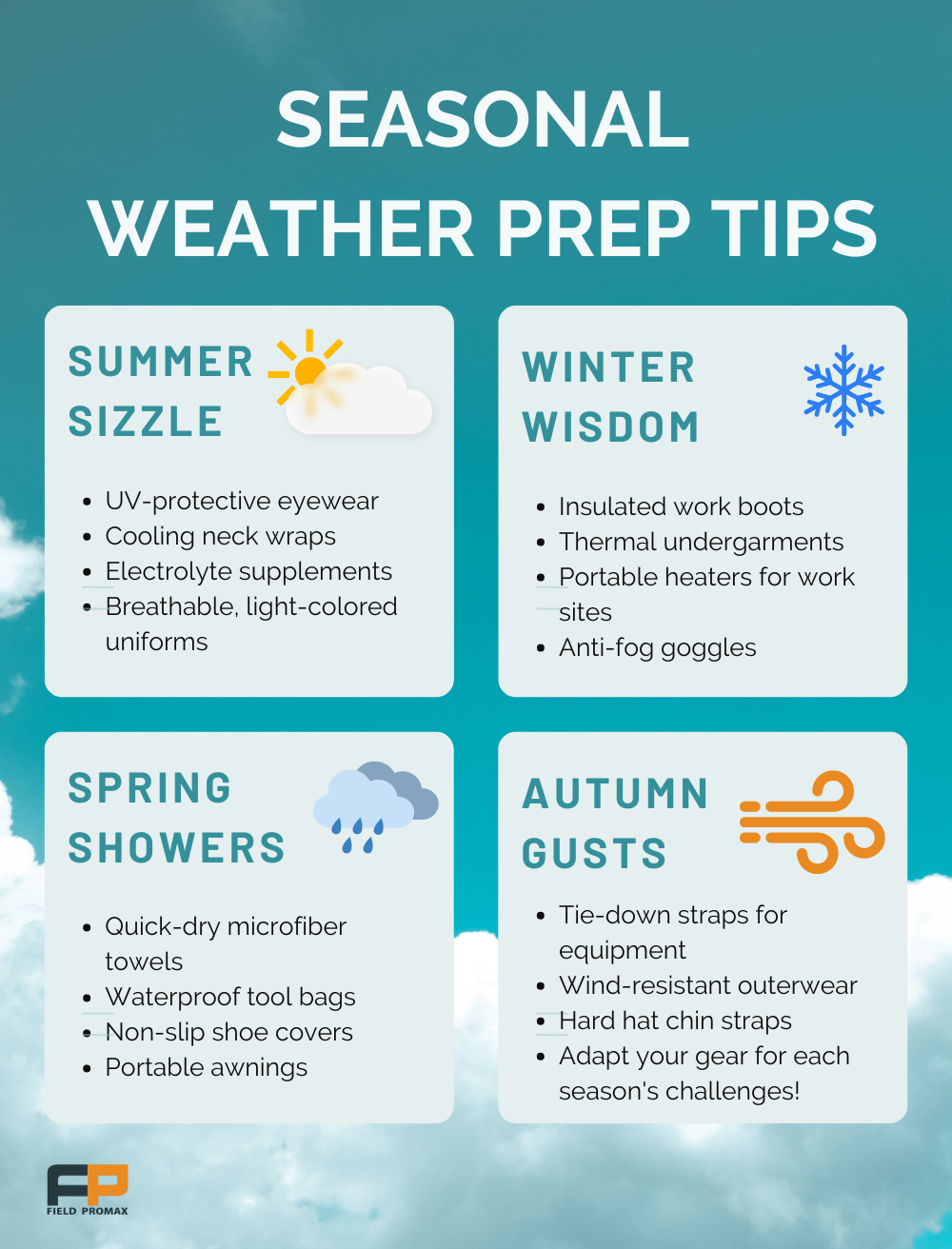
Have cool, light clothes for hot days
Don’t forget sunscreen and water bottles
Give each worker a small weather kit with essentials
Check and Fix Tools Often
Make sure tools can handle wet or hot weather
Keep spare parts handy
Clean tools after use in bad weather
Replace old or damaged tools that might fail in tough conditions
Smart Scheduling with Field Promax
Field Promax is a cool tool that helps plan work better. Here’s what it does:
Make sure everyone knows where to go if it’s not safe
Use real-life examples to make training more useful
Teach About Weather Dangers
Talk about heat stroke and how to avoid it
Explain what to do if lightning is near
Show how to drive safely in heavy rain
Discuss frostbite and hypothermia for cold weather work
Talking to Customers About Weather
Let customers know if weather might delay work
Explain how you’re keeping workers safe
Offer to reschedule if the weather is too bad
Be honest about how weather affects your work and prices
Thank customers for understanding when weather causes changes
Making Plans for Really Bad Weather
Have a Backup Plan
Know what jobs can wait and what’s urgent
Have indoor work ready for rainy days
Be ready to send help if some areas get hit hard
Create a list of priority customers who need help first
Keep Emergency Supplies Ready
Pack first aid kits in all trucks
Have extra batteries and flashlights
Keep some food and water in vehicles
Include basic repair tools for weather-related damages
Using Weather Apps and Tools
Get a good weather app for your area
Use tools that measure heat and wind speed
Check for weather alerts before sending workers out
Consider getting a portable weather station for big job sites
Protecting Tools and Trucks
Cover tools when it’s raining
Park trucks in safe spots during storms
Use covers or garages to protect equipment
Invest in waterproof cases for electronic tools
Regularly check and maintain vehicle weather seals
Working in Hot Weather
Start jobs earlier to avoid midday heat
Take more breaks on hot days
Have lots of water at job sites
Use cooling towels or portable fans
Know the signs of heat exhaustion and heat stroke
Dealing with Cold and Ice
Give workers good gloves and warm gear
Be extra careful on icy roads
Know when it’s too cold to work safely
Use hand and foot warmers on very cold days
Keep ice melt or sand in trucks for slippery areas
Staying Safe in Windy Weather
Secure loose items on job sites
Be careful with ladders on windy days
Know when winds are too strong for safe work
Wear safety glasses to protect eyes from debris
Use wind screens when possible for outdoor work
Handling Rain and Floods
Have good rain gear for all workers
Know which areas tend to flood
Don’t drive through deep water
Use waterproof covers for important paperwork
Have a plan for quickly moving equipment to higher ground
Learning from Past Weather Problems
Keep track of how weather affected jobs before
Use this info to plan better next time
Share what you learn with your whole team
Look for patterns in weather-related job delays
Ask workers for their ideas on handling weather better
Making Your Business Weather-Tough
Have plans for different types of bad weather
Keep some money saved for weather problems
Think about weather when buying new tools or trucks
Consider weather insurance for your business
Build relationships with local emergency services
Helping Workers Stay Ready
Give weather safety tips in team meetings
Reward workers who handle bad weather well
Listen to workers’ ideas about dealing with weather
Provide ongoing training about new weather patterns
Encourage workers to speak up about weather concerns
Checking Your Weather Plans
Look at your plans every year
See what worked well and what didn’t
Make your plans better each time
Stay updated on new weather-related technologies
Get feedback from customers on how you handle weather issues
Remember, we can’t change the weather. But we can be smart and ready for it. With good plans, the right tools like Field Promax, and a well-trained team, you can handle whatever the sky throws at you.
Stay safe out there, and keep up the great work!
Extreme Weather Readiness: Adapting Field Services for Climate Change was last modified: September 24th, 2024 by Ramona Vega
In various challenging environments, drones have emerged as indispensable tools for critical data collection. Traditional methods of gathering information often fall short in hard-to-reach or hazardous areas, where accessibility and safety are major concerns.
Whether surveying disaster-stricken regions, monitoring wildlife in remote terrains, or conducting inspections of large infrastructure, drones provide an unparalleled ability to capture accurate and comprehensive data. By offering a unique aerial perspective and the ability to access previously unreachable locations, drones have revolutionized data collection methods, enhancing both efficiency and effectiveness across multiple industries.
Technological Advancements in Drone Capabilities
Drones today are equipped with state-of-the-art technology that significantly enhances their data collection capabilities. High-resolution cameras and sensors allow for the precise capture of images and environmental data, offering critical insights that were once difficult to obtain. As a result, drones can perform tasks such as mapping, thermal imaging, and 3D modeling with unprecedented accuracy. These technological advancements have made drones invaluable across sectors like agriculture, real estate, and environmental conservation, enabling stakeholders to make informed decisions based on comprehensive data.
In addition to improved camera systems, drones now come with enhanced navigational capabilities, powered by GPS and advanced algorithms, allowing them to perform complex flight maneuvers autonomously. This autonomy not only improves the safety and efficiency of operations but also reduces the need for manual intervention in hazardous conditions. Over time, advancements in battery life and durability have further extended their operational scope, highlighting drones as versatile tools in the arsenal of modern data collection technology.
Drones in Disaster Relief Efforts
The utility of drones in disaster relief has been transformative, helping to save lives and allocate resources efficiently. During natural calamities such as earthquakes, floods, or hurricanes, drones quickly assess damage by flying over affected areas, capturing aerial views that aid rescue operations in identifying the most affected regions. This immediate data collection accelerates the logistics of emergency response teams better than conventional methods, which often confront accessibility and time-delay issues.
Even in the aftermath of disasters, drones continue to play a vital role in damage assessment and reconstruction planning, providing detailed, up-to-date information that guides rehabilitation efforts and resource allocation. Whether they’re US made drones or foreign-made drones, their ability to navigate through hazardous areas and capture high-resolution images makes them an invaluable asset in disaster relief efforts. Not only do they reduce risks for first responders, but their efficiency also helps save time and resources, ultimately contributing to better outcomes for affected communities.
Wildlife Monitoring and Conservation
In the field of wildlife monitoring and conservation, drones have become indispensable. They offer a safer, non-intrusive means of observing wildlife in their natural habitats, minimizing human interference while maximizing data accuracy. By utilizing thermal imaging and high-definition video capture, researchers can monitor species’ behaviors and movements continuously, yielding insights crucial for conservation efforts.
Infrastructure Monitoring and Inspection
The application of drones in infrastructure monitoring and inspection transforms how industries manage large-scale assets. Routine checks of bridges, dams, towers, and other critical structures are streamlined as drones provide detailed visual records without the need for large crews or heavy equipment. This capability not only enhances safety by reducing human exposure to hazardous working conditions but also ensures higher inspection frequencies, resulting in timely maintenance and prevention of potential failures.
Drones are equipped with specialized sensors to detect structural anomalies such as cracks or heat loss, providing essential data that facilitates predictive maintenance. By analyzing these insights, asset managers can address issues proactively, ultimately extending the lifespan and efficiency of crucial infrastructure systems. This technology integration represents a shift towards smart infrastructure management, easing budgeting constraints and enhancing the reliability of public utilities and facilities.
Agricultural Applications of Drones
Drones have taken root in agriculture as powerful tools for precision farming, streamlining once-labor-intensive tasks. From high-resolution aerial imaging to multispectral analysis, drones offer farmers critical insights into crop health, soil conditions, and the distribution of water resources. This information is leveraged to tailor farming strategies, optimizing yield and reducing resource waste through smart field management.
Drones are instrumental in pest surveillance and automated fertilizer or pesticide application. These applications enable precise targeting, minimizing chemical use and fostering sustainable agriculture practices that benefit both the environment and agrarian economies. By integrating drone technology, farmers can transition towards innovative agricultural techniques that promise to meet the growing global food demands while preserving the integrity of natural resources.
Drones in Urban Planning and Management
In the realm of urban planning, drones provide data that is crucial for sustainable city development. Planners benefit from aerial views and 3D models of urban areas, enabling them to visualize the potential impacts of proposed developments. These insights help in making informed decisions on land use, zoning regulations, and public infrastructure expansion, ensuring resource-efficient and environmentally conscious urban growth.
Urban management also leverages drones for effective surveillance, traffic monitoring, and environmental assessments. Data from drones aids in managing public events, ensuring safety protocols, and monitoring air quality. By offering a comprehensive view of urban landscapes, drones equip city authorities and planners with the necessary data to foster developments that enhance the quality of urban life, meet regulatory standards, and promote public welfare.
Future Prospects and Ethical Considerations
As drone technology continues to evolve, its integration into diverse fields shows promising prospects for innovative applications. Potential developments include improvements in artificial intelligence for advanced data analysis and further automation of flight operations, reducing human error and enhancing data accuracy. These advances could unlock new capabilities in sectors such as transport, healthcare, and even law enforcement.
However, as with any technological innovation, the expansion of drone usage presents ethical challenges and privacy concerns. It is crucial to establish regulatory frameworks that balance technological progress with individual rights to privacy and security. Developing clear policies will facilitate the responsible and ethical use of drones, ensuring their benefits are maximized while minimizing potential societal risks. Through collaboration among technologists, policymakers, and society, the future of drones can be shaped to serve the greater good effectively.
Drones have undeniably transformed the landscape of data collection across numerous industries, offering innovative solutions and unparalleled capabilities. Their consistent integration into diverse fields such as disaster relief, wildlife conservation, infrastructure management, agriculture, and urban planning demonstrates their versatility and effectiveness in addressing complex challenges. With ongoing advancements in technology, drones are poised to continue expanding their roles, providing even greater accuracy, efficiency, and safety in operations.
Critical Data Collection: When Drones Are the Only Option was last modified: September 21st, 2024 by Francis Brown
An organization is made up of several sectors or departments. This synchronization of all their activities makes the organization functional. The question that arises here is how the factor of data security comes into the picture. Data is central to every business and organization out there in the market. Its use is not restricted to any single field or profession and is quite general. There is data to enable organizations to understand the challenges of their target market and identify competition and market. Data can also be useful to students who need to work on assignments, some of whom are forced to work with ‘do my homework for me’ services. Since we live in a world where data has numerous applications, data security is more important than ever.
Introducing the new world where data privacy security is the only chance for personal privacy. When it comes to the constantly emerging and developing nature of cyber threats, the protection of information has never been more important. By 2024, it is not just about responding to breaches; it is about preventing your data from getting breached by new threats. Read on to learn some methods to prepare for the future of data in the coming year.
Why Is Data Security Important
Information security is the prevention of data from being jeopardized by hackers, vandals, intruders, viruses, or any other mishap. Data security is relevant because it helps to ensure that this information does not end up with the wrong people. Personal information, customer information, medical information, financial information, and even company information need to be protected from being accessed by the wrong people. For business, a data breach means loss of revenue, loss of reputation, risk of legal action, and, most importantly, loss of customer confidence. In addition, data protection is important, especially in light of current policies and regulations.
This is because as organizations grow, the volume of information they manage also increases significantly. These advancements are backed by strong data protection frameworks that offer solutions that can accommodate the increasing data volumes. This scalability is important for organizations that need to venture into new lines or introduce new technologies.
Consumers are slowly beginning to wake up to data security software privacy issues. This is because consumers are more likely to place their confidence in companies willing to protect their information, strengthening the bond between the firm and the buyer. This means that when customers feel that their information is secure, they are going to transact with and also recommend the business.
Studies report that data theft remains a significant issue, of which 25% of the theft targets customer data, including personally identifiable information. The data that is stolen is sold on the dark web, resulting in additional loss of money and other damages to people.
Data Security Management: Strategies for Privacy
Below are the reasons why data security is essential for companies in the year 2024 for every industry globally: As the number of threats increases daily, the importance of data protection is a top priority among enterprises. Customer data, financial data, and even health information are at constant risk of being exposed to breaches. Hence, data protection remains one of the leading cyber security concerns for both SMEs and large enterprises in 2024.
Transition from Reactive to Proactive
Instead of waiting for the security threat to occur, the organizations should seek out the weaknesses. Schedule risk audits, vulnerability tests, and scans to ensure that the potential threats are not one up on you. If your firm offers services that allow students to buy essay, you must expect breaches and adopt measures to mitigate them.
Software Updates and Patching to Be Done Frequently
Businesses should ensure that the operating systems, applications, and security technologies are updated with the latest updates and security patches. Hackers use previously discovered vulnerabilities in old software versions, so it is important to install updates to eliminate software weaknesses and prevent cyber threats. Patch management is vital to avoid attacks from attackers and to make sure that the IT environment is safe.
Focus on Prevention
Incorporate strong controls regarding data access, information encryption, and efficient network separation. In this way, it is easier to prevent unauthorized access and save time when solving issues related to data privacy security breaches.
Continuously Monitor and Log
Keep a vigilant eye on the systems you are responsible for and ensure that you maintain logs. This helps in the response process and the analysis and gives you an idea of the type and extent of threats you are facing.
Emphasize Employee Training and Awareness
Continuously train your employees about cybersecurity standards and phishing and correct data privacy security procedures. Employees are usually the first to respond, and they must remain aware of the risks. It is recommended that organizations periodically educate their employees on matters concerning data protection, for instance, detecting phishing scams, protecting their devices, and handling sensitive information.
A knowledgeable workforce is a shield against cyber threats because people are considered to be security vulnerabilities. With the help of cyber security awareness, organizations can keep the number of accidental data leaks and other security issues to a minimum.
Prioritize Data Encryption
It is hard to find a person who does not come across encryption in his or her day-to-day life. Encryption is employed in safeguarding devices like smartphones and personal computers, financial transactions like making a deposit in a bank and purchasing an item in an online shop, and keeping messages such as email and text messages confidential. Employed in a wide range of security applications, data encryption helps to ensure that intruders cannot access your valuable information. Whether transferring files through network wiring or looking at them on the disk at your home, data encryption ensures they remain locked and safe.
Conclusion
That is why encryption cannot be overemphasized in the slightest: even with the best budgets dedicated to cybersecurity, large corporations continue to be hacked. However, I have to note that even if your data is stored in a secure infrastructure, it can be in danger. With data encryption, however, your files can be much more difficult to break even if stolen. Data encryption is a process that takes place between a sender and a receiver. The information sender is the individual or organization in possession of the information sought by the receiver. The receiver is the device that requests the information. The data encryption code ensures that the sender offers information only to an authorized receiver. This paper has discussed the various elements of data security, the necessity of an effective data security framework, and the importance of investing in data security software to safeguard data, adhere to legal requirements, and gain public confidence. Develop a security culture within your organization. This means that when all people are concerned with data privacy security and report any suspicious activity, strong barriers against threats are developed.
Importance of Data Security and Privacy in 2024 was last modified: April 7th, 2026 by Brad Peterson
A Legacy of Innovation – The Samsung Galaxy Note Series
Imagine holding a phone that feels like a notebook, a sketchpad, and a powerhouse all in one this was the magic of the Samsung Galaxy Note series. From the very first Note released in 2011, these phones set the stage for what we now expect from a phablet. It wasn’t just about screen size; it was about redefining productivity on the go.
Fast forward to today, and while Samsung’s latest models like the Galaxy S24 and Z Fold series might steal the spotlight, the Galaxy Note still stands strong, especially in its refurbished form. But why would anyone consider a refurbished Note over the newest models? Let’s explore the enduring appeal of the Galaxy Note series and why it’s a smart choice for Aussies in 2024.
A Walk Through Time: The Evolution of the Samsung Galaxy Note Series
The Samsung Galaxy Note series didn’t just introduce a larger screen; it also introduced the S Pen, a tool that redefined mobile creativity and productivity. From the Samsung Galaxy Note 10, with its sleek design and enhanced performance, to the Note 20, which pushed boundaries with its pro-level cameras and advanced S Pen features, the Note series has always been about breaking the mold.
These devices were tailored for those who wanted more than just a phone; they wanted a device that could keep up with their fast-paced lives. Whether it was taking notes in a meeting, sketching a quick design idea, or editing a document on the fly, the Note series transformed how we use smartphones. And even with the influx of newer models, the Galaxy Note’s unique value proposition hasn’t faded.
The Galaxy Note vs. Latest Samsung Models: Why It Still Stands Out
In 2024, it’s easy to get caught up in the hype of the latest tech. Samsung’s Galaxy S23 Ultra and the futuristic Z Fold series are impressive, no doubt. But when you strip away the marketing glitz, the Samsung Galaxy Note still holds a unique place. It’s not just another smartphone it’s a productivity tool, a creative canvas, and a reliable workhorse, all rolled into one.
For those comparing the Galaxy Note 20 vs. Galaxy S20 Series, it’s clear that the Note’s S Pen functionality adds unmatched versatility. The S20 might boast stunning displays and camera performance, but the Note 20 turns everyday tasks into seamless experiences. From annotating PDFs to creating digital art, the Note series offers a hands-on approach that no other Samsung model can match.
The Case for Refurbished: Why a Refurbished Galaxy Note Is a Smart Buy
In a world where consumer tech is constantly evolving, buying the latest device can be tempting but is it always the smartest move? The rising popularity of refurbished phones in Australia suggests otherwise. Opting for a refurbished Samsung Galaxy handset allows you to enjoy the premium features of these iconic devices without the hefty price tag.
Refurbished models undergo stringent quality checks, ensuring they perform just as well as new ones, but at a fraction of the cost. Beyond the financial savings, choosing refurbished is a step toward sustainability, reducing electronic waste and giving these high-quality devices a second life. Whether it’s the Note 10 for its compact yet powerful performance or the Note 20 for its enhanced productivity tools, refurbished Notes make cutting-edge tech accessible and eco-friendly. Buy a refurbished Samsung Note 10 to discover how these devices blend luxury and practicality.
The Samsung Galaxy Note 20 vs. S20 Series: A Real-World Comparison
While newer models like the Galaxy S20 series often grab headlines for their impressive specs, the Galaxy Note 20 offers something less about numbers and more about the experience. The Note 20 is built for multitasking juggling work emails, video calls, and creative projects with ease. Its expansive screen and powerful S Pen transform how you interact with your device, making it perfect for professionals, students, and creatives alike.
On the other hand, the S20 series shines with its high refresh rate display and advanced camera features. But if you’re after a device that helps you do more, not just consume more, the Note 20’s functionality can’t be beaten. The tactile feel of the S Pen, the fluidity of switching between tasks, and the satisfaction of using a phone that adapts to your workflow make the Note 20 a standout choice.
The S Pen Advantage: Why It’s More Than Just a Stylus
The S Pen isn’t just a tool; it’s an extension of the Samsung Galaxy Note’s identity. From jotting down spontaneous ideas to detailed editing, the S Pen elevates the Note series into a category of its own. It’s what makes the Note a favorite among designers, note-takers, and anyone who needs more than just touchscreen interaction.
While other brands have attempted to replicate the stylus experience, nothing comes close to the smooth integration of the S Pen with the Note series. Features like Air Actions, where you can control your phone with simple gestures, or the ability to convert handwriting to text instantly, make the S Pen indispensable. If you’re someone who values precision, creativity, and control, the refurbished Note 10 or Note 20 with the S Pen is an investment worth considering.
Refurbished Samsung Galaxy Note Phones: The Perfect Choice for Australian Users
Refurbished phones aren’t just about affordability they’re about making smarter, more sustainable choices. Australians are increasingly embracing refurbished tech for its value, quality, and reduced environmental impact. Retailers like Phonebot, Harvey Norman, and JB Hi-Fi, alongside many other well-known platforms, offer a range of refurbished Samsung phones that meet high standards of performance and aesthetics.
By choosing a refurbished Galaxy Note, Australians can enjoy the best of both worlds: cutting-edge technology that’s accessible and eco-friendly. It’s about finding balance in owning a powerful, feature-rich device without contributing to the cycle of waste. Explore Refurbished Galaxy Note 20 Deals and see why the Note series continues to stand out among newer, pricier alternatives.
Conclusion: Why the Samsung Galaxy Note Series Remains a Timeless Choice
The Samsung Galaxy Note series isn’t just surviving in 2024; it’s thriving. Its unique blend of productivity, creativity, and robust performance keeps it relevant even as Samsung rolls out its latest innovations. For those who need more than just a phone something that adapts, performs, and inspires the Galaxy Note remains unmatched.
Refurbished Notes available at trusted retailers offer a way to experience these iconic devices without breaking the bank while making a sustainable choice. Whether you’re captivated by the Note 10’s sleek design or drawn to the power-packed Note 20, it’s clear that the Note series isn’t just a relic of the past it’s a smart choice for the future. Ready to rediscover the Galaxy Note? Dive into the world of refurbished tech and see why these legendary phones continue to win over users across the globe.
Against All Odds: How the Samsung Galaxy Note is Still the Ultimate Productivity Beast was last modified: September 7th, 2024 by Olivia Jan
3D exterior visualization is a powerful tool used in architecture, urban planning, and real estate to create realistic and detailed representations of building exteriors before they are constructed. Unlike traditional 2D plans, 3D visualization allows designers and clients to explore every facet of a design, from the building materials to the surrounding environment. This technique is not only crucial for visualizing the final product but also for making informed design decisions early in the planning process.
In this article, rather than providing an overview of all aspects of 3D exterior visualization, we will delve into specific details that significantly contribute to the realism and effectiveness of these visualizations. By focusing on aspects such as lighting, texturing, vegetation, and post-processing, we can gain a deeper understanding of how each element plays a vital role in creating a convincing and aesthetically pleasing render.
Importance of Lighting in 3D Exterior Visualization
Lighting is one of the most critical aspects of 3D exterior visualization, as it fundamentally shapes the mood, realism, and overall impact of the scene. In architectural visualization, light does more than just illuminate; it interacts with materials, defines shapes, and enhances textures, bringing a scene to life.
Role of Natural and Artificial Lighting
Natural lighting, which includes sunlight, skylight, and ambient light, is essential for outdoor scenes. The direction, intensity, and color of natural light change throughout the day, creating different atmospheres in the same scene. For instance, morning light tends to be softer with warmer tones, while midday light is harsh and direct, casting sharp shadows. Evening light, on the other hand, often features a warmer, golden hue that can create a tranquil or dramatic effect.
Simulating artificial lighting is equally important in 3D exterior visualization, especially for projects involving night scenes or specific architectural elements like street lamps, building lights, or landscape lighting. Artificial lights, such as spotlights, area lights, and point lights, help emphasize particular aspects of the design, such as texture or structure. The combination of natural and artificial lighting in a scene requires careful calibration to maintain a balance that looks believable and aesthetically pleasing.
Techniques for Simulating Different Times of Day and Weather Conditions
One of the challenges in 3D exterior visualization is accurately simulating how light behaves at different times of day and under various weather conditions. Advanced rendering engines like V-Ray, Corona, and Unreal Engine offer tools to simulate the sun’s position based on geographic coordinates, allowing for precise control over the lighting conditions. Designers can simulate the sun at noon in summer or during a cloudy autumn afternoon, adjusting the light’s angle and intensity to match the desired time and atmosphere.
Weather conditions also dramatically affect lighting in exterior scenes. For example, a cloudy day diffuses sunlight, creating softer shadows and reducing contrast, while a clear day provides sharper shadows and more defined highlights. Simulating these conditions requires an understanding of atmospheric scattering, cloud opacity, and light diffusion, which can be achieved through careful manipulation of environmental settings in the rendering software.
Common Challenges and Solutions in Lighting for Exterior Visualization
Achieving realistic lighting in 3D exterior visualization presents several challenges. One common issue is balancing light and shadow to avoid flat or overly contrasted images. Overexposure or underexposure can ruin the realism of a scene. Solutions include using High Dynamic Range (HDR) images to provide realistic light reflections and exposure adjustments.
Another challenge is rendering times. Realistic lighting often requires complex calculations that can significantly increase rendering time. To mitigate this, designers use techniques like global illumination, light baking, and optimizing scene geometry to reduce the load on rendering engines without sacrificing quality.
Effective lighting is crucial for creating convincing 3D exterior visualizations. By mastering the art of light simulation, designers can produce renders that not only look real but also evoke the intended emotions, making the visualization more compelling and persuasive.
Texturing and Material Detailing
In 3D exterior visualization, textures and materials play a vital role in achieving realism and depth. While lighting sets the scene, textures and materials give objects their tangible qualities, making a digital render look like a photograph of a real-world environment. High-quality texturing and precise material detailing are what differentiate an average render from an exceptional one.
Importance of High-Quality Textures for Realism
Textures are essentially 2D images applied to 3D models to give surfaces their appearance, such as the grain of wood, the roughness of concrete, or the reflectivity of glass. The quality of these textures is paramount to the realism of the final render. Low-resolution or poorly applied textures can result in a flat, unconvincing appearance, breaking the illusion of reality.
High-resolution textures, on the other hand, allow for the fine details that our eyes expect to see, such as the subtle variations in color and pattern in natural stone or the slight imperfections in a painted surface. These details add to the realism by mimicking the complexity of real-world materials. Moreover, the correct application of bump maps, normal maps, and displacement maps can enhance these textures, adding a sense of depth and physicality to the surfaces.
Methods for Creating Realistic Materials
Creating realistic materials involves more than just applying a texture to a model. It requires an understanding of how materials interact with light. Different materials have unique properties, such as reflectivity, transparency, and roughness, which must be accurately replicated in 3D software.
For example, when simulating glass, the material needs to have the correct level of reflectivity and transparency, as well as the ability to refract light realistically. Similarly, a material like metal must show accurate reflections and highlights, capturing the interaction between the surface and its environment. The use of PBR (Physically-Based Rendering) materials has become a standard practice in achieving these effects. PBR materials are designed to reflect light in a way that closely mimics real-world physics, ensuring that materials look consistent under different lighting conditions.
Impact of Material Detailing on Perception
Material detailing significantly impacts the perception of a 3D render. The way materials are represented can influence how the viewer interprets the scene, affecting both the aesthetic appeal and the perceived quality of the architecture. For instance, a building façade with meticulously detailed brickwork, where each brick has slight color variations and imperfections, will appear far more realistic and engaging than one with a uniform, flat texture.
Additionally, materials can be used to convey specific architectural themes or styles. For example, using aged wood and weathered metal might evoke a rustic or industrial feel, while sleek glass and polished concrete can suggest modernity and minimalism. The choice and detailing of materials are therefore crucial in communicating the design intent and aesthetic vision of the project.
In summary, mastering texturing and material detailing is essential for creating convincing and visually compelling 3D exterior visualizations. By paying attention to the fine details and ensuring materials behave realistically, designers can elevate their work, making the digital representation of architecture not only accurate but also emotionally resonant.
Vegetation and Landscaping
Vegetation and landscaping are crucial elements in 3D exterior visualization that significantly contribute to the overall realism and aesthetic appeal of the scene. Whether it’s a single tree, a patch of grass, or a complex garden design, the way plants and outdoor elements are rendered can make or break the immersion of a 3D visualization.
Integration of Plants, Trees, and Outdoor Elements
Integrating vegetation into 3D exterior scenes requires careful planning and execution. The placement of trees, shrubs, flowers, and grass should complement the architectural design, enhance the environment, and guide the viewer’s eye through the scene. Trees can be used to frame a building, creating a natural border that draws attention to the structure. Shrubs and smaller plants can soften the edges of walkways and outdoor spaces, making them feel more inviting.
Moreover, outdoor elements like benches, fountains, and pathways should be harmoniously integrated with the vegetation. These elements need to be carefully textured and placed to ensure they look like natural parts of the environment. This integration helps create a cohesive scene that feels grounded and realistic.
Techniques for Creating Realistic Vegetation
Creating realistic vegetation in 3D visualization presents unique challenges, as plants are complex, organic forms with a high degree of variability. To achieve realism, designers often use specialized software and libraries like SpeedTree, Forest Pack, or Laubwerk, which provide a wide range of plant models with customizable parameters.
Realism in vegetation comes down to several key factors:
Variety: Realistic scenes include a variety of plant species, sizes, and shapes. This diversity mimics the natural world, where no two plants are identical.
Detailing: High-quality plant models feature detailed textures, including variations in leaf color, vein patterns, and surface imperfections. These details are crucial for close-up views.
Interaction with Light: Plants interact with light in complex ways, often transmitting light through their leaves (a phenomenon known as subsurface scattering). Accurate rendering of these effects enhances realism.
Another technique is using particle systems or scattering tools to distribute plants and grass naturally across the terrain. This method prevents the repetitive, unnatural look that can occur when the same plant model is used multiple times without variation.
Challenges in Maintaining Realism with Complex Landscaping
One of the main challenges in landscaping within 3D exterior visualization is balancing realism with performance. Highly detailed vegetation, especially in large quantities, can significantly increase the complexity of the scene, leading to longer rendering times and higher demands on computing power. To address this, designers often use Level of Detail (LOD) techniques, where plants closer to the camera are rendered in high detail, while those further away use simplified models.
Another challenge is ensuring that vegetation fits seamlessly into the terrain. Poorly integrated plants can appear to float above the ground or sink unnaturally into it, breaking the illusion of reality. Careful attention must be paid to the base of each plant, ensuring it interacts correctly with the soil or pavement, and using displacement maps can help create a more convincing ground surface.
Effective vegetation and landscaping can transform a 3D exterior visualization, making it not only more visually appealing but also more true to life. By paying attention to the placement, variety, and integration of plants, as well as managing the technical challenges, designers can create outdoor scenes that are rich, immersive, and convincingly real.
Camera Angles and Composition
In 3D exterior visualization, the choice of camera angles and composition is as important as the quality of the models and textures. These elements dictate how the viewer experiences the scene, guiding their focus and enhancing the visual narrative. Proper use of camera angles and composition can transform a simple architectural render into a compelling visual story.
Importance of Choosing the Right Camera Angles
The camera angle is the first step in setting the tone and perspective of the visualization. A well-chosen angle can highlight the architectural features of a building, showcase its relationship with the environment, and evoke specific emotions from the viewer. Conversely, a poorly chosen angle can obscure important details or create an unbalanced image that fails to communicate the intended message.
Different angles serve different purposes:
Eye-Level Shots: These are the most common and provide a natural perspective, allowing viewers to see the building as they would in real life. Eye-level shots are effective for creating relatable, grounded visuals that emphasize accessibility and human scale.
Low-Angle Shots: Placing the camera low to the ground and pointing it upwards can make a building appear more imposing and grand, highlighting its height and dominance. This angle is often used to emphasize the verticality of skyscrapers or other tall structures.
High-Angle Shots: Conversely, a high-angle shot, where the camera looks down on the building, can provide a broader view of the structure and its surroundings. This angle is useful for showcasing the overall layout of a site or emphasizing the integration of a building within its environment.
Aerial Views: Aerial shots offer a bird’s-eye perspective, perfect for visualizing entire complexes or urban developments. Drones and virtual flyovers are increasingly used to achieve this angle in both real and digital formats.
Rules of Composition in 3D Visualization
Composition in 3D visualization follows many of the same principles as traditional photography and painting. The rule of thirds, leading lines, and symmetry are all critical to creating a balanced and visually appealing image.
Rule of Thirds: This principle involves dividing the image into a 3×3 grid and placing key elements along these lines or at their intersections. This creates a sense of balance and harmony, guiding the viewer’s eye naturally through the scene.
Leading Lines: Lines that draw the viewer’s eye towards a focal point within the image, such as roads, pathways, or the edges of buildings, are powerful tools in composition. They help in directing attention to specific parts of the visualization, ensuring that the viewer sees the most important aspects of the design.
Symmetry and Balance: Symmetrical compositions can create a sense of order and stability, making the structure appear solid and reliable. On the other hand, asymmetrical compositions can introduce dynamism and tension, which might be more suitable for certain architectural styles or scenes.
Enhancing Visual Appeal Through Strategic Camera Placement
Beyond basic composition rules, the strategic placement of the camera can significantly enhance the visual appeal of a 3D exterior render. For instance, positioning the camera to capture reflections in a glass façade can add depth and complexity to the image. Similarly, using a wide-angle lens can exaggerate the perspective, making the scene appear more expansive and dramatic.
Depth of field (DOF) is another tool that can be used to focus attention on specific areas of the scene by blurring the foreground or background, mimicking the effects of a real camera lens. This technique is particularly effective in creating a sense of scale and spatial hierarchy, emphasizing the most important elements of the design.
By carefully selecting camera angles and employing thoughtful composition techniques, designers can create 3D exterior visualizations that not only showcase the architectural design but also engage and captivate the viewer, telling a visual story that resonates on both an aesthetic and emotional level.
Conclusion
In 3D exterior visualization, the devil is truly in the details. While the overall design and layout are crucial, it’s the meticulous attention to elements like lighting, texturing, vegetation, camera angles, and post-processing that elevates a render from ordinary to extraordinary. By focusing on these specific aspects, designers can create visuals that not only accurately represent the architectural vision but also engage viewers on an emotional level. Mastering these details requires both technical skill and artistic sensibility, but the results—a realistic, compelling, and immersive visualization—are well worth the effort.
Mastering the Art of 3D Exterior Visualization: A Deep Dive into Essential Details was last modified: May 12th, 2026 by Colleen Borator
In today’s fast-paced world, the retail sector faces heightened competition. Brands are constantly searching for ways to differentiate themselves and capture customers’ attention. One effective method they are using is through digital signage.
Commercial digital signage refers to the screens that businesses use to communicate information, engage customers, and promote their products or services. This technology has transformed traditional advertising methods and has become an essential tool for retailers to craft memorable and immersive experiences for their clientele.
Boosting Visual Appeal
One significant benefit of digital signage is its capacity to elevate visual appeal. The era of static posters and banners as attention grabbers is long gone. With captivating visuals, vibrant colors, and engaging animations, digital signage captures viewers’ attention like never before.
Whether it’s showcasing dynamic product ads or narrating brand stories through visuals, commercial digital signage using high powered LED monitors empowers retailers to create an engaging environment that resonates with their target audience. Another benefit of digital signage for retail stores is its capacity to elevate visual appeal and attract shoppers’ attention instantly.
Educating Customers
Beyond creating an engaging ambiance, commercial digital signage also serves as a powerful tool for educating customers. These screens are perfect for sharing updates like sales promotions, new product launches, or upcoming events. One key advantage of using digital displays over traditional printed materials is the ease of real-time content updates.
This feature enables retailers to keep customers informed about the latest deals or changes effortlessly. It also offers a platform for brands to educate customers about product features or advantages through engaging videos or interactive content.
Enhancing Customer Experience
Digital signage also plays a crucial role in enhancing the overall customer experience. By providing timely information, these displays help shoppers navigate stores efficiently and locate desired items quickly. For example, interactive wayfinding screens can guide customers through various sections of a store or shopping center, saving them time and reducing frustration. Additionally, digital signage can display product suggestions and provide recommendations based on customer preferences, enriching the overall shopping experience.
Tailored Advertising
Retailers can now personalize their advertising messages in innovative ways with commercial digital signage. By utilizing data analytics and insights into customer behavior, digital displays can deliver targeted and relevant content to viewers.
For instance, a digital screen at a beauty store could show ads for skincare items to shoppers who have previously shown an interest in makeup. This personalized approach helps strengthen the bond between the brand and its customers, ultimately leading to higher sales and increased customer loyalty.
Boosting Sales
The primary objective of using digital signage in retail settings is to enhance sales. By grabbing customers’ attention, informing them about deals or products, enhancing their shopping experience, and showcasing targeted ads, digital displays have proven effective in influencing buying decisions.
Studies indicate that dynamic visuals on digital signs have a much higher retention rate compared to traditional static signs or banners. When paired with engaging content and strategic placement within stores, these displays become powerful tools for boosting brand recognition and encouraging customer interaction.
The Impact of Interactivity
Another essential aspect of utilizing digital signage in retail environments is its capability to provide interactive experiences. This feature allows customers to engage more deeply, creating meaningful interactions.
Interactive digital screens can encourage customers to participate in quizzes, games, or surveys, offering them an engaging way to connect with the brand. Not only does this entertain shoppers, but it also enables retailers to gather valuable insights into customer preferences and interests.
Businesses can use this data to tailor their offerings and make the shopping experience more personalised. For instance, a clothing store could set up a virtual fitting room where shoppers can try on different outfits without physically changing clothes. By offering customers the opportunity to interact with this technology, brands can increase customer engagement and simplify the decision-making process.
Conclusion
Commercial digital signage has revolutionized how retailers connect with their clientele. From boosting visual appeal to enriching customer experiences and driving sales, these displays offer numerous advantages for brands in today’s competitive market. Embracing this technology enables retailers to stay ahead of the curve in innovation while creating an environment that captures customers’ attention and leaves a lasting impression.
The Role of Commercial Digital Signage in Retail Environments was last modified: July 18th, 2025 by Baris Zeren
Getting the competitive edge is what modern ways of growing your business and overtaking the competition are all about – efficiency and effectiveness. The leading weapon that most pest control companies have in their arsenal is the custom-designed software made to streamline operations, boost customer service, and, eventually, raise productivity.
A company that develops its own pest control software knows the problems of the industry and works to create personalized solutions to address those needs. Use the right business software, and you may better schedule, communicate with clients, and manage your workforce, which then delivers better service and profitability.
Let’s see how an investment in effective pest control software changes your business landscape and puts you on a path to long-term success.
How Can Pest Control Software Benefit Your Operations?
Pest control software is fully featured to take on the unique issues your business faces. It tackles every business matter, from scheduling jobs to monitoring field technician performance. Consider an organized calendar that could schedule and allocate jobs automatically, based on technician availability, proximity, and skill sets. Apart from eliminating manual errors, automated scheduling ensures your team’s productivity reaches its peak. It also helps in tracking every single job, finished and pending, in real time, thus providing you with instant recognition of operational efficiency.
Beyond task management, pest control software programs can take customer experience to a whole new level. You can send out notifications, reminders, and invoices directly to your clients, improving your communication and ensuring customer satisfaction. The digital maintenance of the service record assures transparency and builds trust. In turn, happy customers increase retention and referrals, hence growing your business’ potential.
Let’s sum up some core pest control benefits:
Automated job scheduling: Assign tasks based on technician availability, location, and skill set, reducing manual errors and enhancing efficiency.
Real-time job tracking: Monitor ongoing and completed jobs in real-time, allowing for better decision-making and improved operational oversight.
Enhanced customer communication: Automate notifications, reminders, and invoicing, ensuring clear and consistent communication with clients.
Improved customer retention: Maintain detailed digital records of services, increasing transparency and trust, which leads to higher customer satisfaction and loyalty.
Increased referrals: Satisfied clients are more likely to refer to your business, helping you expand your customer base and reputation.
How Does It Enhance Your Business’ Efficiency?
Efficiency is the backbone of any business. Pest control software increases your efficiency by automating repetitive tasks – like generating invoices, appointment reminders, and follow-ups – while reducing the chances of human error. This is possible since the integration of software into other systems, such as accounting software, removes the need for manual entry, saving you much time and minimizing the potential for expensive errors.
Furthermore, with GPS tracking, it is easy for your technicians to locate routes that will provide the least amount of friction on their way to the destination. It basically means that it saves time on the road and reduces gas costs. This real-time update will allow you to follow technician progress and adjust schedules accordingly, thereby giving leeway to be more flexible about such last-minute requests or emergencies. This level of automation and precision greatly enhances your business’s potential to serve more customers in less time, improving your bottom line.
Why Is Data Insight Important for Growth?
Data drives the decisions that move your business forward. The detailed reporting that pest control accounting software can provide empowers you to track performance metrics across your team. Whether measuring the speed at which jobs are completed, looking at customer satisfaction scores, or trending service demand, the insights gained can inform directly your business strategies.
This information can be used further in optimizing staff levels, marketing efforts, and operational efficiency. Real-time reporting enables highlighting problem areas on which action needs to be taken to bring about change so that adjustments can be made for high-impact improvements. Your business will leverage data insights to make proactive decisions driving growth, profitability, and customer satisfaction.
What to Look for in a Pest Control Application?
Software selection is crucial for your business. Be sure to choose pest control business software with an extensive feature suite that covers areas like job scheduling, customer management, invoicing, and reporting tools. Ensure that it has a user-friendly interface so that your team picks it up fast, and it would also be mobile compatible so that technicians can operate it on-the-go.
The other key element here would be integration. That is, your accounting software for pest control business is going to integrate with your tools – CRM systems, or payment processing platforms – to make sure everything sails through seamlessly. Then there is security, which is very important; the pest control company software should conform to the industry’s standards for data protection. You want to ensure that customer information and business data are safe and secure.
Lastly, there should be the customer support of the pest control computer software provider. This is very essential because you would want to have someone whom you can count on in case technical difficulties arise so that problems do not hamper your operations.
Transform Your Business with Pest Control Software
It is time to switch to effective pest control software that fast-tracks business operations, increases customer satisfaction, and fuels growth. Yes, equipped with the right tools, you can totally change the way you run your business. Look for options; find a perfect match for your needs, and take that next step into giving your business its rightful potential.
Effective pest control computer software is a modernization in business and a strategic move toward growth and operational excellence. Such software will help streamline processes, increase customer satisfaction, and provide valuable data insight into running your business with better precision and efficiency. A set of the right tools not only will improve the bar on everyday operations; it sets a base for long-term success.
As your business grows, so will its demands. One can confidently and agilely face such demands only by proper installation of the best software for pest control business in place. Now is the time to take your business to new heights by choosing the best pest control software for small businesses to suit your needs and set you on a pathway to further success and profitability.
Effective Pest Control Software: How to Improve Your Business was last modified: August 27th, 2024 by Syed Uzair