Tilt and turn European Windows open in a special way, and they offer several good points over other window types. We will talk about some of these good points.
Tilt and turn windows can open in different ways. They tilt for fresh air or open like a door for more air. This two-way opening is why many people like them. The windows let you control how much air and light you let in.
Tilt and turn windows also make cleaning easy. You can clean the outside from inside your house. You do not need to climb outside. This makes the windows good for tall buildings or houses with more floors.
Also, tilt and turn windows help keep your home safe. They have strong locks to stop people from getting in. When combined with Entry Doors your house will be tight and secure. The locks make sure the windows and doors closes tightly and securely.
The last good point is they help save energy. The windows close tightly and stop heat from escaping or coming in. This helps you pay less for energy. Tilt and turn windows keep out noise very well. They are good for loud places, like next to busy roads or city centers.
Tilt and Turn Windows can Open Two Ways. They Use One Handle to Move
The tilt part lets the top of the window open a little. This is safe and lets air in. It is good when you want fresh air but need safety, like on the first floor. The turn part lets the window open wide to the side. This makes the window easy to clean and can be an escape route.
Tilt and turn windows are helpful in many places. The tilt is good for places needing air flow, like kitchens. The turn is good for upper rooms needing a full window opening. Tilt and turn windows save energy. They seal tight and stop drafts. This lowers heat loss and energy bills. Homeowners can save money and help the environment.
The European Union did a study. It said tilt and turn windows use up to 40% less energy than old windows. Homeowners save money when they switch to tilt and turn windows. Tilt and turn windows become more popular because they have many benefits. They are very secure compared to old lift windows.
Unique Locking Mechanism Increases Safety
These windows have a special feature, which is multi-point locks. These locks are better than lift windows, which have just one lock. Tilt and turn windows have many locks, making it hard to open them. The locks are inside the window frame, so they are hard to mess with. People like tilt and turn windows for safety in their homes and shops.
Tilt and turn windows also have strong frames. They use strong materials like uPVC, aluminum, or wood. These make the windows tough against break-ins. They also do not bend or twist much. The strong frames and many locks make them very secure windows.
Many studies show that tilt and turn windows are very safe. A study by the British Standards Institution says they are better against break-ins. This is from their good locks and how they are made.
Tilt and turn windows are not just for security. They also are good for keeping out noise. They have thick glass, which stops noise from coming in. The tilt feature in the window lets in air but keeps out noise. You can feel comfortable even when the window is open. These windows are good if you live near busy streets, trains, or airports.
Tilt and Turn Windows Reduce Noise
People like tilt and turn windows more and more. They are good at cutting down city noise. These windows are quiet because they have many locks and tight seals. This blocks the noise out.
Tilt and turn windows have tight seals, too. This makes them even quieter. The tight window stops noise from coming inside. It also keeps dust and pollen out. This makes the air inside cleaner.
Research shows tilt and turn windows cut noise by up to 50 decibels. In noisy cities, these windows make life better. They make homes quieter.
Windows that are Easy to Clean
Tilt and turn windows are also easy to keep clean. Window Opens Inward
The window opens inside so you can touch both sides of the glass. This design makes it easier to clean the windows. The window will last longer because it stays cleaner. There is no big hardware on the window outside. It is easier to keep clean without those parts.
A window that opens inside is good because it helps you clean better. A clean window means you do not spend much on keeping it clean. And there is no hardware outside on the window. It is easier to clean because dirt does not pile up there.
Summary
Tilt and Turn windows are much better than old lift windows. They close tight and stop air from coming in or out. The tilt option adds security because you can open the window a bit but still keep your house safe. Tilt and turn windows cut down noise if you live in a loud place. Tilt and turn windows are simple to keep clean. You can clean the outside glass from inside your home. The windows also stand up to weather and last a long time.
Five Top Benefits of Tilt and Turn Windows: Versatility, Energy, Safety, Quiet, and Easy to Clean was last modified: January 19th, 2024 by Colleen Borator
In today’s fast-paced business environment, maintaining a reliable and secure infrastructure is paramount. As companies juggle multiple applications and data streams, the ability to monitor your active directory becomes a cornerstone of operational integrity. This behind-the-scenes framework isn’t just about keeping things in order; it’s about ensuring that the right people have the right access at the right time, and that any unusual activity is spotted before it becomes a problem. After all, a well-oiled machine is one that not only performs consistently but also safeguards against potential threats.
In an era where cyber security threats loom large, businesses must prioritize robust security protocols. Active Directory synchronization plays a crucial role in this regard, providing a centralized, automated system for managing network user accounts and permissions. By implementing advanced monitoring tools and setting stringent access controls, organizations can detect and mitigate risks, ensuring ongoing compliance with industry standards and regulations. This preemptive approach is not just about defense, but about creating a resilient infrastructure capable of evolving with new security challenges.
Unlocking the Power of Mobile Integration
Imagine a world where your work follows you, rather than the other way around. This is the reality for businesses that embrace mobile technology as part of their daily operations. The transition from desk-bound resources to a dynamic, mobile-enabled workforce paves the way for heightened efficiency and adaptability. However, it also raises the stakes when it comes to managing and syncing sensitive data. Employees accessing corporate networks from their mobile devices must do so through secure channels to protect against data breaches. This is why having reliable synchronization software is crucial—it ensures that your team can work from anywhere, at any time, without compromising security.
The fusion of mobile technology with business processes goes beyond convenience; it represents a strategic pivot towards a more agile and responsive operational model. This integration facilitates real-time data analysis, allowing businesses to make informed decisions on-the-go. Moreover, the confluence of cloud services with mobile integration ensures that data is synchronized across devices, creating a cohesive ecosystem where information is both current and readily available. It’s a transformative approach that can significantly enhance customer engagement and service delivery.
Apps at the Forefront of Executive Efficiency
Beyond basic email and calendar functions, a suite of advanced mobile apps has emerged to serve as the linchpin of executive productivity. Sophisticated task managers, remote desktop apps, and communication tools are examples of how the modern executive stays ahead of the curve. Through the use of sync solutions, these apps provide a seamless experience across devices, keeping critical information at the fingertips of decision-makers, whether they’re at the office, at home, or halfway across the world. The right apps not only streamline workflows but also create a ripple effect of productivity throughout the entire organization.
Embracing the Mobile Workforce Wave
The offices of tomorrow are not bound by four walls—they’re as limitless as the technology that cultivates them. The rise of remote work is not just a trend; it’s a transformation that is reshaping the fabric of how businesses operate. Companies that adapt to a mobile workforce will benefit from increased productivity and a more robust work-life balance for their employees. Transitioning to such a digitally-focused workforce requires a strategic approach to technology—incorporating tools like synchronization software to keep data consistent and accessible across all platforms.
Guiding Businesses through a Tech Transition
Upgrading technology systems within a corporate setting is a nuanced process that requires careful planning and execution. It’s about striking a balance between the latest advancements and what actually enhances operations. Key factors, such as system compatibility, user-friendliness, and training support, must be considered to minimize downtime and maximize employee buy-in. A smooth tech transition is often achieved through incremental changes rather than sweeping overhauls, allowing employees to adapt along with the technology. Moreover, ongoing support and education ensure that the workforce is not just coping with the new technology but thriving with it.
Seamlessly Syncing and Securing Business Operations was last modified: January 9th, 2024 by Barbara Zomo
Be Aware: Facebook Account Deletion Scam – Your Account/Page is Scheduled for Permanent Deletion
Facebook is one of the biggest social media platforms, with roughly 3 billion monthly active users. This massive active user base also attracts scammers to trick users with scams and access their personal information or gain financial benefits.
Phishing mainly occurs through emails and messages. The Facebook Account Deletion message is a common form of Phishing attack. This particular message is intended to scare you and get you to use reveal Facebook credentials by having you log in to a non-Facebook account.
One such popular scam technique they use is sending users messages that their account/page is about to get permanently deleted. So, let’s dive deep into this Facebook account deletion scam and cover everything to deal with these scams efficiently.
Facebook Account Deletion Scam – A Quick Overview
The Facebook account deletion scam commonly starts by sending you a message via Messenger, email, text message, or a direct post on your Facebook wall. The message intends to pressure you by mentioning that you are violating Facebook terms and conditions or community standards.
The message can mention community standards violations, inappropriate posted content, too many friend requests, suspicious detected activity, or other similar reasons. Based on the reason, the message pressures you to take specific actions to avoid suspension/deletion of the account.
These actions are often related to clicking a link, calling a number, etc. In the face of online scams like Facebook account deletion threats, staying vigilant is key. Using an email verifier can help sift through potentially harmful messages, safeguarding your personal information from falling into the wrong hands.
Below are some of the common scam messages that scammers send to Facebook users:
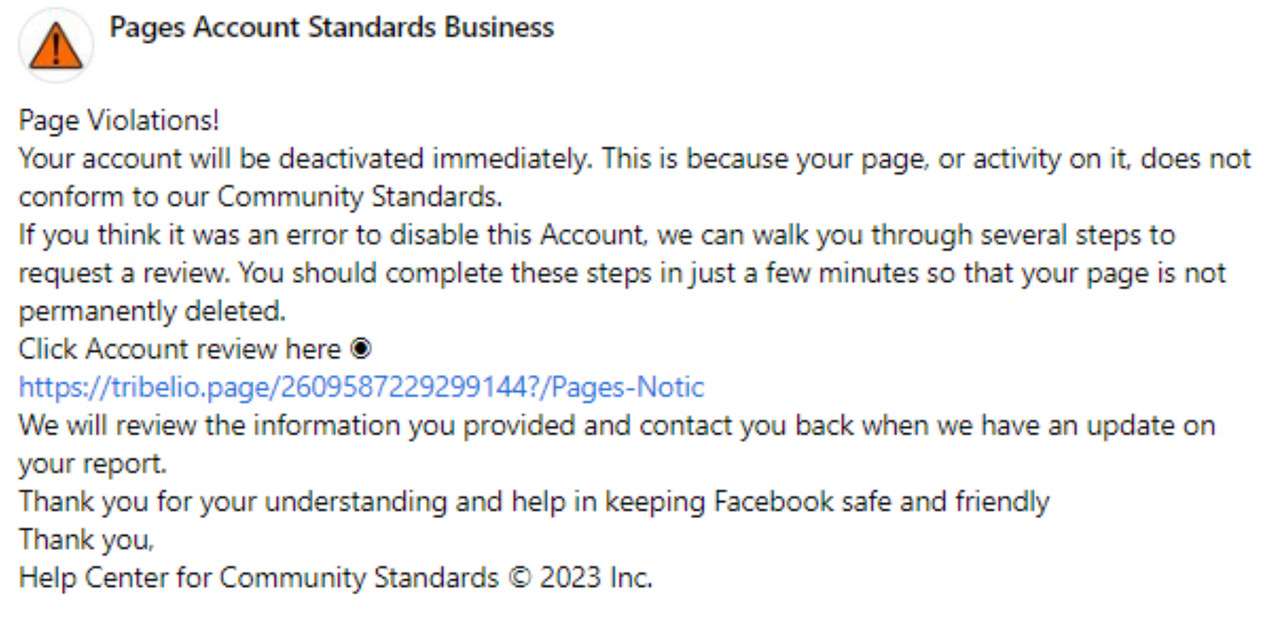
“Your account has been suspended. This is because your account, or activity on it, doesn’t follow our Community Standards.”
“Your Facebook account is due to be deactivated in 48 hours due to unusual activity detected. Please verify to avoid losing your profile.”
“Urgent: Last chance to avoid Facebook account termination for inappropriate content posted.”
“Warning: Your Facebook account is scheduled for permanent deletion in 24 hours due to multiple community standards violations.”
“Alert: Your Facebook account has been flagged for immediate deactivation due to suspicious activity.”
“Final Notice: Comply immediately or your Facebook access will be revoked for multiple terms of service breaches.”
This way, scammers deliver a legitimate-looking message that is meant to scare users and let them quickly follow the instructions.
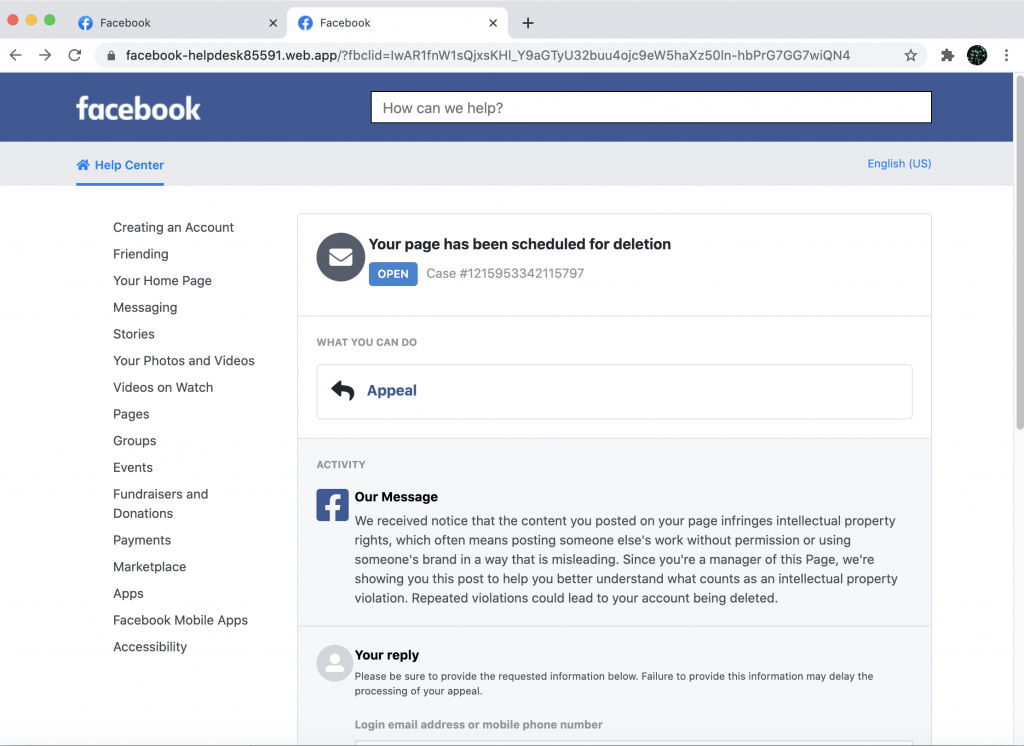
Once you get into the trap and click the link, you will be taken to a legitimate-looking fraudulent page that almost mimics the interface of the original website.
From there, scammers will either make you enter your login credentials or install malware in your system. Besides web links, scammers may also give a phone number to contact, which is also meant to trap you into sharing credentials or other sensitive information.
Once successful, scammers will hijack your account for malicious purposes, try to scam your friends, use your sensitive financial information to steal money, or install malware in your system.
Which Facebook Users Are the Most Vulnerable to the Scam?
Although all Facebook users are vulnerable to the scam, some groups of users are more likely to become the victim. These include but are not limited to:
Inactive Facebook users
Recent policy violators
Aged Facebook users
Users with large friend lists
Business page owners
Commonly, scammers send the message to a large group of users without any specific filters. So, anyone who gets into the fear of losing chats, images, videos, and posts is trapped in such scams.
How to Detect If It’s a Scam?
You never know when you will see a scam attempt. However, there are a few common signs that can help you detect if it’s a scam message/post:
Suspicious message that creates urgency.
Asks for sensitive personal information, such as your password, bank details, identity information, etc.
Grammar or sentence structure errors.
Strange post on your profile about the account suspension/deletion.
The message link takes to a fake page or third-party website.
Suspicious and sudden message/post from your friend.
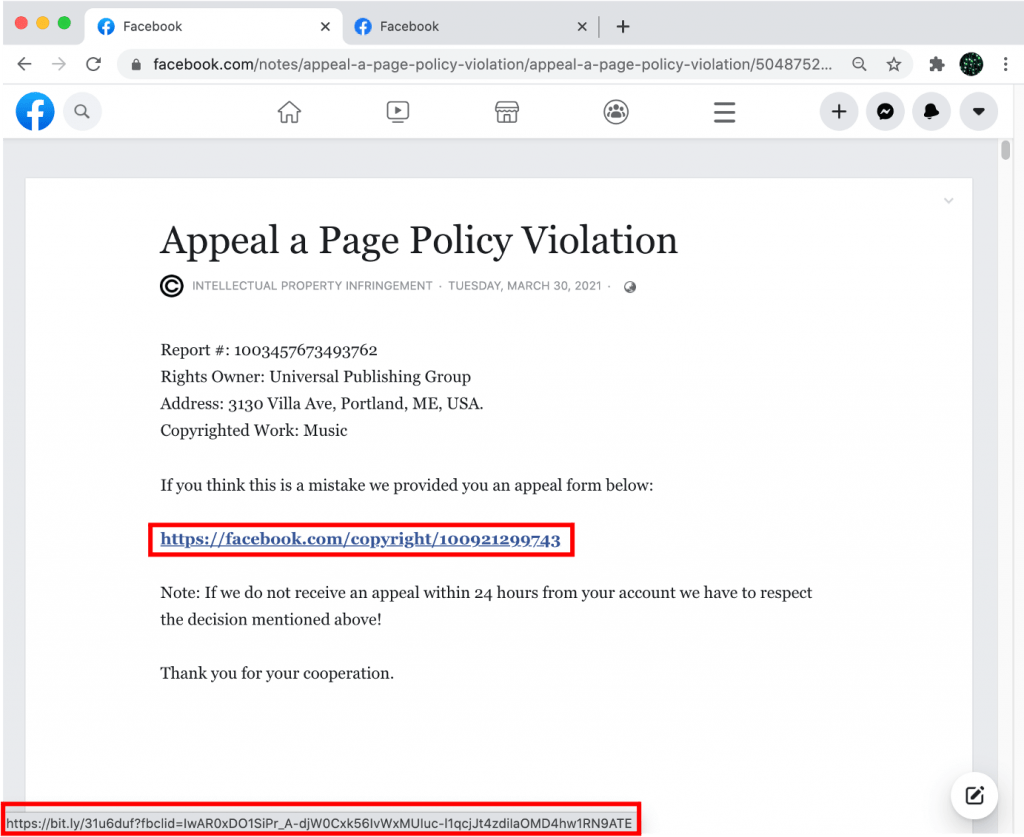
In short, you should activate your senses when you see any message/post that is related to account deletion, deactivation, or suspension. Even if the scammer sends a different message, you can still detect if it’s a scam if the link it takes you has a strange URL and asks for sensitive personal details.
Malicious Link. Source: Trend Micro
What’s Next if You Fell For the Facebook Account Deletion Scam?
If you unfortunately fell for this scam, then don’t panic. You can take a few quick measures to block scammers from harming you. So, below are some essential steps you should follow right away:
Change Password: The first thing is to change your Facebook password. Furthermore, if you have used the same credentials in other services, then change the password from them as well.
Block Debit/Credit Card: If you have shared sensitive information about your debit/credit card, then immediately block the card. In addition, check your bank statement and ensure there are no unauthorized charges.
Alert Friends: Scammers may use your account to trap your friends in similar scams or ask for money. So, alert all your friends about any such suspicious message from your side.
Get Facebook Involved: Interact with the Facebook help forum to report the scam and get further assistance on the compromised account.
Scan for Malware: If the link downloaded something on your system, immediately delete it. Furthermore, scan your computer for malware with the software of your choice.
Check Activity Log: Go through your Facebook activity log to detect any unauthorized posts or messages.
Overall, if you take the mitigation steps discussed above quickly, you can reduce the impacts and even send scammers out before they can do any damage.
Best Practices to Avoid Facebook Account Deletion Scam
The Facebook account deletion scam is avoidable if you follow a few best practices, as follows:
Ignore unsolicited messages
Don’t click or call on any message related to account suspension/deletion
Enable two-factor authentication
Check the URL of any link you click to validate it is the right/original URL
Limit the number of friends
If you receive any suspicious message from a friend, validate it by contacting the friend from any other platform
Report suspicious messages/posts to Facebook
Use strong passwords and regularly change passwords
Designate account recovery contacts
All the above practices and similar others can help you reduce the chances of a Facebook scam.
Wrapping Up – Act Smart Before It’s Too Late
The Facebook account deletion scam has been in full swing for many years now. So, we are on our own to detect such scam activities and avoid sharing our sensitive information. Therefore, this guide will wrap up by recommending you act smart whenever you receive anything related to your Facebook account. Facebook never contacts users this way, so don’t get lured into the trap.
Facebook Account Deletion Spam – Why Can’t Facebook Get Control of this Annoyance was last modified: April 15th, 2024 by Hamza Razzaq
In the digital age, where anonymity and data security are paramount, proxy services have become essential tools. A proxy server acts as a gateway between you and the internet. It provides an additional layer of security and anonymity by masking your IP address and routing your internet requests through a different server. This not only protects your identity but also allows access to geo-restricted content.
What is FineProxy?
Enter FineProxy, a proxy provider established in 2011, known for its affordable services tailored for internet marketers and individuals seeking online privacy. Offering a range of proxies, both shared and private, FineProxy has carved a niche for itself in the market. But is it the best proxy service out there? Let’s explore what users have to say.
User Reviews: The Voice of Experience
Alex 111: “I’ve been using Fineproxy for my internet marketing needs and it’s fantastic! The prices are unbeatable and the unlimited bandwidth is a huge plus. Never had an issue with their service.”
Samantha Lee: “I recently started using Fineproxy and I’m impressed with their customer service. They responded quickly to my queries and were very helpful in resolving my issues.”
Mike Johnson: “As a long-term user, I rate Fineproxy 10/10. They’ve consistently provided top-notch service and their proxies are the best I’ve used.”
Emily Clark: “I appreciate Fineproxy for their free trial and 24-hour money-back guarantee. It shows they’re confident in their service quality. Happy to report I didn’t need the refund – the service was great!”
I Smith: “I was skeptical at first, but after using Fineproxy’s free proxies, I’m a convert. They work well for my casual needs, and I haven’t encountered any major issues.”
Sarah Gomez: “Fineproxy’s extensive location support is a game-changer for my global marketing campaigns. Their proxies are reliable and affordable, which is a rare combo.”
Daniel: “I’ve been with Fineproxy since 2011 and they’ve grown so much. Their data center proxies are robust and I’ve seen significant improvements over the years.”
Jessica Wang: “For anyone on a tight budget, I recommend Fineproxy. Their shared proxies are incredibly cost-effective and have worked well for my small-scale projects.”
Chris Martin: “What I love about Fineproxy is their versatility in supporting different protocols. It’s been a smooth experience for both HTTP and Socks5.”
Laura Davis: “Fineproxy’s customer support team deserves a shoutout! They were super responsive when I had issues configuring the proxy and guided me through the process with ease.”
While the reviews paint a picture of a reliable, affordable, and customer-oriented private proxies, it’s essential to note that every service has its strengths and weaknesses. FineProxy, with its diverse offerings and customer-centric approach, certainly stands out as a strong contender in the proxy service market. Whether it’s the best or not might depend on individual needs and experiences, but it’s clear that FineProxy has won the trust of many of its users.
Is FineProxy the Best? Users Spill Secrets! was last modified: April 30th, 2025 by Colleen Borator
In a rapidly digitizing world, cybersecurity has emerged as a critical concern for businesses of all sizes. The increasing reliance on technology not only streamlines operations but also poses a significant risk of cyber threats. Small, medium, and large businesses alike are potential targets for cybercriminals who are constantly evolving their strategies. A recent study predicts that by 2025, cybercrime damages will cost the world $10.5 trillion annually, up from $3 trillion in 2015. This statistic underscores the urgency for businesses to invest in robust cybersecurity measures. Protecting sensitive data, maintaining customer trust, and avoiding financial losses are just a few reasons why cybersecurity is no longer a choice but a necessity in our interconnected business landscape.
Protection of Sensitive Data
This includes financial information, personally identifiable information (PII), and other proprietary data that, if compromised, could lead to significant damages. Cybersecurity policies and procedures help safeguard this data from unauthorized access, damage, or theft by hackers. Encryption technologies, firewalls, secure networks, and password protection are some of the tools businesses use to protect sensitive data. Furthermore, from hiring a cyber security service provider to conducting regular security audits, businesses can implement a multi-layered approach to ensure the protection of their sensitive data. Especially for small businesses, a data breach can be devastating and lead to costly legal consequences.
Preservation of Reputation
Businesses that suffer data breaches often face significant reputational damage, leading to a loss of customer trust. Maintaining strong cybersecurity protocols helps to avoid such scenarios and preserve a company’s reputation. Customers expect businesses to keep their data safe, and a breach of trust can lead to lost sales, loss of customers, and a damaged brand image. A study by IBM found that the average cost of a data breach for small businesses is $3.86 million. This cost includes not only financial losses but also reputational damage, legal fees, and potential regulatory fines.
Regulatory Compliance
Many industries are subject to regulations requiring them to protect data and personal information. Strong cybersecurity measures help businesses stay compliant and avoid legal repercussions. For example, the healthcare industry is subject to HIPAA regulations that require strict protection of patient information. Failing to comply with these regulations can result in hefty fines and penalties. Implementing cybersecurity measures not only protects sensitive data but also ensures compliance with regulatory requirements. In some cases, businesses may even receive lower insurance premiums for demonstrating strong cybersecurity protocols.
Financial Security
Cyber attacks can result in significant financial losses due to remediation costs, downtime, and lost business. Investing in cybersecurity can save businesses these potential losses. A recent survey found that small businesses in the US lose an average of $200,000 due to cybercrime. These losses can be detrimental to a business’s bottom line and even lead to closure in some cases. By implementing cybersecurity measures, businesses can mitigate these risks and protect their financial security.
From training employees on cybersecurity best practices to regularly updating software and hardware, businesses can take proactive steps to safeguard against cyber threats. Secure your business premises with the most advanced Commercial CCTV Camera Systems available today.
Prevention of Business Disruption
Effective cybersecurity measures ensure uninterrupted business operations. For example, ransomware attacks can lock businesses out of their systems and prevent them from accessing critical data. Such disruptions can result in significant downtime and loss of productivity.
By investing in cybersecurity, businesses can protect against these threats and avoid costly disruptions to their operations. This includes addressing cybersecurity in the supply chain to ensure all external partners and vendors follow robust security practices.Implementing data backup and recovery plans, as well as having a response plan in place, are crucial steps for businesses to take in case of cyber attacks.
Gaining Competitive Advantage
Companies with robust cybersecurity measures can use this as a competitive advantage, demonstrating to customers and partners their commitment to data protection. In today’s digital landscape, customers are increasingly concerned about their data privacy and security. By investing in cybersecurity, businesses can differentiate themselves from their competitors and attract more customers. Additionally, partnering with businesses that prioritize cybersecurity can also strengthen trust between companies.
Supporting Remote Work
With an increasing number of employees working remotely, securing off-site access is becoming more important. Cybersecurity measures ensure the security of remote workers. This includes the use of virtual private networks (VPNs), multi-factor authentication, and secure cloud storage. By protecting remote access to company data and systems, businesses can ensure the continuation of operations and avoid potential cyber threats. Remote work, especially since 2020, has become the new norm for many businesses, and having strong cybersecurity measures in place is crucial for their continued success.
The cost of cybercrime continues to rise, making it imperative for businesses to invest in strong cybersecurity measures to protect sensitive data, maintain customer trust and loyalty, comply with regulations, and avoid financial and reputational losses. By prioritizing cybersecurity, businesses can mitigate potential risks and gain a competitive advantage while also supporting the growing trend of remote work.
Why Cyber Security is Important for Businesses of All Sizes was last modified: December 23rd, 2024 by Charlene Brown
Today, almost everyone knows what cryptocurrency is and how it works. The list of such cryptocurrencies is constantly growing, and the news is just brimming with information about the constant success of this or that coin. The most common of these is Bitcoin. But how does it all work and which wallet should you choose for this? Let’s take a closer look. There are many wallet apps on the market from different providers with a variety of features to choose from.
Sparrow Wallet – a reliable wallet among all existing ones
Quality software wallets provide a great combination of security and ease of use. Depending on how you use your bitcoin, you may want to consider a different type of wallet. Software wallets provide a balance between convenience and security, becoming a popular choice for everyday crypto transactions: buying, selling, storing, trading, and using. The sparrow wallet is one of them. It presents a wide range of functionality and many features.
Advantages of working with the wallet
One of the most important advantages of working with such a wallet is mobility. You can download an application to your phone and track all the dynamics anywhere. This is very convenient and is done in a few clicks! It also offers a user-friendly and stylish interface.
With such a cryptocurrency wallet, security is guaranteed. Only you will know all your data, as security is one of the most basic principles of our work. We know how important this is when dealing with cryptocurrency.
In addition to this, sparrow wallet android provides 24/7 support to its customers. If you have any questions or any problems, you will always get help and answers to your queries. This is very convenient! There is also a FAQ section on the website with answers to many questions.
Bitcoin – a modern investment
In today’s digital world, cryptocurrencies are becoming an increasingly popular means of investment and exchange. However, in order to effectively manage your digital assets, it is important to choose a reliable and convenient cryptocurrency wallet for you. The sparrow crypto service is just such a wallet.
Remember that cryptocurrency is a volatile asset that cannot be guaranteed. Each cryptocurrency can change several times within an hour, so there are no guarantees of profit or loss. All decisions you make are solely your choices.
Cryptocurrency Wallet – How to Make the Right Choice? was last modified: November 21st, 2023 by Colleen Borator
When it comes to estate planning in the Lone Star State, one cannot overlook the pivotal role of trusts. A trust is more than just a legal document; it’s a strategic framework that ensures your assets are managed and distributed according to your wishes, both during your lifetime and after your passing. In Texas, where property rights and inheritance laws are deeply rooted in the state’s identity, setting up a trust is a critical step for many when it comes to managing their estate.
The Importance of Trusts in Estate Planning
Estate planning is a process that many may put off, but it is essential for ensuring that your assets are protected and your loved ones are taken care of. Here’s why trusts are a cornerstone of a solid estate plan in Texas:
Asset Protection: Trusts provide a shield for your assets, safeguarding them from claims and creditors. In states like Arizona, a Miller Trust can help individuals qualify for Medicaid while preserving income.
Avoiding Probate: Unlike wills, trusts typically bypass the probate process, allowing for a quicker and private distribution of assets.
Control Over Distribution: Trusts offer granular control over when and how your assets are distributed to beneficiaries.
Continuity: Trusts can continue to operate and provide for beneficiaries long after the trustor’s death.
Types of Trusts Available in Texas
In Texas, there are several types of trusts available, each serving different purposes and offering various benefits. Let’s delve into the primary trusts you can establish:
Testamentary Trusts
A testamentary trust is created as per the instructions in a person’s will and comes into effect after their death. It outlines specific terms for asset distribution, which can be particularly useful in providing for minors or managing large estates over time.
Revocable Trusts
A revocable trust is flexible; it can be altered or dissolved by the trustor during their lifetime. This adaptability makes it a popular choice for those whose circumstances may change, such as acquiring new assets or undergoing a change in marital status. The attorney from Rhodium Law suggests getting a revocable trust when you anticipate changes in your financial situation or family structure. This type of trust provides the flexibility to update beneficiaries or assets as your circumstances evolve.
Living Trusts
A living trust is established during the trustor’s lifetime and is designed to manage assets before and after death. It’s a proactive approach to estate planning, allowing for a seamless transition of asset management should the trustor become incapacitated.
The Role of Trusts in Texas Estate Planning
In Texas, trusts are not just about distributing wealth; they’re about creating a legacy and ensuring that your estate is handled with care and according to your specific desires. Here’s a closer look at the strategic role of trusts in estate planning:
Providing for Unborn or Minor Children: Trusts can secure the financial future of children who are yet to be born or who are still minors, ensuring they are provided for until they reach maturity.
Charitable Giving: If philanthropy is important to you, a trust can be structured to provide ongoing support to charitable organizations.
Minimizing Estate Size: By transferring assets into a trust, you can potentially reduce the size of your taxable estate, which may have significant tax implications.
In conclusion, trusts are an indispensable tool in the estate planning arsenal, especially in Texas. They offer a combination of protection, control, and flexibility that is hard to match with other estate planning instruments. Whether you’re just starting to think about your estate or looking to refine an existing plan, understanding the role and types of trusts available is a crucial step in safeguarding your assets and your family’s future.
At the Kazi Law Firm, PLLC we help clients throughout the state of Texas, providing you with the knowledge you need to make informed decisions about your estate planning strategy.
Why Everyone in Texas Needs a Trust was last modified: March 10th, 2025 by Colleen Borator
If you’re currently using platforms such as Dropbox, Google Drive, or iCloud to save personal documents, photos, and work files, cloud security should be a priority.
Even though popular cloud service providers are responsible for monitoring and responding to obvious and immediate threats, their efforts are not foolproof.
By gaining an understanding of some of the most common cloud security threats, you can also do your part to protect treasured memories and important information.
Why Cloud Security Matters
Countless people rely on cloud storage services to safeguard their data, much of which is sensitive information. However, learning more about cloud security threats is not just beneficial for cyber security professionals.
Should a data breach occur, you’re left vulnerable to identity theft, financial loss, and the loss of documents, photos, and videos that you can’t always replace.
It is possible for you to learn the security knowledge required to monitor your network. Obtaining a cloud security certification can also be advantageous, providing in-depth knowledge and skills to protect your data better and respond to potential threats.
Alternately, you can work with your cloud service provider to better protect your data from hackers, and educating yourself is the first course of action.
By taking simple steps to mitigate common online data risks, you can enjoy greater peace of mind knowing your most important information is safe.
7 Common Cloud Security Threats (and How to Manage Them)
Let’s look at some of the most common threats that could impact your data in the cloud and what you can do to reduce risks.
1. Data Breaches
Even though most cloud service providers (CSP) use advanced security monitoring techniques, a data breach is never impossible. Advanced hackers are always searching for weaknesses that can give them access to CSP user data.
A data breach is when sensitive information is accessed without authorization. And because millions of people currently use a CSP to store their data, these platforms have become prime targets.
Hackers are usually in search of financial, medical, and any other customer information that they can use to their advantage.
To reduce the impact of a data breach, make a point of choosing your CSP carefully. It also helps to regularly back up your data and password-protect your most sensitive documents.
2. Account Hijacking
Account hijacking has become one of the most common and serious cloud security threats. A weak password is all a cybercriminal needs to access your data in the cloud. Even more so if you tend to use the same password for multiple accounts. Once a criminal identifies your password, they’re able to hijack your accounts.
To better protect your data, it’s highly recommended that you strengthen your passwords and avoid repetition. The more complex the better – include lower and uppercase letters, numbers, and special characters.
Implementing two-factor authentication is another step you can take. This means that an additional step is required over and above your password to access your account. Common authentication methods include biometrics, security questions, authenticator apps, and temporary codes.
3. Poor Access Management
Do other people currently have access to your cloud storage facilities? Can you access your account on more than one device? Poor access management is another common way for cybercriminals to access your data.
Review who has access to your cloud account and decide whether it’s necessary. If you do want to provide access to multiple people, ensure the passwords are strong and that two-factor authentication is applied. It’s also important to check which devices are linked to your account. Limit this to one device where possible to minimize risks.
4. Malware
If malware makes its way onto your computer or mobile device, it increases the risk of a data breach. Files are constantly traveling inside and outside the cloud, each of which is an opportunity for hackers to sneak in malicious code.
To prevent malware threats, install antivirus software on your work and personal computer, as well as your mobile device. This will ensure that any files are scanned before you download or upload them. The software will also regularly scan your device for threats.
You should also avoid opening any email attachments from people or businesses you don’t know – you never know when they might contain malware.
5. Insecure APIs
API breaches are fast becoming one of the most common cybersecurity threats. Software components rely on APIs, or application programming interfaces, to communicate with each other. Your weather app, Uber, and mobile payment apps are all examples of software that use APIs.
As applications are updated, some APIs may be overlooked, which leaves you unprotected.
To avoid this threat, make sure that your apps are always up-to-date and secure. It’s also best to uninstall any unnecessary or outdated apps.
6. Zero-Day Attacks
Freelancers and businesses often invest in open-source software such as Google Cloud and Microsoft Azure, leaving them vulnerable to zero-day attacks.
Unfortunately, open-source platforms will always have weak spots, which is what hackers take advantage of. They aim to infiltrate these areas before developers and administrators have a chance to patch them.
Protect yourself by only working with reputable open-source software and configuring it correctly – the default settings are not always the best option. Over and above this, make sure that you’re regularly updating the software and backing up your data.
7. Shadow IT
Bluetooth-based tools, messaging apps, and collaboration tools all carry shadow IT risks. Without the proper protection, third parties can introduce malignant code, authorize data changes, and access unauthorized information. This is true on both your work and personal computer or mobile device.
One of the ways that you can avoid shadow IT threats is to turn your Bluetooth off whenever it’s not needed. It also helps to check your Bluetooth settings to prevent unauthorized connections. When using messaging apps or collaboration tools, make sure messages are encrypted and that you never open files from unknown sources.
Cloud Security Simplified
Knowing that cybercriminals are always looking for ways to gain access to sensitive information can be disconcerting. However, by choosing the right CSP and taking joint responsibility for your data, it is possible to avoid common and ongoing cloud security threats.
Shield Your Data: 7 Cloud Security Threats to Watch Out For was last modified: December 4th, 2024 by Lark Begin
Before the internet, metal fences were enough to stop most security risks. Now, cybercriminals can wreak havoc in many different ways, making security a proactive and critical priority for business owners.
This article aims to guide you through the key steps for assessing and improving the security of your business, with an emphasis on implementing robust security measures, policies, and best practices.
Step 1: Conduct a Security Audit
The first step in assessing your business security is to conduct a comprehensive security audit. A security audit will unveil your existing security measures, if any, and identify gaps and vulnerabilities in your defenses. A thorough audit helps pinpoint areas that need immediate attention and aids in crafting a more effective security strategy. Some critical areas to focus on in security audits are:
Once the audit is complete, it’s time to update your security policies. All of those weak links you identified during the audit need to be addressed. Standard focus areas for strengthening security policies include:
Setting stringent data access controls
Ensuring regular updates of systems and software, and
Clear, concise, and regularly updated policies not only help in safeguarding sensitive data but also in creating a culture of security awareness among employees.
Step 3: Implement Strong Password Management
Another critical security policy for businesses is strong password management. Credential stuffing and harvesting are common entry points for cybercriminals, requiring businesses to pay special attention to the length and complexity of their passwords.
A tool that can significantly aid businesses in managing employee credentials is a password manager. Password managers help by generating and storing complex passwords for individual users or teams, eliminating the need for storing passwords insecurely or using easy-to-guess passwords. It helps maintain a high level of password security across the organization and significantly reduces the risk of data breaches.
Step 4: Train Your Employees
With 84% of data breaches resulting from human error, it is easily the most common security risk businesses face. Employees almost exclusively rely on technology to do their jobs yet often lack formal training to understand and recognize security risks.
Provide regular training to your employees about security best practices, potential threats like phishing scams, and the importance of adhering to company policies. The training should be comprehensive, continuous, and tailored to different roles within your organization. One approach to employee training that has been catching steam recently is human behavior management.
Step 5: Regularly Update and Backup Data
Outdated software is another common entry point for hackers. Without having the latest updates, your systems are exposed to many vulnerabilities that cybercriminals know about. Ensure all your business software is up-to-date with the latest security patches and updates. Enable automatic updates whenever possible and remind employees to adhere to these security practices.
Additionally, regular backups of important data are crucial. In a security breach or data loss, having up-to-date backups can mean the difference between a minor setback and a significant disruption in business continuity.
Step 6: Secure Sensitive Business Data with a VPN
If your business employs remote workers, securing their data and network access poses a unique challenge, especially if they use their personal devices. One solution to this problem is deploying a Virtual Private Network (VPN) across the business.
A VPN establishes a secure and encrypted connection over networks that might be less secure, such as public networks. So, even if employees access business networks remotely, their connection is encrypted, shielding all sensitive information.
Here, it’s also important to select a reliable VPN that would be a perfect fit for your business. A Reddit user created a useful database called the VPN comparison table to address the strengths and weaknesses of available VPN providers.
Step 7: Monitor, Review, and Improve
Finally, the key to maintaining robust security is constant vigilance. Threats and attack techniques constantly evolve, so you must evolve with them. Regularly monitoring your network for any unusual activity, periodic reviews of your security policies, and staying informed about the latest cybersecurity trends are all essential practices. Remember, security is not a one-time effort but a continuous improvement process.
Consider investing in monitoring and detection tools to help you stay on top of threats. It’s also critical to foster a security-centric mindset among all employees, as their awareness and proactive behavior play a pivotal role in fortifying the company’s overall security posture.
Conclusion
Assessing and improving the security of your business requires a comprehensive approach that includes conducting regular audits, updating policies, training employees, using tools like password managers and VPNs, and constantly monitoring and improving your security posture. By following these steps, you can significantly enhance the security and resilience of your business against the myriad of cyber threats present in today’s digital world.
6 Steps to Assess the Security of Your Business was last modified: April 1st, 2024 by Kristine Vedder
In modern times, where hackers can infiltrate even the most secure systems with relative ease, it is more important than ever to ensure that your business is taking all of the necessary steps to keep data safe and secure. One technology has emerged as a viable option for companies looking to bolster their security protocols — blockchain. Not familiar? Don’t worry! In this post, we will explore what blockchain security entails and why it should be taken seriously by businesses looking to stay ahead of cybercriminals.
Introducing the Benefits of Blockchain Security
Blockchain security is becoming increasingly important in today’s digital age. Not only does blockchain technology provide enhanced security measures, but it also offers several benefits that make it stand out from traditional security systems. For one, blockchain is decentralized, meaning that information is not stored in one central location that can be hacked or corrupted. Instead, it is distributed across a network of nodes, making it virtually impossible to tamper with. Additionally, blockchain offers transparency, so users can see exactly how information is being stored and accessed. With its robust security and numerous benefits, it’s no wonder that blockchain technology is rapidly gaining popularity across various industries.
Hiring Professional Blockchain Security Services
When it comes to implementing blockchain security in your business, it’s highly recommended to hire professionals who specialize in this technology. These experts will conduct a thorough assessment of your existing security infrastructure and work closely with your team to integrate blockchain effectively. To learn more about the range of services offered by blockchain security professionals, visit their website, where you will find comprehensive information about their capabilities, expertise, and how they can tailor their services to meet your specific business needs. They have the knowledge and tools necessary to address potential risks proactively, ensuring that your business remains secure and resilient against cyber threats. Furthermore, their ongoing support and maintenance services will guarantee that your blockchain system operates at its optimum, adapting to the evolving security landscape. Partnering with blockchain security professionals, therefore, is a strategic move that can significantly enhance your business’s data protection capabilities.
Understanding Risks Associated with Not Implementing Blockchain Security
As technology evolves and continues to shape our daily lives, the importance of cybersecurity has never been more critical. This is especially true when it comes to technologies like blockchain, which have the potential to revolutionize industries and disrupt traditional systems. Without proper implementation of blockchain security measures, businesses and individuals open themselves up to a range of risks, including hacks, data breaches, and theft. These risks can not only result in the loss of valuable assets but can also damage a business’s reputation and erode consumer trust. It is imperative that individuals and organizations understand these risks and take steps to protect themselves by implementing robust blockchain security measures.
Potential Vulnerabilities and Weaknesses Within Your System
Blockchain security, when not implemented, leaves your systems susceptible to a number of vulnerabilities and weaknesses. This could allow unscrupulous individuals to perform double-spending, where they spend the same cryptocurrency twice, leading to financial losses. Furthermore, a lack of blockchain security could expose your system to 51% of attacks. In a 51% attack, a single entity gains control over the majority of the network’s mining power, allowing it to manipulate the transaction history and double-spend coins. Without blockchain security measures, your system is also prone to Sybil attacks, where an attacker creates multiple false identities to gain a disproportionate amount of influence over the network. These are just a few examples of the potential vulnerabilities that can occur when blockchain security measures are not in place.
Strategies to Minimize Cybersecurity Risks
With more and more aspects of our lives taking place online, the threat of a cyber attack becomes increasingly concerning. Fortunately, to minimize your risk, there are a variety of strategies you can implement. First and foremost, it is important to stay up to date on the latest security measures and technologies. This can include things like two-factor authentication or virtual private networks. Additionally, practicing good internet habits, such as avoiding suspicious emails or links, can go a long way in protecting your personal information. By taking a proactive approach to online security, you can significantly reduce your risk of falling victim to a cyber attack.
Overview of Next-Generation Security Solutions
The next generation of security solutions is here to help businesses stay one step ahead of these threats. These solutions go beyond traditional firewalls and antivirus software, employing advanced technologies such as machine learning and artificial intelligence to identify and mitigate potential security risks. They also offer greater visibility into network activity and give IT teams the tools to quickly respond to and remediate any issues that arise. With the cyber threat landscape evolving every day, adopting next-generation security solutions is essential for businesses looking to protect their assets and keep their operations running smoothly.
The advent of blockchain technology has revolutionized the cybersecurity landscape, offering unparalleled security features that outshine traditional systems. However, the failure to implement these measures exposes businesses to significant threats, including data breaches and financial losses. By hiring professional blockchain security services, businesses can integrate this advanced technology into their security infrastructure, thereby enhancing their protection against cyber threats. Remember, staying abreast of the current cybersecurity advancements, practicing good internet habits, and adopting next-generation security solutions are paramount in this digital age. The security of a business should never be compromised; therefore, the move towards blockchain security is not only beneficial but necessary.
The Risks of Not Implementing Blockchain Security was last modified: November 6th, 2023 by Charlene Brown
Cryptocurrencies came as a savior for many who wanted to own assets in a more decentralized manner. People wary of traditional means of banking poured their money into a supposedly safer way of owning assets. Cryptocurrency has seen its fair share of ups and downs since its inception, but mostly were related to market forces and legislation issues. Recently, there has been a rise in crypto theft, which will also affect the investors who have tied their savings to this money medium.
Digital assets have become a way of living as people get rid of hard-paper currency in favor of digital wallets. These wallets usually have top-notch security measures in place and present the owner with flexible options for usage. However, in 2023, Coinbase lawsuits have been on the rise due to the ever-growing influence of crypto-jacking and crypto theft. Cybercriminals have found a new way of stealing as they target people’s hard-earned assets stored in crypto wallets.
Cybercriminals can theoritically easily steal money from crypto accounts due to their anonymity and untraceable nature. Thus, the strengths of crypto currency often become a saving grace for criminals who want to exploit people off their hard-earned money. Here are five ways to secure your digital wallets and cryptocurrency assets so that cybercriminals cannot get in.
1. Use Hardware Wallets
The use of hardware wallets is an excellent method via which you can keep your digital assets safe. These physical devices store your cryptocurrency offline, thus making your assets extremely safe and secure against online attacks. It especially reduces the threat of phishing attacks and online hacking attempts; the two most common ways hackers get into your system. There are many trustworthy software in the market, but you must choose a hardware wallet that comes from a reputable source. Counterfeit products are abundant in the market and cause more harm than good.
2. Use Strong Passwords / 2-factor Authentication
Strong passwords have been advised to customers who have had an online presence for a long time. Crypto wallets are no different, and you must remember what’s at stake here: your hard-earned savings. For this reason, a strong, unique, and unpredictable password is your best bet against hackers who want to crack your account. The stronger the password, the more time hackers require to crack it, and on top of it, you should enable two-factor authentication. Thus, whoever tries to hack into your wallet will need a password and access to your cell phone.
3. Be Wary of Phishing Attempts
Surfing the web comes with its dangers as more and more hackers find the online web space conducive to their activities. Phishing attempts are a common mode of finding a person’s details to hack into their financial accounts. It is important to use anti-virus software while surfing the web and ensure that the webpage you’re viewing has the ‘HTTPS’ added before the webpage’s name. HTTPS is a secure protocol that ensures data sent to and from a particular website is encrypted and thus cannot be hacked into. Suspicious email addresses and webpages should be avoided and not clicked when surfing the World Wide Web. Also, never disclose your personal information to anyone online, however trusted their credentials may seem.
4. Regularly Update Software and Wallets
In the modern world, keeping track of all the changes happening around us is important. We must be informed about the latest developments in cybercriminal activity, how to thwart them, and the best defenses available against them. Regularly updating your wallets and software linked to your crypto exchange is one way of ensuring safety. You can also download the latest security patches and improvements to your wallet and software, including protection against newer threats.
5. Practice Cold Storage / Regular Monitoring
Assets that need not be moved for long periods must be stored in cold storage options. It means securing your cryptocurrency holdings in an offline storage option away from the dangerous world of cyber criminals. Such hardware wallets contain all your private keys safely stored in an offline place, but you must monitor your assets regularly for any suspicious activity.
In addition to these five secure practices, you must keep up with the latest threats by joining crypto communities and learning about the latest developments; diversifying your crypto portfolio is another way to stay one step ahead of the hackers. In summary, using strong passwords, offline storage, and two-factor authentications can greatly increase your chances of securing crypto exploits. Keeping yourself and your software up to date is the best protection against these cybercriminals.
Five Secure Ways to Avoid Crypto Theft in 2023 was last modified: November 3rd, 2023 by JW Bruns
Accidents can be incredibly stressful and uncertain times. Whether it’s a car crash, slip and fall, or workplace mishap, sustaining an injury is more than just painful—it can have long-term medical and financial implications. In situations like these, seeking legal assistance becomes crucial to protect your rights and fight for the compensation you deserve. That’s where an accident lawyer comes in.
The purpose of this blog post is to educate readers on when it’s time to consult an accident lawyer in Houston TX after sustaining an injury. By recognizing the signs and circumstances that call for professional legal counsel, you can navigate the often complex aftermath of accidents with confidence.
Signs It’s Time to Consult an Accident Lawyer
Sign #1: Serious Injuries
If you’ve suffered serious injuries such as fractures, head trauma, or spinal cord damage due to someone else’s negligence, seeking immediate legal assistance is paramount. While seeking medical attention should be your first priority after any injury, consulting with an accident lawyer who specializes in personal injury cases will help assess the full extent of damages caused by the accident and work towards obtaining adequate compensation.
In cases of serious injuries, there may be ongoing medical treatment required or future rehabilitation needs. This can lead to overwhelming expenses not only for hospital bills but also for therapies or caregiver costs. An experienced accident lawyer in Houston, such as Husain Law + Associates — Accident Attorneys, P.C. understands how complications arising from these injuries may affect your day-to-day life and seeks compensation accordingly.
Sign #2: Multiple Parties Involved
Accidents involving multiple parties—such as multi-car collisions—can make determining liability a daunting task. With each party pointing fingers at one another, negotiations become complicated. Determining fault requires careful investigation into various factors such as traffic laws violated or driver negligence involved.
In these situations, having an experienced lawyer who specializes in handling cases involving multiple parties can make all the difference. They will gather relevant evidence, including police reports, witness statements, and even expert opinions if necessary. By diligently investigating the accident scene, interviewing witnesses, and analyzing available data, the lawyer can determine liability to establish a strong case on your behalf.
Sign #3: Disputed Liability
Some at-fault parties may refuse to accept responsibility for their actions or deny their liability outright. This often occurs with opposing accounts regarding fault or conflicting witness statements. In such cases, an accident lawyer becomes essential in gathering additional evidence beyond what’s collected at the scene of the incident.
An experienced accident lawyer in Houston TX has access to a network of professionals who can provide expert testimonials or perform accident reconstructions when needed. They will also interview witnesses thoroughly and use various legal resources to build a robust case against the at-fault party. By collecting compelling evidence and presenting it effectively, they increase your chances of securing fair compensation for your injuries.
Sign #4: Insurance Company Disputes
Insurance companies are notorious for their claim denials, unreasonably low settlement offers, or unnecessary delays in processing claims. These tactics aim to minimize payouts and protect their bottom line. Negotiating with insurance adjusters without proper legal representation puts you at a disadvantage as they prioritize profit over justice.
By hiring an accident lawyer in Houston TX specialized in personal injury cases, you have someone well-versed in negotiating with insurers on your side. They understand how these companies operate and know how to navigate through their strategies effectively. An attorney will fight tenaciously for your rights while assessing the true value of your claim based on damages suffered—both economic (medical bills) and non-economic (pain and suffering).
Sign #5: Long-Term or Permanent Disabilities
Accidents resulting in long-term or permanent disabilities can significantly impact your quality of life. From ongoing medical care expenses to loss of earning capacity due to inability to work full-time or pursue certain occupations—it all adds up financially.
An accident lawyer in Houston TX ensures you receive the necessary compensation to meet these future costs. They will work with medical experts and financial specialists to determine the long-term effects of your injuries accurately. This includes estimating ongoing medical expenses, required assistive devices or modifications to accommodate disabilities, and projected loss of income or earning potential.
Sign #6: Complex Legal Processes
Legal procedures surrounding accidents can be intricate and overwhelming for individuals without legal training. Filing lawsuits, navigating court proceedings, dealing with uninsured motorists—all these processes require careful attention to detail and knowledge of applicable laws within Houston TX.
The complexities involved necessitate the expertise of an accident lawyer who can guide you through each step. Whether it’s understanding various statutes of limitations that affect your ability to file a claim or deciphering legal jargon in official documents, their experience is invaluable in avoiding any missteps that may harm your case.
The Benefits of Early Legal Consultation
Timing is crucial when it comes to seeking legal counsel after an accident. Here are some benefits associated with early consultation:
Timely Evidence Collection:
Meeting with an accident lawyer in Houston TX promptly allows for the gathering of evidence while it’s fresh and readily available. Time-sensitive evidence includes witness statements, photos from the scene, video footage (if any), or physical evidence like damaged property or equipment involved in the accident—anything that supports your version of events.
As time passes, memories can fade, witnesses may become difficult to locate, and vital evidence might disappear. By consulting an accident lawyer in Houston TX as soon as possible following an accident, you significantly increase the chances of collecting all relevant evidence before it becomes unavailable or unreliable.
Legal Protection:
An accident lawyer in Houston TX provides invaluable protection by handling all communication with insurance adjusters, opposing parties’ attorneys, or anyone else involved in disputing liability related to your case. They know how insurance companies operate and won’t fall victim to their tactics aimed at undermining your claim’s legitimacy.
Moreover, during conversations pertaining to your case, it’s crucial not to inadvertently damage your chances of receiving fair injury-related compensation by making misguided statements or accepting inadequate settlement offers. An accident lawyer in Houston TX will guide you on what to say and do, ensuring you don’t compromise your legal position.
Negotiation and Settlement Skills:
Accident lawyers in Houston TX specialize in negotiating on behalf of their clients. Their experience helps them understand the intricacies involved in insurance claim negotiations and dispute resolution procedures. They know how much your case is worth and won’t settle for anything less than what you deserve.
Furthermore, they can utilize their expertise to develop compelling arguments supported by evidence that compel opposing parties to increase their initial settlement offers. By maximizing the value of your claim through strategic negotiation, they aim to secure a fair settlement promptly.
Preparing for Litigation:
If a fair settlement cannot be reached through negotiations or alternative dispute resolution methods, an accident lawyer in Houston TX will prepare your case for litigation effectively. This requires extensive research into relevant laws and precedents, gathering expert witnesses when needed, and building a strong legal strategy tailored specifically to fit the unique circumstances surrounding your accidents.
Preparing for litigation is a meticulous process that involves drafting legal documents such as pleadings or complaints while adhering to specific court rules. Having an experienced accident lawyer in Houston TX handle these preparations ensures that all required elements are met accurately—an advantage when pursuing justice through formal legal processes.
How to Choose the Right Accident Lawyer
Selecting the right accident lawyer in Houston TX is crucial in ensuring you receive sound legal advice and effective representation throughout your case. Consider these factors when choosing your attorney:
Experience and Expertise:
Look for a lawyer who has extensive experience handling cases similar to yours within Houston TX—preferably with positive outcomes for their clients. A track record of success demonstrates their ability to navigate complex situations and formulate winning strategies tailored specifically for personal injury cases like yours.
Additionally, familiarity with local laws governing personal injury claims is important. Laws may differ from state-to-state or even within cities, so finding an accident lawyer in Houston TX well-versed in the Houston TX legal landscape is advantageous.
Communication and Availability:
Effective communication between you and your attorney is essential for achieving positive results. Choose an accident lawyer in Houston TX who takes the time to listen to your concerns, answer your questions promptly, and keep you updated on developments in your case. Good communication fosters trust, reduces anxiety, and ensures that everyone involved remains on the same page throughout the process.
Additionally, accessibility is vital when selecting an accident lawyer. Emergencies or pressing questions may arise at any moment—and having someone available during such times can greatly alleviate stress levels associated with navigating complex legal processes.
Fee Structures and Agreements:
Understanding how legal fees and expenses work is crucial before hiring an accident lawyer in Houston TX. Many personal injury attorneys operate on a contingency fee basis. This means they only get paid if they win or settle your case successfully. However, remember to discuss other potential costs beyond their contingency fees—for instance, fees charged for filing court documents or hiring expert witnesses.
Ensure all fees are transparent from the beginning by discussing them during initial consultations. Go over any retainer agreements in detail so both parties understand their responsibilities regarding payment arrangements and additional charges that might apply.
Conclusion
In conclusion, recognizing when it’s time to consult an accident lawyer in Houston TX can significantly impact the trajectory of post-accident proceedings. Serious injuries, disputed liability, involvement of multiple parties, disputes with insurance companies—all these signs indicate that seeking legal counsel is necessary to protect your rights effectively.
Early consultation provides numerous benefits—timely evidence collection while it’s fresh and reliable; legal protection against tactics employed by insurance companies; skillful negotiation to secure fair settlements; comprehensive preparation for litigation should negotiations fail. By choosing an experienced and specialized accident lawyer who understands your unique circumstances within Houston TX specifically, you can confidently pursue the compensation and justice you deserve after sustaining an injury due to someone else’s negligence.
Don’t delay—take action by consulting a reputable accident lawyer today. Time is of the essence when it comes to preserving evidence and initiating legal proceedings. With the right legal guidance, you can navigate the complexities of the legal system with confidence, ensuring your rights are protected and securing the compensation necessary to aid in your recovery and secure your future well-being.
When to Consult an Accident Lawyer in Houston TX After an Injury was last modified: November 18th, 2023 by Timothy Munene