5 Ways to Create an SEO-Friendly Website Design

When you create a site with a Web Design Agency, your goal is to make it accessible to users. Your visitors should discover your website through their online search activities. This is where Search Engine Optimization comes in.

SEO enables your website to show up on Google search results when users search for terms related to your business. The process functions like a street sign that directs pedestrians to your shop business located within a busy city area.

The blog will feature five Ways for creating website designs with SEO standards. The article will explain Search Engine Optimization and its benefits for your site.

What is SEO?

Search Engine Optimization is what SEO stands for. This is a way to get your website to appear on search engines like Google.

When people search for something on Google, it looks at a lot of websites to find the answers. Search Engine Optimization helps your website become one of the answers that Google finds.

Search Engine Optimization is about using the words and making content that people find useful. It is also about designing your website in a way.

You can think of SEO like a book that tells search engines what your site is about. If you partner with an SEO Consultant and use SEO correctly, more people can find your site. They can then visit it and learn about what you sell.

5 Tips to Create a Website Design with Effective SEO

The following are the 5 ways to create a site design with SEO:

Create Quality Content

People really like content. The essential requirement for SEO exists in this particular method. People will remain on your site for extended periods when your site offers clear and useful information because they will develop trust in your brand.

Search engines, such as Google, prefer sites that provide answers to user queries. After creating a site with a Webflow Expert, you should create site content that people can easily read. Your writing should use simple words together with short paragraphs. It is also an idea to use clear headings.

Do not add words that are not useful; add details that people will find helpful instead. Your content should be about what people’re searching for. This is important for your website.

Good content is what people want, so make sure your website has content. When visitors find exactly what they need on your site, they are more likely to come back — and that’s great for SEO.

Practice Internal Linking

Internal linking is when you connect one page of your website to another page on your website. Let us say you write a blog about web design, you can link this blog to another blog about SEO tips.

This way, visitors can look at more of your stuff without leaving your site. Internal linking also helps search engines figure out how your website is set up. Internal linking is like constructing roadways that connect different buildings throughout a city.

The better the public transportation system operates, the more beneficial it becomes for people who need to travel. The use of links on your website provides users with better navigation while increasing their access to your web design and SEO tips blogs.

The practice of intelligent internal linking maintains user interest while enhancing the search engine optimization results of your website.

Make Sure Your Site’s Pages are Indexed 

Indexing is when search engines like Google know that your website is there. If your website pages are not indexed, people will not see them when they search for something on Google.

That is why you need to make sure Google can find your pages and read what is on them. You can check this by putting your website in Google Search Console.

Also, you have to make sure that your pages are not stopping search engines from looking at them by accident. When Google can see your pages, they get added to Google’s collection of websites.

The website pages that are really good and have everything right can be seen by more people because they are higher up in the search results.

Your website pages need to be good so they can rank higher in Google search results. No indexing means no visibility, so this step is very important.

Make Your Site Mobile-Friendly

People use their phones to look at the internet every day. If your website does not function well on a phone, people will not stay long on your website. A good website is one that works well for devices such as phones and tablets.

Therefore, such a website will be able to change to fit your screen. The words should be easy to read. The buttons should be easy to press. The images should be able to load.

Google loves mobile-friendly websites. Google will place your website at the top by using this. Your site will achieve top results on Google when it has an attractive design and works well on a mobile device.

Follow Accessibility Guidelines

Making your website easy to use for everyone is what accessibility is about. This includes people with disabilities. For instance, some people use tools like screen readers to listen to the things on your website.

To make your website easy to understand, you should do things. You should add headings and make it easy to get around your site. You should also add words to describe the pictures on your site.

This is called text. It is also an idea to use colors that are easy to see. When you do these things, your website is accessible. This means more people can use your website without any problems. Search engines like your website when it is easy to use

They like it when your website is well organized because it is easy for them to look at your website and understand what is on it. This is because accessible websites like your website are easier for search engines to crawl.

If the website is good-looking and usable for phones and tablets, then the website will be ranked at the top of the results list of Google. A well-designed website is useful for the search engine optimizer.

Final Thoughts

Making a website that search engines like is not that difficult. You need to do things that make sense. First, you should write things that people find helpful. Then you should connect the pages of your website with links. Your website requires search engine accessibility. Your website needs to be presentable because search engines require it to be easily discoverable.

Your website needs to function correctly on mobile devices while providing simple navigation for all users. When you create a visually appealing website that successfully attracts visitors through search engine optimization, your site becomes more beneficial for users. Your website requires effective design and search engine optimization methods to achieve its success. The process requires you to begin with minor adjustments, maintain consistent implementation, and your results will improve over time.


Top 6 E-Commerce Marketing Strategies That Drive Sustainable Growth

Creating your personal e-commerce platform and filling it with valuable, catchy products is a great start to a business. However, that’s exactly what it is: a start, with the remaining part of the road being unclear and full of frustrating hurdles. 

You might be offering the best products in the world, but it won’t matter unless you let the world know about them. Using marketing strategies is your only solution; the problem is, there are a lot of them, so which ones should you choose to strengthen your business and drive its sustainable growth?

Top 6 Marketing Strategies for E-Commerce

Paying for ads and splashing them all over social media? Sending a ton of emails and hoping to convert a lead into a paying customer? Sticking to SEO principles? Which approach is the best? Let us present the 6 top e-commerce marketing strategies that will show the most efficient results in 2026.  

Video Storytelling 

The first strategy is video storytelling. It has a simple but effective principle: instead of doing direct sales pitches, you appeal to your audience through emotions and hold their interest by presenting an engaging movie-like scenario. 

Imagine that you’re selling a variety of USB-powered lamps. Instead of simply displaying one of them and describing its features, you create a short video with a character who finds themselves in a new, cold, bare apartment. They’ve just moved in, there is a ton of work ahead, and they’re feeling tired and depressed. 

The lamp is one of the few things they brought along, and when they turn it on, the apartment transforms. The warm lighting seems comforting and hopeful: the gray blankness vanishes, and the lamp keeps working through the night, soothing the character greatly. 

A video like this will resonate with people emotionally, making them relate to the character and their choice of a product. Here is what you need to know about video storytelling as an AI in e-commerce marketing strategy:

  • Considering the wild popularity of TikTok, Instagram Reels, and YouTube Shorts, it’s clear that the majority of people love consuming content in a short video format. That’s why video storytelling is such a potentially lucrative area in the sphere of marketing.
  • Mini-movie ads have real plots that even someone not necessarily interested in your products might be compelled to watch. This stimulates engagement and makes it more likely for people to see your ad from start to finish. 
  • With video storytelling, you demonstrate how your products work better than in traditional ads. Instead of parroting what features something has and how great it is, you actually get to show it and make it a central part of the plot.  
  • Emotional hooks improve conversion, as it’s much simpler for people to feel connected to your characters and understand why they should buy your products. 

Undoubtedly, this strategy has its drawbacks. As you can probably imagine, creating videos with quality content is time-consuming. While AI can help with some parts, you shouldn’t rely on it to plot and mass-produce your storytelling ads: people have learned to recognize AI at this point, and for many of them, it’s an immediate turn-off. 

Besides, finding a balance between a random short movie and a smart, engaging mini-movie ad can take you a lot of time and wasted effort. Storytelling marketing is a complex form of art, and it is difficult to master it. If you do, though, the returns will be more than worth it. 

Micro-Influencer Marketing

The second effective marketing strategy is making a deal with a couple of micro-influencers. Sure, you might want to target someone with a larger base of subscribers, but this is where quality triumphs over quantity. It’s better to find someone related to your unique e-commerce niche — for example, if you’re selling tea, then targeting ardent tea lovers will be a great idea.

Small communities tend to be more united and dedicated, which is another reason why micro-influencer marketing is a good approach. As the 2025 research showed, around 14% of marketers planned to dedicate about half of their marketing funds to influencer-based campaigns in 2026, so this strategy has been proven to work. It has some other benefits, too, such as:  

  • Establishing relationships with micro-influencers is cheaper than paying for sponsored content across larger channels; you will be able to afford more placements, which will increase your marketing efficiency.
  • Subscribers of minor celebrities tend to trust their recommendations more because they see these people as real human beings with honest likes and dislikes.
  • You stand a chance to cultivate long-term marketing bonds with such influencers, which will benefit your product as more people will start thinking of it as something familiar and highly recommended.

The key secret to excelling at this marketing strategy lies in finding reliable and suitable micro-influencers. Once you do, your effort will start bringing fruit sooner rather than later.  

Paid Advertising

Paid advertising is one of the most overused marketing strategies, yes, but it’s also highly effective. With its help, you can reach your customers through platforms like Google, Meta, and others, scaling a lot of traffic even with one thoughtful ad if you’re lucky.

Specifically, paid ads tend to capture high-intent users, meaning people who are already looking for something you sell. If someone viewed a product but didn’t buy it, retargeting ads can send them reminders. 

In the end, everything depends on how good your ads are and how much you pay for marketing. Quality visuals, catchy messages, and relevant products will stand higher chances of resonating with the audience and getting them to place an order. 

Search Engine Optimization 

Some people believe that SEO is dead. In fact, SEO is still one of the most effective ways to improve eCommerce product discovery by helping shoppers find the right products faster through search and category pages. In reality, it keeps bringing profit to marketers; you just need to know how to keep up with the changes that keep taking place within this industry. Here are the tips to consider:

  • Your product pages will rank higher if you use precise keywords and concise but clear descriptions. 
  • E-stores with fast loading times, mobile usability, good design, and clear layout result in better user experience, which can also affect your rankings.
  • The more content you have on your website, the better; you’ll get an even better ranking if you type questions and answer them in clear words right on top of each page.
  • Relevant long-tail keywords will attract more buyers with a high buying intent.

SEO marketing has an accumulative, long-term effect. You might invest more heavily at the start, but in the end, you’ll see that it’s one of the most cost-effective advertising strategies out there.

Personalized Experience

After acquiring users through influencer marketing, paid advertising, and SEO, delivering a compelling on-site experience is essential to turn visitors into engaged users and potential customers. A well-designed, personalized experience encourages visitors to explore content, interact with products, and move closer to purchase—making personalization a key focus in modern e-commerce. If you want personalization to scale across channels and customer data, Salesforce Commerce Cloud consulting can help unify your storefront, journeys, and insights without patchwork tools.

For beauty and fashion e-commerce in particular, AI-powered tools such as virtual try-on can significantly enhance user engagement. Today, virtual try-on no longer requires costly or complex AR implementations. Companies like Perfect Corp offer flexible AI API solutions for makeup, hairstyles, and apparel try-on. These solutions enable users to upload a photo to instantly test products, experiment with new looks, and even perform AI-driven skin analysis—creating a more immersive, personalized shopping journey that drives confidence and conversion.

Helpful Content Creation 

The best thing about content creation is that it can be genuine and relevant, and it will keep bringing you profit. Consumers prefer to do research before buying anything, especially if a product is costly, and you can help them with it.  All you’ll need to do is post educational articles, guides, video reviews, and other helpful content. To support this content at scale, many e-commerce teams leverage creative automation to create bulk images from reusable templates for product guides, comparisons, and educational assets.

Imagine that you’re selling products for animals, including toys and tech. Your buyers will be curious to see how a specific product works and how real animals react to it. They’ll also appreciate reading detailed explanations and guidelines about its usage and value. 

Instead of simply selling something, explain why people should buy it. Illustrate how pets can benefit from this product, why they tend to like it, what makes it special, and so on. 

In addition, you can start posting articles and other types of content related to animals in general. For instance, discuss common illnesses and ways to treat them; share interesting facts and recommendations about food, walks, basic care, etc. 

This will bring various animal lovers to your website. They might not be necessarily looking for your products, but once they read your content, a lot of them will decide to check it out, and at least some will place their orders.  

Such content creation will work well with SEO marketing. Combine the two, and you’ll start seeing natural results soon enough. The best thing about this marketing strategy is that it’s a long-term one. Every single piece of content you create will keep accumulating and attracting more and more people to your e-commerce website.  

Make Your E-Commerce Brand Stand Out

There are many more potentially lucrative marketing strategies you can use to make your e-commerce platform successful. However, the five strategies above are what really drives growth these days. 

Some of them might not work for you, so decide which approach suits your needs and capabilities best. There are two possible solutions here: you can invest in one specific strategy, maintain it for a while, and then gauge how effective it is, or you can combine several of them at the same time. 

Focus on delivering quality over quantity in your marketing efforts. Produce useful, human-written content that your potential clients might find truly helpful, and reap the benefits that will come with it.      

Why Is Software Important for an SEO Agency?

When it comes to digital marketing, SEO agencies are there to help businesses grow their visibility online, attract qualified traffic, and achieve meaningful results, not just vanity metrics. That goal requires more than experience and strategic thinking; it demands powerful, reliable software that supports strategy, sharpens execution, and measures performance with precision.

Simply put, software has become as central to modern SEO work as keyword research itself. From automating repetitive tasks and delivering real-time insights to managing multi-client campaigns and producing custom reports, the right tools transform what would otherwise be a series of manual chores into scalable, measurable, strategic action.

In this article, we’ll explore why software is so important for SEO agencies, how it improves outcomes, and how choosing the right tools can give teams a competitive edge.

SEO Today Is More Complex Than Ever

Search engine optimization is no longer just about sprinkling keywords into content. Search engines constantly evolve their algorithms, user behavior changes rapidly, and new technologies such as AI-driven search experiences are reshaping how results are surfaced and consumed. Agencies today need to juggle dozens of tasks, and attempting to manage all of this manually, with spreadsheets, scattered dashboards, and disconnected data sources, quickly becomes inefficient, error-prone, and ultimately unsustainable. Software solves these challenges by centralizing data, automating routine tasks, and delivering insights that matter for strategy and execution.

Automate the Routine, Focus on Strategy

One of the most immediate benefits of software for an SEO agency is the ability to automate repetitive, time-consuming tasks. Tasks that used to take hours, such as compiling keyword tracking data, formatting client reports, or auditing multiple sites for technical issues, can now be handled automatically. Automation not only saves time, but it also reduces human error and enables teams to redirect energy toward higher-value strategic thinking.

For agencies managing many accounts, this shift is critical. Instead of spending hours pulling data from different sources, consultants and strategists can analyze results, ideate improvements, and focus on creative problem-solving that actually improves client outcomes.

Multi-Client Management

Unlike in-house SEO specialists working on a single brand, agencies need tools that scale across dozens, sometimes hundreds, of clients. Software helps agencies manage this complexity with centralized dashboards, client segmentation, role-based permissions, and unified reporting workflows. This not only improves internal workflow but also helps agencies maintain consistency, track performance trends over time, and ensure no insight gets lost in translation.

One concrete example of how specialized tools benefit agencies working with so many clients can be seen in dedicated software for SEO agency platforms like Click Insights. This type of software is designed specifically with agency needs in mind, bundling key features such as rank tracking, SEO monitoring, content auditing, automated reporting, and white-label dashboards into a cohesive platform.

Click Insights enables agencies to:

  • Monitor daily keyword positions and long-term trends
  • Integrate seamlessly with GA4 and Google Search Console
  • Audit content and competitor performance
  • Generate customized dashboards and reports for clients
  • Offer branded, white-label visibility dashboards that clients can self-serve

This not only saves time but also strengthens client confidence by providing clear, data-driven evidence of progress. When agencies can show measurable improvements in organic visibility or technical SEO health, it directly reinforces their value.

Better Reporting and Client Communication

Clients today expect measurable results, clear visibility of progress, and regular reporting backed by data, not long PDF attachments full of static screenshots. Modern SEO platforms allow agencies to generate dynamic, custom reports that highlight meaningful metrics such as ranking changes, organic traffic growth, page performance trends, and visibility across search engines. These reports can often be automated, delivered weekly, monthly, or on demand, and customized with branding, improving professionalism and transparency.

Clear reporting builds trust, reinforces value, and keeps clients aligned with long-term strategic goals, all of which are key to strong client relationships.

Collaboration and Team Efficiency

Agency work is often collaborative, involving account managers, SEO specialists, writers, and strategists. Software makes these collaboration workflows smoother by integrating task assignments, comments, shared dashboards, and version histories. Teams operate more efficiently when everyone can see updates, understand progress, and work from consistent, up-to-date data. This reduces misunderstandings and accelerates project delivery.

Final Thoughts

Software isn’t a luxury for modern SEO agencies. It is a must! After all, it saves time, strengthens strategy, improves client communication, and delivers the insights needed to make confident decisions. From automation and performance tracking to custom reporting and centralized data, the right tools empower agencies to do more, smarter.

How to Audit a Website: The Complete Step-by-Step Guide for 2026

Every website accumulates technical debt, outdated content, and hidden issues that silently erode performance. A comprehensive website audit reveals these problems before they tank your rankings, drive away visitors, or create compliance risks. In 2026, with Google’s algorithms more sophisticated than ever and user expectations at all-time highs, knowing how to audit a website isn’t just useful—it’s essential for digital survival.

This guide walks you through the complete website audit process, from initial crawl to final recommendations. Whether you’re auditing your own site or preparing an audit for a client, you’ll learn exactly what to examine, which tools to use, and how to prioritize fixes for maximum impact.

What Is a Website Audit?

A website audit is a systematic examination of your site’s performance, technical health, content quality, user experience, and search engine optimization. Think of it as a comprehensive health check that diagnoses problems, identifies opportunities, and provides a roadmap for improvement.

Website auditing encompasses multiple dimensions:

  • Technical Analysis: How search engines crawl and index your pages, site speed, mobile responsiveness, security protocols, and code quality.
  • SEO Evaluation: How well your site is optimized for search engines, including keyword targeting, on-page elements, internal linking, and backlink profile.
  • Content Assessment: Quality, relevance, accuracy, and performance of your existing content, identifying gaps and opportunities.
  • User Experience Review: How visitors interact with your site—navigation, design, accessibility, and conversion pathways.
  • Security and Compliance Check: Verification that your site meets security standards and regulatory requirements like GDPR and ADA accessibility.

Why Website Audit Is Important

Understanding why website audit is important helps justify the investment of time and resources. Here’s what a comprehensive audit delivers:

Audit BenefitBusiness Impact
Technical issue detectionPrevents ranking drops, improves crawlability
SEO optimizationIncreases organic traffic and conversions
UX improvementsReduces bounce rate, increases engagement
Compliance verificationAvoids legal penalties and reputation damage
Performance trackingEnables data-driven decision making

Types of Website Audits

Technical SEO Audit

Focuses on how search engines crawl, index, and render your website: site architecture, XML sitemaps, robots.txt, page speed, Core Web Vitals, mobile-friendliness, HTTPS, structured data, canonicalization, and crawl budget.

Content Audit

Evaluates every piece of content for quality, relevance, and performance. Identifies top-performing content, underperforming pages, content gaps, outdated information, and thin content.

UX Audit

Examines your site from the visitor’s perspective: navigation, information architecture, page layout, forms, mobile experience, and user flows. Combines quantitative data with qualitative research.

Accessibility Audit

Verifies that your website works for users with disabilities, checking WCAG compliance: screen reader compatibility, keyboard navigation, color contrast, alt text, video captions, and form labels.

Security Audit

Identifies vulnerabilities: SSL/TLS configuration, software updates, authentication systems, data protection, malware detection, and backup procedures.

How to Do a Website Audit: Step-by-Step Process

Step 1: Define Audit Scope and Objectives

Before crawling a single page, clarify: audit type (comprehensive or focused), priorities (rankings, conversions, compliance), stakeholders, and timeline. Document these parameters to keep the audit focused.

Step 2: Gather Existing Data

Collect: Analytics data (traffic, behavior, conversions), Search Console data (indexing, queries, errors), previous audits, and business context (recent changes, known problems).

Step 3: Crawl the Website

Use crawling tools (Screaming Frog, Sitebulb, DeepCrawl) to systematically examine every accessible page. Configure to mirror how search engines see your site, including JavaScript rendering and mobile/desktop versions.

Step 4: Perform Technical SEO Analysis

With crawl data in hand, examine: Indexability (pages blocked, canonical tags, sitemaps), Crawlability (orphan pages, redirect chains, crawl traps), Page Speed (Core Web Vitals: LCP, INP, CLS), Mobile Friendliness, and Security (HTTPS, mixed content).

Step 5: Evaluate On-Page SEO Elements

Review: Title Tags (unique, 50-60 chars, with keywords), Meta Descriptions (compelling, 150-160 chars), Heading Structure (single H1, logical hierarchy), Content Quality, Internal Linking, Image Optimization, and Structured Data.

Step 6: Analyze Content Performance

Export all URLs and enrich with performance data. For each content piece, assign action: Keep (high-performing), Update (needs refresh), Consolidate (merge weak pages), or Remove (low-value).

MetricSourcePurpose
Organic trafficGoogle AnalyticsIdentify top performers
RankingsSearch Console / SEO toolsAssess visibility
BacklinksAhrefs / Moz / SemrushMeasure authority
EngagementAnalytics (time, bounce)Evaluate quality
ConversionsAnalytics goalsTrack business impact

Step 7: Assess User Experience

Combine methods: Analytics Review (bounce rates, exit pages, site search), Heatmap Analysis (Hotjar, Clarity), User Testing (watch real users), and Accessibility Testing (WAVE, axe DevTools).

Step 8: Review Backlink Profile

Examine: total referring domains, domain authority distribution, anchor text variety, toxic links for disavow, lost links worth recovering. Compare to competitors for opportunities.

Step 9: Compile Findings and Prioritize

Transform data into recommendations. Categorize by type and severity. Estimate impact and effort. Create priority matrix focusing on high-impact, low-effort items first.

PriorityImpactEffortExamples
P1 – CriticalHighLow-MediumBroken redirects, missing titles, indexing blocks
P2 – HighHighHighSite speed improvements, content gaps
P3 – MediumMediumLowMeta descriptions, image alt text
P4 – LowLowAnyMinor UX tweaks, edge cases

Step 10: Create the Audit Report

Structure with: Executive Summary (key findings in 1-2 pages), Detailed Findings by category, Prioritized Recommendations with impact estimates, and Technical Appendix with raw data. Tailor depth to audience.

How to Audit a Website for SEO: Checklist

Crawling and Indexing

Verify robots.txt isn’t blocking important content. Check XML sitemap accuracy and submission status. Review Search Console coverage report. Identify noindexed pages and orphan pages. Resolve redirect chains, loops, and broken links. Address duplicate content and verify canonical tags.

On-Page Optimization

Ensure unique, keyword-optimized title tags (50-60 chars) and compelling meta descriptions (150-160 chars). Verify single H1 per page with target keyword and logical heading hierarchy. Optimize images with alt text and compression. Review internal linking and implement structured data.

Technical Performance

Achieve Core Web Vitals targets: LCP under 2.5 seconds, INP under 200ms, CLS under 0.1. Optimize server response time, implement caching, minimize render-blocking resources. Compress images and enable text compression. Verify HTTPS and mobile-friendliness.

Content Quality

Identify thin content needing expansion and outdated content requiring updates. Discover content gaps compared to competitors. Check for keyword cannibalization and verify E-E-A-T signals.

Website Audit Tools

CategoryToolsPurpose
CrawlingScreaming Frog, Sitebulb, DeepCrawlTechnical data extraction
SEO AnalysisSemrush, Ahrefs, Moz, Search ConsoleComprehensive SEO data
PerformancePageSpeed Insights, GTmetrix, WebPageTestSpeed optimization
AccessibilityWAVE, axe DevTools, LighthouseCompliance testing

Manual audits provide point-in-time snapshots, but websites change constantly. AI-powered SEO platforms like Spotrise.ai continuously monitor your site’s health, automatically detecting issues as they arise rather than waiting for scheduled audits.

For ongoing website health management, combine periodic comprehensive audits with automated monitoring tools that alert you to critical issues in real-time.

How Often to Audit Your Website

Site TypeRecommended FrequencyKey Triggers
Small business (<50 pages)Quarterly full auditAfter major updates
Medium site (50-500 pages)Monthly tech + quarterly fullNew content launches
Large site (500+ pages)Continuous + monthly deep divesAlgorithm updates
E-commerceWeekly tech + monthly contentSeasonal changes

Beyond scheduled audits, conduct immediate reviews after: major site changes (redesigns, migrations), significant traffic drops, Google algorithm updates, security incidents, and new feature launches.

How Much Does a Website Audit Cost?

TypeCost RangeNotes
DIY Audits$100-500/mo tools + 10-40 hoursRequires SEO knowledge
Freelancer$500-2,500Varies by complexity
Agency$2,500-10,000+Enterprise-grade analysis
Audit-as-a-Service$100-500/monthContinuous monitoring

The right investment depends on site complexity and stakes. A $2,000 audit preventing $50,000 in traffic loss delivers obvious ROI.

Common Website Audit Mistakes

  • Auditing Without Clear Goals: Without defined objectives, audits become data dumps. Establish what decisions the audit will inform.
  • Ignoring Context: Raw data without interpretation misleads. A page with zero traffic might be new, seasonal, or blocked.
  • Overwhelming Stakeholders: Presenting 500 issues without prioritization paralyzes decision-making.
  • Neglecting Implementation: An audit sitting in a drawer helps no one. Build accountability into the process.
  • One-and-Done Mentality: Websites require ongoing monitoring and periodic comprehensive reviews.
  • Tool Dependency: Tools surface data but don’t provide judgment. Interpret findings in context.

What to Do After Your Website Audit

Transform findings into results: share with stakeholders, create implementation roadmap with owners and deadlines, fix critical issues first, schedule follow-up verification, establish monitoring alerts, and plan your next comprehensive review.

Conclusion

Learning how to audit a website equips you to maintain a technically sound, user-friendly, and search-optimized digital presence. Key takeaways:

  1. Start with clear objectives—know what you’re trying to achieve
  2. Use appropriate tools without replacing human judgment
  3. Prioritize by impact and effort
  4. Implement systematically with ongoing monitoring
  5. Conduct audits regularly, not just when problems appear

Your next step: pick one section of this guide and audit that aspect of your site this week. Start with technical SEO if unsure—it’s foundational to everything else.

What Modern Businesses Gain From Investing in Strategic Marketing Efforts

Modern businesses operate in markets shaped by constant change, shifting consumer expectations, and intense competition. Strategic marketing offers a structured way to communicate value, reach the right audiences, and stay visible as industries evolve. Companies that approach marketing with clear goals and planning often gain stronger positioning than those relying on short-term promotion.

Investment in thoughtful marketing efforts supports stability and long-term direction. Rather than reacting to trends, businesses can guide their messaging, refine their presence, and align outreach with measurable objectives. This approach builds momentum that supports sustainable performance across different stages of growth.

Stronger Brand Recognition And Identity

Strategic marketing helps create and maintain a consistent brand identity. Visual elements, messaging, and tone work together to establish a recognizable presence that customers come to trust. Repetition across multiple channels reinforces familiarity, credibility, and long-term recognition.

Clear brand recognition allows businesses to stand out in competitive markets. When customers can easily identify a company’s values, personality, and offerings, their decision-making process becomes simpler. This clarity reduces confusion, builds confidence, and strengthens emotional connections between the audience and the brand.

A defined identity supports internal alignment. Teams share a clear understanding of how the brand should be presented, improving cohesion across marketing campaigns, sales initiatives, and customer interactions.

Market Awareness And Competitive Positioning

Strategic marketing helps businesses stay aware of industry trends and competitor activity. For companies seeking sector-specific guidance, resources such as landscape business growth insights demonstrate how informed strategies support stability and forward momentum. This awareness allows brands to respond to shifting demand and changing customer expectations.

Understanding the market enables brands to position themselves more clearly. Messaging can emphasize unique strengths while addressing unmet needs. Clear positioning minimizes direct comparison and reduces price-driven competition.

Ongoing awareness informs strategic decisions and campaign planning. Companies can identify gaps and opportunities before competitors. Informed positioning strengthens reputation and long-term market presence.

More Targeted Audience Engagement

Strategic marketing emphasizes understanding audience needs, preferences, and behaviors. Research-driven planning helps businesses communicate directly with the people most likely to engage. Messaging becomes timely, relevant, and more impactful.

Targeted engagement increases response rates across digital and traditional channels. Campaigns tailored to specific segments generate stronger interest and interaction. This approach minimizes wasted resources and improves efficiency.

Deeper audience connection fosters loyalty and advocacy. When customers feel understood, they are more likely to return and recommend the brand. Consistent engagement encourages word-of-mouth promotion and strengthens long-term relationships.

Improved Return On Marketing Investment

Planned marketing efforts prioritize measurable outcomes to maximize effectiveness. Clear benchmarks allow businesses to monitor performance and adjust campaigns as needed. Data-driven insights provide guidance, reducing reliance on guesswork and assumptions.

Strategic oversight improves budget allocation and resource use. Investments can focus on high-performing channels and campaigns, while underperforming tactics are revised or discontinued. This approach ensures marketing efforts deliver greater value.

Visible returns increase confidence in continued marketing investment. Leadership gains understanding of how marketing drives revenue, visibility, and long-term growth. Measured results support informed decisions and contribute to sustained business success.

Scalable Growth Opportunities

Marketing strategies designed for growth can expand alongside a business. Systems, processes, and messaging frameworks make it possible to enter new markets or introduce offerings without starting from scratch. This approach reduces delays and ensures consistent brand representation.

Scalability supports adaptability. Campaigns can be adjusted for different regions, audiences, or platforms while maintaining consistent messaging. Businesses can execute expansion efforts more efficiently and respond quickly to market changes.

Long-term planning strengthens cumulative results. Each campaign builds on previous initiatives, creating ongoing impact rather than isolated wins. Strategic growth planning positions businesses for sustained success.

Stronger Customer Relationships And Retention

Marketing extends beyond attracting new customers. Ongoing communication supports retention through education, updates, and value-driven content. For companies seeking guidance, different resources show how sustained engagement strengthens customer loyalty.

Retention-focused strategies reduce reliance on constantly acquiring new leads. Returning customers provide higher lifetime value and lower acquisition costs. This approach contributes to long-term financial stability and business growth.

Strong customer relationships build trust and encourage feedback. Customers who feel connected are more likely to share insights that guide product and service improvements. Consistent engagement ensures continued relevance and strengthens brand loyalty.

Strategic marketing provides modern businesses with structure, clarity, and direction. Through consistent branding, targeted engagement, and measurable planning, companies gain tools to navigate competitive environments with confidence.

Investment in marketing strategy supports more than visibility. It strengthens relationships, guides growth, and supports informed decision-making. Businesses that commit to thoughtful marketing efforts position themselves for sustained relevance and long-term success.

How a Well-Executed Influencer Marketing Campaign Can Build Trust and Increase Sales

Influencer marketing has matured. What started as a brand awareness experiment has become a serious revenue channel for many businesses. At the same time, audiences have grown more skeptical. Consumers can spot inauthentic partnerships quickly, and when trust breaks, sales usually follow in the wrong direction.

That tension is exactly why execution matters more than ever. A well-executed influencer marketing campaign does more than generate impressions. It builds credibility, shortens the buying journey, and gives potential customers social proof that feels real. Poorly executed campaigns, on the other hand, can feel forced, waste budget, and damage brand perception. Let’s look at the difference between the two.

Influencer Marketing Measurement as the Foundation for Trust and Sales

One of the biggest mistakes businesses make in influencer marketing is waiting until the campaign ends to think about results. Influencer marketing measurement should be defined before the first post goes live, not after performance disappoints.

Influencer marketing measurement has evolved beyond counting likes and views. Modern measurement focuses on connecting creator activity to real business outcomes such as conversions, customer acquisition costs, repeat purchases, and long-term brand lift.

From a trust perspective, measurement creates accountability. Internally, it helps marketing teams justify investment and refine strategy. Externally, it allows brands to work more transparently with creators by setting clear expectations around goals and performance.

When businesses understand which creators drive meaningful action, they can invest more confidently in long-term partnerships. This consistency benefits audiences as well. Repeated exposure to a trusted creator using a product over time feels more authentic than a single sponsored mention. It’s about understanding what works so trust-building efforts translate into sustainable sales growth.

Starting an Influencer Marketing Campaign With the Right Structure

Before trust can be built, a campaign needs a solid foundation. Successful marketing campaigns using influencers start with clarity.

Businesses need to define what they are trying to achieve. Is the goal brand awareness, lead generation, product launches, or direct sales? Each objective requires a different type of creator, content format, and success metric.

Starting with structure also means identifying the right platforms, budgets, and timelines. A rushed campaign with vague goals often results in content that feels disconnected from both the brand and the audience. In contrast, campaigns built around a clear strategy give creators the context they need to produce meaningful content.

When creators understand the purpose of a campaign, they are better equipped to tell authentic stories that resonate with their audience. That authenticity is where trust begins.

Choosing the Right Creators Over the Largest Reach

One of the most persistent myths in influencer marketing is that bigger audiences always deliver better results. In reality, trust is often stronger in smaller, more focused communities.

Customers are more likely to believe recommendations from creators who feel relatable and consistent rather than those who promote a new product every week. Alignment matters more than scale. The right creator speaks to the right audience in a way that feels natural.

Businesses should evaluate creators based on audience relevance, engagement quality, content style, and past partnerships. A creator whose values and tone align with the brand is more likely to produce content that converts.

This careful selection process also protects brand trust. Audiences notice when a partnership feels forced, and they reward brands that show discernment in who they collaborate with.

Creating Content That Educates Instead of Interrupts

The most effective influencer content doesn’t feel like an ad. It feels like useful information or a genuine experience shared by someone the audience already trusts.

Educational content plays a powerful role here. Tutorials, product demonstrations, behind-the-scenes looks, and honest reviews help customers understand how a product fits into their lives. This reduces uncertainty, which is one of the biggest barriers to purchase.

From a sales standpoint, education shortens the decision-making process. Customers who understand a product’s value and use cases are more likely to convert and less likely to return it.

Businesses should resist the urge to over-script content. Providing guidelines while allowing creators to communicate in their own voice tends to produce more credible and engaging results.

Maintaining Transparency to Protect Credibility

Transparency is not optional in influencer marketing. Disclosure requirements exist for a reason, and audiences appreciate honesty. Clear labeling of sponsored content does not reduce trust. In many cases, it enhances it.

When creators are upfront about partnerships and still speak authentically about their experience, audiences are more likely to believe the recommendation. Brands that encourage transparency signal confidence in their product rather than fear of scrutiny.

Transparency also applies to expectations behind the scenes. Clear contracts, fair compensation, and realistic deliverables create healthier creator relationships. Those relationships often show up in the quality of the content itself.

What Are the Benefits of a Website Builder?

A professional online presence is now essential for businesses, freelancers, and creatives in the digital world. However, not everyone has the technical skills or financial means to hire professional web developers. This shift has changed how entrepreneurs develop their digital strategy, pushing many toward solutions that blend professionalism with accessible technology. Modern web development prioritizes efficiency while maintaining quality, allowing individuals to build their brand identity on their own. Knowing the full benefits of these platforms helps decision-makers select the best solution while maximizing their digital investment.

Why Non-Technical Entrepreneurs Are Embracing Website Builders in 2026

The entrepreneurial landscape has shifted dramatically, with startup founders and small business owners recognizing that technical barriers should never prevent market entry. Modern platforms eliminate the steep learning curve traditionally associated with web development, offering intuitive interfaces that translate creative vision into functional reality. Anyone researching top-rated options for small business website creation quickly discovers that professional templates now rival custom designs in both aesthetics and functionality.

Cost Efficiency and Budget Management

Financial considerations remain paramount for emerging businesses, as these ventures must carefully balance limited budgets while establishing themselves in competitive markets where resources are often stretched thin. Traditional web development projects, which have long been the standard approach for businesses seeking an online presence, often require substantial upfront investments that can be financially burdensome, sometimes reaching thousands of dollars before the business has any opportunity to generate even a modest return on that considerable initial expenditure. Accessible alternatives use predictable subscriptions for strategic resource allocation.

Speed to Market Advantages

Launching quickly can determine competitive success, as businesses that bring their products or services to market faster often gain a significant advantage over slower-moving competitors in their industry. While conventional development timelines, which typically involve extensive planning, coding, and testing phases, stretch across many months of dedicated work, modern self-service platforms, designed with user-friendly interfaces and pre-built templates, enable complete website deployment within mere days or even hours, dramatically accelerating the path from concept to launch. This is the gap AI now closes: you can build websites with AI agents that handle the design, copy, and setup from a plain-language description, quickly and with no coding required.

Built-In SEO and Analytics Features That Drive Organic Traffic

Visibility determines digital success, making search engine optimization capabilities essential rather than optional. Contemporary platforms integrate sophisticated SEO tools directly into their frameworks, democratizing techniques previously reserved for marketing specialists. A comprehensive website builder typically includes meta tag editors, URL customization, image optimization, and structured data implementation without requiring manual coding.

Integrated Performance Tracking

Understanding visitor behavior transforms marketing effectiveness. Built-in analytics dashboards reveal traffic patterns, popular content, conversion funnels, and user engagement metrics through accessible visualizations. Owners can track leads, drop-offs, and traffic sources.

Mobile Optimization Standards

Search engines prioritize mobile-friendly websites, so responsive design is essential for ranking success. Modern platforms, which have been specifically designed to address the growing demands of mobile users, automatically generate mobile-optimized versions of websites, thereby ensuring that users enjoy consistent and seamless experiences across all devices, including smartphones, tablets, and desktop computers, without requiring any additional effort from website owners or developers.

E-Commerce Integration Made Simple for First-Time Online Sellers

Selling products online requires specialized functionality that extends well beyond a basic web presence, as merchants need robust tools and features to manage their digital storefronts effectively. Payment processing, inventory management, shipping calculations, and tax compliance, which each demand specialized knowledge and careful attention to regulatory requirements, collectively create a level of operational complexity that frequently overwhelms many new sellers who are attempting to establish their first online retail ventures. Integrated e-commerce solutions address these challenges comprehensively:

1. Secure payment gateway connections supporting multiple transaction methods

2. Automated inventory tracking prevents overselling

3. Shipping rate calculators based on weight and destination

4. Tax computation tools ensuring regulatory compliance

5. Order management systems streamline fulfillment workflows.

Research from the University of Pittsburgh’s web development resource guide confirms that integrated platforms significantly reduce technical barriers for commerce implementation.

Customization Freedom Without Writing a Single Line of Code

Visual design tools have evolved remarkably, offering granular control over every aesthetic element. Drag-and-drop editors enable precise positioning, color scheme customization, typography selection, and layout adjustments through intuitive interfaces. Users can maintain ongoing connections with their audience through regularly updated content sections, blog integration, and social media embedding features.

Template libraries offer foundational frameworks while still allowing complete flexibility for personalization and customization. Business owners can customize industry-specific designs to express their brand. Advanced platforms offer CSS injection bridging simplicity and sophistication.

Ongoing Maintenance and Updates Handled Automatically

Traditional websites demand ongoing maintenance for security patches, updates, and compatibility fixes. Self-managed hosting consumes time better spent on business. Platform-based solutions effectively transfer these critical responsibilities to specialized infrastructure teams, which ensures continuous protection and robust security maintenance without requiring any direct user intervention or technical oversight.

Security certificates, backup systems, and performance optimization all happen invisibly behind the scenes, working continuously to protect your website without requiring any manual intervention or technical oversight from you. When new browser standards emerge from the ever-evolving technological landscape or critical security vulnerabilities suddenly appear and threaten website integrity, comprehensive updates deploy automatically and seamlessly across all hosted sites, ensuring continuous protection without requiring manual intervention from site administrators. This maintenance automation eliminates unexpected downtime while ensuring business continuity remains fully intact.

Your Path to Digital Independence Starts Here

The remarkable transformation from an initial concept to a truly compelling and professional online presence, which was once considered a challenging endeavor reserved for experts, no longer requires specialized technical knowledge or substantial financial investment from those who wish to establish themselves digitally. Modern website creation platforms deliver professional results using accessible tools designed for non-technical users. These solutions provide the foundation for sustainable online success, whether launching a business, showcasing portfolios, or expanding retail digitally. Starting your digital identity has never been easier or more rewarding.

B2B Inbound Marketing That Actually Drives Pipeline (Not Just Traffic)

Picture this: an operations manager at a mid-sized services firm opens their laptop at 7:30 a.m. and realizes half the sales team’s calendars are out of sync—again. Meetings disappear. Follow-ups slip. Notes live in three different places. The team isn’t “bad at process.” They’re just running on fragmented systems.

So the ops manager does what modern B2B buyers always do: they search.

They don’t want a pitch. They want an answer. They want clarity, proof, and a solution that fits their reality—security requirements, device policies, and a team that can’t afford downtime.

That moment is exactly why B2B inbound marketing works.

Inbound isn’t “blog more.” It’s a system for showing up when buyers are already in motion—researching quietly, comparing options, and building a shortlist long before they ever fill out a form.

In practice, B2B inbound marketing turns that silent research phase into your best opportunity to earn trust—before your competitors even know the prospect exists.

What B2B inbound marketing really is (and why it wins today)

B2B inbound marketing is the process of attracting and converting business buyers by publishing the resources they’re actively looking for—guides, comparisons, checklists, calculators, implementation answers, and proof. Instead of interrupting prospects with cold outreach, inbound draws them in with relevance.

The key distinction: B2B buying is research-heavy. Committees educate themselves, evaluate options quietly, and reach out late in the journey. Inbound meets them earlier—when they’re forming opinions and defining requirements.

Why inbound feels “easier” for buyers (and harder for marketers)

Outbound asks for attention.

Inbound earns it.

That sounds simple until you realize what you’re signing up for: building trust at scale.

In B2B, people don’t buy because you showed up in their inbox. They buy because you reduced risk:

  • You explained the problem better than anyone else
  • You made the path forward feel doable
  • You proved you’ve done it before
  • You respected their time

B2B inbound marketing is a strategy and a system: publish problem-solving content, optimize for search, convert visitors with relevant offers, and nurture them until they’re sales-ready.

Your Buyers Want Control, Not Hype

If you sell software in categories like syncing, productivity, workflow, CRM, or operations, your buyers tend to care about:

  • Reliability (“Will this break on Monday?”)
  • Compatibility (“Does it work with our stack?”)
  • Security and control (“Do we need the cloud?”)
  • Support and setup (“Can we get help if it’s messy?”)

Notice what’s happening: that’s not fluffy branding. That’s decision support.

Inbound marketing should mirror that same practical energy: answer what the buyer is worried about, in the order they worry about it.

That’s the heart of B2B inbound marketing for practical software categories: make your content feel like a calm, competent teammate—not a sales brochure.

The inbound framework that keeps you focused (Attract → Engage → Delight)

Most teams struggle with B2B inbound marketing because they treat it like a content treadmill. The fix is a clear framework.

Attract: show up when buyers search

Your job is to rank for the questions buyers ask before they’re ready to talk:

  • “Best way to sync Outlook with iPhone”
  • “USB vs cloud sync security”
  • “CRM mobile app that supports categories”
  • “How to prevent duplicate contacts”
  • “Outlook sync not working new Outlook”

This is where SEO, helpful blog content, comparison pages, and technical guides do the heavy lifting.

Engage: turn attention into leads (without being annoying)

A visitor doesn’t become a lead because your form exists.

They become a lead because your offer matches their intent.

Examples that convert in B2B:

  • Implementation checklist
  • Migration guide
  • Security one-pager
  • Buyer’s guide for stakeholders (IT + Ops + Sales)
  • ROI calculator or time-saved estimator

Delight: keep customers engaged so retention and referrals grow

Inbound isn’t just acquisition. It’s customer success at scale:

  • onboarding sequences
  • training resources
  • best-practice playbooks
  • troubleshooting hubs
  • feature adoption campaigns

What to publish: build around “buyer jobs,” not just keywords

A simple way to outperform competitors with B2B inbound marketing is to stop thinking in topics and start thinking in jobs-to-be-done.

Instead of “sync software,” your buyer’s job is:

  • “Keep my team’s schedules accurate across devices”
  • “Make sure our CRM data is available offline”
  • “Reduce support tickets caused by duplicates”
  • “Avoid cloud requirements due to policy”

Those jobs translate into content that ranks and converts.

High-performing B2B content types (that also build trust)

Mix these formats so you cover the journey:

  • Pillar guides (the definitive resource)
  • Use-case pages (role-specific and scenario-specific)
  • Comparisons (X vs Y, best alternatives)
  • Troubleshooting/knowledge base (high-intent traffic)
  • Case studies (proof, metrics, before/after)
  • Implementation articles (what happens after yes)
  • Security and compliance explainers (de-risking content)

The SEO layer: how to win without stuffing keywords

Good SEO is less about repeating phrases and more about structuring answers the way buyers search.

In B2B inbound marketing, that means writing pages the way decision-makers scan: clear subheads, direct answers, and obvious next steps.

Practical SEO moves that compound

  • Build topic clusters (one pillar + supporting pages)
  • Use clear subheads that match queries (“Does it work with New Outlook?”)
  • Add internal links to related setup guides and troubleshooting pages
  • Keep pages fast, scannable, and easy to navigate
  • Prioritize commercial-intent content (comparisons, cost, implementation)

A common mistake is publishing too much top-of-funnel content and wondering why pipeline doesn’t move. In B2B, you also need mid- and bottom-funnel pages that answer purchase questions.

Conversion: the “offer” should feel like the next logical step

If your CTA is always “Book a demo,” you’ll lose most of your traffic—especially in B2B inbound marketing, where buyers want to self-educate before they raise their hand.

A better approach is to match CTAs to intent:

TOFU (learning)

  • “Get the checklist”
  • “Download the buyer’s guide”
  • “Watch the 8-minute walkthrough”

MOFU (evaluating)

  • “Compare options”
  • “See the setup steps”
  • “Get the security overview”

BOFU (ready)

  • “Start a free trial”
  • “Talk to support about your setup”
  • “Request onboarding help”

The best CTAs reduce uncertainty. They don’t increase pressure.

Nurture: how to stay helpful without becoming noise

Once someone downloads a guide or starts a trial, your job is to make progress feel easy.

This is where B2B inbound marketing quietly wins: it keeps teaching and de-risking the decision after the first conversion.

A simple nurture sequence that works in B2B:

  1. Day 1: “Here’s the guide + what to do first”
  2. Day 3: “Common pitfalls and how to avoid them”
  3. Day 6: “How teams like yours handle [objection]”
  4. Day 9: “Quick setup walkthrough + support options”
  5. Day 14: “When you’re ready: next steps”

Make nurture role-aware when possible:

  • IT cares about security, deployment, compatibility
  • Ops cares about process reliability and support volume
  • Sales cares about speed, usability, mobile access

Sales alignment: inbound doesn’t replace sales—it makes sales easier

Inbound should produce better conversations, not just more leads.

Strong B2B inbound marketing gives sales the context they need—what the prospect read, what they compared, and which objections they’re trying to solve.

That means:

  • shared definitions for MQL/SQL
  • a lead routing process that doesn’t drop the ball
  • feedback loops (sales tells marketing what questions stall deals)

When inbound is aligned, sales gets educated prospects and better timing signals—and marketing gets real-world intel to create content that closes deals.

Measurement: track what matters, not what flatters

Traffic is a starting point, not a business outcome.

In B2B inbound marketing, the goal is measurable commercial progress: more qualified conversations, faster decisions, and cleaner handoffs from marketing to sales.

A clean B2B inbound dashboard typically includes:

  • Non-brand organic clicks (are you attracting net-new demand?)
  • Conversion rate by page type (TOFU vs BOFU)
  • MQL → SQL rate
  • Sales cycle velocity (does inbound shorten time-to-close?)
  • Pipeline influenced by inbound content

A realistic 90-day inbound plan (for B2B software teams)

If you want momentum without chaos, here’s a practical approach to B2B inbound marketing.

Month 1: Build the foundation

  • Identify your top 3 buyer jobs (with sales/support input)
  • Create one pillar topic and outline supporting cluster pages
  • Audit top-performing pages for conversion opportunities

Month 2: Publish + convert

  • Publish the pillar + 2–4 cluster articles
  • Create one high-intent offer (implementation checklist, buyer’s guide, security overview)
  • Add role-appropriate CTAs across high-intent pages

Month 3: Nurture + optimize

  • Build one nurture sequence tied to the offer or trial
  • Add one comparison page (alternatives / vs page)
  • Review what’s converting and expand that cluster

If you’re looking for a done-with-you approach to building the full engine—SEO, content, conversion paths, and pipeline measurement—this is exactly what B2B inbound marketing services are designed to support.

The bottom line: inbound is trust-building at scale

If your buyers are doing quiet research, B2B inbound marketing gives you a fair shot at being considered—without begging for attention.

The companies that win with inbound don’t necessarily publish the most. They publish the most useful:

  • clearer explanations
  • better comparisons
  • stronger proof
  • fewer gimmicks
  • more confidence-building detail

Do that consistently, and you don’t just get traffic—you get a pipeline that feels earned.

About the Author

Vince Louie Daniot is a seasoned SEO strategist and professional copywriter specializing in B2B inbound growth for software, SaaS, and professional services. He develops search-led content strategies, topic clusters, and conversion pathways that help brands earn visibility, build trust, and generate sales-ready leads.

Understanding Data Connectivity in the SEO Context

Data connectivity refers to how efficiently information moves between websites, servers, bots, and search engines. In SEO, this invisible infrastructure plays a critical role in determining how easily search engine crawlers can discover, interpret, and store web content. While keywords and content quality often get the spotlight, poor connectivity can quietly undermine even the strongest optimization strategy by slowing down or blocking access to important pages.

When data pathways are fragmented or unreliable, search engines struggle to build a complete picture of a site. This can lead to delays in crawling, incomplete indexing, and missed ranking opportunities that are difficult to diagnose without looking deeper than surface-level SEO metrics.

How Crawlers Rely on Seamless Data Flow

Search engine crawlers operate by following links and requesting data from servers. Each request depends on stable connectivity between multiple systems, including hosting environments, content delivery networks, and internal site architecture. If any part of this chain is inefficient, crawlers may time out, skip pages, or deprioritize future crawl attempts.

Sites with clean internal linking, consistent server responses, and well-structured data tend to be crawled more frequently. In contrast, broken redirects, inconsistent URLs, or slow responses can disrupt the crawler’s path, reducing overall visibility. Data connectivity ensures that crawlers can move smoothly from one resource to another without unnecessary friction.

Indexing Depends on Reliable Data Signals

Indexing is not just about being crawled; it is about being understood and stored correctly. Search engines rely on clear, consistent data signals to determine which pages are worth indexing and how they relate to one another. Weak connectivity can distort these signals, causing pages to be indexed incorrectly or not at all.

For example, if backlinks exist but search engines struggle to process them due to connectivity or discovery issues, their value may be delayed or lost. This is where platforms like Linkindexer.io are often discussed in SEO workflows, as they focus on helping search engines detect and process linking data more efficiently within the broader indexing ecosystem.

The Role of APIs, Feeds, and Structured Data

Modern SEO is increasingly dependent on machine-readable data. APIs, XML sitemaps, and structured markup all rely on consistent connectivity to transmit information accurately. When these systems work well together, search engines gain clearer insights into site updates, content relationships, and relevance signals.

Poorly maintained feeds or inconsistent structured data can interrupt this flow, leaving search engines with outdated or partial information. Strong data connectivity ensures that updates propagate quickly, reducing the lag between publishing content and seeing it reflected in search results.

Why Speed and Stability Influence Crawl Priority

Search engines allocate crawl budgets based on trust, performance, and reliability. Sites that consistently respond quickly and accurately are rewarded with more frequent crawling. This is not only a speed issue but a connectivity issue, as stable data transfer reduces errors and wasted crawl resources.

If crawlers encounter repeated issues, such as failed requests or incomplete responses, they may scale back crawl activity. Over time, this can slow indexing across the entire site, particularly for deeper pages that rely on internal links for discovery.

Improving SEO Outcomes Through Better Connectivity

Optimizing data connectivity requires a holistic approach. Technical SEO audits, server monitoring, clean linking structures, and consistent data formatting all contribute to a smoother experience for search engines. When connectivity improves, crawlers move more efficiently, indexing becomes more accurate, and visibility increases as a natural result.

Rather than viewing crawling and indexing as isolated processes, it helps to see them as outcomes of a well-connected digital ecosystem. By strengthening the pathways that data travels through, websites create a more accessible environment for search engines, supporting long-term SEO performance and scalability.

How the Best WhatsApp CRM Improves Lead Qualification and Conversions

You launch a campaign. The clicks roll in. Your phone buzzes every thirty seconds. It feels like success, but by Friday, you realize the truth: you spent the entire week chatting with people who have no budget, no authority, or no real interest in buying. Meanwhile, the three serious buyers who messaged you on Tuesday are still waiting for a reply. They bought from your competitor on Wednesday.

This is the “WhatsApp trap.” It feels productive because it’s loud and busy. But without a system to filter noise, you aren’t selling; you are just typing.

To fix this, you don’t need to type faster. You need a system that filters people for you. You need a tool that syncs WhatsApp with your customer database, qualifies leads while you sleep, and shows your sales team exactly who to call first.

Here is how the right tools turn WhatsApp from a chaotic chat app into a revenue engine, and five tools that do it best.

The Problem with Manual Qualification

When you treat WhatsApp as a simple chat app, you rely on human memory and speed. This fails for three reasons:

  1. Speed kills quality: If a salesperson has 50 unread messages, they reply to the most recent one, not the most important one.
  2. Data vanishes: A lead shares their budget in a chat. Two weeks later, another agent speaks to them and asks the same question. The buyer gets annoyed. The deal stalls.
  3. No context: You don’t know if the person messaging you just looked at your pricing page or if they are a returning customer with an open support ticket. You treat them all the same.

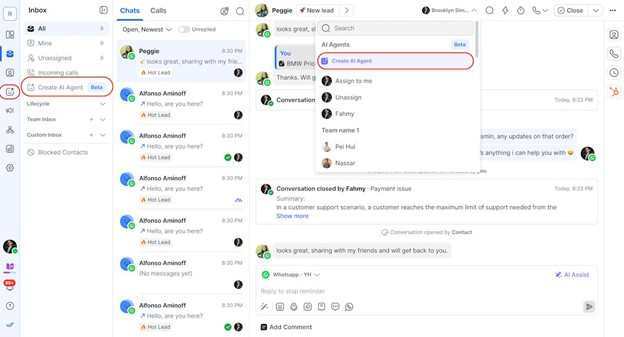
A WhatsApp CRM solves this by connecting the chat (where the customer is) with the data (where the business logic is). It allows you to set rules or use AI Agents to handle the flow. These agents reply to leads instantly, filter out spam, and qualify prospects. Then, they prioritize the serious buyers and automatically route them to the right salesperson.

5 Tools to Qualify Leads and Boost Conversions

We tested the market to find tools that don’t just “connect” WhatsApp but actively help you filter and convert leads.

1. Respond.io – The Best WhatsApp CRM for AI Qualification and Routing

Respond.io is a customer conversation management platform built for high-volume chat, email and call interactions across the customer lifecycle, with built-in CRM integrations, AI Agents and advanced reporting.

It is widely considered the best WhatsApp CRM for businesses that depend on WhatsApp or other instant messaging channels and require advanced AI-powered qualification, routing and automation, plus integrations with CRMs like Salesforce and HubSpot.

How it Improves Qualification

Respond.io has agentic AI Agents that can qualify leads, extract key details and hand conversations over to humans whenever necessary. Unlike rigid chatbots that rely on fixed rules, these agents understand intent and adapt to how customers naturally write, even with typos or incomplete sentences.

You can configure the AI Agent to run the qualification flow automatically. For example, when a new lead messages you, the AI Agent can filter out spam leads, then ask qualifying questions based on your setup, such as budget, product interest or purchase readiness, before determining the best next step.

Based on the customer’s replies, the system can automatically:

  • Update the contact’s profile with new or enriched details.
  • Assign lifecycle stages based on intent and buying readiness (e.g., marking someone as a “Hot Lead”).
  • Route high-value conversations directly to your VIP sales team.
  • Sync all captured data to your external CRM (like Salesforce or HubSpot) so records stay accurate and consistent.

Why it Converts

Respond.io AI Agents cut through inbox noise by identifying and routing serious buyers to your sales team immediately. Low-intent contacts stay out of the way, so reps spend their time where it matters.

Plus, with WhatsApp Business Calling, teams can switch from chat to call in one click – perfect for fast-moving or high-value deals that close better over the phone.

Best for: B2C businesses that rely on conversations to drive revenue across chat (including WhatsApp), email and voice calls and want a unified platform with advanced AI Agents, CRM integrations, customer lifecycle tracking and more.

2. WANotifier – The Best WhatsApp Marketing Tool for Automated Lead Qualification and Conversions

WANotifier is a leading WhatsApp marketing platform, best for businesses that want a fully functional lead qualification engine. It connects directly with the official WhatsApp Business API.

Additionally, it ensures you get easy access to features like broadcast messaging, two-way chat, automation workflows, and a built-in chatbot builder under one roof. Overall ensuring enterprise CRM capabilities without the overhead cost.

How it Improves Qualification

WANotifier’s chatbot builder lets you design structured qualification flows. When a new lead messages you, the bot runs a sequence of qualifying questions and branches the conversation based on their replies.

Moreover, you can also trigger these flows from outside WhatsApp. With an embed, click-to-WhatsApp button you can run a Meta ad that opens directly in chat.

The moment someone initiates a conversation, your set qualification sequence kicks off automatically.

Why it Converts

Speed matters in lead conversion. For teams managing high volumes, the shared team inbox means multiple agents in your team are able to handle conversations simultaneously.

Because every chat is tagged, filtered, and searchable, hot leads never get buried under cold ones.

On the pricing side, WANotifier charges zero markup on WhatsApp API costs.This means, you pay only what Meta charges. Setup is equally straightforward as well.

Best for: DTC brands, SMBs, and growing ecommerce brands looking for WhatsApp marketing and lead qualification system across the full customer lifecycle.

3. HubSpot

HubSpot is the default brain for many B2B sales teams. Its native WhatsApp integration brings the chat directly into the customer’s timeline. If you live inside HubSpot, this integration makes WhatsApp feel like just another part of the contact record.

How it Improves Qualification

The power here lies in “Workflows.” You can trigger WhatsApp messages based on website behavior.

Imagine a prospect visits your pricing page three times in one week. HubSpot tracks this. You can set a rule: “If a contact visits the Pricing URL > 3 times, send a WhatsApp template: ‘Saw you checking our plans. Want a quick demo?'”

If they reply, the conversation logs automatically on their contact card. You can also use HubSpot’s lead scoring. If a lead chats on WhatsApp, their score goes up. If the score hits 50, the system creates a deal and assigns a task to a salesperson.

Why it Converts

Context. When a salesperson replies to a WhatsApp message in HubSpot, they see the lead’s entire history: every email opened, every page visited, and every past purchase. They don’t ask “How can I help?”; they ask “Did you like the Enterprise plan you looked at yesterday?” That precision closes deals.

Best for: Marketing and sales teams who already run their lives through HubSpot.

4. Zoho CRM

Zoho offers a toolkit for everything, and its WhatsApp integration fits that mold. It is flexible, affordable, and deeply customizable.

You can connect it natively or use third-party extensions depending on your region and technical needs.

How it Improves Qualification

Zoho uses a feature called “Blueprints.” This forces your sales team to follow a process. You can design a Blueprint for WhatsApp leads that requires an agent to ask specific questions before moving the deal to the next stage.

For example, an agent cannot move a lead from “New” to “Qualified” until they tick a box confirming they received the client’s budget via WhatsApp. The system prompts the agent to ask the question if the field is empty.

Why it Converts

Consistency. In many teams, top performers convert at 30% while juniors convert at 5%. Zoho’s structure ensures every lead on WhatsApp gets the same high-standard treatment. No lead gets dropped because an agent “forgot” to ask for the budget.

Best for: Small to medium businesses that need structure and affordability.

5. Salesforce

Salesforce is the heavy lifter. Its integration (via Digital Engagement or partners) is not for casual users. It is for enterprises where a lost lead costs thousands of dollars.

How it Improves Qualification

Salesforce combines WhatsApp with Einstein (their AI). It analyzes the sentiment of messages. If a lead sounds frustrated or urgent, the system flags it.

You can build complex “Flows.” For example: A lead messages via WhatsApp. Salesforce checks their phone number against your database.

  • Match found: It checks their annual spending. If it’s over $50k, the chat routes to the Key Account Manager immediately.
  • No match: It triggers a bot to collect name, email, and company size.

Why it Converts

Power. Salesforce allows for extreme personalization at scale. You can send a WhatsApp message that pulls data from five different fields: “Hi John, your renewal for [Product X] is coming up on [Date]. Since you used [Feature Y] heavily last month, we recommend upgrading to…” This level of detail proves you know your customer.

Best for: Large enterprises with complex sales cycles and distinct sales departments.

6. Kommo CRM (formerly amoCRM)

Kommo does not try to be an “everything store.” It focuses entirely on messenger-based sales.

If your business lives in chat, Kommo builds your entire sales process around it, treating every WhatsApp conversation as a deal in a pipeline rather than just a support ticket.

How it Improves Qualification The standout feature is the visual Salesbot. It is not just a greeter. It qualifies leads inside the chat and physically moves their deal card to the next stage in your pipeline.

You can build a logic path without code: When a lead messages via WhatsApp, the bot asks, “Are you looking for B2B or B2C services?”

  • If they answer “B2B,” the bot automatically moves the lead from the “Incoming” stage to the “Qualification” stage.
  • It then tags the lead as “Corporate” and assigns a task to your B2B specialist to call them.

Why it Converts

Visibility. Most tools show a chronological list of chats, which buries older (but valuable) conversations. Kommo shows a board of deals, similar to Trello. You see instantly which WhatsApp conversations are “New,” which are “In Progress,” and which are stalled. You prioritize by deal stage, not by who messaged last.

Best for: Small to medium businesses (SMBs) that want a visual, board-style view for their WhatsApp chats.

The “Sync + Productivity” Framework

Simply buying these tools won’t fix your sales process. You need to apply the “Sync + Productivity” framework. This is a mental model for setting up your WhatsApp CRM.

Phase 1: The Sync (Stop Data Leaks)

Your first goal is to ensure that what happens in WhatsApp stays in the CRM.

  • The Rule: No business contact exists solely on a phone. If a number isn’t in the CRM, it doesn’t exist.
  • The Action: Configure your tool to auto-create contacts. When a new number messages you, the system should create a “New Lead” profile immediately.
  • The Benefit: You build a database asset. Even if a salesperson leaves the company, the conversation history stays with you, not on their personal device.

Phase 2: The Filter (Automated Qualification)

Once data is syncing, you must stop your team from doing robot work.

  • The Rule: Humans should only talk to qualified humans.
  • The Action: Deploy an AI Agent to interview new leads immediately.
    • Bad: “Hello, how can we help?” (Too open-ended).
    • Good: “Hi! I’m the digital assistant. To connect you with the right expert, are you looking to buy a new license or do you need technical support?”
  • The Benefit: You instantly separate buyers from complainers. Support tickets go to the support desk; sales leads go to the deal pipeline.

Phase 3: The Context (Conversion)

Now that you have a qualified lead, you need to close them.

  • The Rule: Never ask a question you already know the answer to.
  • The Action: Before replying, the agent looks at the contact history for context. They see the lead’s location, past orders, and web visits.
  • The Benefit: The agent provides contextual replies such as, “Hi Sarah, I see you’re looking at our Pro Plan. Since you’re based in the UK, we can offer you…” This creates a feeling of competence and care.

Summary

The difference between a chat app and a sales channel is data. WhatsApp without a CRM is just noise – a constant stream of notifications that distracts your team.

By connecting WhatsApp to a tool like Respond.io or HubSpot, you turn that noise into a structured pipeline. You stop guessing which leads are real. You stop losing phone numbers. You stop asking “What is your budget?” for the hundredth time. Instead, you start the conversation at the finish line, closing the deal because you already know who you are talking to and what they need.

5 Essential Strategies to Boost Small Business Productivity and Security

Running a small business is often a balancing act. Owners are frequently expected to be the CEO, marketing manager, IT support, and financial planner all at once. In the current digital landscape, the pressure to maintain high productivity while securing assets against sophisticated threats is immense. For business owners in Thailand and beyond, the key to sustainable success lies in working smarter, not harder. Here are five essential strategies to enhance your business’s efficiency and security.

1. Streamline Communication and Data Synchronization

One of the biggest productivity killers in a small business environment is disjointed data. If your team is wasting hours manually updating contacts across devices or searching for the latest calendar entry, you are losing money. Efficient data management is the backbone of a productive office.

Ensuring your email, calendar, and contacts are synchronized across all devices—mobile and desktop—is crucial. For organizations relying on the Microsoft ecosystem, utilizing reliable Outlook sync solutions can eliminate data silos. This ensures that whether you are in the office or meeting a client in Bangkok, you have access to accurate, real-time information without the risk of duplication errors.

2. Invest in Strategic Digital Growth

Productivity and security create the foundation, but strategic investment drives growth. Many small business owners make the mistake of trying to manage their entire digital marketing strategy in-house to save costs. However, the complexity of search engine algorithms and online advertising often requires specialist knowledge.

Investing in a partnership with a dedicated agency can yield a much higher return on investment than a DIY approach. Agencies such as Move Ahead Media specialize in navigating the competitive digital landscape, helping businesses optimize their online presence. By outsourcing these tasks to experts, you ensure your marketing budget is spent effectively, allowing you to redirect internal resources toward product development and customer service.

3. Prioritise Robust Cyber Security

As businesses become more digital, the risk of cyber attacks increases. Small businesses are often seen as easy targets because they frequently lack the dedicated security infrastructure of larger corporations. Security is not just about installing antivirus software; it involves a holistic approach to protecting your PC and network integrity.

To safeguard your business, you must ensure that all software is regularly updated and that you have a recovery plan in place. The UK’s National Cyber Security Centre provides excellent PC security guidance that is relevant for businesses globally, covering the basics of backing up data, protecting your organization from malware, and keeping smartphones and tablets safe.

4. Automate Routine Administrative Tasks

Automation is a powerful tool for boosting productivity. Repetitive tasks such as invoicing, social media posting, and appointment scheduling can easily be automated using modern software. Consider implementing the following to save time:

  • Accounting Software: Automate invoice chasing and expense tracking to keep finances in order.
  • Social Media Schedulers: Plan your content in advance to maintain a consistent presence without daily disruption.
  • Customer Relationship Management (CRM): Automate follow-up emails to ensure no lead is left cold.

By reducing the manual load of these administrative duties, you minimize the scope for human error and allow your team to focus on high-value creative and strategic work.

5. Foster a Culture of Continuous Training

Your technology is only as secure and productive as the people using it. Regular training sessions are vital to ensure your staff understands the importance of data security and knows how to use productivity tools effectively.

Encourage a culture where employees feel comfortable reporting potential security breaches, such as phishing emails, without fear of blame. Furthermore, investing in training for new software ensures that your team can utilize the full features of your tech stack, maximizing the return on your software investments.

Conclusion

Balancing productivity with security requires a proactive mindset. By synchronizing your data, investing in expert support for your digital growth, and securing your systems, you position your small business for long-term success. The goal is to build a resilient operation that can weather digital storms while seizing new opportunities in the marketplace.

How to Promote an App on the App Store: ASO, Trending Searches, and Top Rankings

Successful App Store growth is built on three core components: a strong ASO foundation, visibility boosters like Trending Searches, and tactics that help apps rise into top positions. With thousands of new apps appearing every week, search-driven discovery remains the most reliable and scalable route.

Way #1. Keyword optimization

Keyword research

Focus on the language users rely on when describing the results they want, not the technical features behind them. Build a keyword set that mixes high-, mid-, and low-volume keywords and study competitor metadata. High-volume keywords broaden reach, mid-volume keywords offer realistic ranking opportunities, and long-tail phrases often deliver stronger conversion because intent is clearer.

Metadata optimization

Metadata transforms keyword choices into signals the algorithm can act on.

  • Title: when possible, pair the app name with a relevant keyword.
  • Subtitle: clearly express the primary benefit in a natural, user-friendly line.
  • Keyword field: add additional terms, avoiding repeats and stop words.

Use all available locales to expand indexed metadata space. Track changes in search behavior and adjust your keyword set. Incentivized installs tied to specific keywords can help accelerate movement in search rankings.

Other best practices

Don’t repeat terms across metadata fields, skip meaningless connectors, exclude the app name unless it’s a commonly searched term, and check keyword performance frequently.

Way #2. Trending Searches

Trending Searches highlight keywords experiencing a rapid surge in interest. If your app already ranks well for a rising term, you can gain significant organic visibility when it enters the trending list. Estimates suggest that 3–5K concentrated searches may be enough to trigger the trend. Coordinated PR pushes, paid campaigns, or social buzz around a chosen keyword can help capture that momentum.

Way #3. Getting into the App Store top

Reaching top placements requires more than optimized metadata. Ranking is also shaped by install velocity, product quality, and the strength of your creatives.

  • A smooth onboarding flow reduces early drop-off.
  • Preview videos, which autoplay in search, serve as quick visual pitches.
  • Refresh icons, screenshots, and promo text regularly and run A/B experiments.
  • Custom product pages let you tailor messaging for different traffic sources.
  • Trigger review prompts after moments of success, not at random.
  • Encourage sharing, collaborate with niche communities, run referral programs, test targeted ads, re-engage via email, cross-promote, build a simple landing page, and use events to increase awareness.

Incentivized traffic can rapidly increase ranking but must be supported by healthy retention. 

To make these spikes stick, you still need strong App Store Optimization. See how we build high-performing ASO strategies and apply them in real campaigns.