The Rise of AI Wearables: What Business Users Need to Know

AI wearables are quickly moving from consumer gadgets into serious business tools. For professionals, the appeal is easy to understand. People want faster access to information, smoother communication, fewer interruptions, and technology that supports work without constantly pulling them back to a phone or laptop.

That is why Ray-Ban AI glasses fit into a much larger workplace trend. Smart glasses and other AI-powered wearables are becoming part of a new productivity ecosystem where workers can capture information, receive assistance, communicate, and multitask with less friction.

For business users, the question is no longer whether wearable technology is interesting. It is how these devices can support real work in practical, responsible, and measurable ways.

Close-up of a person using a smartwatch, focusing on technology and connectivity.

AI Wearables Are Changing Workplace Productivity

Productivity is not only about working faster. It is also about reducing small interruptions that slow people down. Every time a professional stops to unlock a phone, search for information, take notes, check a message, or document a task, attention is broken.

AI wearables can reduce some of that friction. A smartwatch can surface quick alerts. Smart earbuds can support calls and voice commands. Smart glasses can help with hands-free capture, audio assistance, real-time prompts, and quick access to information.

Deloitte’s discussion of wearable devices in the workplace notes that wearables can enhance worker effectiveness, support productivity, and help improve safety. That business value is one reason companies continue to explore wearable tools across different industries.

The strongest use cases are not about replacing existing devices. They are about making certain tasks easier to complete without disrupting the flow of work.

Why Smart Glasses Are Useful for Communication

Communication is one of the most obvious workplace uses for smart glasses. Professionals already rely on video calls, voice notes, messaging apps, and quick updates throughout the day. Smart glasses make some of these interactions more natural because they support hands-free use.

For example, a field worker can share a first-person view with a remote expert. A technician can document a repair step without holding a phone. A manager walking through a site can capture a quick note or communicate while staying aware of the environment.

This point-of-view communication is especially useful in industries where workers need both hands available. Construction, logistics, healthcare support, manufacturing, inspections, events, and training can all benefit from tools that reduce the need to stop and handle another device.

Smart glasses can also make communication feel less screen-heavy. Instead of switching between a laptop, phone, and meeting app, users can rely on audio, voice control, and quick commands for simpler interactions.

Real-Time Information Access Matters

Business users often need information at the exact moment they are making decisions. That might mean checking a procedure, confirming a product detail, translating a phrase, reviewing instructions, identifying an object, or asking for a quick summary.

AI-powered wearables can help by bringing information closer to the task. Instead of stepping away to search on a phone or computer, a user may be able to ask a question, hear a response, or capture context in real time.

This is where smart glasses become especially interesting. Because they are worn at eye level, they can support more contextual experiences. The device can capture what the user is seeing, while AI features can help interpret or respond to that information.

In business settings, that can support faster decisions, better documentation, and more efficient collaboration.

Hands-Free Technology Supports Different Industries

Hands-free technology is valuable anywhere movement matters. In offices, it may help with calls, reminders, notes, and quick information access. In field-based jobs, it can support documentation, remote guidance, safety checks, and training.

For logistics workers, wearables may help with picking, scanning, routing, and task updates. For technicians, they can support repair guidance and remote troubleshooting. For healthcare-adjacent teams, smart glasses may help with communication, workflow documentation, or training, depending on privacy and compliance rules.

In retail and hospitality, wearable technology can help employees access information without leaving customers waiting. In education and training, smart glasses can support demonstrations, recorded walkthroughs, and immersive learning.

The common thread is convenience. Workers can stay engaged with the task while technology supports them in the background.

AI Wearables Can Help With Multitasking

Multitasking is often messy. People jump between screens, apps, calls, notes, and physical tasks. AI wearables can make some multitasking more manageable by handling small tasks quickly.

A professional may use voice commands to set a reminder, capture a photo, start a recording, answer a call, or ask for information. These actions may seem small, but they can save attention over the course of a busy day.

Microsoft’s 2026 Work Trend Index reports on how AI is reshaping work and how organizations are thinking about human agency, AI assistance, and new workflows. Its report on AI and the future of work reflects the broader shift toward AI-supported productivity, where technology helps people focus on higher-value decisions instead of constant execution.

For wearables, the goal should be similar. The best devices will not simply add more notifications. They will reduce unnecessary steps and help users stay focused.

Business Adoption Will Depend on Trust

AI wearables have strong potential, but adoption will depend on trust. Businesses need to think carefully about privacy, data security, recording policies, employee consent, and customer comfort.

Smart glasses with cameras require clear rules. Where can recording happen? Who has access to captured content? How is data stored? What happens in sensitive environments? These questions matter, especially in workplaces where customers, patients, employees, or confidential information may be involved.

Companies also need to avoid using wearables in ways that feel intrusive. Productivity tools should support workers, not make them feel constantly monitored. Transparency will be important if businesses want employees to adopt wearables willingly.

The companies that succeed with AI wearables will be the ones that treat them as workflow tools, not surveillance tools.

Why Adoption Is Expected to Grow

Business adoption of wearable technology is expected to grow because the underlying problems are not going away. Workers need faster access to information. Companies need better documentation, training, communication, and safety tools. Professionals want less screen friction and more flexible ways to stay productive.

At the same time, wearable hardware is improving. Devices are becoming lighter, more stylish, more comfortable, and more capable. AI software is also becoming more useful, especially for voice interaction, summaries, translation, visual assistance, and real-time guidance.

As the technology becomes easier to use, more businesses will test it in focused ways. The early wins will likely come from specific use cases: remote support, field documentation, training, logistics, inspections, and hands-free communication.

A close-up image of hands with manicured nails typing on a laptop keyboard, showcasing modern workspace.

Final Thoughts

AI wearables are becoming more relevant for business users because they solve practical problems. They can reduce friction, support hands-free work, improve communication, provide real-time information, and help professionals stay focused while moving through busy tasks.

Smart glasses are especially important because they combine voice, audio, camera features, and AI support in a wearable format that fits naturally into many work environments.

The future of business wearables will not be about adding technology for its own sake. It will be about using the right devices to make work simpler, safer, faster, and more connected.


What Google’s Own AI Developments Mean for the Future of Organic Search Optimization

The traditional search engine results page, once filled with ten blue organic links, has transformed into a conversational interface driven by Google’s rapid updates like Gemini 3.5 Flash and AI Overviews. This means that for digital brands, old-school keyword stuffing and traditional rank-tracking will not be enough to keep a visible web placement. With more zero-click searches, optimizing citations in these algorithmic summaries requires a completely new approach to structured data, topical clarity, and deep data analytics. To navigate this highly fluid system, smart agencies are completely overhauling their fulfillment pipelines, incorporating specialized ai seo services to run deep semantic data calculations and keep client visibility stable before seasonal market shifts occur.

Shifting Focus to Intent-Destination and Structured Data

Google has a smart search box that looks at what people are searching for in a lot of detail. So when you write something, it needs to be about more than one keyword. Google likes pages that give answers and make it easy for them to find what they are looking for. You should use headings that make sense, tables that describe things well, and bullet points to show that your page is important. If you make your page easy for people to read and understand and also make sure it works with computers, then Google is more likely to think your page is a good source and show it to people. This way Google will trust your page. Show it to people when they are looking for information.

Prioritizing First-Hand Experience Over Commodity Writing

Machine learning models are now the way to copy and make web data. Because of this, regular articles that just give information are not doing well in search results anymore. Google’s main updates are hurting articles that just repeat what is already online without giving a point of view or fresh ideas. To do well in this situation, online plans need to focus on being real and trustworthy. They should add stories, interviews with experts, and special information that only they have. This special way of doing things makes sure that what you put online is really valuable and that a computer program cannot just copy it. Machine learning models cannot make this kind of content because it is unique.

Capitalizing on New Search Console Performance Tracking

The introduction of generative performance metrics inside search tools means agencies can finally measure exactly how much traffic their automated campaigns are driving. Tracking these citations helps teams see which structured formats and conversational queries are generating the highest commercial engagement for their accounts. Instead of guessing how your optimization lines are performing, utilizing advanced data monitoring software lets you track live visibility updates continuously. Relying on modern ai seo services allows your agency to lock in fixed fulfillment costs, ensuring that your technical production line remains steady and highly profitable during volatile engine updates.

Conclusion

To do well with Google’s way of searching, you need to stop using old and slow methods. You have to build a foundation that is fast and accurate. The companies that do well with changes on the internet are the ones that use machine learning all the time. They do not think of it as something, but as something they need to have. If you use computer programs in your work now, you will not have problems with tracking things inside your company. Your creative team will also not get too tired. Your clients will be able to stay popular on the internet for a long time. Google’s generative search ecosystem is something you need to adapt to. Machine learning is a part of this. By using machine learning, you can make sure your company is running smoothly and your clients are happy.

The Practical Roadmap to AI CRM Integration

A modern CRM is no longer just a digital filing cabinet. The days of sales reps manually logging calls, updating contact fields, and tracking pipelines are rapidly giving way to a new era of autonomous systems. Today, enterprise CRMs are expected to act as predictive engines: capable of forecasting customer intent, auto-drafting personalized communications, and autonomously prioritizing leads based on complex behavioral data.

Yet, for all the promise of artificial intelligence, the reality of implementing it is often a painful wake-up call for business leaders.

Many organizations approach AI CRM integration as a simple plug-and-play upgrade, only to realize that their underlying systems are not built to support it. Instead of a streamlined, intelligent revenue engine, they end up with disconnected SaaS tools, siloed datasets, and AI models that hallucinate due to poor data inputs. Buying advanced AI software is the easy part. The real challenge lies in architecting the underlying data and strategy to support it.

To unlock the true power of AI in your customer relationships, you must look beyond the generic trends and marketing hype. True digital transformation requires a calculated roadmap that addresses technical infrastructure, data hygiene, and strategic alignment from the ground up. Here is how modern enterprises can navigate the complexities of AI CRM integration and turn their legacy databases into active growth engines.

The Hidden Roadblocks in AI CRM Integration

In 2026, the role of the CRM is undergoing a major shift. Rather than just logging historic customer data, businesses are now turning to AI to use that data to actively predict and drive revenue. Yet, despite the widespread enthusiasm, scaling these intelligence-driven systems remains incredibly difficult. Recent industry data indicates that while over 70% of mid-market and enterprise firms have adopted AI pilots, a staggering number stall before reaching full production.

1. The “Dirty Data” Dilemma

AI is entirely dependent on the context and quality of the data it processes. In 2026, “dirty data” consisting of outdated, duplicated, or inconsistently formatted records remains the primary killer of enterprise AI projects. According to recent Gartner research, the vast majority of AI initiatives fail due to poor data quality and lack of integration.

When you bolt a sophisticated AI model onto a CRM filled with unverified leads and fragmented communication logs, the AI does not fix the mess; it scales it. A predictive scoring model trained on incomplete data will generate confident, yet entirely inaccurate, revenue forecasts. Before any AI feature can be trusted, enterprises must establish rigorous data governance and validation layers to ensure the AI is operating on a single source of truth.

2. Siloed Tech Stacks and Integration Complexity

Enterprise intelligence is rarely confined to just the CRM. Crucial customer context is scattered across legacy ERPs, marketing automation platforms, support ticketing systems, and unstructured document repositories.

The challenge lies in the fact that these legacy systems were not designed to exchange data with modern AI models in real time. They often lack the necessary APIs or use incompatible data formats. When organizations attempt to deploy “out-of-the-box” AI assistants without resolving these silos, the AI is forced to operate blindly, lacking the cross-departmental context required to execute complex tasks or provide meaningful next-best-action recommendations.

3. The Limits of “Out-of-the-Box” Solutions

To keep pace with the market, CRM vendors are rapidly shipping native, out-of-the-box generative AI features. While these tools are excellent for basic tasks like summarizing emails or drafting standard replies, they frequently fall short of complex enterprise requirements.

Standardized AI tools cannot inherently understand an enterprise’s proprietary business logic, compliance constraints, or unique sales cycles. To achieve measurable ROI, such as automated churn prediction or dynamic pricing models, businesses require highly customized enterprise AI solutions. These tailored architectures allow organizations to build bespoke middleware, integrate proprietary AI models securely, and orchestrate complex, multi-agent workflows that align perfectly with their specific operational needs.

A Step-by-Step Roadmap for AI CRM Adoption

Fixing these roadblocks requires a methodical approach. Businesses cannot simply flip a switch and expect intelligent automation. Integrating artificial intelligence into a revenue engine is a phased process that demands tight alignment between engineering and sales teams.

Step 1: Data Governance and Infrastructure Readiness

You cannot build a smart system on a broken foundation. The very first phase of any integration roadmap must be a comprehensive data audit. Organizations need to standardize field formats, merge duplicate contact records, and establish strict protocols for how new information enters the system. Because this cleanup process often exposes deep architectural flaws across multiple departments, business leaders must take a strategic approach to map out their existing workflows and design a clean database architecture capable of feeding machine learning models.

Step 2: Defining Targeted Use Cases

A common mistake is attempting to automate every sales function at once. The most successful adoptions start with narrow, highly measurable objectives. A business might begin by deploying AI strictly for predictive lead scoring or summarizing customer support tickets. Starting small allows internal teams to verify the accuracy of the AI outputs in a controlled environment. Once the system proves its reliability, leadership can confidently expand the technology into more complex areas like revenue forecasting or automated contract drafting.

Step 3: Bridging the Technical Gap

Once the data is clean and the use cases are defined, the technical heavy lifting begins. Standard CRMs rarely communicate seamlessly with older internal databases or custom ERPs right out of the box. Enterprises typically need to develop custom APIs or middleware layers to ensure data flows securely across their entire technology stack in real time.

This level of architectural complexity is exactly why forward-thinking businesses collaborate with an AI Innovation Partner like SotaTek. Bringing in a specialized engineering partner allows enterprises to safely connect fragmented data sources, build robust middleware, and deploy custom AI models without disrupting their daily operations. The right partner bridges the gap between legacy software and future-proof intelligence.

The Human Element: Change Management and AI Adoption

The most sophisticated technology will fail if the people using it refuse to adapt. While leaders often focus entirely on data and infrastructure, a major hurdle in AI adoption is employee resistance.

Sales and support teams sometimes view automation as a threat to their job security or as an overly complex burden added to their daily routine. Leadership must actively reframe this narrative. The goal of integrating intelligence into the CRM is to augment human capabilities, not replace them. By automating repetitive tasks like data entry and preliminary lead research, representatives are freed to focus on high-value relationship building and complex negotiations.

Acceptance is only the first step. Organizations must also invest heavily in targeted training and workflow redesign. Modern AI systems require users to know how to prompt the CRM correctly to extract valuable insights. Furthermore, sales teams need a basic understanding of how the predictive analytics function so they can actually trust the revenue forecasts the system provides. Establishing clear guidelines and continuous feedback loops ensures that employees feel confident operating alongside their new digital tools.

Conclusion

Upgrading a CRM with artificial intelligence is far more than a routine IT software update. It is a fundamental business transformation. Moving from a static database to a proactive revenue engine demands clean data, robust infrastructure, and a workforce prepared to embrace new methodologies.

Ultimately, successful integration relies on bridging the gap between legacy databases and future-proof technology stacks. Trying to navigate this transition internally often leads to costly delays and siloed systems. Partnering with dedicated tech innovators allows modern businesses to bypass the steep learning curve of AI adoption. With the technical architecture managed by experts, organizations can focus entirely on what matters most: driving sustainable growth and delivering exceptional customer experiences.

AI Receptionist for Appointment Scheduling: Top Tools

Missing customer calls directly hurts your bottom line, but automated voice assistants can capture every lead. This guide explains how AI receptionists manage your calendar, sync with your CRM, and cut booking costs.

Every missed call is a lost customer. When your phone rings and nobody answers, the caller dials your competitor.

The Small Business Administration reports that there are over 36 million American small businesses. This figure represents 99.9% of all firms in the country.

Most struggle to keep up with incoming calls. A front desk receptionist can only handle one call at a time. If they are helping an in-office customer, the phone rings out.

According to the Nextiva Customer Patience Benchmark, slow support causes immediate customer loss. In fact, 56.3% of consumers hang up after waiting on hold for more than five minutes.

Voicemail is where hot leads die. Most callers hang up at the beep. They want immediate answers and instant booking.

Old auto-attendants fail. They force callers through confusing menus until they get frustrated and hang up.

Smart businesses use an automated phone answering service to capture every lead. Nextiva provides a custom booking assistant that answers calls instantly to solve front-desk bottlenecks.

This digital assistant schedules appointments and answers FAQs to keep your calendar full.

A receptionist and client converse over an appointment book at a clinic reception desk.

How AI manages your calendar

An AI receptionist handles phone calls like a human agent. The assistant answers instantly and listens to natural speech instead of forcing callers to press buttons.

The software understands intent, checks your calendar, and books the slot. It connects directly to your existing tools to perform live database lookups.

It checks availability across platforms like Google Calendar, Calendly, Cal.com, Zoho, and Housecall Pro.

Once the caller chooses a time, the assistant writes details directly to your system. This instant write capability prevents double bookings and eliminates manual data entry.

The software updates your calendar and CRM instantly to keep customer records accurate.

In fact, the XBert AI Receptionist by Nextiva provides these integrations out of the box without custom code, syncing with your tools in the background.

Your staff sees new appointments instantly. Read more about these benefits in our virtual receptionist guide.

Callers do not need to use rigid commands. They talk naturally, and the system understands context to handle rescheduling requests.

If a customer needs to change a time, the assistant automatically updates the calendar.

Essential features for automated scheduling

The best digital assistants do more than answer phones. They work across multiple channels and handle complex caller requests.

According to a 2026 report by Thomson Reuters, 40% of professionals are adopting generative AI. Clients expect fast, digital options.

Your assistant must handle phone calls, text messages, and website chats. Nextiva manages all three from a single dashboard.

When a caller needs a human, the assistant immediately transfers the call.

It passes call notes to your team so the customer never has to repeat themselves.

You can customize the greeting and tone to match your brand voice.

This ensures a consistent experience for every caller.

Modern communication platforms sync calls, texts, and notifications across desktop, mobile, and browser apps to keep your team aligned.

  • Multichannel communication: The tool manages phone calls, text messages, web chat, and social media.
  • Contextual call transfers: Routes urgent calls to live staff along with written customer notes.
  • Custom voice profiles: Lets you choose the accent, tone, and greeting for your brand.
  • Database synchronization: Updates your customer database automatically after every call.

Industry use cases for AI receptionists

Different industries have unique scheduling needs. Dental offices require strict privacy controls, while plumbing companies must dispatch technicians instantly.

Salons must fill stylist chairs without gaps. Secure communication platforms adapt to healthcare, real estate, and professional offices.

HIPAA compliant patient booking

Medical offices must protect patient data. With federal telehealth flexibilities extended through December 31, 2027, digital coordination is vital.

An AI call assistant must meet strict security standards.

Are AI phone receptionists safe? Yes, if you choose a secure provider. Nextiva is SOC 2 certified and HIPAA compliant.

It offers a signed Business Associate Agreement, integrates with Epic EHR, and uses end-to-end encryption for voice, video, and messaging.

For dental offices, Nextiva turns a phone line into an automated patient scheduling system. The assistant books appointments securely, answers patient questions, and frees clinical staff to focus on in-person care.

Maximizing salon and consulting calendars

Salons and consulting firms rely on tight schedules. A 15-minute gap costs money. The assistant schedules appointments back-to-back to maximize revenue.

It also sends text reminders to reduce no-shows.

Clients can text the assistant to reschedule instantly instead of waiting on hold.

This keeps chairs full and staff busy.

Capturing home service leads instantly

For plumbers, electricians, and real estate agents, speed is everything. If you do not answer a lead within minutes, they hire a competitor.

Nextiva operates with 99.999% uptime across eight points of presence to keep your lines open.

The assistant captures leads at 2:00 am, schedules home visits automatically, and qualifies prospects before booking.

By asking about job types or budgets, it ensures technicians only visit qualified prospects.

Comparing AI costs to human agencies

Human answering services were the standard for decades, but AI has changed the math for small businesses.

Pricing models are the biggest differentiator.

Traditional answering services charge $1.50 to $3.00 per minute. High call volumes push monthly bills into the thousands, making seasonal spikes unpredictable.

How much does an AI receptionist cost? Nextiva offers an AI receptionist starting at a flat $99 per month.

This predictable pricing allows unlimited calls without extra fees.

Here is how the features stack up.

Human agents make mistakes copying phone numbers or booking slots. An AI assistant connects directly to your calendar to eliminate typos.

It never double-books a slot.

Human services struggle during peak hours, leaving callers on hold. An AI assistant answers dozens of calls simultaneously so everyone gets immediate attention.

Human agents require onboarding, constant feedback, and struggle to remember pricing or script changes.

An AI assistant learns your business rules instantly and never forgets them.

Close-up of a calendar with red push pins marking important dates, emphasizing deadlines.

How to deploy your AI assistant

You do not need an IT department to set up a digital assistant. Connecting your tools takes just a few steps.

First, define your booking rules, including daily appointment limits and buffer times to prevent staff burnout.

  • Map your tools: Identify your current calendars and CRM systems.
  • Design your greeting: Write an opening message that matches your brand voice.
  • Create your database: List your business hours, pricing, and FAQs.
  • Train the software: Upload your business details so the bot answers accurately.
  • Test and launch: Place test calls to verify the scheduling logic.

If you prefer not to configure the software yourself, Nextiva offers professional setup assistance to handle calendar connections, custom greetings, and voice training.

XBert AI handles more than one billion interactions on its network annually, meaning your assistant runs on a reliable infrastructure built for heavy call volumes.

How AI is Changing the Future of Remote Work?

Remote work is no longer a perk. For millions of people around the world, it has become the default. And now, artificial intelligence is reshaping what that actually looks like — not in some distant, theoretical way, but right now, in real workflows, real companies, and real careers.

A woman using a VR headset while working on a laptop, exploring virtual reality in a modern office setting.

AI as the New Office Infrastructure

The traditional office gave workers structure: shared calendars, visible managers, instant hallway conversations. Remote work stripped most of that away. AI is quietly building it back — but in a smarter form.

Tools like AI-powered scheduling assistants, intelligent project trackers, and automated meeting summaries are eliminating a huge chunk of the coordination overhead that once required entire layers of management. According to McKinsey, AI could automate up to 70% of repetitive work tasks by 2030 — and remote workers are among the first to feel that shift.

The Productivity Paradox — and How AI Resolves It

Ask any remote team leader about their biggest concern and you'll hear a version of the same answer: accountability. It's hard to know whether people are actually working, struggling, or simply distracted. AI changes the frame entirely.

Instead of tracking hours, modern AI tools analyze output — flagging bottlenecks, identifying when a task stalls, and even predicting when someone is likely to miss a deadline before they know it themselves. That's a fundamentally different approach to productivity, and it's one built for distributed teams.

Communication Without the Confusion

One of the hidden costs of remote work is miscommunication. A message gets misread. A nuance gets lost. A tone lands wrong. Studies suggest that remote employees spend up to 20% of their workday searching for information or waiting for responses.

AI is attacking this directly. Smart inbox tools prioritize messages by urgency. AI writing assistants help people phrase things more clearly. Translation tools make multilingual teams function without friction.

Some things AI is already handling in remote communication:

  • Real-time transcription and meeting summaries
  • Tone analysis to flag potentially ambiguous messages
  • Automatic task extraction from conversation threads
  • Cross-timezone scheduling without the back-and-forth

None of these are futuristic promises. They are features inside tools that millions of remote workers use today.

Cybersecurity: The Risk Nobody Talks About Enough

Here's the uncomfortable truth: remote work massively increases a company's attack surface. Home networks are less secure than corporate ones. Employees use personal devices. Public Wi-Fi happens — even when it shouldn't.

AI has become essential to managing this. Behavioral analytics can detect when an account behaves unusually, flagging potential breaches before they escalate. Automated threat detection runs continuously, without needing a human to monitor a dashboard at 2 a.m.

But technology alone isn't enough. Remote workers also need to take personal steps — encrypting their connections, avoiding unsecured networks, and using reliable tools. Often, remote workers rely on VPN services like VeePN and this is a smart solution. VeePN solutions offer a practical layer of protection for distributed teams, helping employees work securely from virtually any location without compromising company data. AI doesn't replace that kind of operational security. It builds on top of it.

The Rise of the AI Co-Worker

Something more subtle is happening too. AI is increasingly acting not just as a tool, but as a working partner. It drafts your first email, summarizes the documents you haven't read, suggests follow-up actions, and keeps your task list honest.

For remote workers, this matters more than it might sound. Without colleagues nearby to ask a quick question or check your thinking, AI fills a specific gap: the thinking partner who's always available, never busy, and never annoyed by a stupid question.

This dynamic is pushing remote professionals to level up. The future remote work environment rewards people who know how to work with AI rather than around it.

What Gets Left Behind

Not everything about AI in remote work is gain. There are real concerns worth sitting with.

Surveillance creep is one. Some companies are using AI-driven monitoring tools to track keystrokes, screenshots, and even attention levels through webcams. That's not collaboration — it's anxiety in software form, and it erodes exactly the trust that makes remote work viable.

There's also the question of equity. Not every remote worker has the same access to fast internet, good hardware, or AI tools that their company licenses. The productivity gap between well-resourced and under-resourced remote workers could widen, not narrow, if AI rollout isn't thoughtful.

Skills That Actually Matter Now

The future remote work landscape isn't just about tools. It's about how people adapt to them. Certain skills are already becoming more valuable:

  • Prompt literacy — knowing how to ask AI the right questions
  • Critical filtering — reviewing AI output rather than accepting it blindly
  • Async communication — writing clearly for audiences who aren't watching in real time
  • Digital security awareness — understanding threats and how to mitigate them personally

These aren't technical skills in the traditional sense. They're judgment skills. And judgment is, for now, still deeply human.

From below of modern geometric building with windows and balconies located against cloudless sky

Where This Is All Going

Remote work was already transforming the employment landscape before AI entered the picture. Now the pace is different. Companies are hiring globally, operating across a dozen time zones, and building teams that have never shared a physical space — and functioning better than many co-located teams did a decade ago.

AI is the connective tissue making this possible. It's not replacing remote workers. It's raising the floor on what distributed work can actually look like. The organizations that understand this — and invest accordingly — will move faster, retain better, and compete more effectively than those still waiting for employees to come back to the office.

The office isn't coming back the way it was. And that's not the problem it used to be.

How Marketers Use AI to Scale Business Growth: Expert Insights

Artificial Intelligence is no longer a futuristic concept sitting inside innovation labs. It has become one of the most powerful growth engines in modern marketing. From automating repetitive tasks to predicting customer behavior, AI is helping marketers scale faster, improve ROI, and make smarter decisions with less guesswork. Businesses that once relied heavily on manual marketing processes are now using AI-driven systems to create personalized customer journeys, optimize advertising campaigns in real time, and uncover hidden revenue opportunities.

What makes AI especially valuable is not just automation — it is intelligence at scale. Marketers can now analyze millions of customer interactions, identify patterns humans would miss, and respond instantly with highly relevant messaging.

Here are some insights from the marketing experts on how they use AI for scaling their business online.

US dollar bills on laptop with financial graph in background, symbolizing wealth and technology.

AI Is Helping Marketers Scale Faster and Work Smarter

AI is changing the speed at which marketers can operate. Across SEO, content, reporting, and campaign management, it helps teams get through processes quicker, remove bottlenecks, and massively increase capacity levels without needing to scale headcount at the same pace. A lot of marketing tasks that used to take hours can now be done in minutes, which gives teams more time to focus on strategy, decision-making, and growth. That efficiency compounds quickly, especially for agencies or fast-growing businesses handling large volumes of work. In SEO specifically, AI is helping speed up keyword research, content planning, and competitor analysis. The businesses using it well are simply able to execute faster, produce more output, and scale their marketing efforts far more efficiently.

=> Says, Liam Quirk, founder and CEO at Quirky Digital

AI Is Transforming Local SEO for Business Growth

At LocalSArch, we see AI as a game-changer for Local SEO. It helps marketers analyze local search trends, discover high-intent keywords, and identify opportunities faster than ever before. Instead of spending hours on manual research, businesses can use AI-powered tools to make smarter decisions and focus on strategies that drive results.

AI also improves custom content creation by helping marketers develop location-specific pages, optimize Google Business Profiles, and respond to customer reviews more efficiently. Additionally, AI can track competitor activities, monitor local rankings, and provide actionable insights to improve visibility in local search results.

The biggest advantage is efficiency. AI automates repetitive tasks, allowing marketers to spend more time on strategy and customer engagement. Businesses that embrace AI-powered Local SEO are better positioned to attract qualified leads, improve online visibility, and accelerate long-term growth.

=> Okeke Clinton, Founder & SEO Consultant at LocalSArch

Personalized Marketing at Scale Using AI

Personalized marketing has become far more effective with the help of AI. Instead of showing the same message to every customer, AI tools analyze browsing behavior, interests, and purchase history to deliver highly targeted emails, advertisements, landing pages, and product recommendations. This creates a more relevant customer experience and significantly improves engagement and conversion rates.

Businesses using AI-driven personalization are building stronger customer relationships while increasing marketing performance at scale. Even smaller brands can now deliver enterprise-level personalization through automated systems that continuously optimize messaging based on customer behavior and intent.

=> Says, Justin Herring, Founder & CEO, YEAH! Local

Using AI for Smarter Marketing Decisions

AI is no longer limited to automation alone. Businesses are now using AI to make smarter marketing and growth decisions by analyzing competitors, identifying market trends, discovering profitable keywords, and forecasting advertising performance. AI also helps professionals build stronger personal brands by identifying trending topics, audience interests, and high-engagement content opportunities across platforms like LinkedIn, Google, and YouTube.

These insights help companies make data-driven decisions with greater confidence and lower risk. Instead of relying on guesswork, businesses can identify growth opportunities earlier and optimize campaigns more efficiently. As industries become increasingly data-driven, integrating AI into marketing strategy and decision-making is helping businesses scale faster, improve operational efficiency, and strengthen long-term profitability.

=> Lydia Walters, founder at ExpertRoundup

AI-Powered Lead Qualification for Faster Business Growth

AI-powered lead qualification is helping businesses scale faster by allowing marketing and sales teams to focus only on high-intent prospects. Instead of manually contacting every inquiry, AI tools analyze customer behavior, website interactions, search intent, and engagement patterns to identify leads that are most likely to convert. This improves conversion rates while reducing wasted time and marketing costs. Faster response to qualified leads also creates a strong competitive advantage because businesses can engage potential customers at the exact moment buying intent is highest. As competition continues to grow across industries, using AI for smarter lead management is becoming an essential strategy for scaling revenue and improving overall sales efficiency.

=> Says, Vidyarthi Ram, SEO Consultant at RankCare

Final Thoughts

AI is fundamentally transforming modern marketing. It enables businesses to scale content creation, automate workflows, personalize customer experiences, improve advertising efficiency, and make more intelligent decisions using predictive analytics.

But the real power of AI is not simply automation. It is the ability to combine speed, data, and intelligence in ways that were previously impossible.

Close-up of a business notebook with marketing plans in a casual office environment.

The future of marketing will belong to businesses that successfully blend AI capabilities with human creativity, strategic thinking, and authentic customer relationships. Companies that learn how to use AI as a growth multiplier — rather than just a shortcut — will be positioned to dominate increasingly competitive markets.

The Problem With Trusting One AI for Translation (And What the Numbers Say About Multi-Model Approaches)

There is a specific kind of damage that is hard to trace back to its source.

A contract goes to a supplier in Germany with a payment clause that reads slightly off. A product description goes live in Japanese with a phrase that carries an unintended meaning. A customer service email goes out in Spanish and the tone is formal when it should have been warm, or warm when it should have been formal.

None of these feel like AI errors when you read the translation. They feel like good output. The grammar is correct. The sentences are fluent. And that is exactly the problem.

For small business operators who are already relying on AI across their workflows, and if you want to understand how AI is changing day-to-day operations for small businesses, there is a lot happening fast, translation is one of those areas where the failure mode is invisible until it is not.

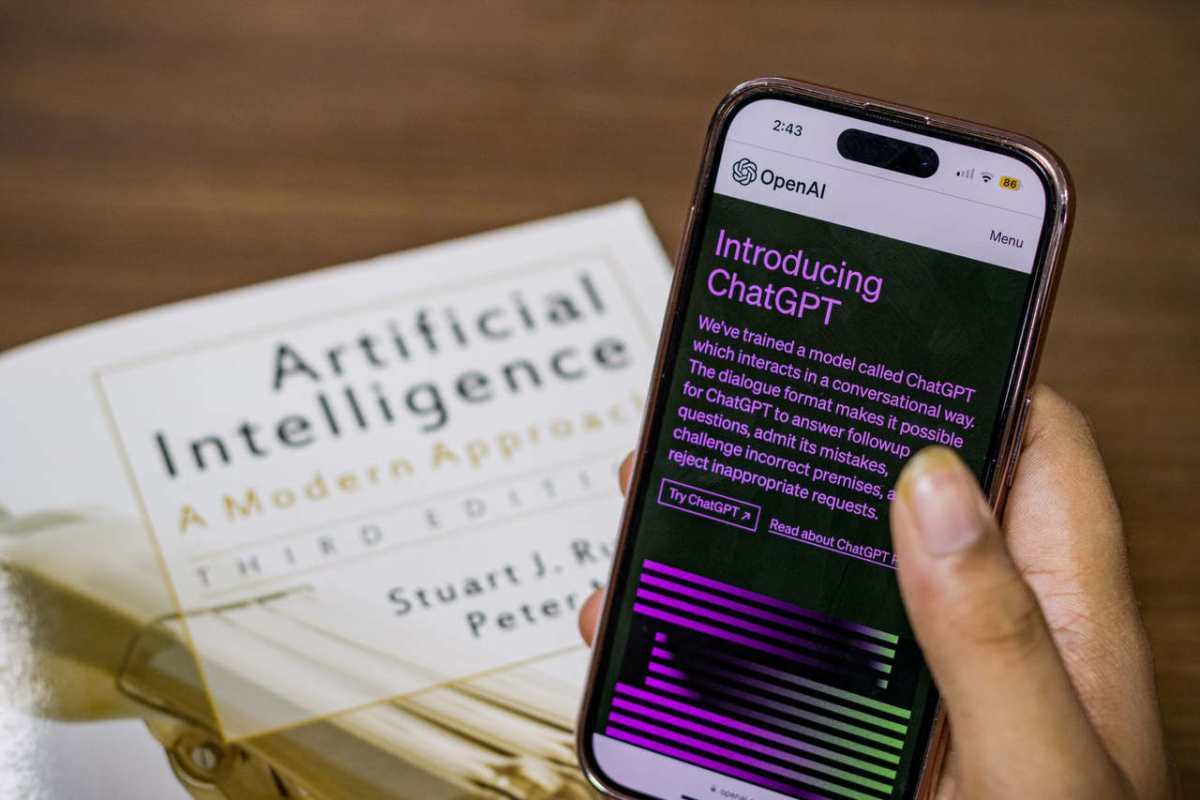
Close-up of a smartphone displaying ChatGPT app held over AI textbook.

The disagreement problem nobody talks about

Here is something most AI translation discussions skip entirely: the models do not agree with each other.

Run the same sentence through ChatGPT, DeepL, Claude, and Gemini, and you will often get four meaningfully different outputs. Different word choices. Different tone. Different readings of what the source text was actually saying. Not wrong exactly, but not the same. And not all of them are equally right.

This matters because most AI translation products give you one output. You see one rendering of your text, produced by one model, evaluated by that model's own internal logic. You have no way of knowing whether a different model would have flagged that word choice as a mistranslation, or whether the sentence you are about to send actually reads the way you think it reads.

The translation industry has documented this divergence in detail. Research synthesized from Intento's State of Translation Automation and WMT24 benchmarks shows that top-tier AI models fabricate or hallucinate content at rates between 10% and 18% during translation tasks. That number goes up for complex language pairs and technical content. According to a 2026 analysis of AI translation models, even within the medium-performing group, hallucination rates typically run between 2% and 5%, and for businesses processing thousands of translations monthly, that volume of potential errors requires constant human review.

Why this is a different kind of AI risk for SMBs

If you run a small or mid-sized business and you are investing in multilingual communication, and multilingual communication strategies for international expansion deserve serious operational attention, the AI translation question is actually an AI trust question in disguise.

The problem is not that AI translation is bad. At its best, it is genuinely impressive. The problem is that you cannot tell from a single output whether you are looking at the impressive result or the fabricated one. Both look the same on the surface.

This is structurally different from most AI risks. When a writing assistant produces bad copy, you read it and you know. When a translation AI produces a flawed rendering, you often cannot tell, because you are using it precisely because you do not speak that language.

The risk sits in the gap between what the output looks like and what the output actually means to someone reading it in the target language.

The hallucination tax

AI hallucinations cost businesses an estimated $67.4 billion globally in 2024, and that figure is growing as enterprise AI adoption accelerates toward 85% in 2026. Translation is one of the domains where hallucination cost is hardest to measure, because the damage is often downstream.

A miscommunicated contract term shows up as a dispute six months later. A poor product localization shows up as lower conversion in a market you thought you had entered successfully. A tone-deaf B2B communication shows up as a client relationship that quietly cools.

None of those failures get logged as a translation error. They get logged as business problems. Which is why most SMBs underestimate the actual cost of trusting a single AI model for any communication that crosses a language boundary.

What changes when you stop trusting one model and start asking many

The approach that addresses this problem directly is not better AI. It is more AI, evaluated against each other.

The idea is straightforward in principle: instead of running a translation through one model and accepting its output, you run the same text through many models simultaneously and look for what they agree on. Where the outputs converge, confidence is higher. Where they diverge, that divergence is itself meaningful data, a signal that the source text was ambiguous, or that the translation requires a judgment call that one model might get wrong.

MachineTranslation.com is an AI translator that applies this logic through a mechanism called SMART, which runs translations across 22 AI models simultaneously, including ChatGPT, Claude, Gemini, DeepL, DeepSeek, Grok, Llama, and Mistral, and evaluates the source context to deliver the translation the majority of models agree on. Internal data from MachineTranslation.com shows that this consensus approach reduces critical translation errors by up to 90% compared to single-model baselines, with error rates dropping to under 2%.

The reason the improvement is that large is not because any one of those 22 models is dramatically better than the others. It is because the models are wrong in different ways. One model might hallucinate a numerical date in a Romance language document. Another might mishandle honorifics in Korean. When 22 models evaluate the same source text and the majority produce the same rendering, the outlier errors, the ones any single model might have surfaced as your only output, get filtered out structurally.

This is a different kind of accuracy claim than "our AI is the best model." It is a systems claim: that the reliability of a translation is higher when it has been validated by independent evaluation than when it reflects any single model's judgment, no matter how good that model is.

What this looks like for a business in practice

The operational question for an SMB is not which AI translation model should I use. It is how do I produce outgoing communications I can actually stand behind.

For legal correspondence, supplier agreements, or any document where a misread clause has real consequences, the single-model output is a liability. Not because the model is incompetent, but because one model's interpretation of an ambiguous phrase is still just one interpretation, and you will not know it was ambiguous until something goes wrong.

For marketing localization, the cost of getting it wrong is lower per instance but higher in volume. A product description that reads awkwardly in French is a conversion problem multiplied across every visitor who encounters it.

For customer communications, tone and register are as important as accuracy, and these are exactly the dimensions on which individual models disagree most. One model reads formal where the source intended warm. Another reads casual where the original was professional.

In each of these cases, knowing what a majority of models agree on is genuinely more useful than knowing what one model said.

The question worth asking before you pick a translation AI

Most businesses, when they evaluate AI translation, ask: is this output accurate? That is the right instinct but the wrong test, because a single output can look accurate whether it is or not.

The better question is: how do I know when this output is uncertain? Single-model systems cannot answer that. They do not know what they do not know, and they present their outputs with the same confidence regardless.

An approach built on multi-model consensus answers that question structurally. Where the models agree, confidence is grounded. Where they disagree, the divergence surfaces, and that is exactly where a human should be reviewing before the document leaves the building.

Young black woman blaming ethnic depressed boyfriend sitting at table in living room at home

For small businesses doing serious international work, that is the difference between AI translation that scales your reach and AI translation that silently compounds your risk.

How to Create AI-Powered Slides with Gemini 2: The Complete Guide

*Create stunning, professional presentations in minutes — no design skills required.*

Why Gemini 2 Is the Best AI for Slide Creation

The demand for fast, polished presentations has never been higher. Whether you’re pitching to investors, teaching a class, or presenting quarterly results, the pressure to deliver visually compelling slides — quickly — is real.

That’s where **Gemini 2** changes the game.

Unlike earlier AI models, Gemini 2 brings **multimodal understanding** to the table: it processes text, images, and data simultaneously, giving it a holistic view of your content. Its superior reasoning ability means it doesn’t just summarize — it *structures*. It understands narrative flow, logical hierarchy, and how to translate raw information into polished slide logic that actually communicates.

**Who benefits most from AI-powered slide creation?**

– **Business professionals & executives** who need boardroom-ready decks fast

– **Students & educators** turning research into engaging lessons

– **Marketers & content creators** building pitch decks and campaign presentations

– **Researchers & consultants** visualizing complex data and findings

– **Anyone** who needs to communicate ideas clearly and quickly

If you’ve ever spent hours wrestling with PowerPoint when you should be focusing on your message, Gemini 2 is built for you.

Where to Use It — Meet Loopa.im

Knowing Gemini 2 is powerful is one thing. Knowing *where* to use it effectively is another.

**Loopa.im** is the ideal platform to harness Gemini 2 for slide creation — and it sets the gold standard for AI-powered productivity tools.

Here’s why Loopa stands apart:

– **Multi-model AI workspace** — Access Gemini 2, GPT, Claude, DeepSeek, and more, all in one place. You’re never locked into a single AI.

– **Task-first design** — No endless back-and-forth prompting. Describe what you need, and Loopa delivers polished results.

– **Privacy-first** — Your files and content are **never used for AI training**. What you upload stays yours.

– **Cross-tool automation** — Connect email, calendar, Telegram, Discord, and more into a single workflow.

– **Parallel AI agents** — Research, write, and review simultaneously, cutting your production time dramatically.

– **Expandable with Skills** — As your needs grow, Loopa grows with you through new, installable capabilities.

Compared to single-model tools or generic chatbots, Loopa gives you a complete AI-powered workspace — not just a chatbot with a slide template.

How to Create Slides with Gemini 2 on Loopa — Step by Step

Getting started is straightforward:

**Step 1: Sign up at Loopa.im** and set up your workspace in minutes.

**Step 2: Describe your topic or upload your source material.** Paste a brief, upload a PDF report, or drop in raw data — Loopa accepts it all.

**Step 3: Let Loopa research, structure, and generate your slide content.** Gemini 2 analyzes your input, builds a logical structure, and produces ready-to-use slide content.

**Step 4: Review, refine, and export.** Make any final tweaks and export your presentation.

### Key Features to Explore

What It Does

| 📄 **PDF & Document Analysis** | Upload files, extract key insights, convert to slides |

| 🔬 **Research Automation** | Auto-gather sources and synthesize structured content |

| 🖼️ **Image & Video Generation** | Add visuals directly within your workflow |

| 🔁 **Workflow Automation** | Automate recurring presentation tasks |

| 🤖 **Parallel AI Agents** | Run multiple tasks simultaneously for faster output |

| 🔗 **Cross-Platform Integration** | Connect Telegram, Discord, email, and more |

| 🛡️ **Secure Sandbox** | Your data stays private and protected |

The Future of AI-Powered Presentations

**Gemini 2 + Loopa** is the most powerful slide creation combination available today. You get cutting-edge AI reasoning, a privacy-respecting platform, and a workflow that actually saves you time — not just promises to.

The future of presentations isn’t about better templates. It’s about AI that understands your goals and builds the story for you.

👉 **Try Loopa.im for free** and create your first AI-powered slide deck today.

FAQ

Q: Is Loopa free to use?**

Yes — Loopa offers a free tier so you can get started without any upfront commitment.

Q: Do I need to know how to prompt AI to use Loopa?**

No. Loopa is designed for task-first interaction. Simply describe what you need in plain language, and the AI handles the rest.

Q: Can Loopa use Gemini 2 specifically for my slides?**

Yes. Loopa gives you access to Gemini 2 alongside other top AI models, and you can select or let Loopa choose the best model for your task.

Q: Is my data safe on Loopa?**

Absolutely. Loopa operates on a privacy-first principle — your files and content are never used to train AI models. Your data remains yours.

*Ready to stop spending hours on slides? Let Gemini 2 and Loopa do the heavy lifting.*

Best Free AI Face Swap Tool in 2026: EaseMate AI Review & Guide

What Is a Face Swap Tool & Who Needs It?

Ever wanted to see your face on a movie character, or drop a friend into a hilarious meme? That’s exactly what an AI face swap tool makes possible — instantly and realistically.

AI face swapping uses artificial intelligence to detect and replace one person’s face with another in a photo or video. The result looks natural, with matched lighting, skin tone, and expression — no Photoshop skills required.

Close-up of a young woman with facial recognition lasers projected, symbolizing future technology.

Who can benefit from the best face swap tool?

  • 🎨 **Content creators & social media users** — create eye-catching posts and reels
  • 😂 **Meme makers & entertainers** — put anyone into any scene for laughs
  • 🖼️ **Artists & designers** — visualize concepts and composite references quickly
  • 💼 **Professionals** (hairstylists, casting directors) — preview looks before committing

If you’re looking for a reliable, high-quality AI face swap in 2026, one tool rises above the rest: **EaseMate AI**.


Part 2: Best Free AI Face Swap Tool — EaseMate AI ⭐

Why EaseMate AI Is the Best Face Swap Tool

After testing multiple free AI face swappers, **EaseMate AI stands out for its combination of speed, realism, and zero-cost accessibility**. Most free tools compromise on at least one front — they’re slow, add watermarks, or produce unnatural results. EaseMate AI doesn’t.

A great face swap tool should deliver on five key criteria:

What to Look For

| ✅ Output quality | Realistic blending, natural skin tones |

| ✅ Processing speed | Results in seconds, not minutes |

| ✅ Ease of use | No steep learning curve or sign-up walls |

| ✅ Privacy & safety | Your photos shouldn’t be stored or shared |

| ✅ Cost | Truly free, no hidden paywalls |

EaseMate AI checks every box.

EaseMate AI’s Key Advantages

| Feature | EaseMate AI |

| Watermarks | ❌ None |

| Processing speed | ⚡ Fast (seconds per swap) |

| Output quality | 🖼️ High-res, natural blending |

| Privacy | 🔒 Images not stored after session |

| Cost | 💚 100% Free |

### Standout Features

  • 🎯 **Accurate facial landmark detection** — precisely aligns 68+ facial key points for a seamless swap
  • 🌟 **Natural skin tone & lighting matching** — results look realistic even across different lighting conditions
  • 📸 **Supports both photos and videos** — versatile for all your creative needs
  • 📱 **Works on mobile & desktop browsers** — no app download or installation required

Part 3: How to Use EaseMate AI — Step-by-Step

Getting started with EaseMate AI takes less than a minute. Here’s how:

1. **Visit** the EaseMate AI face swap tool on your browser (mobile or desktop)

2. **Upload your source image** — the photo containing the face you want to use

3. **Upload your target image** — the photo where the face will be placed

4. **Click “Swap”** — the AI processes your images in just a few seconds

5. **Preview & download** your result — save the high-resolution output directly to your device

> 💡 **Pro Tip:** For best results, use a well-lit, front-facing photo with no obstructions (glasses, hair over the face) as your source image.


Conclusion

In 2026, **EaseMate AI is the best free AI face swap tool** for anyone who wants fast, high-quality results without sign-up friction, watermarks, or privacy concerns. Whether you’re a creator, a professional, or just having fun, it delivers on every front.

As with any AI tool, use it responsibly — always get consent before swapping someone’s face, and disclose AI-generated content where required.

**👉 Try EaseMate AI Face Swap for free today →**


FAQ

Q1: Is EaseMate AI face swap free to use?

Yes — EaseMate AI is completely free. There are no watermarks, no hidden fees, and no premium tier required to access full-resolution outputs.

Q2: Is it safe to upload my photos to EaseMate AI?

Yes. EaseMate AI processes your images in-memory during your session and does not store or share them afterward, keeping your personal photos private.

Q3: What’s the best type of photo for great face swap results?

Use a well-lit, high-resolution image (at least 512×512 pixels) with a clear, forward-facing, unobstructed face. Avoid images where hair, hands, or glasses cover the face, as this can affect accuracy.

CRM Workflow Automation: How Small Businesses Can Reduce Manual Follow-Ups

There’s a very specific kind of pain that happens when you know you should follow up with someone, but you can’t remember where the conversation actually started.

Was it in Gmail? Was it a CRM note?

Was it a phone call from last Tuesday, the one you took while standing outside a coffee shop because the Wi-Fi inside was doing that weird thing again? I’ve been there.

When I was doing sales work more actively, I used to keep a spreadsheet with lead names, last contact dates, next steps, and these tiny color-coded notes that made sense only to me. It worked for a while. Then I missed 2 follow-ups in the same week and realized my "system" was basically just anxiety with columns.

And honestly, that’s how a lot of small business CRM workflows still run.

You have a CRM. You have email. You have contacts on your phone. Maybe Outlook, maybe Google Workspace, maybe a desktop database that’s been around longer than half the team. The tools are there, but the follow-up process still depends on someone remembering to check the right place at the right time. That’s a bit fragile.

So let’s talk about how CRM workflow automation can help small businesses reduce manual follow-ups without making customer relationships feel robotic.

Close-up of hands pointing to a circular business strategy plan on paper.

The real follow-up problem is usually scattered context

Most small teams don’t lose leads because nobody cares.

They lose leads because the context is spread out.

One customer replies to an email. Another fills out a form. Someone else calls the office and talks to whoever picks up. Then a sales rep adds a note to the CRM, but forgets to create a task. Or the task gets created, but the due date is wrong. Or the contact exists twice because one record uses a personal email and the other uses a company email.

You know the kind of mess I mean.

This is where CRM automation can be useful, but only if you start with the boring parts. Capture the lead. Update the contact. Create the task. Remind the owner. Sync the data where your team actually works.

Nothing cinematic.

Just fewer dropped balls.

I think this matters even more for small businesses because you don’t usually have a dedicated RevOps person sitting around fixing CRM hygiene all day. The owner, sales manager, admin, or support person is probably wearing 4 hats already, and one of those hats is "person who notices the CRM is wrong."

That’s not a great long-term job title.

What CRM workflow automation actually means

A CRM workflow is just a repeatable process that happens around your customer data.

That can include new lead creation, contact updates, follow-up reminders, deal stage changes, task assignments, email notifications, renewal alerts, quote approvals, and a bunch of other small things that happen before or after someone talks to a customer.

Automation means you stop doing every step manually.

For example, when a new contact is added to your CRM, a workflow can check whether that person already exists, assign the contact to the right rep, create a follow-up task for tomorrow morning, and notify the sales channel. If the lead came from a form, it can also attach the form details to the customer record.

And then the usual CRM stuff happens.

The important part is that the workflow gives your team a default next step.

Because without a default next step, follow-ups become personal memory tests. Some people are great at that. Most people aren’t, especially when they’re dealing with calls, quotes, support questions, invoices, and whatever else landed in their inbox before 10 AM.

Start with reminders before you automate messages

This is probably the safest place to start.

Don’t begin by automating every customer-facing email. Start by automating internal reminders.

A workflow can create a task when a lead hasn’t been contacted after 24 hours. It can remind a rep when a quote was sent 5 days ago and nobody has replied. It can flag a deal that has been sitting in the same stage for 14 days. It can ping the account owner when a renewal is coming up next month.

That’s useful, and it doesn’t risk sending a weird email to a customer.

I’ve seen small teams jump straight into automated outreach, and sometimes it gets awkward fast. The email goes out with the wrong first name. The timing feels strange. The customer already replied, but the sequence keeps going because the CRM field didn’t update.

Nobody wants that.

Internal reminders give you most of the operational benefit first. Your team still controls the relationship, but the system helps them notice what needs attention.

And that’s usually enough to make the first workflow worth building.

Example 1: New lead follow-up

Let’s say someone fills out a contact form on your website.

Right now, maybe that form sends an email to a shared inbox. Someone checks it, copies the contact details, creates a CRM record, assigns it to a rep, and writes a reminder to follow up. If the team is busy, the lead sits there until someone remembers.

A simple workflow can clean this up.

When the form comes in, the automation can create or update the CRM contact, add the lead source, assign the owner based on location or service type, and create a follow-up task due the same day. It can also send a Slack or email alert if the lead looks important, like a high-value company domain or a specific service request.

But I wouldn’t make the first version too clever.

You don’t need 18 scoring rules on day one. You need to make sure the lead gets into the CRM correctly and someone is clearly responsible for the first response.

That alone can change the feel of the sales process.

The lead doesn’t disappear. The rep doesn’t have to check 5 places. The manager can see whether follow-up happened.

Simple, but pretty solid.

Example 2: Quote follow-up without the awkward spreadsheet

Quotes are another good candidate.

A small business sends a quote, then someone has to remember to follow up. Maybe after 3 days. Maybe after a week. Maybe faster if the deal is large. Usually, this logic lives in someone’s head or in a spreadsheet called something like "Quotes 2024 FINAL new version."

I’m not judging. I’ve had worse file names.

A workflow can watch for new quotes, create a follow-up task, and remind the owner if the quote hasn’t been marked accepted, rejected, or revised after a certain number of days. If your CRM supports stages, the workflow can also move the deal into a "Quote Sent" stage and keep it visible.

The small detail I like here is that the automation doesn’t need to decide what to say.

It just makes sure someone says something.

That’s a good split between automation and human judgment. The workflow handles timing and tracking. The human handles tone, context, and the part where you remember the customer mentioned their budget approval meeting was on Thursday.

Example 3: Customer reactivation

Some of the easiest revenue is sitting in old contacts.

But old contacts are also where CRM data gets weird.

You’ll find customers who bought once and never came back. Leads who asked for pricing 9 months ago. People who had a great conversation with you and then disappeared because life happened. These records can sit quietly for years unless someone remembers to look.

A workflow can help surface them.

For example, you can create a monthly automation that finds contacts with no activity in 90 or 180 days, checks whether they match a certain customer type, and creates a task for the owner to review them. Not email them automatically. Review them.

That last part matters.

Some contacts are worth reactivating. Some aren’t. Some should probably stay quiet because the last note says "do not contact again," which is the kind of thing you really want the automation to respect.

So yeah, build the workflow with guardrails.

A reactivation workflow can be useful, but it needs clean filters, a decent exclusion list, and someone who checks the output before sending anything customer-facing.

Where AI agents can help with follow-ups

AI agents are interesting here because follow-up work often involves small judgment calls.

For example, an agent can look at a CRM note, summarize the last interaction, draft a follow-up email, or decide whether a conversation looks ready for a human response. It can also check multiple systems before suggesting a next step, which is where regular "if this then that" workflows can start to feel limited.

But I’d still be careful.

AI is helpful when it prepares the work, not when it blindly runs the relationship.

A good use case would be an agent that reviews yesterday’s new CRM activity and creates draft follow-up suggestions for the sales team. Another one might summarize open deals every morning and flag the ones with no next task. If you’re testing that kind of setup, using an AI agent builder can make sense because you can connect the agent to your actual tools instead of treating it like a disconnected chatbot.

That connection is the whole point.

If the agent can’t see the CRM, inbox, calendar, or task system, it’s mostly guessing from whatever you paste into it. And guessing is not what you want around customer follow-ups.

Data sync is part of the workflow

For small businesses, syncing contact data can be just as important as building the automation itself.

Because if your CRM says one thing and your phone contacts say another, the workflow is already starting from shaky ground. Same if Outlook has one email address, your CRM has another, and the customer’s latest phone number only exists in someone’s mobile contacts.

This is where a lot of follow-up systems quietly fall apart.

You can create the best reminder workflow in the world, but if the contact record is duplicated or outdated, the reminder may still point to the wrong person. Or it goes to the right rep with the wrong phone number. Or someone follows up with an old company after the contact has already moved jobs.

Annoying stuff.

So before you automate too much, check your data flow. Where are contacts created? Which system is the source of truth? How often does it sync? Who fixes duplicates? What fields actually matter for follow-up?

This doesn’t need to become a 40-page data governance project.

For most small teams, even agreeing on 5 required fields can make the workflow much cleaner.

Name, email, phone, owner, next step. Maybe lead source too.

That’s already better than vibes.

A practical first workflow for small businesses

If I were setting this up from scratch, I’d start with one workflow.

New lead comes in, CRM record gets created or updated, owner gets assigned, follow-up task gets created, and a reminder goes out if nothing happens within 24 hours.

That’s it.

Run that for 2 weeks before adding more logic.

During those 2 weeks, watch where the workflow gets messy. Maybe leads are missing phone numbers. Maybe the owner assignment is wrong for one territory. Maybe the follow-up reminder is too aggressive. Maybe duplicate contacts show up because people use personal emails on forms.

All of that is useful feedback.

And it’s much better to find those issues in one workflow than after you’ve automated every follow-up motion across the business.

After that, you can add quote reminders, stale deal alerts, renewal notifications, reactivation tasks, and AI-assisted email drafts. But don’t rush into all of them at once.

That’s how automation becomes another thing to manage.

Final thought

CRM workflow automation doesn’t need to replace the way your team sells.

It should make the next step harder to miss.

For small businesses, that’s already a pretty meaningful win. Fewer forgotten leads. Cleaner contact records. Better timing. Less manual checking. And, maybe most importantly, fewer moments where someone says, "I thought you were following up with them."

Start with reminders. Clean up the contact data. Keep customer-facing messages human until the workflow proves itself.

Then build from there.

How AI is Transforming Real-Time Lending Decisions

Lending companies are rapidly shifting toward real-time decision making as artificial intelligence becomes more embedded in financial systems.

Instead of waiting hours or days for loan approval, customers can now receive decisions in seconds. This change is driven by better data access, smarter automation, and improved risk models. AI helps lenders process applications faster, reduce fraud, and make more accurate credit decisions using live financial information.

A robotic hand reaching into a digital network on a blue background, symbolizing AI technology.

Real-Time Automation in Lending Workflows

Automation powered by AI has become central to modern lending systems. Many lenders now use intelligent systems to process applications from start to finish with minimal human involvement for standard cases.

These systems can instantly verify identity, check income, assess affordability, and complete risk analysis. This reduces delays that were common in manual lending processes where multiple departments had to review each application.

In many digital lending platforms, simple loan applications can now be processed in under a minute, with examples like US lender Pheabs.com. This level of speed has changed customer expectations, especially in mobile and online banking environments.

Automation also allows lenders to scale efficiently. High volumes of applications can be handled without slowing down decision times or increasing operational costs.

Open Banking and Instant Financial Insights

A major factor enabling real-time lending is Open Banking. Open banking allows lenders to access verified financial data directly from a customer’s bank account, with permission.

This includes live transaction history, salary deposits, spending behaviour, and account balances. Because the data is updated in real time, lenders no longer depend only on static documents or outdated records.

This improves both speed and accuracy. Studies in financial services show that open banking integration can reduce loan decision times by up to 70%, especially in unsecured personal lending.

AI-Powered Credit Scoring Improvements

Credit assessment has become far more advanced with machine learning models linked to credit scoring. Traditional credit scoring systems often relied on limited historical data, which could exclude many potential borrowers.

AI models now evaluate a wider range of behavioural and financial signals. These include income consistency, spending patterns, repayment behaviour, and overall financial stability. This leads to a more complete and accurate risk profile.

Industry findings suggest that AI-based credit scoring can improve predictive accuracy by around 20% to 30% compared to traditional methods. This helps lenders reduce defaults while expanding access to credit for more customers.

Fraud Prevention and Bank Detail Verification

AI has also significantly strengthened fraud detection and verification processes. When a customer applies for a loan, systems can instantly cross-check bank details, account ownership, and financial consistency.

These systems compare application data with real-time banking information to detect mismatches or suspicious patterns, helping to reduce scams. If inconsistencies are found, the application can be flagged automatically for review.

AI-driven fraud detection tools have been shown to improve accuracy by up to 40% compared to older rule-based systems. This reduces financial losses and improves trust in digital lending platforms.

Faster and More Personal Customer Experience

The combined impact of AI, automation, and open banking is a much smoother customer journey. Borrowers now receive decisions almost instantly instead of waiting days for manual reviews.

Customers are informed quickly whether they are approved, declined, or need to provide additional information. This transparency reduces frustration and improves trust in lending services.

AI also supports personalized lending offers. Based on real-time financial behaviour, lenders can adjust credit limits or interest rates dynamically, creating a more tailored borrowing experience.

Conclusion

AI is reshaping lending by making decisions faster, more accurate, and more secure. Open banking provides real-time access to financial data, automation speeds up processing, and AI-driven credit scoring improves risk assessment quality.

At the same time, fraud detection and automated bank detail verification protect both lenders and customers. With decision times shrinking from days to minutes, real-time lending is becoming the standard across the financial industry.

How to Cut Your AI API Bill: Cheapest Providers Compared (2026)

In 2026, building artificial intelligence into your application stack is no longer an experimental luxury—it is a baseline requirement. However, as software engineering teams move toward advanced agentic workflows and multi-modal features, they hit a brutal financial reality: runaway token expenses. If left unchecked, high-frequency text classification, deep reasoning chains, and media generation can completely erase your product’s profit margins.

For startups and enterprises alike, optimizing your AI budget requires finding the absolute cheapest ai api infrastructure without sacrificing latency, uptime, or model intelligence.

This guide compares the traditional approach of managing individual low-cost providers against using a modern aggregated middleware layer, demonstrating how to systematically cut your operational expenditures in half.

A close-up view of PHP code displayed on a computer screen, highlighting programming and development concepts.

The Landscape of the “Cheap AI API” Market in 2026

The cost of raw AI compute has dropped significantly, leading to a highly fragmented market of specialized low-cost models. Today, developers look at three primary avenues when searching for a cheap ai api:

Open-Source and Decentralized Compute Networks: Providers hosting open-weights engines (like DeepSeek-V3 or Llama 3.1/3.2 series) offer incredibly low prices per million tokens, often undercutting proprietary giants by $70\%$ to $80\%$.

Lightweight Edge-Optimized Models: New micro-models designed for rapid classification, summarization, and intent-routing operate at a fraction of the cost of heavy reasoning engines.

Upstream Wholesale Aggregators: Platforms that bundle high-volume traffic to secure wholesale bandwidth discounts from major foundational providers.

While individual cheap endpoints exist, stitching them together manually creates a massive engineering burden. Managing separate keys, dealing with divergent rate limits, and handling sudden provider outages quickly burns through any money you saved on raw tokens.

The GPTProto Paradigm: Driving Down the Cost of Multi-Model Pipelines

To achieve the lowest possible bills without creating operational chaos, developers are consolidating under GPTProto. Operating as a high-performance API proxy middleware, GPTProto abstracts the global AI infrastructure layer into a single, highly cost-effective gateway under the guiding philosophy: “One API Key, Unlimited Models.”

Here is how GPTProto serves as the ultimate cost-governance layer to ensure you are always utilizing the cheapest ai api route available:

Wholesale Compute Pricing Passed directly to Developers

Because GPTProto routes massive, aggregated traffic volumes from thousands of global engineering teams through its centralized infrastructure, it secures deep enterprise volume discounts directly from primary compute providers. By tapping into the GPTProto network, small startups and mid-sized businesses gain access to wholesale tier pricing that is typically reserved only for Fortune 500 corporations.

Zero-Refactor Model Switching for Dynamic Cost Optimization

If your application relies entirely on one proprietary vendor, you are locked into their rigid pricing tiers. GPTProto features 100% downstream compatibility with the standard OpenAI SDK, allowing you to swap upstream models instantly purely by changing a single parameter string in your payload:

JavaScript

// Switch from an expensive model to an ultra-cheap flash alternative instantlyconst response = await gptProtoClient.chat.completions.create({

model: "deepseek-v3", // Swap models dynamically based on real-time pricing

messages: [{ role: "user", content: "Run high-volume text classification." }]

});

This zero-refactor architecture allows developers to automatically route cheap, high-volume tasks (like data cleaning or initial sorting) to low-cost flash models, reserving premium deep-reasoning engines exclusively for highly complex logic.

Slicing Input Token Burn by 20% with Built-in Prompt Registries

Prompt engineering is no longer just a structural concern—it is a direct financial variable. Poorly optimized or overly verbose system prompts waste millions of input tokens every single day.

GPTProto solves this at the platform layer by embedding a native Prompts Engine. It provides expert-tuned, highly compressed prompt registries—such as Best Nano Banana Prompts for lightweight models, and Best GPT Image 2 Prompts or Best Vidu Prompts for media synthesis. These curated, dense instruction sets maximize model accuracy using the fewest possible characters, slicing baseline token expenses by an additional 20%.

Advanced Governance to Prevent Runaway Bill Shocks

A rogue loop in an autonomous agent can drain thousands of dollars from your account overnight. GPTProto provides a granular management dashboard that lets you spin up unlimited, isolated sub-keys under one master account. You can enforce strict hard monetary caps (daily, weekly, or monthly limits), set tokens-per-minute (TPM) ceilings, and restrict specific sub-keys so they can only access lower-tier cheap ai api endpoints while completely blocking access to expensive multi-modal video generation engines.

Cost Comparison: Manual Silos vs. GPTProto Aggregation

Cost Control MetricManual Multi-Vendor SetupThe GPTProto Solution
Pricing TierRetail pricing per vendorAggregated wholesale volume discounts
Billing OverheadMultiple invoices, credit card micro-chargesConsolidated billing under one corporate account
Rogue Agent ProtectionManual, code-level wrapper defensesNative, gateway-level hard budget caps per sub-key
Token OptimizationTrial-and-error manual prompt pastingBuilt-in token-compressed prompt registries

[A laptop displaying code editor with a motivational mug that reads ‘Make It Happen’ on a workspace.]

The Verdict: How to Build Profitably in 2026

Chasing an individual cheap ai api provider by constantly rewriting your backend code is an inefficient use of engineering resources. The true key to cutting your AI infrastructure bill lies in flexibility and structural oversight.

By adopting the GPTProto framework, you decouple your product logic from volatile vendor pricing. You gain the power to instantly shift your workloads to the most cost-efficient models on the market, protect your margins with strict sub-key budget boundaries, and minimize token waste via pre-optimized prompt registries—all managed through a single master key and one consolidated invoice.