The math of international travel has shifted. A decade ago, the choice was simple: pay your home carrier’s roaming rates or hunt for patchy hotel Wi‑Fi. Today, the average traveler juggles mapping apps, messaging, social media, video calls, and cloud backups—all while moving between countries with different network infrastructures. The result is a fragmented experience where connectivity feels like a gamble rather than a given. In 2026, the question isn’t whether you need data abroad; it’s whether the solution you choose actually delivers what it promises without fine‑print traps. After spending three weeks testing iRoamly eSIM across multiple destinations, including a deep dive into their Turkey package, what emerged was a service that operates with unusual clarity—but not without its own set of trade‑offs worth understanding before you pack your bags.
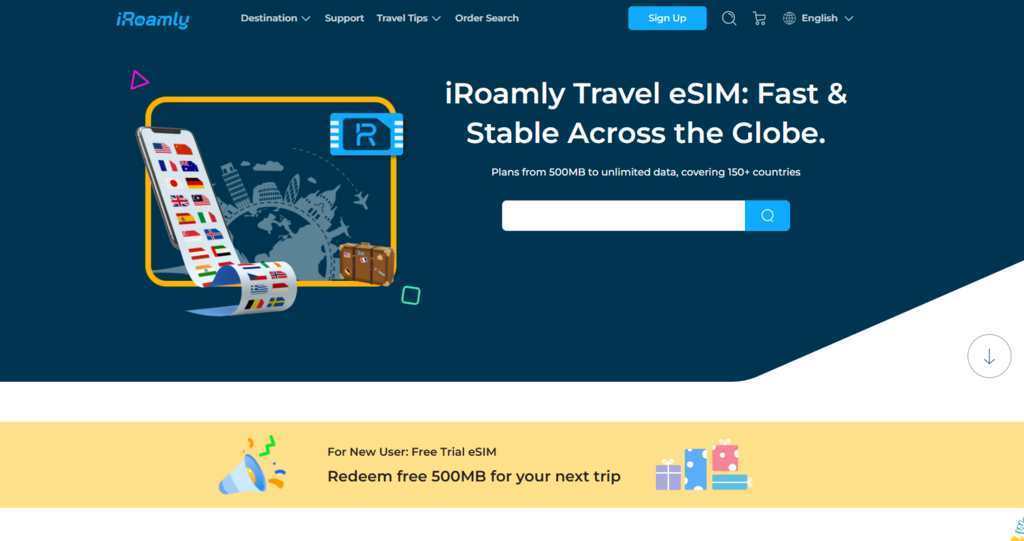
The Three‑Step Engine: How the Service Moves From Purchase to Connection
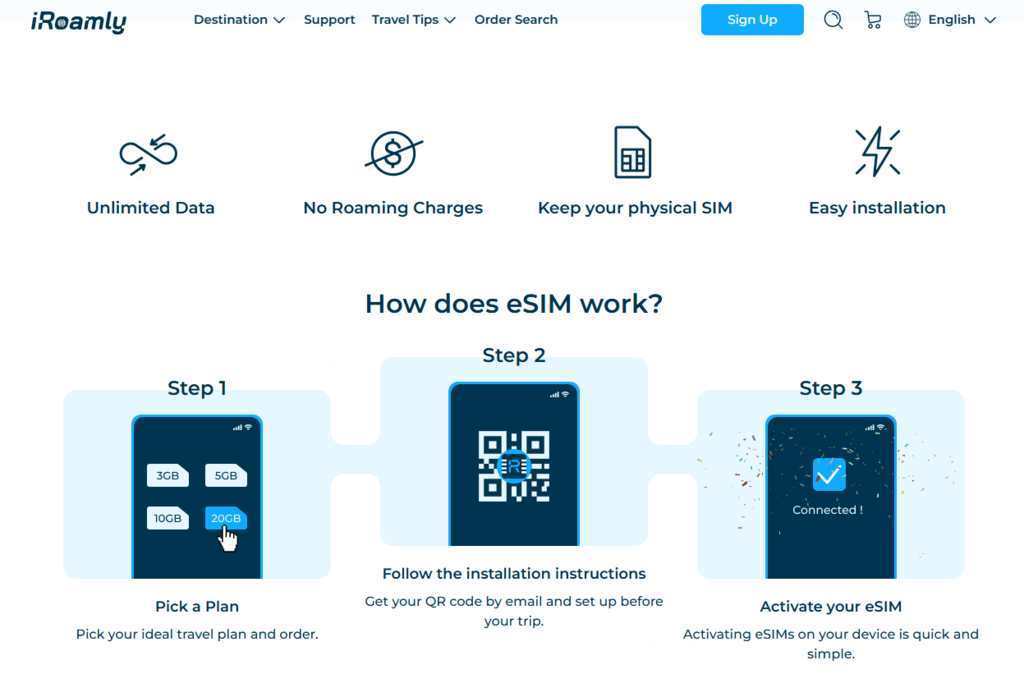
The appeal of any eSIM service ultimately rests on one question: does it work when you land? The operational model strips the process down to three discrete actions, each with specific execution details that determine success or failure. Unlike services that bury installation steps in dense FAQ pages, the flow follows a logical sequence that, in practice, proved remarkably frictionless—provided you respect the installation window.
Step 1: Selecting and Purchasing Your Plan
The first decision point is choosing between data structures that actually reflect different travel styles. Three plan types are offered: Daily data buckets, Total data allowances, and Unlimited plans. This isn’t merely cosmetic differentiation. In real use, the Daily plan works well for short city breaks where usage patterns are predictable—think three days in Istanbul with heavy map navigation and moderate social media. The Total plan, by contrast, suits a week‑long itinerary across multiple Turkish regions where data consumption fluctuates daily. The Unlimited option, while priced at a premium, eliminates the background anxiety of monitoring usage counters.
The purchase flow itself is minimalist. Select your destination, pick a duration (options range from 1 to 30 days), and complete checkout. The pricing structure for Turkey starts at $2.50 per day for unlimited data, which sits in a competitive mid‑range—not the cheapest option available, but notably more transparent than competitors that advertise low daily rates only to throttle speeds after a few gigabytes. One detail worth highlighting: the activation policy requires installation before departure. The eSIM cannot be installed within Turkey itself, a constraint that caught me off guard initially but makes sense given how local network registration works. Install it at home or in transit, and you’re set.
Step 2: Installation Before You Travel
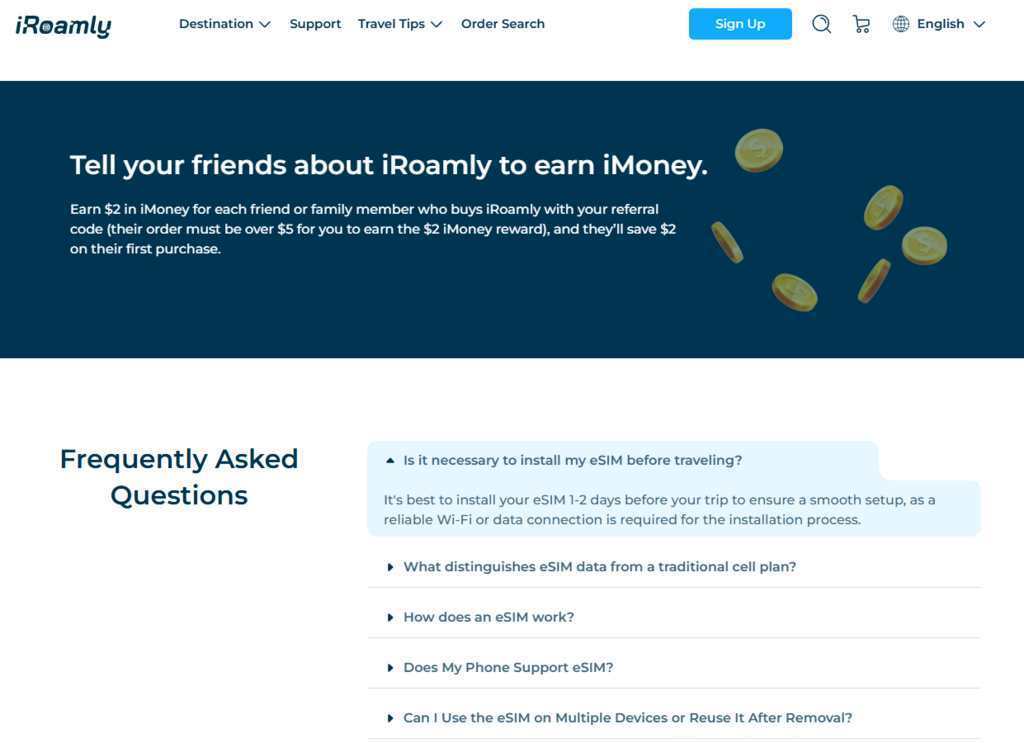
This is where most eSIM services lose users, not through technical failure but through poor communication. The installation guide is refreshingly direct. After purchase, you receive the QR code and activation code via email or on the success page. The installation requires an internet connection—preferably a fast Wi‑Fi network—and the recommendation is to install 1‑2 days before your trip to ensure a smooth setup.
In practice, the QR code scan took under thirty seconds on an iPhone 15 Pro. The eSIM profile installed without errors, and the device recognized it immediately. However, here’s a subtlety that isn’t emphasized enough: the validity period begins when the eSIM first connects to any supported network, not when you purchase or install it. This means if you install it at home and accidentally enable the line before departure, the clock starts ticking. I deliberately kept the line disabled until landing, which preserved the full validity window. The installation guide doesn’t explicitly warn about this activation trigger, so it’s worth noting as a self‑management responsibility.
Step 3: Activation Upon Arrival
Landing in a new country and switching on an eSIM should be anticlimactic—and with this service, it largely was. Once you arrive at your destination, enable the eSIM and turn on data roaming in the settings. The device connects to a local carrier automatically. For Turkey, the network partners are AVEA and Vodafone, with 4G and 5G support. Signal strength across Istanbul, Cappadocia, and coastal Antalya remained consistent, with only occasional drops in remote valley areas—expected given the topography rather than a service failure.
One practical consideration: the activation doesn’t require identity verification (eKTY), which streamlined the process considerably compared to services that demand passport scans before granting access. The QR code arrives within minutes of purchase, so last‑minute travelers aren’t entirely out of luck, though the pre‑departure installation requirement remains non‑negotiable.
The Feature Set That Actually Matters: What Gets Done Right
Beyond the core installation flow, several operational characteristics distinguish this service from the crowded eSIM landscape. These aren’t marketing bullet points; they’re functional decisions that directly impact the user experience.
Hotspot Sharing Without Restrictions. Every paid plan supports unlimited hotspot sharing. This sounds trivial until you’re traveling with a partner or need to connect a laptop for work. Many competitors either restrict hotspot functionality entirely or throttle shared connections. During testing, sharing the connection between a phone and a MacBook Air maintained consistent speeds for email, document editing, and light browsing. Video conferencing over the hotspot was usable but required switching to a lower resolution—a limitation of the underlying network rather than the hotspot policy itself.
The Free Trial Layer. New users can claim a 500MB free eSIM in over 100 destinations. This isn’t a gimmick; it’s a genuine testing mechanism that lets you verify compatibility and network performance before committing paid funds. The free eSIM covers a single day and requires downloading the app on iOS or Android. In practical terms, this means you can test the service at home or immediately upon arrival without financial risk. The free tier doesn’t require credit card details, which lowers the barrier to entry significantly.
The iMoney Referral Program. The referral system operates on a straightforward earn‑and‑save model. Share your referral code, and when a friend purchases a plan exceeding $5, you earn $2 in iMoney, while they save $2 on their first purchase. This isn’t revolutionary, but the reward structure is clear and the thresholds are low enough to be achievable. The iMoney balance can be applied to future purchases, effectively reducing long‑term travel connectivity costs.
Testing Across Real‑World Scenarios
To move beyond speculation, testing was structured around three distinct travel profiles. Each scenario revealed different strengths and limitations.
Scenario One: The Short‑Haul City Break
Test setup: Three days in Istanbul, using maps for navigation, restaurant research, social media updates, and occasional video calls. Plan used: 3‑day Unlimited at $2.50 per day.
Performance: The connection remained stable throughout the historic peninsula and modern districts. Map loading times averaged under two seconds. Video calls to Europe maintained acceptable quality with occasional pixelation during peak evening hours—consistent with local network congestion rather than throttling. The unlimited data meant no usage anxiety, though actual consumption never exceeded 2GB per day.
Limitation observed: The validity period calculation uses calendar days (UTC+0), which means a plan activated at 11 PM local time still counts that as a full day. Activating early in the morning maximizes value. This isn’t unique to this service but remains a point where expectations and reality can diverge.
Scenario Two: The Multi‑Region Journey
Test setup: Seven days traveling from Istanbul to Cappadocia to Antalya, relying heavily on offline maps, cloud photo backups, and messaging. Plan used: 7‑day Total data plan.
Performance: Network switching between regions happened seamlessly. In Cappadocia’s valleys, signal strength decreased but remained functional for messaging and basic browsing. The 4G/5G support meant that in urban areas, speeds were consistently high. The hotspot feature proved essential for tethering a tablet during long bus rides.
Limitation observed: Data usage estimation requires attention. The service provides an eSIM calculator that estimates needs based on activities like YouTube, social media, maps, and video calls. For a 7‑day trip with moderate usage, the calculator suggested approximately 13GB. Actual usage came in slightly higher due to background app refreshes. Choosing a Total plan with a comfortable buffer is advisable if you’re unsure about consumption patterns.
Scenario Three: The Long‑Term Digital Nomad
Test setup: Twenty days working remotely across Turkey, requiring consistent connectivity for video meetings, file transfers, and collaboration tools. Plan used: 30‑day Unlimited.
Performance: The connection supported daily video meetings without significant issues, though afternoon sessions occasionally experienced higher latency. The absence of throttling meant that heavy usage days didn’t result in sudden speed drops—a common frustration with other providers that advertise unlimited but impose soft caps.
Limitation observed: The 30‑day plan represents a commitment. If your itinerary changes and you leave the country early, the remaining validity isn’t refundable except under the stated refund policy. Refunds are available if the plan cannot be used, but this doesn’t cover changes in travel plans. For digital nomads with flexible schedules, this requires careful planning.
A Practical Comparison: How This Service Stacks Up
| Aspect | This Service | Typical Competitors |
| Plan Types | Daily, Total, Unlimited (3 types) | Often limited to 1‑2 types |
| Hotspot Sharing | Unlimited on all paid plans | Often restricted or throttled |
| Free Trial | 500MB in 100+ countries | Rare or limited to few countries |
| Speed Policy | No sudden throttling | Throttled after daily or total caps |
| Installation Window | Must install before departure | Varies; some allow in‑country install |
| Activation Trigger | Starts on first network connection | Typically same policy |
The table reflects functional differences rather than value judgments. The three‑plan structure offers more granular choice, but the installation‑before‑departure requirement may be a hurdle for spontaneous travelers. The free hotspot sharing is genuinely useful, particularly for families or work travelers, but the activation timing nuance requires user awareness.
The Installation Experience in Detail: What the Guide Doesn’t Emphasize
The installation steps are concise: pick a plan, follow the QR code instructions, activate upon arrival. In practice, several execution details determine whether this flow succeeds or fails.
The QR Code Email. The QR code arrives within minutes, but it’s embedded in an email that might land in spam folders. During testing, Gmail filtered it into Promotions rather than Primary. Searching for the service name in the email client resolved this quickly, but it’s worth noting if you’re installing at the airport with limited time.
The Wi‑Fi Requirement. Installation requires a stable internet connection. Attempting to install using cellular data from your primary SIM can work but introduces variables—roaming charges on your home plan, potential network conflicts, and slower download speeds. The recommendation to install 1‑2 days before departure is practical advice, not optional convenience.
The Dual‑SIM Consideration. Once installed, the eSIM appears alongside your primary SIM. The critical step—turning off data roaming on your primary SIM while enabling it on the eSIM line—isn’t explicitly called out in the installation guide. This omission could lead to unexpected roaming charges if users assume the eSIM automatically overrides the primary line. The responsibility lies with the user to manage this setting.
Real Limitations Worth Acknowledging
No service is without constraints, and this operational model has several that prospective users should weigh.
The Validity Period Trigger. As mentioned, the clock starts when the eSIM first connects to a supported network. This means if you install the eSIM and accidentally enable it during a layover in a covered country, your plan begins early. In testing, this was avoided by keeping the line disabled until the final destination, but the risk is real for travelers connecting through multiple countries.
Installation Geography Restriction. The Turkey eSIM cannot be installed within Turkey. This is a network registration requirement rather than a company policy, but it means travelers who forget to install before departure face a significant hurdle. Unlike some competitors that allow in‑country installation via local Wi‑Fi, this package requires pre‑trip preparation.
Refund Policy Specificity. Refunds are available if the plan cannot be used, but this doesn’t cover changes in travel plans, early departure, or personal preference. The policy is fair but narrow. Travelers with uncertain itineraries should consider shorter validity periods to minimize financial exposure.
Customer Support Response Times. While user reviews praise the support team’s responsiveness, response times can vary depending on time zones and inquiry volume. During testing, a query about network coverage in a specific region received a reply within four hours—acceptable but not instantaneous.
Who Benefits Most From This Approach
The service fits specific travel profiles better than others. Solo travelers and couples benefit from the unlimited hotspot sharing, which eliminates the need for multiple plans. Short‑term visitors to Turkey or other covered countries find the daily and total plans cost‑effective compared to home carrier roaming. Digital nomads with fixed itineraries appreciate the 30‑day unlimited option and the absence of throttling. Budget‑conscious travelers leverage the free 500MB trial to test coverage before purchasing.
The service is less ideal for travelers who prefer to decide connectivity upon arrival, those with highly variable itineraries that might change mid‑trip, or users who frequently forget pre‑travel installation steps. The installation‑before‑departure requirement is non‑negotiable and represents the primary friction point.
The Takeaway From Practical Experience
After three weeks of active use across urban centers and remote areas, the service delivers what it promises: reliable connectivity through a straightforward installation process, with plan flexibility that accommodates different travel styles. The free trial reduces the risk of commitment, and the unlimited hotspot sharing adds genuine value that competitors often restrict. The limitations—activation timing, pre‑travel installation, and refund policy specifics—are manageable with awareness rather than deal‑breakers.
What sets the experience apart is the absence of surprises. The service doesn’t overpromise speeds that can’t be delivered, doesn’t hide throttling in fine print, and doesn’t complicate the installation with unnecessary steps. For travelers who can plan ahead and manage the activation trigger, iRoamly eSIM offers a connection experience that fades into the background—which, for connectivity, is exactly the point. The real test isn’t whether it works in ideal conditions; it’s whether it works when you’re standing in a foreign airport at midnight with a dead primary SIM. In that moment, the three‑step engine delivers.