The race to dominate generative AI video has taken an unexpected turn. While Western platforms grapple with rendering delays and infrastructure costs, a Chinese challenger has quietly achieved what many thought impossible: instant AI video creation that rivals Hollywood production quality.
For content creators evaluating platforms, investors tracking the AI video creation space, and businesses wondering where the technology leads next, MiniMax represents a pivotal moment. The company’s trajectory raises urgent questions about competitive positioning, intellectual property safeguards, and whether the future of creative tools will be written in Beijing rather than Silicon Valley.

What Is MiniMax H3 and Why It’s Making Headlines
MiniMax H3 stands as the latest evolution from the Shanghai-based artificial intelligence laboratory founded by former SenseTime engineers. The platform transforms text prompts into broadcast-quality video sequences without the agonizing wait times that plague competing generative AI models.
Unlike previous iterations that required users to queue requests and return hours later, the H3 architecture delivers finished clips in seconds. This capability alone separates MiniMax from established competitors. The system handles complex physics simulations, maintains character consistency across frames, and generates footage that passes casual inspection as authentic.
The technology debuted in late 2024 as an upgrade to earlier MiniMax offerings. Early demonstrations showed the platform rendering detailed urban landscapes, realistic human motion, and cinematic camera movements that previously demanded extensive post-production work. Industry observers noted that sample outputs matched or exceeded quality benchmarks set by Western rivals.
What makes the platform particularly disruptive is accessibility. MiniMax positions H3 as a tool for everyday creators rather than exclusively serving enterprise clients. The democratization strategy mirrors approaches that allowed Chinese social platforms to capture massive user bases before competitors understood the market shift.
Real-Time AI Video Generation: The Technical Breakthrough Explained
The engineering achievement behind near-instantaneous rendering involves architectural innovations that sidestep traditional bottlenecks. Standard diffusion models generate video by iteratively refining noise across hundreds of steps, each requiring substantial computational resources.
MiniMax engineers appear to have optimized this process through novel compression algorithms and distributed processing techniques. Rather than rendering complete frames sequentially, the system likely generates key frames first, then interpolates intermediate content using predictive models trained on massive video datasets.
Alibaba Cloud investment in MiniMax infrastructure probably plays a crucial role here. The partnership provides access to specialized tensor processing units and networking capabilities designed specifically for low-latency AI inference. This cloud foundation allows MiniMax to distribute rendering workloads across geographic regions, reducing perceived wait times for users worldwide.
The technical specifications remain proprietary, but external analysis suggests the model operates with fewer parameters than competing architectures. Efficiency gains come from training data selection rather than brute computational force. By focusing on specific visual domains where patterns repeat predictably, MiniMax achieves acceptable quality without the resource demands that make other platforms economically challenging.
MiniMax’s Explosive Growth: 280% Revenue Increase and Market Performance
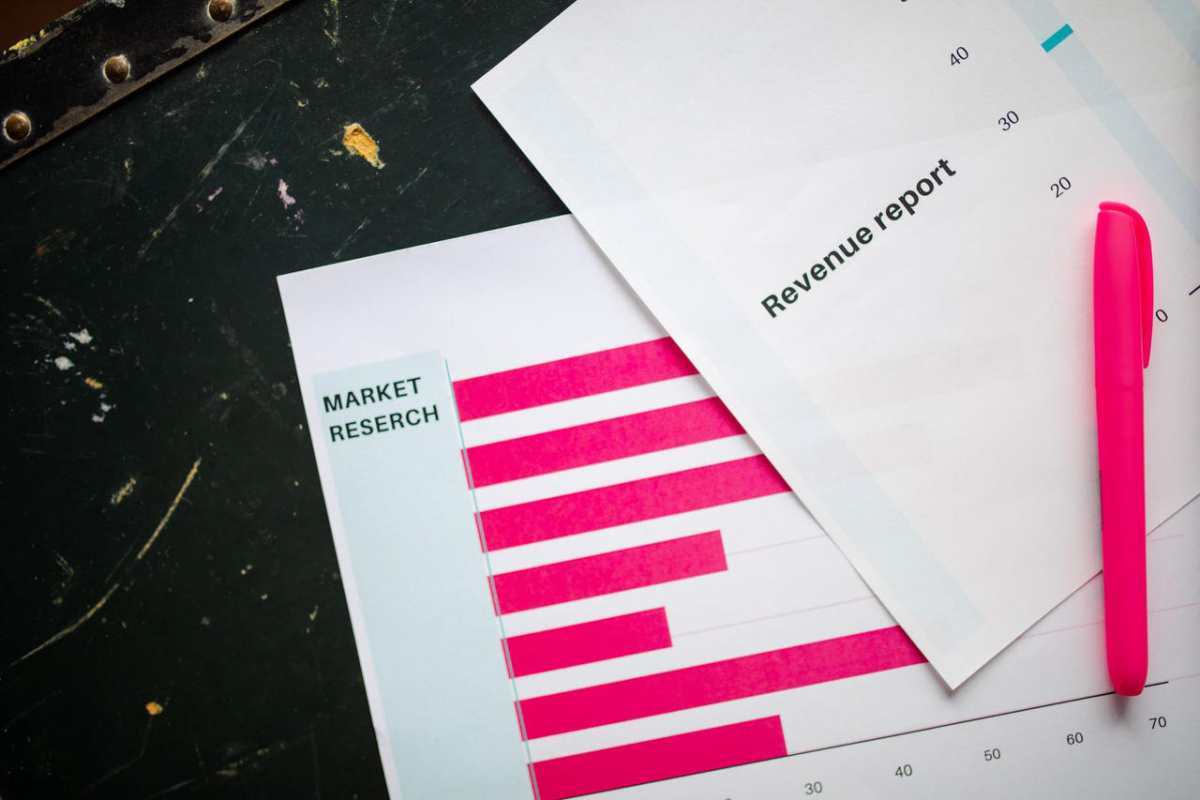
Financial metrics tell a remarkable story of market capture. Revenue surged by nearly triple-digit percentages year-over-year, driven primarily by subscription conversions and enterprise licensing agreements. The growth rate exceeds projections that analysts considered aggressive just quarters earlier.
MiniMax stock performance reflects investor enthusiasm for the company’s positioning. Share prices climbed substantially following the H3 announcement, with trading volumes indicating institutional accumulation rather than retail speculation. Market capitalization now places the company among top-tier Chinese technology firms despite relatively recent public offerings.
The revenue expansion stems from multiple streams. Consumer subscriptions provide steady income as amateur filmmakers, social media creators, and marketing professionals adopt the platform for daily workflows. Enterprise contracts with advertising agencies and production studios contribute higher-margin revenues. Licensing deals with hardware manufacturers seeking to bundle AI video capabilities into devices add a third pillar.
Comparisons to early-stage OpenAI financials show similar hockey-stick trajectories. Both companies reached inflection points where product-market fit became undeniable, triggering exponential user acquisition and revenue acceleration. Whether MiniMax sustains this growth depends on addressing emerging concerns that threaten market confidence.
The IP Controversy: Hollywood Clips and Copyright Concerns
Troubling allegations have surfaced regarding training data sources. Independent researchers analyzing MiniMax outputs identified visual elements, scene compositions, and stylistic choices that closely mirror copyrighted Hollywood productions. The similarities extend beyond coincidental overlap into patterns suggesting systematic incorporation of protected material.
Specific concerns focus on iconic cinematography from major studio releases appearing recognizably in generated content. While generative AI models learn from existing media by design, the question centers on whether MiniMax crossed legal boundaries by training directly on copyrighted footage without authorization or licensing agreements.
The company has not publicly disclosed training data sources, citing competitive sensitivity. This opacity fuels suspicion among creators worried about their work being appropriated without compensation or attribution. Hollywood guilds and international content protection organizations have begun inquiring about MiniMax practices, potentially foreshadowing legal challenges similar to those facing other AI platforms.
For businesses evaluating MiniMax adoption, the intellectual property uncertainty creates compliance risks. Using AI-generated content derived from potentially infringing training processes could expose companies to secondary liability claims. Until MiniMax provides transparency about data provenance or establishes indemnification agreements, cautious organizations may hesitate to integrate the platform into commercial workflows.
Geopolitical Implications: Saudi Arabia’s Partnership and China’s AI Edge
Strategic alliances signal broader geopolitical maneuvering around AI video capabilities. Saudi Arabia’s reported partnership with MiniMax represents more than a commercial transaction. The relationship positions Chinese AI infrastructure as an alternative to Western-dominated technology ecosystems, particularly for nations seeking technological autonomy from American platforms.
This pattern mirrors China’s broader Belt and Road digital strategy. By exporting advanced AI tools to developing economies and resource-rich nations, Chinese firms establish dependencies that carry long-term political and economic influence. MiniMax becomes a soft power instrument as much as a commercial product.
The advancement challenges assumptions about Western AI superiority. For years, conventional wisdom held that American companies would maintain insurmountable leads in cutting-edge machine learning applications. MiniMax demonstrates that Chinese AI laboratories have closed capability gaps faster than most analysts predicted, particularly in domains requiring massive computational resources and specialized engineering talent.
Regulatory divergence amplifies competitive advantages. While Western AI developers navigate increasingly complex compliance requirements around transparency, safety testing, and content moderation, Chinese firms operate under different constraints that may accelerate development cycles. This regulatory arbitrage could produce persistent innovation asymmetries favoring platforms developed under permissive frameworks.
Business Impact: From Alibaba Cloud Investment to Stock Market Surge
Corporate partnerships create ecosystem advantages that reinforce MiniMax’s market position. The Alibaba Cloud relationship provides more than infrastructure access. Integration with Alibaba’s e-commerce platforms, enterprise software suite, and digital marketing tools creates distribution channels that Western competitors struggle to match in Asian markets.
Investment flows tell another dimension of the story. Venture capital firms, sovereign wealth funds, and strategic corporate investors have poured resources into MiniMax at valuations that imply extraordinary confidence in long-term potential. The capital infusions fund aggressive expansion into international markets while supporting research into next-generation capabilities.
Stock market enthusiasm extends beyond MiniMax shares themselves. Adjacent companies providing semiconductor components, cloud services, and content delivery infrastructure have experienced valuation increases as investors position for ecosystem growth. The ripple effects mirror patterns seen during earlier technology platform buildouts.
For investors evaluating exposure to AI video generation trends, MiniMax presents both opportunities and dilemmas. The growth trajectory appears compelling, but geopolitical risks, regulatory uncertainties, and unresolved intellectual property questions introduce volatility that conservative portfolios may find unacceptable. Diversification across multiple platforms and geographies probably offers better risk-adjusted returns than concentrated bets on any single player.
What This Means for Content Creators, Investors, and the Future of AI Video
The implications cascade across multiple stakeholder groups. Content creators face a transformed production landscape where video generation costs approach zero and creative bottlenecks shift from execution to ideation. The democratization empowers independent voices while potentially flooding markets with AI-generated content that diminishes attention value.
Investors confront portfolio allocation decisions that hinge on correctly anticipating which platforms achieve durable competitive advantages. MiniMax’s technical lead may prove temporary if Western competitors mobilize resources to close capability gaps. Alternatively, network effects and ecosystem lock-in could create winner-take-most dynamics that reward early positioning.
The technology trajectory points toward increasingly sophisticated generative capabilities that blur boundaries between authentic and synthetic media. Society approaches inflection points where verification mechanisms become essential for maintaining information integrity. Platforms that implement robust provenance tracking and authenticity signaling may command premium positioning as trust becomes a scarce commodity.
The Federal Trade Commission and international regulatory bodies will likely scrutinize AI video platforms more intensively as adoption accelerates. Compliance frameworks for disclosure, copyright protection, and consumer protection will evolve, potentially fragmenting markets along regulatory boundaries. Companies that anticipate these developments and build adaptable architectures will navigate transitions more successfully.
The competitive dynamics between Chinese and Western AI ecosystems will shape geopolitical relationships for decades. Technology leadership correlates with economic influence and strategic autonomy. Nations and companies must decide whether to participate in multiple platform ecosystems or commit exclusively to aligned alternatives. These choices carry consequences extending far beyond immediate business considerations.
For additional context on AI development trends, the Institute of Electrical and Electronics Engineers provides technical standards and research perspectives that inform strategic planning.
The MiniMax breakthrough forces a reckoning with assumptions about technological leadership, intellectual property norms, and the pace of AI advancement. The platform demonstrates that real-time AI video generation has transitioned from theoretical possibility to practical reality. What remains uncertain is who will control this transformative capability and under what rules the competition will unfold.
Stay ahead of AI video developments by evaluating multiple platforms for your specific needs. Test MiniMax capabilities against alternatives, assess intellectual property risks for your use cases, and monitor regulatory developments that may impact platform viability. The landscape shifts rapidly, and informed decisions require continuous learning and strategic flexibility.