The initial wave of corporate excitement surrounding artificial intelligence has shifted toward a more mature phase of evaluation. Business founders, product leaders, and chief technology officers are no longer interested in sweeping experimental promises or speculative technology trends. Instead, the focus has firmly turned to implementation, security, and measurable operational value. Modern enterprises are seeking stable applications that address persistent overhead, eliminate data silos, and improve the daily efficiency of human teams without introducing unnecessary system complexity.
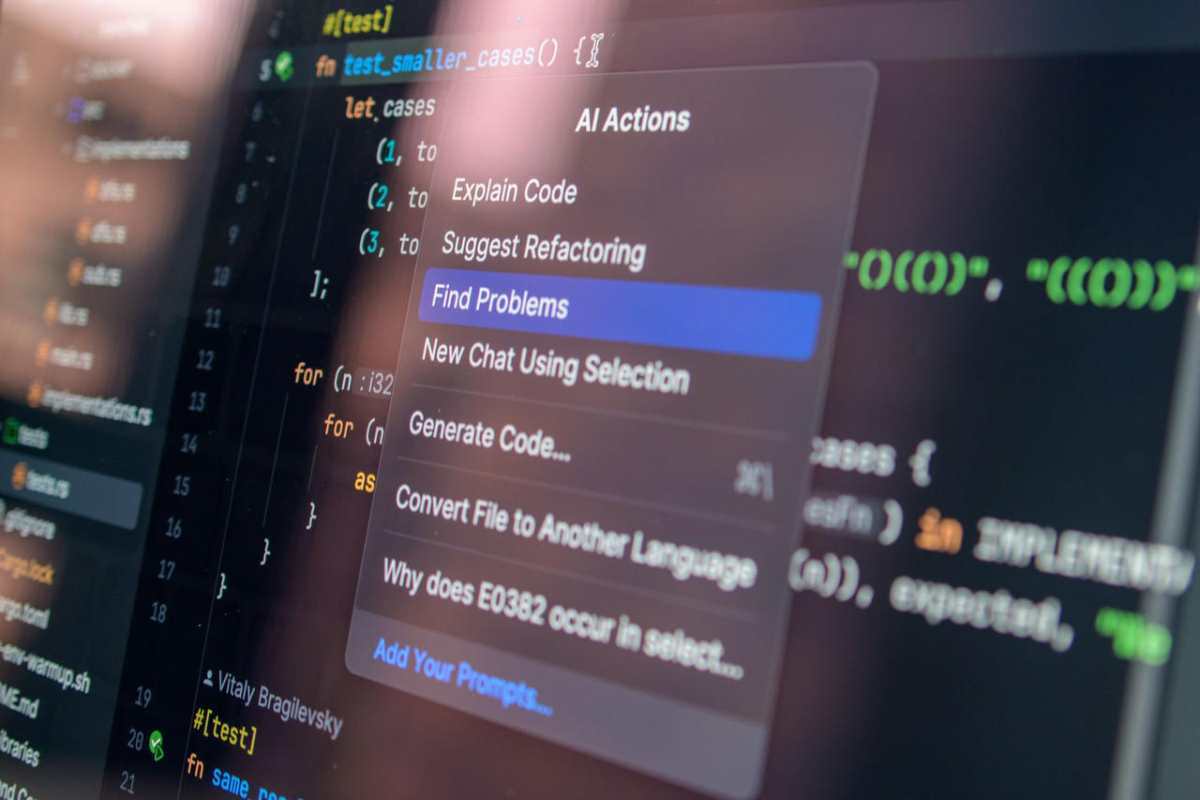
Moving Beyond the Hype: Practical AI Use Cases
To realize a true return on investment, enterprises must bypass superficial chat interfaces and focus on embedding machine learning directly into foundational operational layers. Three distinct areas stand out as highly practical, low risk, and high impact avenues for modern business deployment: customer support architecture, predictive data analytics, and context aware recommendation engines.
Intelligent Customer Support Infrastructure
Traditional customer ticketing platforms rely on rigid keywords and predefined branching logic. When a client submits a complex or emotionally nuanced inquiry, these basic systems break, leading to consumer frustration and requiring immediate manual routing to human agents. Modern custom software development solutions solve this problem by leveraging natural language processing engines that comprehend intent, sentiment, and contextual subtext.
These intelligent backend engines process incoming multi-channel communications, analyze historical communication patterns, and automatically draft precise, hyper localized responses. For highly complex technical problems, the platform acts as an internal copilot for support staff, surfacing relevant technical documentation, account histories, and regulatory guidelines in real time. This minimizes manual search times, accelerates resolution speeds, and maintains absolute brand consistency across every digital channel.
Proactive Predictive Analytics
Most commercial software tools offer backward looking reports. They compile historical metrics to illustrate what occurred during the previous quarter or fiscal year. While this information is necessary for compliance, it does not provide actionable forward looking guidance. Specialized data pipelines change this dynamic by aggregating historical data streams from disparate infrastructure, including customer databases, supply chain systems, and enterprise resource planning modules.
By feeding clean corporate data into localized machine learning models, businesses can identify invisible operational bottlenecks and consumer behavior shifts early. Modern software development solutions allow organizations to accurately forecast seasonal inventory requirements, detect anomalies in financial transactions, and predict client attrition before a contract cancellation occurs. This transforms standard executive dashboards into active predictive tools that allow leadership to make faster, more confident strategic decisions.
Context Aware Recommendation Engines
Standard recommendation systems usually rely on basic collaborative filtering, tracking what similar users purchased to suggest popular products. This approach falls short in complex business models, such as wholesale business to business commerce, professional services, or deep digital marketplaces where purchasing drivers are highly multi-faceted.
Advanced custom engines analyze real time behavioral signals, historical account constraints, seasonal shifts, and contractual pricing models simultaneously. For an account manager or a business to business buyer, the platform dynamically generates tailored product configurations, specialized pricing bundles, and proactive restocking alerts. This level of precise personalization directly drives higher average order values and increases customer lifetime retention without relying on generic marketing campaigns.
The New Architecture of Custom Applications
The traditional approach to engineering enterprise software relied entirely on deterministic programming. Software engineers wrote explicit, fixed rules to process highly structured inputs, which meant that an application could only execute tasks it was explicitly commanded to perform. Artificial intelligence replaces this linear framework with highly adaptive probabilistic architectures.
Modern business ecosystems require this flexible model to bridge the gap between aging legacy databases and next generation workflow automation, accelerating the speed of a typical software development process from inception to rollout. Technology leaders secure these scalable capabilities by partnering with an engineering vendor for comprehensive software development through tailored custom software development services: “We build systems where reliability and safety are built into every code path. In manufacturing, a software failure during production is not an inconvenience, it is a financial event,” notes a software provider solution architect regarding the critical stakes of modern engineering projects.
A Rigorous Framework for Vendor Selection
Because building intelligent enterprise software requires deep algorithmic expertise alongside traditional engineering discipline, selecting a development partner is a critical strategic decision. Organizations must avoid superficial sales pitches and evaluate prospective providers through a strict five part operational framework to minimize deployment risks.
Assessing Past Experience and Case Studies
A technology vendor must prove they possess a verified history of shipping functional, secure applications within complex corporate environments. Leaders should demand technical case studies that detail exactly how a provider approached data engineering, model training, and infrastructure integration. The documentation must highlight clear, verifiable business outcomes such as reduced operational latency, improved processing accuracy, or measurable margin growth. Speaking with executive references helps validate whether a provider can deliver stable systems under heavy enterprise traffic.
Technical Stack Alignment and Architecture
Organizations must verify that a vendor preferred programming languages, frameworks, and cloud hosting protocols match their long term corporate tech stack. Advanced enterprise software development services should build highly modular, API first architectures that interface effortlessly with existing legacy infrastructure through secure middleware. Providers must supply exhaustive technical documentation and system diagrams before coding begins, ensuring that the selected databases and computing services support rapid scale while respecting strict corporate security perimeters.
Accelerated Engineering Timelines
The integration of advanced development tools into the modern engineering workflow is significantly changing how code is generated, checked, and deployed. Automated code scaffolding, predictive bug detection, and simulated staging environments allow teams to compress project timelines extensively.
Rather than dedicating weeks to writing repetitive backend architecture, developers can focus their energy on system scaling, clean data governance, and intuitive user experience design. This acceleration helps modern enterprises validate market hypotheses quickly, deploying core functional modules in a fraction of the time required by traditional frameworks. Reviewing institutional software development updates today highlights how these accelerated deployment cycles allow mid market firms to challenge dominant market leaders by launching highly sophisticated tools with leaner engineering budgets.
The Foundation for Enterprise Value
As the corporate environment becomes increasingly digitized, the competitive divide between companies that own their core technology and those that lease generic applications will widen significantly. Relying entirely on mass market tools limits an organization's ability to differentiate its client experience and locks valuable operational data inside closed systems.
Investing in a tailored digital ecosystem powered by stable, practical machine learning is a fundamental commitment to long term corporate value. Business leaders who proactively take control of their technology infrastructure, centralize their data pipelines, and automate their core workflows will secure an unassailable market position. Analyzing global corporate investments through leading business publications like Wired confirms that organizations prioritizing proprietary technology infrastructure consistently achieve higher market valuations and stronger operational resilience. Partnering with a disciplined engineering team transforms custom software from a complex technology expense into a highly profitable, self sustaining corporate asset.