An impulse buy is a purchase that was not part of the plan when you picked up your phone or walked into a store: a gadget found during a late-night scroll, a second sweater at the register, a bundle that looked like a deal. Learning how to stop impulse buying usually comes down to a few habits that put a short, deliberate gap between wanting something and paying for it.
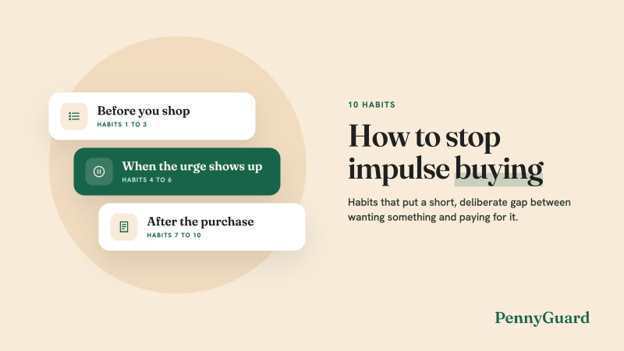
The ten habits below are grouped by timing: before you shop, when the urge shows up and after a purchase. They are meant for anyone who would like spending to stay closer to the plan, and every one of them leaves room for the things you enjoy. Two or three are plenty to start with.
How to Stop Impulse Buying Before You Shop
These three habits are set up at a quiet moment, with no cart open and no sale running. Once they exist, the habits in the next two groups have rules to lean on.
1. Choose a Waiting Rule
Pick a pause for unplanned purchases ahead of time, for example overnight for small things and a full week for anything larger. You can draw the line by price or by category, such as clothes or gadgets, as long as the rule is easy to remember. A familiar yardstick can help, such as treating anything under the price of a dinner out as a small purchase. Write it down, so the decision is already made when something lands in your cart.
Why it works: You choose the rule with no cart open, so at checkout the only question left is whether the waiting period has passed.
2. Keep a Dated Wish List
Give every "I want that" a place to land: a note on your phone, a page in a notebook or the save-for-later button on a store site. Add the date and where you saw the item, then read through the list once a week, for example on Sunday evening, so each entry gets a second look.
Why it works: The date turns a vague want into something you can check, and an item that still appeals a week later can move from the wish list into next month's plan.
3. Write a Shopping List, Online Too
Before opening a store app or website, write down what you need from it. Searching for each item by name, instead of browsing the home page or the deals section, keeps the visit short. When those items are in the cart, check out or close the tab. The same list works in a physical store, where it can be as short as two items, such as printer ink and a phone charger.
Why it works: A list gives each visit a clear finish line, and anything extra has to pass through the wish list first.
When the Urge Shows Up
These three habits are for the moment itself, with the item on the screen or in your hand. Each is quick enough to use in a store aisle or with your thumb over the checkout button.
4. Notice Your Triggers
Emotional spending tends to cluster around certain moments: a long day at work, a slow Sunday afternoon, scrolling in bed late at night. For a couple of weeks, jot down the time and your mood whenever you buy something you had not planned. A note can be as brief as the day, the hour, how you felt and what you bought. After a handful of entries, a pattern often appears, such as most of those orders landing after nine at night.
Why it works: Once you can name the moment, you can plan something else for it, such as a walk after work or charging the phone in another room overnight.
5. Ask Whether You Would Buy It at Full Price
Sales and bundles can make an item feel like a bargain. Before paying, ask whether you would still want it at full price; if the answer is no, the discount is making the decision. The same goes for a free-shipping minimum: if reaching it means adding something you had not planned to buy, that extra item is a new purchase of its own. It also helps to ask whether you would buy it this week if nobody had mentioned a sale.
Why it works: With the crossed-out price set aside, you judge the item at what you would normally pay, and the add-on for free shipping gets the same test.
6. Read the Return Policy Before You Pay
Find the return window, any restocking fee and whether the item is final sale. Online stores often link to the policy from the product page or at checkout, and in a physical store you can ask at the register. Check who pays for return shipping as well, since some stores charge for it. If an item cannot be returned, give it the full waiting rule from habit 1.
Why it works: A restocking fee or a final-sale tag changes what a mistake would cost, and seeing it before checkout leaves you time to wait.
After the Purchase
These four habits start after something has been bought: a monthly look back, fewer prompts from stores, a slower checkout and a set place for fun money. For anyone working out how to stop overspending in general, this stage is where the patterns become visible.
7. Look Back at Last Month's Spending
Once a month, scroll through your bank and card activity and mark the purchases you did not plan. Next to each one, note whether you are still glad you bought it and what was going on that day. Keep the result simple: how many unplanned purchases there were, which ones you are still glad about and which you would skip next time. Those notes add to the trigger log from habit 4.
Why it works: A short count of the purchases you would skip is easier to act on than a general sense of having spent too much, and those entries point to the trigger worth working on first.
────────────────────────────────────────────────────────────
8. Unsubscribe From Store Emails After an Order
Placing an order often adds you to the store's mailing list. Unsubscribe from the marketing emails, keep the order and shipping updates, and turn off sale notifications in store apps. Many marketing emails have an unsubscribe link near the bottom of the message, and many store apps let you choose which notifications to receive. Logging out of a store app also adds a step before the next purchase.
Why it works: Fewer sale prompts means shopping starts when you decide to look, instead of when a message lands.
9. Remove Saved Cards From Store Sites
After checkout, go to the account settings on the online stores you order from most and take off the saved payment card. Typing the card in each time adds a short pause before the next order, while the shipping address can stay saved. Browsers and phones can store a card as well, so check those settings if the number still fills in by itself. If a store handles a repeat delivery you rely on, such as pet food, leave the card on that one site.
Why it works: That extra moment at checkout is often enough to ask whether the item belongs on the wish list first.
10. Give Fun Money a Set Place in the Budget
Set an amount for unplanned treats at the start of each month and spend it freely; when it runs out, new wants go on the wish list until the next month. Setting it on the first of the month or on payday makes it easy to remember, and anything left over can roll into the next month or go to savings. For the end-of-month review, the spending total PennyGuard shows for the month is a ready starting point.
Why it works: A set amount gives impulse buying a home inside the budget, so a treat is something you planned for.
How to Use These Habits
- Choose two habits from different groups and try them for a month.
- Write your waiting rule where you shop most, such as a note on your phone.
- Start the wish list with the last three things you almost bought.
- Put a monthly reminder on your calendar for the look back in habit 7.
- Set your fun money amount for next month before the current one ends.
- After a month, keep what helped and swap in another habit from the list.