The premise goes something like this: AI can now generate images, videos, and visual content at a fraction of the traditional cost and time. Therefore, human creativity will become less valuable. Creative professionals will be displaced. The market for original ideas will shrink.
I want to make the opposite argument — with data, with logic, and with the pattern of every previous technological revolution as evidence.
AI is not diminishing the value of human creativity. It is creating the conditions for human creativity to become the scarcest and most valuable resource in the modern economy. And the leaders who understand this paradox early will build organizations that are nearly impossible to compete with.
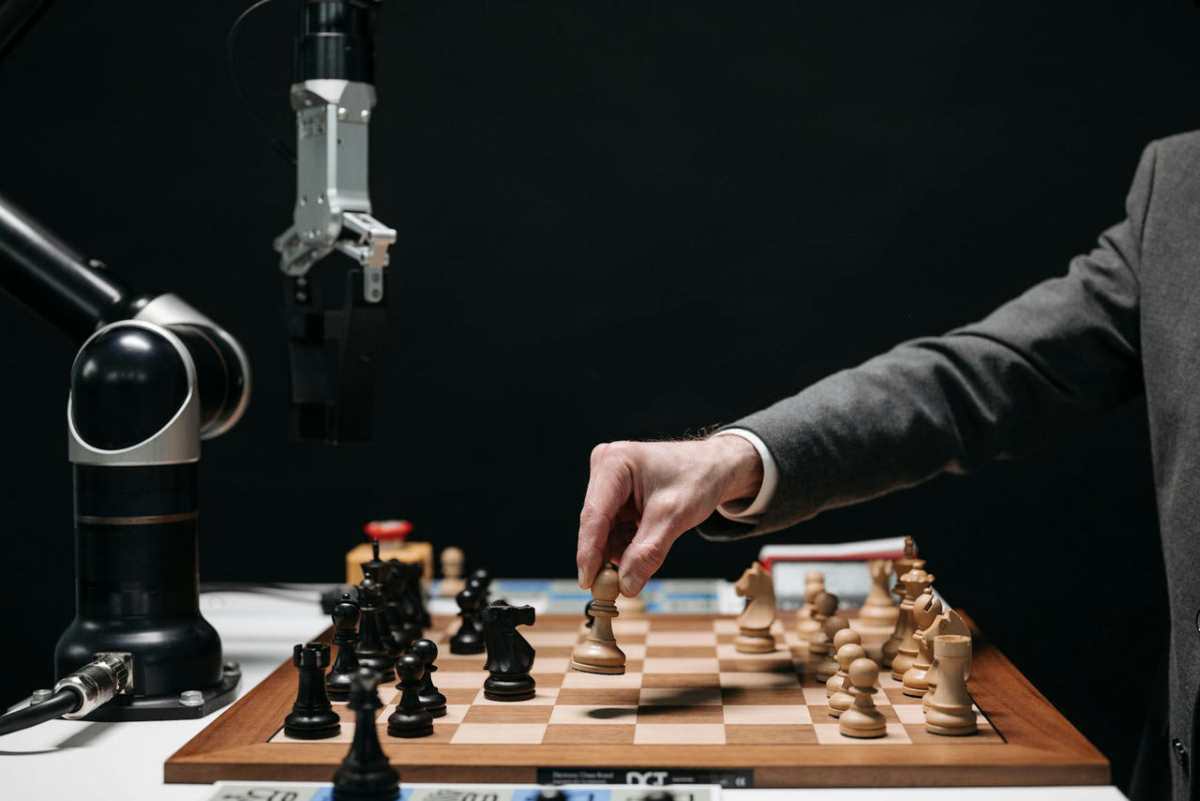
The Paradox at the Heart of the Revolution
Here is what the pessimists miss: scarcity determines value.
For most of the last century, execution was scarce and ideas were relatively abundant. Any competent designer could generate ten solid concepts before lunch. The bottleneck was always the cost and time required to execute those concepts at professional quality. This dynamic quietly shaped the entire creative economy — agencies were paid primarily for execution, not ideation.
An AI image generator does not just reduce execution costs. It inverts the entire value equation. Execution is now approaching zero marginal cost. The bottleneck has moved — permanently and irrevocably — to the quality of the idea itself.
In a world where anyone can generate a technically competent image in seconds, the differentiating factor is no longer technical skill. It is taste. Judgment. The ability to know which idea is worth executing in the first place. These are distinctly human capabilities, and they have never been more commercially valuable than they are right now.
What History Actually Teaches Us
Every major technological disruption in the creative industries has followed the same pattern, and we keep being surprised by it.
When desktop publishing arrived in the 1980s, the prediction was that professional designers would be displaced by anyone with a Mac and a copy of PageMaker. What actually happened was that demand for genuine design thinking exploded, because suddenly every company needed designed materials and the market discovered very quickly that access to tools does not confer taste.
When digital photography eliminated film costs, the prediction was that professional photographers would be commoditized out of existence. What happened instead was that the market bifurcated sharply — commodity photography became genuinely cheap, and the value of a photographer with a distinctive visual perspective increased dramatically.
The pattern is consistent: when a technology lowers the cost of execution, it raises the premium on the human judgment that directs that execution.
We are watching the same pattern unfold in real time with AI creative tools. The AI video generator has made it possible for anyone to produce a technically competent video. The result is not that video has become less valuable — it is that the market is developing a sharper and more immediate ability to distinguish between content that has genuine creative intelligence behind it and content that does not.
The floor has risen. The ceiling has not moved. The space between them is where human creative leadership lives.
The New Creative Stack
Understanding the practical implications of this shift requires thinking about what I call the creative stack — the layered set of capabilities that produce outstanding visual content.
At the bottom of the stack are the technical execution layers: the ability to produce a clean image, edit a video, composite elements together, match color grades. AI has largely automated this layer. It is no longer where value is created or captured.
In the middle of the stack are the craft layers: understanding composition, narrative pacing, visual hierarchy, typographic systems, the grammar of motion. AI is becoming increasingly competent here, though human expertise still has a meaningful edge in the most sophisticated applications.
At the top of the stack are the strategic and conceptual layers: understanding what an audience actually needs to feel, knowing which story is worth telling, having the cultural intelligence to recognize what will resonate and what will ring hollow, building a visual language that is authentic to a specific brand and irreplaceable by any competitor.
AI cannot operate at the top of the stack. Not because of technical limitations that will eventually be engineered away, but because the top of the stack requires genuine human experience, cultural embeddedness, and the kind of judgment that only comes from actually living in the world.
The smartest creative leaders are ruthlessly automating the bottom of their stack — using AI image and video generation tools to eliminate low-value execution work — and investing every freed resource into sharpening their capabilities at the top.
The Organizations Getting This Right
The most instructive examples are not the large enterprises with dedicated AI task forces and transformation budgets. They are the small and mid-sized organizations that have quietly restructured their creative operations around AI tools and emerged with capabilities that are genuinely disorienting to their larger competitors.
A three-person content team that would previously have produced eight pieces of content per month can now produce forty. But the ones doing this well are not producing forty versions of the same mediocre content. They are using the additional production capacity to run real creative experiments — testing radically different visual approaches, different narrative frames, different emotional registers — and developing a detailed empirical understanding of what their specific audience responds to.
This is a form of market intelligence that used to be available only to organizations with significant research budgets. It is now available to anyone willing to invest the strategic thought required to use AI creative tools with intention rather than just efficiency.
The Skill Nobody Is Teaching
There is a capability that is becoming critically important in the AI creative era and that almost no educational institution or professional development program has yet recognized as a formal discipline: creative direction at scale.
The ability to maintain a coherent creative vision — a consistent aesthetic, a recognizable brand voice, a distinctive visual identity — while producing content at the volume and velocity that AI tools make possible is genuinely difficult. It requires the simultaneous exercise of creative judgment, strategic clarity, and operational thinking in ways that have no real historical precedent.
The professionals who develop this capability over the next three to five years will be among the most valuable creative leaders in the market. They will be the people who can look at a thousand AI-generated outputs and know instantly which ten are worth developing further. They will be the ones who can brief an AI tool with the same precision and authority that the best creative directors brief their human teams.
This is not a skill that AI will automate. It is a skill that AI makes necessary.
What to Do Starting Tomorrow
The strategic imperative is not complicated, even if the execution requires sustained commitment.
Start treating AI creative tools as infrastructure, not as experiments. The organizations that are building durable advantages are not running pilot programs — they are rebuilding their creative workflows around these capabilities as a permanent operating assumption.
Invest in creative judgment, not just creative production. The scarce resource in the AI creative era is not the ability to generate content. It is the ability to know which content to generate, why, and for whom. Every investment in strategic and conceptual creative capability will compound in value as execution costs continue to fall.
And perhaps most importantly: resist the framing that positions human creativity and AI capability as competitors. The most powerful creative operations of the next decade will be those that treat AI tools as the infrastructure layer and human creative intelligence as the irreplaceable layer above it.
The paradox resolves itself when you see it clearly. AI is not making creativity less valuable. It is making genuine creativity — the kind rooted in real human experience, cultural intelligence, and strategic judgment — more valuable than it has ever been.
That is not a threat. For anyone serious about building something worth building, it is the best news in a generation.