Managed services revenue looks recurring on paper, but the invoice run tells a messier story. A single customer might owe you a flat monthly fee, per-seat Microsoft 365 licenses, a metered Azure bill and a block of project hours, all from different vendors with different billing cycles. Mordor Intelligence put the global managed services market at about $430.56 billion in 2026, up from $390.21 billion in 2025, and every dollar of it has to be invoiced accurately by someone.
That’s where many MSPs get stuck. Billing for labor is one problem; billing for resold subscriptions and cloud consumption is another, and the software built for one often handles the other badly. The six platforms below are ranked by how well they cover the second problem without ignoring the first. Pricing figures come from published comparisons and vendor pages, so confirm them with each vendor before you budget.
1. Infiterra
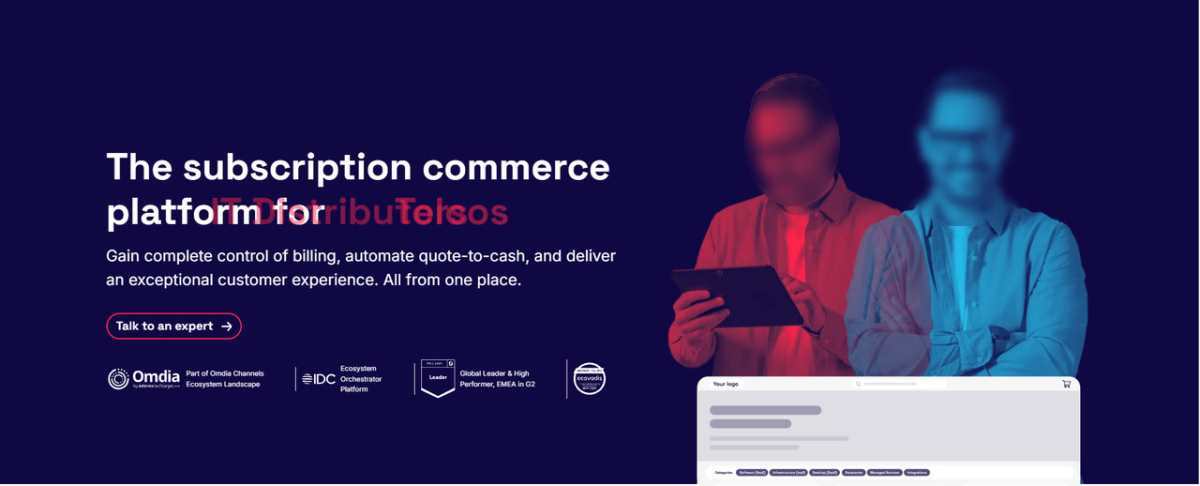
Infiterra describes itself as a subscription commerce platform for IT distributors, MSPs and telcos. Instead of a single invoicing module, it lists a connected set of tools: subscription billing, product catalog management, a white-label cloud marketplace, credit risk management, reseller management, business reporting and an AI assistant.
The integration side matters just as much for resellers. The platform connects to multiple vendors, back-office systems and payment gateways, and it exposes open APIs for anything custom. It also publishes dedicated solution pages for Microsoft CSP, Adobe VIP MP and cybersecurity offerings, which tells you who the product was designed around.
For an MSP that resells cloud licenses from several vendors, that setup keeps catalog, billing and customer-facing storefront in one system. Anyone shortlisting the best recurring billing software for MSPs with a heavy cloud-resale mix should start here, since the platform was built for that exact workload. It also suits distributors who manage a channel of resellers on top of their own customers.
2. RackNap
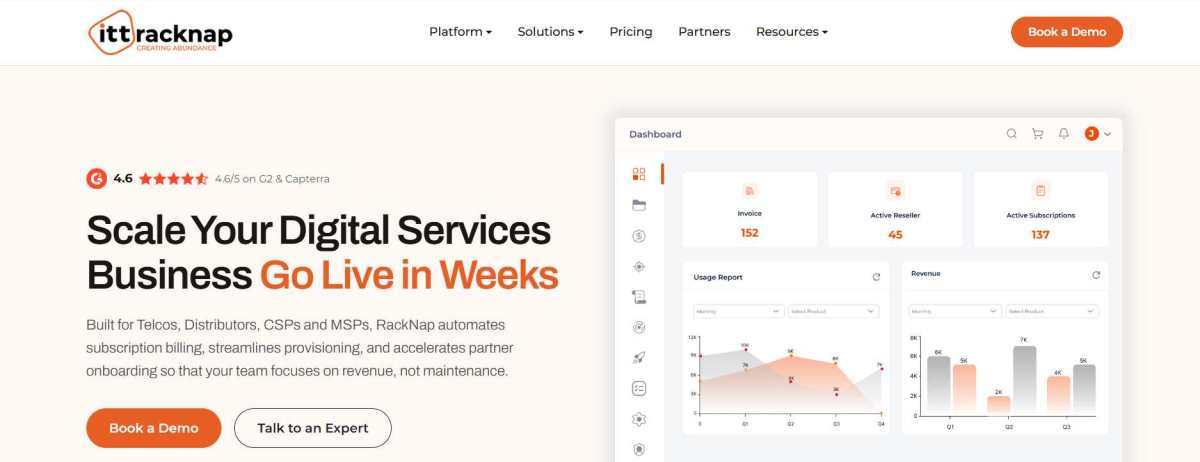
RackNap targets MSPs that resell cloud at volume. It supports recurring, usage-based and hybrid billing, automated provisioning, and native integrations with Microsoft 365, Azure, AWS, Google Workspace and Acronis. It also uses AI to flag billing issues before invoices go out.
Pricing is the main thing to weigh. RackNap’s own 2026 comparison lists a Standard plan at $10,000 a month for up to 11 active products and an Enterprise plan at $25,000 a month with unlimited SKUs, multi-vendor reconciliation, multi-currency and tax handling. That’s a serious commitment for a small shop. The need it addresses is real, though; Flexera’s 2025 State of the Cloud Report found that 84% of 759 respondents named managing cloud spend as their top cloud challenge, the third year running.
3. Rev.io
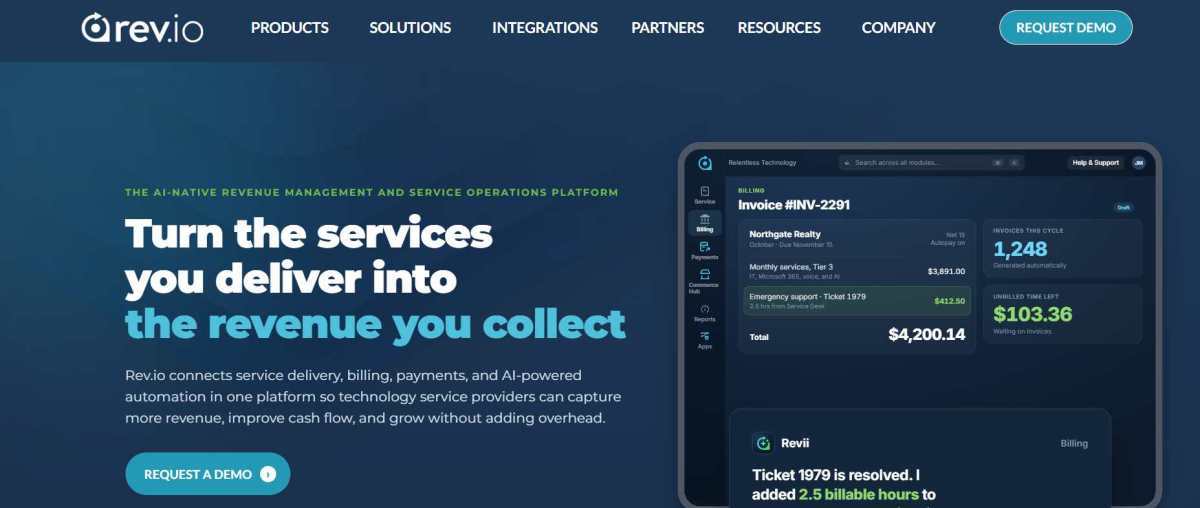
Rev.io describes its product as an AI-native PSA platform that combines ticketing, billing, payments and RMM. Invoices can be generated from tickets, time entries and recurring services, and it supports recurring, usage-based and project-based invoicing, plus card, ACH and autopay collection. For communications service providers, it also advertises supplier data reconciliation. Billing, payments and analytics are available as separate products too.
The appeal is a single record of work and money. If a technician closes a ticket and the billable time lands on the right invoice without a re-key, you’ve removed a common source of leakage. Pairing that with sound endpoint habits matters; our post on basic cybersecurity habits covers the day-to-day basics that any RMM-connected billing stack depends on.
4. HaloPSA
HaloPSA bundles ticketing, time tracking, contracts and billing in one tool. Its strength is contract flexibility, which suits growing MSPs that sell a mix of managed plans, projects and retainers. Cloud billing depends on integrations rather than native reconciliation, so MSPs with large Microsoft or AWS resale volumes should test that workflow early.
RackNap’s 2026 comparison reports pricing of $95 to $115 per agent per month, plus roughly $4,000 for onboarding. Plan for the setup effort as well. Contract-based billing gets tricky fast, and our guide to proration and failed payment retries walks through the edge cases that tend to surface after the first mid-cycle upgrade.
5. Syncro
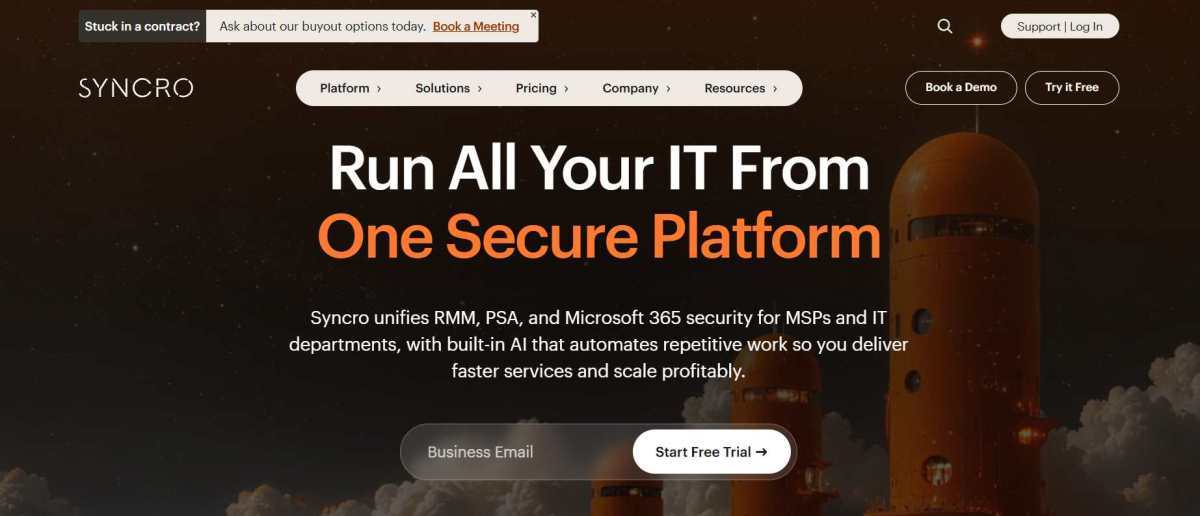
Syncro combines RMM, PSA and invoicing, with recurring billing and a branded client portal. The Team tier adds automated Microsoft 365 license billing, which removes a monthly chore for MSPs that mostly resell that one product. It doesn’t offer native Azure consumption billing, so heavier cloud resellers will need a workaround or a second tool.
Pricing is per technician. RackNap’s comparison reports $129 per user per month on an annual Core plan and $179 for Team. Per-tech pricing is easy to forecast for a small shop, but the cost climbs as you hire, so run the numbers at your headcount a year from now.
6. Chargebee
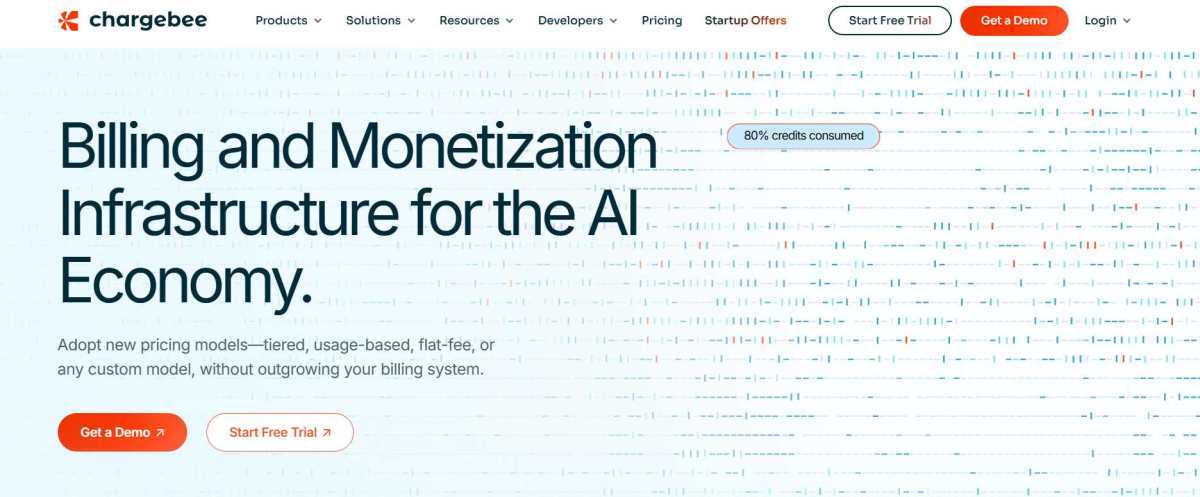
Chargebee sits at the end of this list because it solves a different problem. It’s a subscription billing platform for SaaS and AI companies, with flat, per-unit, tiered, volume, stairstep, pay-as-you-go, hybrid and prepaid credit models. Its pricing page cites usage ingestion above 200,000 events per second, and a separate RevRec product handles ASC 606 and IFRS 15 revenue recognition. The Flow plan is free for the first $250,000 in cumulative billing, then charges 0.75%.
That makes it a strong fit for an MSP that sells its own software or metered service. It isn’t designed to reconcile a distributor’s vendor catalogs. If you do sell subscriptions directly, read the FTC’s negative option guidance too; the rule currently covers only prenotification plans, while the agency pursues other recurring-billing abuses under Section 5 of the FTC Act and ROSCA.
How to Choose Recurring Billing Software for MSPs
Start with the revenue mix. If most of your invoice is labor, contracts and tickets, a PSA such as HaloPSA, Syncro or Rev.io will serve you well, and the billing sits next to the work that creates it. If most of it is resold cloud subscriptions from several vendors, a subscription commerce platform like Infiterra or RackNap fits better. If you sell your own software, Chargebee is built for that.
Then check the details that break billing in practice: hybrid flat-fee and usage plans, proration on mid-cycle changes, consolidated invoices across many subscriptions, and vendor reconciliation when a supplier’s bill doesn’t match your records. Ask each vendor to run one of your messiest customers through a demo. A clean example proves little.
Cancellation and renewal practices deserve attention as well. The FTC removed its 2024 “click-to-cancel” amendments on February 12, 2026, following court decisions, then issued an advance notice of proposed rulemaking on March 11, 2026; the agency’s negative option rulemaking notice explains where things stand. Rules are in flux, so pick a platform that lets you adjust renewal and cancellation flows without custom development.
Last, look at data handling. Billing systems hold contact details, payment tokens and contract terms. Our piece on keeping client data secure is a useful checklist to run against any vendor’s answers.
Pick the Model Before the Product
Most billing frustration comes from buying a tool built for the wrong revenue model. A labor-heavy MSP that buys a cloud-resale engine pays for features it won’t touch; a cloud reseller on a PSA ends up reconciling vendor invoices in spreadsheets. Settle which of the three models you are, shortlist two vendors that match it, and test both on real invoices before signing anything.