Calibration records often receive close attention during audits because an out-of-tolerance instrument can call earlier measurements into question. Choosing among the best calibration service companies is therefore a risk-management decision as well as a purchasing one. The right fit depends on accreditation scope, instrument type, service model, and recordkeeping needs.
This guide ranks eight calibration providers serving US manufacturers, aviation maintenance shops, defense contractors, and industrial operations in 2026. Each entry is evaluated on accreditation status, instrument scope, ordering convenience, geographic reach, and how well it fits a specific operational need. No single lab is the right fit for every buyer.
Our top pick is Pilot John International for teams that prefer online ordering to a phone-and-quote workflow. It combines live pricing and prepaid shipping with an in-house ISO/IEC 17025 accredited lab and an Equipment Hub for due dates and certificates. Organizations that need on-site field calibration across multiple states may prefer Cal-Rite Corporation, while defense contractors and aviation maintenance operations can also consider Tra-Cal.
The rankings below weigh accreditation type, breadth of instrument scope, the industries and compliance frameworks each company actually serves, how transparent ordering and turnaround are, geographic reach (mail-in versus on-site versus local drop-off), and how well each provider helps customers manage certificates and due dates across a fleet. The list spans single-state specialists with deep regional expertise and nationwide operators built for mail-in convenience, so the right choice depends on your industry, instrument mix, and preferred method for shipping or dropping off equipment.
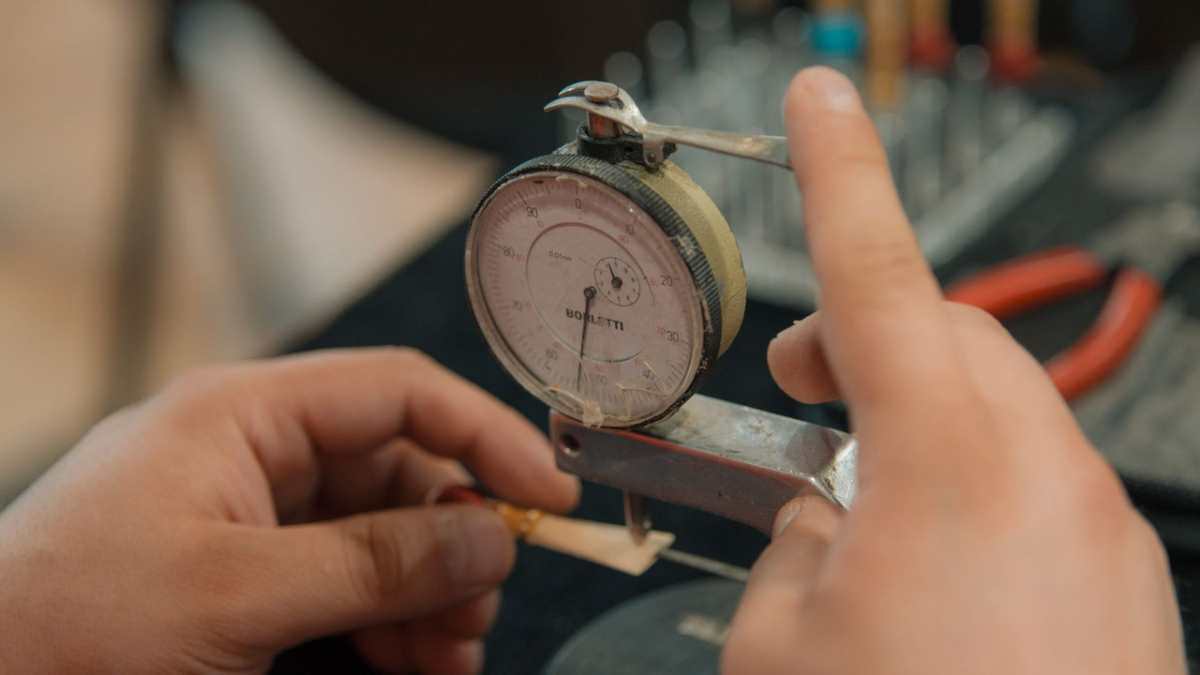
At A Glance: The 8 Best Calibration Service Companies
| Provider | Best For | Key Strength | Accreditation |
|---|---|---|---|
| Pilot John International | Nationwide online ordering, fleet tracking, and mail-in calibration | In-house lab with live online pricing and instant certificate downloads | ISO/IEC 17025 |
| Quality Calibration Service, Inc. | Hard-gage, dimensional metrology, and hand-tool repair | Gage calibration and tool repair combined under one roof | ISO/IEC 17025, A2LA |
| Tescom Calibration Services | Texas/Southwest manufacturing, semiconductor, and aviation | Four decades of regional expertise across mixed industries | ISO/IEC 17025 |
| Cal-Rite Corporation | Veteran-owned nationwide field (on-site) calibration | On-site service reaching customers across most of the country | ISO/IEC 17025 |
| Precision Technical Services | Arizona medical-device, aerospace, and dual Z540.3 compliance | Dual ISO/IEC 17025 and ANSI/NCSL Z540.3 accreditation | ISO/IEC 17025, Z540.3 |
| Instrument Calibration Solutions | Pennsylvania electrical, mechanical, and process-control instruments | Multi-discipline calibration and maintenance under one contract | Not independently confirmed |
| Global Calibration Services | Pacific Northwest torque, pressure, dimensional, and electrical tools | Eight listed calibration disciplines | A2LA |
| Tra-Cal | Mid-Atlantic/Crystal Coast defense contractors and avionics teams | Triple accreditation with direct MCAS Cherry Point experience | ISO/IEC 17025:2017, ANSI Z540-1, Z540.3 |
How We Ranked These
Six criteria drove every placement: stated accreditation, instrument scope, industry fit, ordering convenience, geographic reach, and record-management tools. Buyers should verify that a laboratory's current accredited scope covers the exact instrument, measurement range, and service required. The IEEE Technology Navigator's calibration topic hub offers additional background on calibration and related test-and-measurement topics.
We also compared mail-in, local drop-off, and on-site service models. These options affect practicality for portable tools, fixed equipment, and geographically dispersed fleets. Ordering transparency, certificate access, and due-date tracking were considered because they influence the administrative work involved in maintaining a calibration program.
The 8 Best Calibration Service Companies in the US
With those six criteria in mind, the following eight companies offer different combinations of accredited scope, service model, and regional access. Some are built for nationwide mail-in convenience, while others focus on regional on-site work or particular industries. Pilot John International tops our ranking for its online workflow, range of supported tools, and fleet-management features.
#1. Pilot John International: Best For Nationwide Online Ordering And Fleet Tracking
Pilot John International is a nationwide equipment distributor that also operates an in-house ISO/IEC 17025 accredited calibration lab. Its digital workflow lets customers browse live, upfront pricing and place an order directly online for calibration services, with a prepaid shipping label emailed immediately and nothing charged until the work is finished.
The lab handles torque wrenches, pressure gauges, multimeters, micrometers, calipers, force gauges, ground support equipment, and avionics test equipment. It serves aviation, automotive, manufacturing, marine, energy, and defense customers, making it an option for facilities with several supported instrument types. Customers in eastern North Carolina also have the option of local drop-off instead of shipping.
The standout workflow feature is the free Equipment Hub, which tracks due dates for a tool fleet and stores certificates for download. There are some trade-offs. Pilot John International operates a single lab location in New Bern, NC, so there's no on-site field calibration option, and turnaround always includes shipping time in both directions. Extremely specialized metrology disciplines, such as ultra-precision dimensional CMM work, may fall outside its scope, and customers outside eastern North Carolina won't have a walk-in option.
Pros
- Only distributor on this list operating an in-house ISO/IEC 17025 accredited lab
- Fully online ordering with live pricing, an immediate prepaid shipping label, and no upfront payment
- Free Equipment Hub supports due-date tracking across a multi-tool fleet
- Certificates are available for download through the account
- Serves six major industries through nationwide mail-in service
Cons
- Single physical lab location means no on-site field calibration
- Mail-in model adds shipping time to overall turnaround
- Customers must check the accredited scope for each instrument and range
- Walk-in drop-off is only practical for eastern North Carolina customers
Who it's best for: Facilities with supported instruments that want transparent online ordering and a way to track a tool fleet's calibration status without requesting a quote by phone.
#2. Quality Calibration Service, Inc.: Best For Hard-Gage And Dimensional Metrology
Quality Calibration Service, Inc. is a Wisconsin metrology laboratory that lists ISO/IEC 17025 accreditation through A2LA and focuses on hard-gage and dimensional work. Operating since 1984, it combines calibration with hand-tool and instrument repair, which may allow customers to keep related work with one vendor.
The company also offers First Article Dimensional Inspection services. That mix is particularly relevant to precision manufacturers whose programs rely heavily on dimensional measurements. Distant customers should account for shipping, and buyers interested in field service should confirm coverage for their location. No self-service online ordering portal was confirmed during our review.
Pros
- Lists ISO/IEC 17025 accreditation through A2LA
- Focuses on hard-gage and dimensional work
- Offers hand-tool and instrument repair
- Provides First Article Dimensional Inspection
- Has operated since 1984
Cons
- Distant customers need to account for shipping
- No confirmed self-service online ordering option
- Field-service coverage should be confirmed directly
- Buyers must verify the accredited scope for each instrument
Who it's best for: Precision manufacturers and machine shops whose quality programs depend on dimensional accuracy and hard-gage calibration, and who want repair handled by the same vendor.
#3. Tescom Calibration Services: Best For Texas And Southwest Manufacturing
Tescom Calibration Services is an ISO/IEC 17025 accredited provider headquartered in Cedar Park, Texas, with another location in San Antonio. Founded in 1982, it serves manufacturing, semiconductor fabrication, aviation, electrical utilities, research laboratories, and small businesses.
Tescom states that its calibration results are traceable to NIST. Its Texas locations make it most convenient for customers in the state and surrounding region, while distant facilities should consider shipping logistics. No online ordering system was confirmed during our review, so prospective customers should contact the company about scope, pricing, and scheduling.
Pros
- Has operated since 1982
- Maintains two Texas locations
- Serves semiconductor, aviation, utility, manufacturing, and research customers
- States that calibration results are traceable to NIST
- Works with both small businesses and manufacturers
Cons
- Most convenient for Texas and nearby customers
- Distant customers need to plan for shipping
- No confirmed online ordering portal
- Buyers should verify scope and scheduling directly
Who it's best for: Texas and Southwest manufacturing, semiconductor, and aviation facilities that want a single regional lab experienced across multiple industries.
#4. Cal-Rite Corporation: Best For Veteran-Owned Nationwide Field Calibration
Cal-Rite Corporation is an ISO/IEC 17025 accredited, veteran-owned field calibration company headquartered in Naperville, Illinois. It focuses on on-site work, which can suit equipment that is fixed, difficult to ship, or needed close to the point of use. The company reports service across roughly 35 states and Mexico.
Its veteran-owned status may also be relevant to organizations with supplier-diversity goals. Buyers should confirm scheduling, travel charges, and the applicable accredited scope for each site and instrument.
Pros
- On-site service avoids shipping large or fixed equipment
- Reports coverage across roughly 35 states and Mexico
- Veteran-owned status may support supplier-diversity goals
- Has operated since 1994
- Focuses on field calibration
Cons
- Scheduling and site coverage require confirmation
- Lab-based calibration scope isn't clearly documented
- No confirmed online ordering or self-service tools
- Customers should ask about travel charges
Who it's best for: Organizations, especially defense and government contractors, that need on-site calibration across multiple states and can't afford to ship fixed or oversized equipment.
#5. Precision Technical Services: Best For Arizona Medical-Device And Aerospace Compliance
Precision Technical Services, based in Tempe, Arizona, lists ISO/IEC 17025 and ANSI/NCSL Z540.3 among its quality credentials. It offers physical, dimensional, and electronics calibration through both on-site and in-lab service.
The company serves medical-device and pharmaceutical manufacturing, aerospace and defense, energy generation, automotive, and precision manufacturing. Customers should compare their instruments with the provider's current scope and confirm capacity for large fleets. Its location is most convenient for Southwest customers, while facilities elsewhere should include shipping time in their plans.
Pros
- Lists ISO/IEC 17025 and ANSI/NCSL Z540.3 credentials
- Serves medical-device and pharmaceutical customers
- Offers both on-site and in-lab options
- Covers physical, dimensional, and electronic calibration
- Convenient for Arizona and nearby customers
Cons
- Capacity for high-volume fleets should be confirmed
- Shipping adds time for distant customers
- Buyers should check the current scope for each instrument
- Geographic coverage outside the Southwest needs confirmation
Who it's best for: Arizona-area medical-device, pharmaceutical, and aerospace manufacturers that need dual ISO/IEC 17025 and Z540.3 compliance in one provider.
#6. Instrument Calibration Solutions: Best For Pennsylvania Process Control Instruments
Instrument Calibration Solutions, headquartered in Aliquippa, Pennsylvania with another office in Clayton, specializes in electrical, mechanical, and process-control instrument calibration. Founded in 2005, it offers calibration, maintenance, and certification services.
That combination may help mid-Atlantic manufacturers and process facilities consolidate related work. The two Pennsylvania offices also provide regional access, although customers farther away should discuss shipping or service coverage directly.
The most important caveat concerns accreditation. Available public information does not clearly confirm ISO/IEC 17025 accreditation for Instrument Calibration Solutions, so the company is best described as providing calibration and certification services rather than operating as a confirmed accredited lab. Buyers whose audits specifically require ISO/IEC 17025 calibration should request current accreditation documentation and confirm that the relevant instrument and measurement range are included before relying on this provider for accreditation-dependent work. The company is also primarily a regional Pennsylvania operator with no confirmed online ordering system.
Pros
- Covers electrical, mechanical, and process-control instruments
- Includes maintenance services alongside calibration
- Maintains two Pennsylvania offices
- Has operated since 2005
- May help regional customers consolidate related work
Cons
- ISO/IEC 17025 accreditation status is not clearly confirmed publicly
- Primarily a regional Pennsylvania operator
- No confirmed online ordering or self-service tools
- Full instrument scope isn't fully detailed
Who it's best for: Mid-Atlantic manufacturers and process-control facilities that want a local, multi-discipline provider, provided accreditation status is confirmed for audit-dependent work.
#7. Global Calibration Services: Best For Pacific Northwest Multi-Parameter Coverage
Global Calibration Services, headquartered in Seattle, Washington, is an A2LA accredited independent lab that lists electrical, electronic, temperature, torque, pressure, mass, force, and dimensional calibration. Founded in 2004, it primarily serves Seattle, western Washington, and the wider Pacific Northwest.
Its range of disciplines may suit facilities that prefer one regional provider for a mixed instrument fleet. Customers should still check the current A2LA scope for each instrument and range. Distant buyers should account for shipping, and no online ordering system was confirmed during our review.
Pros
- Lists eight calibration disciplines
- Holds A2LA accreditation
- Serves the Pacific Northwest
- Has operated since 2004
- Covers mixed instrument categories
Cons
- Distant customers need to account for shipping
- Buyers should verify handling requirements for sensitive programs
- No confirmed online ordering or self-service tools
- The current A2LA scope should be checked by instrument and range
Who it's best for: Pacific Northwest facilities that need broad multi-parameter instrument coverage from a single independent regional lab.
#8. Tra-Cal: Best For Defense Contractors And Crystal Coast Avionics Teams
Tra-Cal operates an accredited laboratory in Gaithersburg, Maryland, and lists ISO/IEC 17025:2017, ANSI Z540-1, and ANSI/NCSL Z540.3 credentials. With more than 35 years of experience, it reports work supporting military aviation environments, including MCAS Cherry Point and Fleet Readiness Center East.
Its listed scope includes torque tools, calipers, micrometers, pressure gauges, multimeters, and thermocouples. Tra-Cal offers in-lab and on-site calibration as well as metrology database management. Crystal Coast customers should note that service is associated with the Maryland lab rather than a local North Carolina branch.
The trade-off worth understanding upfront is that Tra-Cal's actual lab sits in Maryland, so Crystal Coast customers are still shipping equipment rather than dropping it off locally. The company's defense and military aviation specialization also means it may be more specification than a purely commercial industrial customer needs. Neither pricing nor specific turnaround commitments are publicly confirmed, and there is no confirmed self-service ordering portal.
Pros
- Triple accreditation covers ISO/IEC 17025, ANSI Z540-1, and Z540.3
- Direct experience with MCAS Cherry Point and Fleet Readiness Center East
- Metrology database management adds fleet-management value
- Both in-lab and onsite calibration options
- Over 35 years of defense and avionics-focused operation
Cons
- Lab is based in Maryland; Crystal Coast service is mail-in, not local
- May be over-specified for purely commercial industrial customers
- No confirmed online ordering or self-service tools
- Pricing and turnaround commitments aren't publicly detailed
Who it's best for: Defense contractors and avionics maintenance teams near MCAS Cherry Point or the wider Crystal Coast that need defense-grade accreditation and direct military aviation experience.
Frequently Asked Questions
How much does a professional calibration service typically cost?
Cost varies widely by instrument type, accreditation level, and whether calibration includes adjustment or repair, so there's no single industry rate. Simple mechanical instruments like torque wrenches or calipers generally cost less than multi-function electrical or pressure equipment. Providers with transparent online pricing let buyers see costs before committing, while traditional labs typically require a quote request. Ask for a written estimate based on the exact instrument, its condition, shipping or travel, required certificate data, and the requested turnaround.
What does ISO/IEC 17025 accreditation mean, and why does it matter?
ISO/IEC 17025 is the international standard for testing and calibration laboratory competence, covering technical rigor, measurement traceability, and quality management systems. A lab accredited to this standard by a recognized body such as A2LA or ANAB has been assessed for competence within a defined scope. Aviation, defense, medical-device, and other regulated buyers should check their contracts and quality procedures to determine when accredited calibration is required.
What is the difference between ISO/IEC 17025 and ANSI/NCSL Z540.3 calibration?
ISO/IEC 17025 sets competence requirements for testing and calibration laboratories, including resources, processes, and management-system controls. ANSI/NCSL Z540.3 addresses the calibration of measuring and test equipment and includes requirements concerning measurement decision risk. Contractual requirements vary, so buyers should identify the standard and accredited scope their program needs. Related topics have also been covered at events such as the Binghamton ASQ and IEEE calibration workshop.
Can I mail my tools in for calibration, or do I need to visit a lab in person?
Several providers on this list accept mail-in work, with instruments returned alongside the applicable calibration documentation once service is complete. Mail-in calibration is generally practical for portable instruments like torque wrenches, gauges, and multimeters. Larger, fixed, or safety-critical equipment sometimes calls for on-site field calibration instead, which several providers on this list, including field-focused operators, offer as an alternative to shipping.
How do I keep track of calibration due dates for a large tool fleet?
A spreadsheet can work, but it requires consistent updates and ownership. A provider dashboard with due-date reminders and certificate downloads can reduce manual administration and make records easier to retrieve. Facilities managing mixed fleets across multiple locations should compare reminder settings, user permissions, export options, and certificate access before choosing a system.
What are the three main types of calibration?
Calibration is commonly grouped into three broad categories: electrical, mechanical, and thermal. Electrical calibration covers instruments such as multimeters and electrical test equipment. Mechanical calibration includes torque, pressure, force, mass, and dimensional tools such as wrenches, gauges, micrometers, and calipers. Thermal calibration applies to thermometers, temperature probes, and thermocouples. Some laboratories organize their scopes differently or add specialties such as optical, flow, or time and frequency calibration, so compare the exact instrument and measurement range with the provider's accredited scope.
How much does a calibration certificate cost, and what should it include?
A certificate may be included in the calibration price rather than billed as a separate item, so ask what the quoted fee covers. It should identify the instrument, calibration date, method or procedure, results, units, traceability information, and the laboratory. Environmental conditions, measurement uncertainty, before-and-after adjustment data, and a next due date may also be included when relevant or required. For accredited work, confirm that the certificate carries the applicable accreditation details and that the instrument and measurement range fall within the laboratory's current accredited scope.
How often should instruments be calibrated?
There is no universal interval for every instrument. The appropriate schedule depends on manufacturer guidance, frequency and severity of use, environmental exposure, historical stability, contractual requirements, and the consequences of an incorrect measurement. Many organizations start with a defined interval in their quality procedure and adjust it using calibration history and risk. Instruments that drift frequently, receive heavy use, or support critical work may need shorter intervals. Review out-of-tolerance results and repair history regularly, document the reason for interval changes, and do not extend schedules solely to reduce cost.
Final Word: Matching The Right Lab To The Right Job
The right choice depends on instrument type, location, service model, and applicable quality requirements. Pilot John International is our top pick for online ordering, upfront pricing, fleet tracking, and nationwide mail-in service through its in-house ISO/IEC 17025 accredited lab. Cal-Rite Corporation is oriented toward on-site field work, while Tra-Cal may suit defense and aviation teams seeking its listed quality credentials and military-sector experience. Before placing an order with any provider, verify that its current accredited scope covers the exact instrument and range, then confirm pricing, shipping or travel, turnaround, certificate contents, and record-access options.