Modern laboratories depend on a variety of advanced instruments to ensure accurate results and efficient workflows. These tools have transformed scientific research and routine testing. With new technologies, laboratories can now process more samples and generate reliable data faster than ever before. This article highlights the primary laboratory instruments that drive progress in today’s laboratories, explaining their importance and basic functions.
Analytical Balances
Analytical balances play a critical role in achieving the precision needed while preparing a sample. These technologies are used to accurately measure microscopic mass. Strong calibration features paired with sensitive sensors ensure that every reading is reliable and accurate. Scales or balances are an essential part of every laboratory. They are often used to prepare chemical solutions and confirm the results in chemical analyses.
Spectroscopy Instruments
Spectroscopy instruments have many applications, from searching for compounds to discovering their chemical properties. Ultraviolet-visible spectrophotometers and infrared analyzers detect and quantify light absorption. Scientists obtain clues about composition and purity by assessing how the samples interact with a range of wavelengths. These laboratory instruments provide clearer, quantitative data to support pharmaceuticals, environmental science, and materials analysis.
Chromatography Systems
Gas and liquid chromatographs separate a sample into its constituents. They can analyse what is in the mixture with precision. These systems run over 20 million tests every day in laboratories for drug testing, food safety, and pollution monitoring to ensure that the levels in the mixture comply with stringent standards.
Centrifuges
Rapid centrifuges separate density-based samples. These devices utilize centrifugal force to separate proteins, cells, or nucleic acids from mixtures. Centrifuges make use of spinning samples at various speeds to separate the components in the samples and make them ready for more observations. They are reliable, fast, and versatile. They are great assets to laboratories, both in biology and in medical diagnostics.
Microscopes
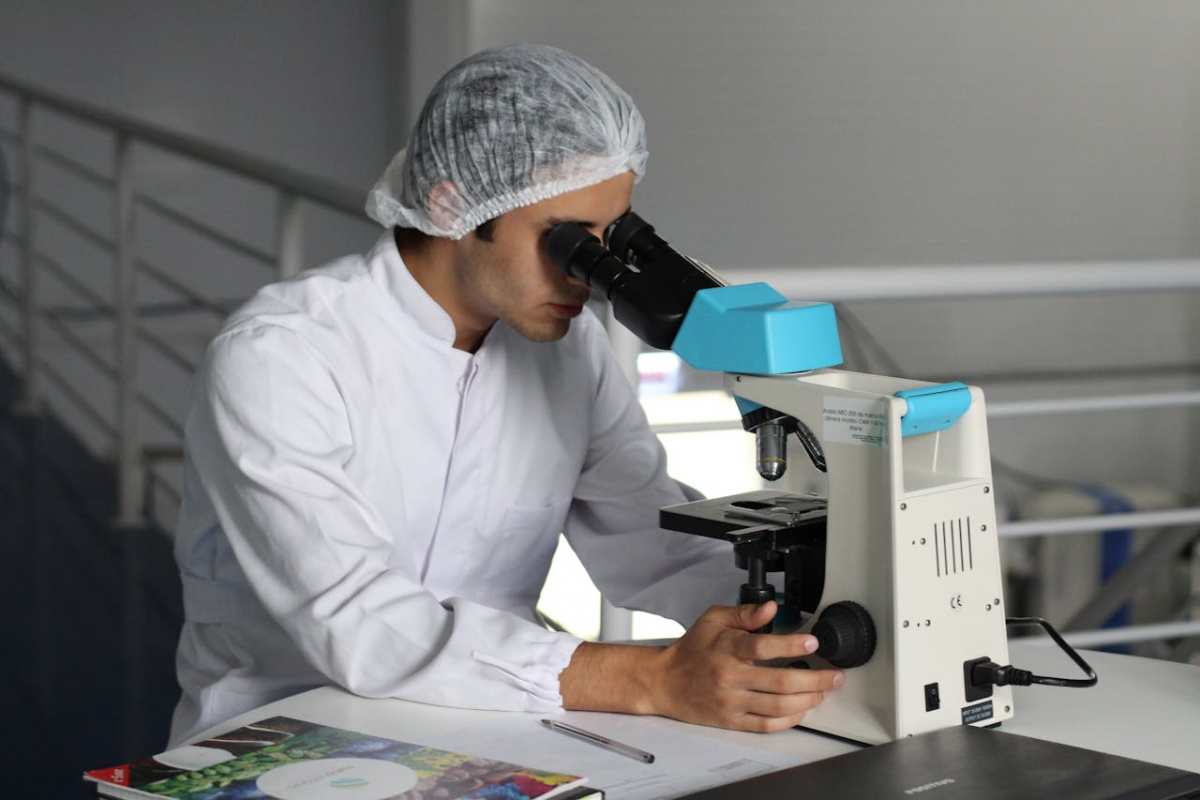
Advanced microscopes allow detailed observation of small objects. Optical and electron microscopes allow us to see cells and microorganisms, as well as atoms. Advanced optics, digital imaging, and greater magnification further enable detailed investigations in life sciences and materials research. These tools allow scientists to study the microscopic structure, function, and interactions.
Polymerase Chain Reaction (PCR) Machines
An important step in genetic analysis is using PCR machines. These are lab instruments that allow us to amplify certain pieces of DNA, making it easier to detect and study DNA. PCR technology is used for various purposes, such as disease diagnostics, forensic analysis, and genetics research in laboratories. This ability to quickly replicate genetic material has revolutionized several aspects of molecular biology and personalized medicine.
Automated Liquid Handlers
Manual liquid handling leads to the introduction of errors and a reduction of throughput. Automated systems overcome these limitations by accurately liquid handling into microplates or tubes. Such robots enhance reproducibility and speed, especially in HTS laboratories. This allows researchers to spend more time on experiment design and data interpretation and less time manipulating large amounts of data. This reduces the possibility of human error.
Spectrometers for Mass Analysis
By measuring mass-to-charge ratios, mass spectrometers provide detailed data about molecular composition. Sample ions are then fragmented and their spectra analyzed to create a substance-specific signature. This data enables proteomics, drug, and environmental testing applications. These tools are very sensitive and specific, allowing laboratories to identify and quantify molecules at nM concentrations.
Incubators and Environmental Chambers
Many experiments need regulated temperature, humidity, and other atmospheric conditions. Laboratory incubators and environmental chambers provide a controlled environment for the growth of cultures and for chemical reactions. They keep the conditions consistent to establish reproducible results. They are employed in microbiology, tissue culture, and product stability tests.
Conclusion
Advances in laboratory technology have streamlined the research process and have offered more reliable and efficient diagnostics. Balances, spectrometers, and automated handlers are the workhorses in scientific inquiry. The ongoing developments in these tools will enable more discoveries and help laboratories respond to evolving needs. Knowing these core technologies can help scientists produce results and innovate rapidly.