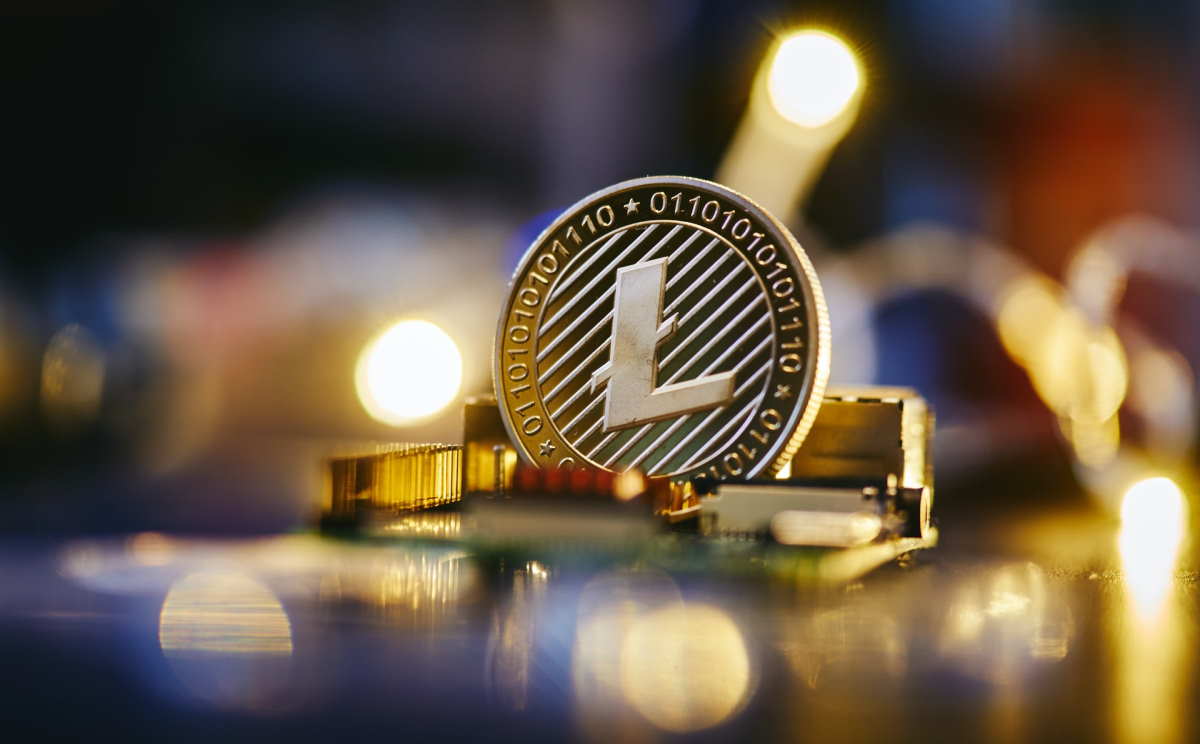
LTC is used as a digital currency and enables instant payments to anyone in the world. Consumers describe LTC payments as secure and frictionless. Continue reading
Litecoin (LTC-6.412%) is considered the first successful alternative cryptocurrency, paving the way for future developers and helping them expand the user base for cryptocurrencies. By 2011, other networks had already tried to alter Bitcoin’s code and modify its features, but it was only Litecoin that made an impact.
Let’s see how the project made historical significance, what it represents now, and what to do if you buy Litecoin (LTC).
Charlie Lee, the founder and creator of Litecoin, is a computer scientist and graduate of the Massachusetts Institute of Technology. The former Google engineer became highly interested in Bitcoin (BTC-1.108%) and the new blockchain technology in 2011. In October, he posted about “playing around with the Bitcoin codebase” on the Bitcointalk forum. He also expressed his intention to create “a coin that is silver to Bitcoin’s gold”.
Lee announced the exact time of the official launch along with Litecoin’s source code and binary one week leading up to it. This gave miners plenty of time to plan ahead prepare to start mining at the same time.
150 LTC coins were pre-mined before the launch – these were the genesis block and the block to confirm its validity. Since miners have already changed their files, they could quickly get a 50 LTC reward once the network went live. Subsequently, Bitcoin grew from a side-project to a full-on fork of the Bitcoin blockchain.
In 2017, Lee donated all of his LTC, dissociating himself from using Litecoin for personal benefit, and focused solely on managing the Litecoin Foundation.
There are a few technical innovations in LTC that were meant to overcome the shortcomings of BTC.
Litecoin was the first network to successfully implement Segwit in 2017 and increase the number of transactions for one block. Segwit essentially divides a transaction into two sections and reduces the weight of transactions on the blockchain. Segwit has also become a solution to transaction malleability.
The Lightning Network is an off-chain protocol, facilitating the first-ever off-chain atomic swap between Bitcoin and Litecoin. Off-chain swaps are meant for smaller transactions, which otherwise clog up the mainnet and slow down validators working on bigger transactions. It’s a win-win situation – now, users don’t have to sacrifice protection for speed and utility.
The activation of the highly anticipated MimbleWimble protocol is aimed at enhancing the network’s fungibility and scalability and is scheduled for the end of 2021. This will be an opt-in upgrade, parallel to LTC’s main chain.
Litecoin is often used as a speculative instrument. Traders and investors rely on the limited supply of LTC to generate a satisfactory return on their capital. So far, the results have been tremendous – in 2017, one LTC cost $2-$4, and now it’s worth around $150, ranking #16 by market capitalization on CoinMarketCap.
Aside from being a trading asset, LTC is used as a digital currency and enables instant payments to anyone in the world. Consumers describe LTC payments as secure and frictionless. You can also use Litecoin to pay for goods and services online. For example, AMC (AMC +1.80%
There are over daily 100,000 transactions processed by the Litecoin network between 200,000-300,000 active addresses. This is a fantastic sign that the network’s payment processing has a competitive advantage.
Stop guessing what's wrong with Outlook. Learn to diagnose error types and apply targeted fixes…
Everyday work now involves moving information through laptops, phones, cloud platforms, messaging tools, and increasingly…
Unsynced CRM data across phones and laptops wastes hours and leads to missed follow-ups. Learn…
Explore a practical set of tools for advertising, design, CRM and analytics that revitalize sales…
Learn how boarding school waitlists really work, what timing signals mean, and the exact steps…
Stop paying hidden tech taxes. Learn how next-gen, API-driven programmatic platforms help independent agencies boost…