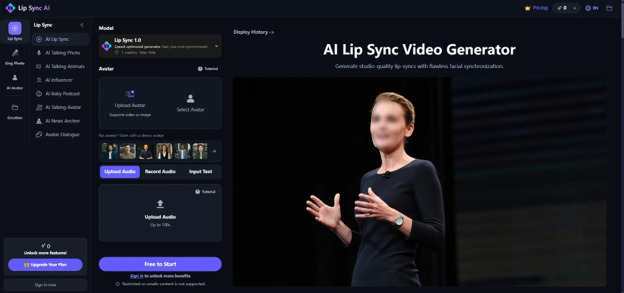
For years, traditional video editing has been considered the standard way to create professional videos. Editors adjust timelines, synchronize audio, refine facial movements, and manually improve visual details. While this method offers strong creative control, it also requires time, experience, and access to specialized software.
The rise of AI video tools has challenged the idea that every video project needs a long production process. Many people now wonder whether AI-powered solutions can replace traditional editing workflows or simply provide a faster alternative for specific tasks.
The comparison between traditional editing and lip sync AI online free no sign up tools is not about finding one universal answer. Instead, it is about understanding which approach fits different creative needs. Traditional editing remains valuable for detailed productions, while AI solutions can simplify repetitive tasks such as matching speech with facial movements.
A common misconception is that AI video tools remove creativity from the process. In reality, they often change where creators spend their time. Instead of manually handling every technical step, users can focus more on storytelling, concepts, and audience engagement.
| Feature | Summary |
|---|---|
| Generation speed | Can create synchronized videos through automated processing |
| Input requirements | Can work with images, videos, avatars, and audio |
| Scene options | Can support two speaking characters and short video scenes |
| Access model | Can offer online access with free first-time usage |
| Key limitation | Can require credits for advanced features and longer storage |
Traditional video editing developed around manual control. Editors needed to adjust individual elements, including audio timing, facial animation, and visual transitions. For complex projects, this process could involve multiple rounds of review and refinement.
AI video technology has introduced a different approach. Modern systems can analyze audio patterns, understand visual information, and generate synchronized movements automatically. Tasks that previously required specialized editing skills can now be completed through simpler workflows.
One major improvement is speed. AI tools can process content without requiring users to manually create every animation detail. This makes them useful for quick content production, social media campaigns, educational materials, and personalized videos.
However, speed does not mean traditional editing has become unnecessary. Professional productions may still require detailed adjustments, advanced effects, and complete creative control. The difference is that AI tools provide another option for projects where efficiency matters.
The growing interest in image to video AI free unlimited solutions reflects this change. Creators increasingly want tools that help transform simple visual materials into engaging video formats without complicated production steps.
Traditional editing and AI-powered creation solve different problems.
Traditional video editing gives creators direct control over every frame. An editor can fine-tune timing, add custom effects, adjust colors, and create highly specific visual styles. This approach works well for films, advertisements, and projects where every detail needs manual attention.
AI lip sync tools focus on automation. Instead of manually adjusting mouth movements and expressions, the system can analyze audio and generate matching facial animations. This approach is especially useful when the goal is to create talking characters quickly.
The main myth is that AI tools are only suitable for simple or low-quality videos. Modern AI systems can produce realistic results with facial expressions, blinking, and head movements. The technology has moved beyond basic animation and now supports more natural communication.
A casual observation many creators share is that watching a still image begin speaking naturally can feel surprisingly impressive the first time. It changes the way people think about ordinary visual assets.
A reliable AI video tool needs to balance speed, quality, and flexibility. Fast generation alone is not enough if the final output looks unnatural or limits creative options.
Input flexibility is an important factor. Creators may start with different materials depending on their goals. Some projects begin with a portrait, while others use existing videos, digital avatars, or recorded audio. Tools that support multiple formats allow users to adapt the workflow to their needs.
Output quality also matters. Realistic lip synchronization requires more than matching basic mouth movements. Facial expressions, blinking, and subtle head movements help create a more convincing result.
Language support is another consideration. As creators reach global audiences, multilingual and accent-aware features become increasingly useful. They allow content to be adapted for different regions without rebuilding the entire production process.
Access is also part of the user experience. Many people want to test a tool before making a commitment. This is why interest in lip sync AI online free no sign up continues to increase among creators who want a simple starting point.
When comparing workflows, speed is one of the most noticeable differences. Traditional editing often requires multiple manual steps before a talking video is complete. AI-based solutions can shorten this process by automating facial synchronization and animation.
Lip Sync AI allows users to create lip sync videos from different types of inputs, including images, videos, avatars, and audio files. This flexibility makes it suitable for various content scenarios, from social posts to digital presentations.
With lip sync AI online free no sign up, first-time users can access the platform online without immediate registration requirements. The workflow is designed to let people explore the creation process before deciding whether they need continued access.
The system can generate realistic lip synchronization with natural facial expressions. Features such as blinking and head movements help create videos that feel more dynamic than simple image animations.
For projects involving conversations or multiple characters, the platform can support up to two speaking characters in one video. Lip Sync 1.0 can handle videos up to 100 seconds, providing enough flexibility for short explanations, introductions, and storytelling content.
The tool also supports multilingual and accent-aware lip sync, helping creators produce videos for audiences in different regions. This is especially useful for businesses and educators who need localized content.
The access model provides an entry point for experimentation. Anonymous users can complete one free generation before an account is needed for further use. Registered users receive 70 free credits daily, while more advanced models may require additional credits.
There are also practical limitations to consider. Higher-quality Lip Sync 2.0 uses more credits and supports shorter videos up to 40 seconds. Storage periods are limited as well, with anonymous videos available for 2 days and free account histories stored for 15 days. Users needing advanced features or longer storage may need additional credits or upgraded plans.
These differences highlight an important point: AI tools are not designed to eliminate every traditional editing workflow. Instead, they provide a faster option for specific types of video creation.
Different types of creators can benefit from AI-powered video workflows. Social media creators can produce more engaging posts without spending excessive time on manual animation. Small businesses can create digital spokesperson videos, product introductions, and customer education content more efficiently.
Educators and trainers can use talking visuals to make lessons more interactive. Marketing teams can test multiple video concepts quickly and adapt messages for different audiences. Individuals creating personal greetings or storytelling videos can also transform simple images into more expressive content.
For experienced editors, AI tools can work as a supporting solution rather than a replacement. They can handle repetitive tasks while leaving more time for creative decisions. For beginners, they offer a simpler entry point into video production.
The growing adoption of image to video AI free unlimited workflows shows that more people want accessible ways to experiment with visual storytelling.
The comparison between traditional video editing and AI lip sync technology depends on the project requirements. Traditional methods remain valuable when creators need complete manual control, while AI tools provide speed and convenience for projects that require efficient production.
For creators exploring faster ways to animate images and build engaging videos, image to video AI free unlimited solutions can open new creative possibilities. These tools allow users to experiment with ideas that previously required more time and technical skills.
As AI video technology continues to develop, lip sync AI online free no sign up platforms will become a practical option for many content workflows. The key is understanding when automation improves the process and when traditional editing remains the better choice.
Selecting the right technological partner forms the foundational bedrock of a modern enterprise. Continue reading…
The word “smart” appears on everything from kitchen appliances to watches, heating systems, and sports…
A peer-reviewed study says the race to hand product listings entirely to AI creates two…
FinTech companies move money faster than traditional banks ever could. Rapid growth creates unique vulnerabilities…
Character drift is the single biggest obstacle to using AI-generated people in anything serial, whether…
Learn how AI deployments evolve from local development to VPS, dedicated servers, cloud, and hybrid…