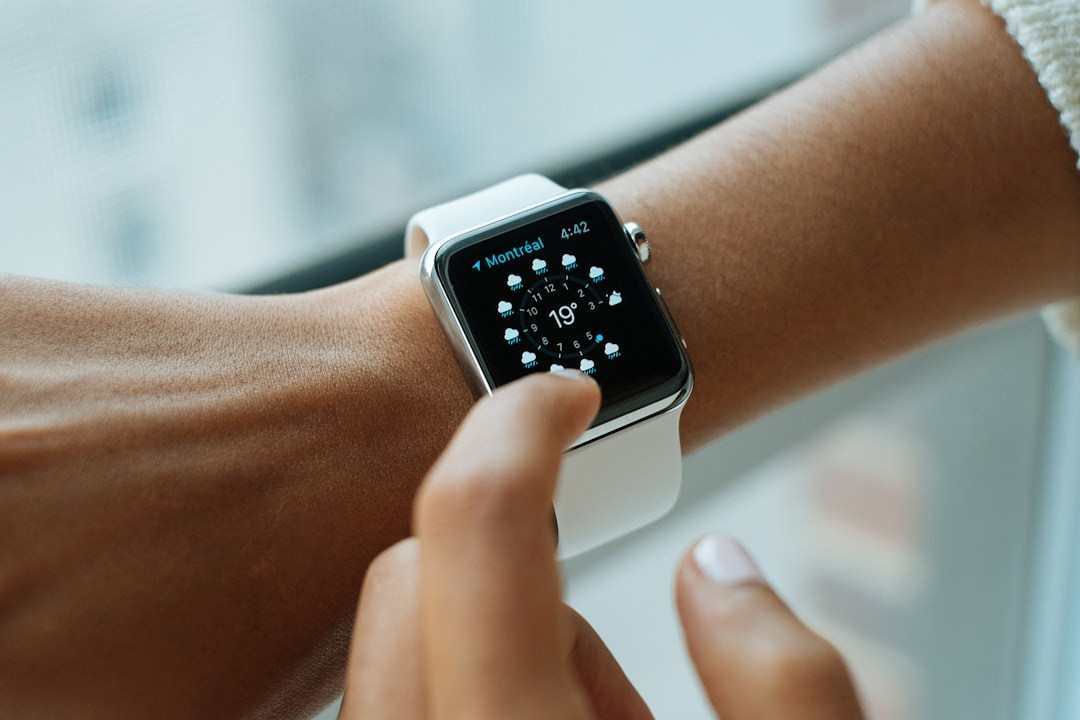
The word “smart” appears on everything from kitchen appliances to watches, heating systems, and sports equipment. Yet the most useful smart devices are not defined by touchscreens or mobile apps alone. Their real value comes from the ability to observe what is happening, process that information, and respond in a way that makes an ordinary task easier or more precise.
Sensors provide awareness. Software gives the collected information meaning. Together, they allow devices to measure movement, temperature, pressure, location, energy use, and countless other conditions that once required human observation. This shift is quietly changing everyday routines. Golfers can examine individual shots within seconds, homeowners can understand how heating patterns change throughout the day, and appliances can adjust their operation according to real conditions. The smartest technology is increasingly the technology that works in the background while helping people make better decisions.
Athletes once relied primarily on feel, repetition, and a coach’s observation to understand performance. Those methods remain important, but sensors can now capture details that are almost impossible to judge accurately with the naked eye. Cameras, radar, and motion tracking systems measure tiny changes in speed, angle, direction, and impact, turning a brief physical action into information that can be reviewed repeatedly.
Golf provides a particularly clear example. Modern portable launch monitors can measure elements such as ball speed, spin, launch angle, carry distance, and club movement during practice. The important development is not simply that these measurements exist. Software can organize the readings shot by shot, helping players identify patterns instead of judging an entire practice session from a few memorable swings. A golfer who consistently loses distance with one club can investigate the data rather than relying entirely on guesswork.
This approach is appearing across sport. Running watches examine pace and movement, cycling computers record power output, and connected fitness equipment tracks consistency between sessions. Sensors do not perform the activity for the athlete, but they make previously invisible details easier to recognize.
Home technology has followed a similar path. Older household controls generally depended on direct instructions: turn something on, select a setting, and turn it off later. Smart devices can use sensors and software to respond to conditions that change throughout the day, reducing the need for constant manual adjustments.
Temperature control demonstrates how practical this can become. Someone comparing the best home smart thermostat is no longer looking only at the number displayed on the wall. Compatibility, scheduling, humidity sensing, energy tracking, room data, and smart-home integration can all influence how effectively a system manages comfort. Software may display historical runtime information or coordinate a heating schedule, while sensors provide the measurements needed to make those features useful.
The same principle applies elsewhere in the home. Lights can react to movement, irrigation systems can consider environmental conditions, and security devices can distinguish between different types of activity. These products become valuable when automation removes repetitive decisions without making basic controls confusing. A device that requires constant app management may technically be connected, but it has not necessarily made the home easier to manage.
Photo by Daniel Romero on Unsplash
Collecting information is relatively easy compared with explaining what that information means. A device can generate thousands of measurements, but raw numbers have limited value if the user cannot identify which ones deserve attention. This is where software has become central to the development of smarter products.
Good software filters, compares, and presents data in a form that supports a decision. A fitness device might show that sleep duration has changed over several weeks rather than forcing the user to compare individual nights manually. An energy application can reveal when consumption is consistently highest. Sports software may group repeated measurements and highlight trends that would be difficult to notice during practice.
The design of these systems matters. More data does not automatically create a better experience. When dashboards contain dozens of unexplained metrics, users can become less confident rather than more informed. Effective devices prioritize the information most relevant to the task and allow deeper analysis when it is genuinely needed.
This explains why software updates can significantly change a physical product after purchase. Improved algorithms, clearer interfaces, and better integrations can make existing sensors more useful without changing the hardware itself. The device remains physically identical, but its ability to interpret and communicate information improves.
The strongest smart devices often become almost invisible during everyday use. After initial setup, they handle predictable tasks and ask for attention only when something unusual happens. This is a major change from early connected products, which sometimes seemed designed to send a notification for every minor event.
Useful automation begins with understanding routine behavior. A device may follow a schedule, react to a sensor reading, or combine several conditions before taking action. The purpose is not to remove human control but to reduce the number of repetitive choices people make throughout the day. Adjusting the same setting every morning is a good candidate for automation; making an unusual or high-impact decision usually still benefits from human input.
There is also a balance between personalization and predictability. Some users appreciate systems that learn behavior automatically, while others prefer creating precise schedules themselves. Smart technology works best when people understand why a device is acting and can easily change its behavior. Automation that constantly surprises the owner quickly becomes frustrating, regardless of how advanced the underlying software may be.
Manufacturers are gradually recognizing that simplicity is a feature. Clear controls, understandable settings, and reliable routines can matter more than an enormous list of experimental functions. The smartest product is often the one that solves a familiar inconvenience consistently.
Sensors are becoming smaller, more accurate, and easier to include in ordinary products. At the same time, software is becoming better at comparing multiple streams of information. The result will likely be devices that respond less to single measurements and more to context.
A sensor detecting movement can provide one piece of information. Combine movement with time, temperature, location, and previous patterns, and software gains a much clearer picture of what may be happening. This broader context can help devices avoid unnecessary reactions and provide information at more useful moments.
However, smarter products will also face greater expectations around privacy, reliability, and control. Consumers may appreciate personalization while still wanting to understand what information a device collects and where it is processed. A convenient feature can quickly lose its appeal if users feel they have little control over their own data or cannot operate basic functions without an internet connection.
The future of smart devices therefore depends on more than adding sensors to additional products. Successful technology must collect the right information, interpret it clearly, and use it to solve a genuine problem. Golf equipment, thermostats, watches, appliances, and countless other devices are already moving in this direction.
When sensors provide accurate awareness and software turns that awareness into practical action, ordinary objects become more useful without demanding more attention. That quiet improvement, rather than another screen or notification, is what increasingly defines a genuinely smart device.
A consistent routine can make the setup easier to maintain. The goal is not to…
If you want a luxury SUV that feels exciting but still gives you room to…
Three weeks into a job search, a recruiter calls and says, pleasantly, “Your resume says…
Every six months, even when you’re not looking. Continue reading →
You want to achieve balance in your sales and service teams? Explore top strategies that…
The dryer was still ticking as it cooled when I sat sideways in the driver's…