When you’re trying to deliver applications on time, you need tools to boost company efficiency, not hurt it. To ensure that your Kubernetes system is operating as planned, you should keep your eyes peeled for the following key features in a management tool. Continue reading
Finding a Kubernetes management solution shouldn’t leave you out of sorts or winded from warding off time-wasters on the attack. When you’re trying to deliver applications on time, you need tools to boost company efficiency, not hurt it. To ensure that your Kubernetes system is operating as planned, you should keep your eyes peeled for the following key features in a management tool.
Kubernetes is a container-based system designed to help the development and scaling of applications. Initially, Google developed Kubernetes. Later on, the Cloud Native Computing Foundation swooped in and assumed responsibility for management. Today, both big and small companies use this infrastructure because of how readily the entire system scales.
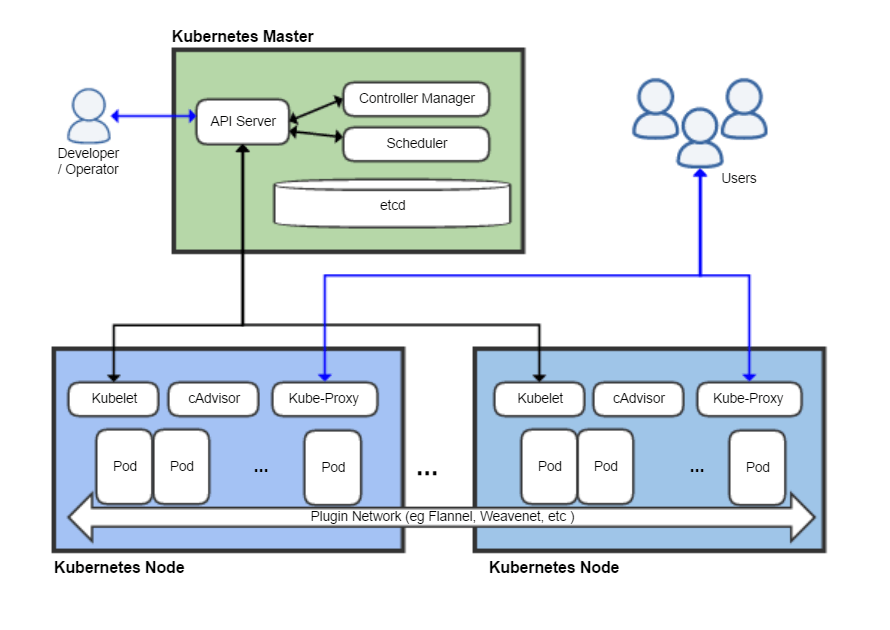
This system works by creating containers, which are vessels for applications and their libraries. Virtual machines riding inside these containers deploy across nodes, which is a network of associated computers. Once they arrive, the container renders the virtual machines needed to carry out the application.
Kubernetes suits the purpose of creating databases and accessing application data. By dispersing the containers across many nodes, the computing power for the whole system gets distributed out, keeping any singular node from overworking.
While many Kubernetes management solutions have all sorts of features, there are some key things to consider when choosing a management solution:
A management tool needs to suit your production needs if it’s going to be useful. Security, accessibility, and native managerial tools are essential factors in making a management solution worth your time. You should also ensure that your management solution can scale well and keep up with your Kubernetes infrastructure.
With the trend of multiple cloud solutions at full velocity, many businesses have rejected all-eggs-in-one-basket mentalities and started relying on several cloud vendors to meet their data and storage needs. For those business owners still searching for a management tool that can keep up with day-to-day business operations, this security trend will be crucial as your data needs evolve.
Managing a cluster of nodes is a challenge in itself. If your management solution introduces another layer of complexity, your team will have a more challenging time keeping the system running well.
In many cases, data analysis throws administrators for a loop. Luckily, several management solutions offer ways to analyze data natively, letting your admins work more on maintaining the infrastructure.
Make sure that your Kubernetes management solution comes from a vendor with solid support and training programs. Getting off on the right foot with training will help you launch your solution successfully, while support will ensure solutions as quickly as possible.
A Kubernetes management solution should be ready for use at your business, allow you to grow with it, be easy to use, and have ongoing support from the vendor. Extra features sprinkled on top of those spotlighted above are simply frosting and won’t be the most crucial over the long term.
So, the next time you shop for a management solution, keep these key things in mind to ensure you have the tool you need for the job.
Live database synchronization is one of the most challenging engineering problems of current IT architecture.…
Taking family road trips or navigating daily city commutes requires frequent pit stops along busy…
As professionals take on new responsibilities, their current tools and setup may no longer be…
Managing an engineering team is a job. You have to balance a lot of things.…
Most small businesses leak customers between first contact and the sale. Here is where the…
A designer in New York opens the same project that a developer in another country…