Performance marketing is built on one core objective: generating profitable traffic at scale. The challenge is that not all traffic behaves the same way. Some formats prioritize volume and low costs, while others focus on engagement quality and conversion rates.
Two of the most widely used formats in modern advertising ecosystems are native ads and popunder ads. Although both can drive profitable campaigns, they operate on completely different principles and produce very different user behavior.
Advertising platforms specialize in these high-performance formats, giving advertisers the flexibility to test both traffic quality and scalability within a single environment.
This article explores the strengths, weaknesses, and strategic applications of native and popunder ads in modern performance marketing.
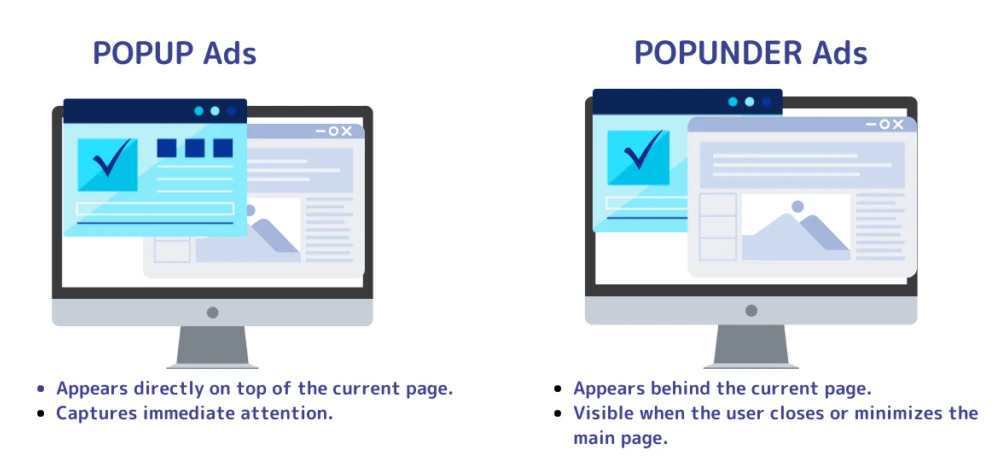
Popunder advertising is a format where a landing page opens in a separate browser tab behind the active window. The user does not intentionally click the ad — the page is triggered automatically while browsing another site.
The key purpose of popunder traffic is simple:
Unlike traditional display ads, popunder campaigns bypass the need to convince users to click.
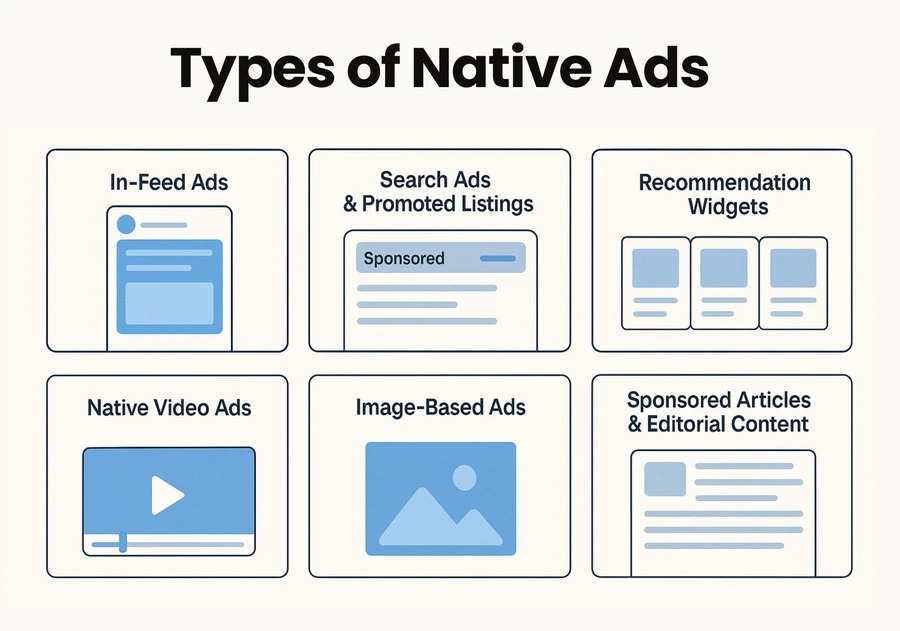
Native ads are advertisements designed to blend naturally into the content and layout of the platform where they appear.
Common examples include:
Native advertising focuses on:
Users actively choose to click because the ad resembles useful content rather than obvious advertising.
At the strategic level, the difference is fundamental:
This distinction affects every important performance metric:
One of the biggest advantages of popunder traffic is price.
Advertisers can buy enormous traffic volumes at relatively low cost compared to native advertising or traditional display networks.
This makes popunder ideal for:
Popunder campaigns can scale almost instantly because inventory is widely available across multiple geographies and device types.
This allows advertisers to:
For affiliate marketers and arbitrage specialists, this speed is highly valuable.
Even though users do not actively click the ad, the landing page still receives exposure once the user closes or minimizes the current tab.
This creates extremely high delivery rates compared to click-based formats.
The user did not intentionally engage with the offer, which reduces conversion probability.
As a result:
Popunder advertising can feel intrusive, especially in Tier 1 markets where users expect cleaner browsing experiences.
This makes the format less suitable for:
Native advertising generates traffic through curiosity and relevance.
Users click because the content:
This produces:
Although native traffic is more expensive, it often converts significantly better.
Why?
Because users arrive with:
This is especially important for:
Native ads adapt naturally to mobile interfaces and content feeds.
Unlike banners or intrusive formats, native placements fit smoothly into:
This improves user experience and engagement.
Native traffic is typically more expensive than popunder traffic.
Advertisers must invest more in:
A native campaign succeeds or fails based on:
Weak creatives usually destroy performance immediately.
Compared to popunder campaigns, native traffic scales more gradually because:
| Factor | Popunder Ads | Native Ads |
|---|---|---|
| Traffic Cost | Very Low | Medium–High |
| User Intent | Low | High |
| CTR | Extremely High | Medium |
| Conversion Rate | Low–Medium | High |
| Scalability | Very High | Medium |
| Creative Importance | Low | Very High |
| Traffic Quality | Lower | Higher |
| Mobile Experience | Moderate | Strong |
There is no universal answer because profitability depends on:
However, the formats generally excel in different areas.
Examples:
Examples:
The most effective media buyers rarely rely on a single traffic source.
Instead, they combine:
Example strategy:
This creates balance between:
Marketing agency specifically on high-performance advertising formats such as native and popunder traffic.
The platform enables advertisers to:
For affiliate marketers and media buyers, this flexibility is important because different offers require different traffic strategies.
Instead of relying entirely on one traffic model, advertisers can build layered acquisition systems combining:
Popunder traffic requires:
Even strong offers fail with weak headlines and poor images.
Native and popunder users behave differently and require different user journeys.
Especially in native advertising, aggressive scaling can destroy campaign stability.
As advertising competition increases, performance marketers will continue prioritizing formats that balance:
Popunder remains valuable because of its low cost and enormous reach.
Native remains valuable because of its trust-based engagement and strong conversion performance.
Both formats will likely continue evolving alongside:
Native ads and popunder ads solve different problems within the performance marketing ecosystem.
The most profitable campaigns often use both formats strategically rather than choosing one over the other.
If you are planning to buy native ads traffic, contact this agency GTARO. Platform make this possible by providing advertisers with access to multiple high-performance traffic sources in a single environment.
In modern advertising, success is not determined by traffic volume alone. The real advantage comes from understanding how different traffic formats influence user behavior — and using that knowledge to build smarter, more profitable campaigns.
Three weeks into a job search, a recruiter calls and says, pleasantly, “Your resume says…
Every six months, even when you’re not looking. Continue reading →
You want to achieve balance in your sales and service teams? Explore top strategies that…
The dryer was still ticking as it cooled when I sat sideways in the driver's…
A freelancer with twelve clients does not have one schedule. She has twelve, each with…
Outlook sync tools exist because Outlook holds the calendar, contacts, and email history most businesses…