Procure analytics empowers organizations to transform raw spending data into actionable insights, driving cost savings and operational efficiency.
By leveraging data-backed procurement intelligence early in the process, teams gain a competitive edge through precise forecasting and risk mitigation.
Procure analytics includes more than basic reporting.
Beyond analyzing trends in spend, supplier performance, and contract compliance, it also helps organizations address issues such as maverick spending and supply disruptions by using real-time dashboards and predictive modeling.
Such organizations have reported 15-25% savings in purchases and improved collaboration with existing suppliers.
This transforms procurement from a tactical back-office cost engine to a planned powerhouse where data-driven insights from invoices, POs, and contracts illuminate hidden opportunities to consolidate and negotiate.
An important aspect of effective procure analytics is the delivery of data-driven procurement intelligence that transforms data from disparate sources into actionable insights and planned foresight.
For example, it can detect anomalies in spend, forecast changes in demand, and benchmark purchasing against predefined procurement goals.
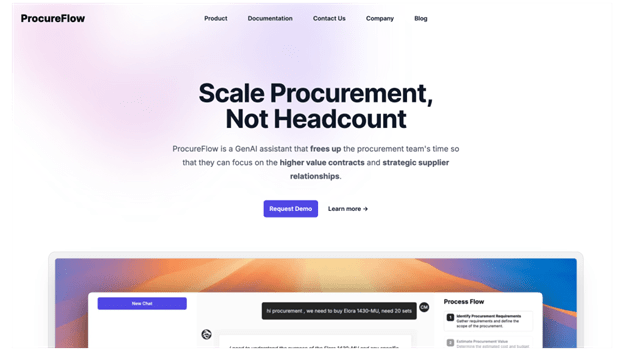
An example of smart procurement software that does not require a wide-ranging setup is procureflow.ai.
These teams report faster decision cycles, higher levels of compliance, and the use of data-based metrics instead of gut instinct to determine the right procurement decisions.
Bring all of your spending data together in one place.
If your data is fragmented, you will struggle to analyze it (different systems for indirect materials, services, etc.).
Dedupe datasets, as duplicate records can skew insights by as much as 30%.
Once these segments are unified, you can subdivide the spend into high-volume direct goods and low-volume indirects, and see if there are leaks, such as off-contract purchases.
Apply tactical strategies to execute procure analytics and drive value using proven frameworks.
To prevent stockouts while forecasting future needs, time-series algorithms can use historical information accurately to reduce excess inventory costs.
Dynamic scores taking into account delivery history, financial position, and external risk indicators allow you to receive real-time alerts and avoid disruptions.
Separate spending into specific categories that can be analyzed, exposing opportunities to negotiate on poorly-performing items.
Automatically scan contracts for key terms and notices of renewal, and proactively alert on realized savings.
Also consider maintenance and disposal costs, not just purchase price.
See total cost of ownership.
It drives long-term value.
Assess supplier environmental impact with financial data.
Quantitative green metrics meet regulatory and stakeholder needs.
Finance and operations participate in analytic reviews, and all parties share common KPIs for unified views.
Quarterly reviews of managed vs. unmanaged spending reveal control gaps.
Iterative audits support continuous improvement.
Gain insights from interactive reports with our smart dashboards and make changes on the go.
Transition from spreadsheets to scalable, faster computing platforms, improving accuracy and enabling rapid analysis.
Access survey data and tools for your team.
Identify gaps in visibility, such as missing supplier data.
Gather six months of historical data, harmonize formats, use APIs to integrate data sources, and begin testing with the biggest expenditure categories.
Use visualization and automation-friendly platforms, and train users for key tasks such as drill-down queries.
Establish KPIs from day one, reviewing weekly and adjusting based on your early wins to build momentum.
Staged roll-outs of projects reduce the impact on the business and often provide a return on investment (ROI) in the first quarter.
Procure analytics delivers benefits for all stages of procurement.
In Sourcing, it helps with better supplier benchmarking.
Consolidation allows for vendor numbers to be reduced by 20%.
Automated compliance checks further ease contracting, providing 10-15% of the potential savings on cost.
For example, predictive forecasting in execution phases, anomaly detection in payment phases for invoices, increased cash flow through decreased overpayments, and reduced amounts of capital tied up in inventories at any point in time.
Data quality problems are common in these projects.
Implementing strict data governance can help reduce this.
Demand sanitized inputs and regular validation.
Ease stakeholder buy-in by delivering value quickly, such as running a pilot in one category and delivering 10% savings.
No budget?
Start with basic open-source tools instead of investing in wide-ranging systems.
Skill gaps can be filled by ubiquitous training of the entire team in the fundamentals of analytics.
Focus on these core KPIs for comprehensive oversight:
Automated reports make these easy to monitor, quantifying ROI at 5-10x investment levels.
| Metric | Target Benchmark | Improvement Potential |
| Savings Realized | 10-15% of spend | High via optimization |
| On-Time Delivery | 95%+ | Medium with risk tools |
| Compliance Rate | 90%+ | High via automation |
| Spend Under Management | 80%+ | Medium via audits |
| Cost Avoidance | 20% of baseline | High via forecasting |
Repetitive tasks such as generating RFPs will be done by AI.
Predictive risk models taking into account global data will free experts for calculated activities.
Sustainability analytics will not only measure but also track emissions throughout the full supply chain and use cloud-based collaboration tools to solicit input.
Invest in analytical capabilities, and conduct quarterly technology scans of new opportunities and innovations.
Future leaders will be hybrid human and AI.
Hybrid workflows will combine human intuition and human diligence with data precision.
Frequently audit frameworks.
Embedding procurement analytics realizes direct cost savings and resilient supply chains to tackle any eventuality, as well as driving the procurement function as a value-add to the organization.
Every growing business reaches a point where technology stops feeling like a helpful tool and…
Recurring revenue is the goal for most modern businesses — predictable cash flow, lower acquisition…
Modern companies are constantly searching for innovative ways to bring employees together, especially in remote…
Reliable knowledge management options are essential for many independent professionals. Selecting a platform that best…
The global procurement landscape in 2026 is undergoing a fundamental transformation, driven by the rapid…
Looking for ways to turn junk into cash? Everyone's got unused clutter gathering dust in…